

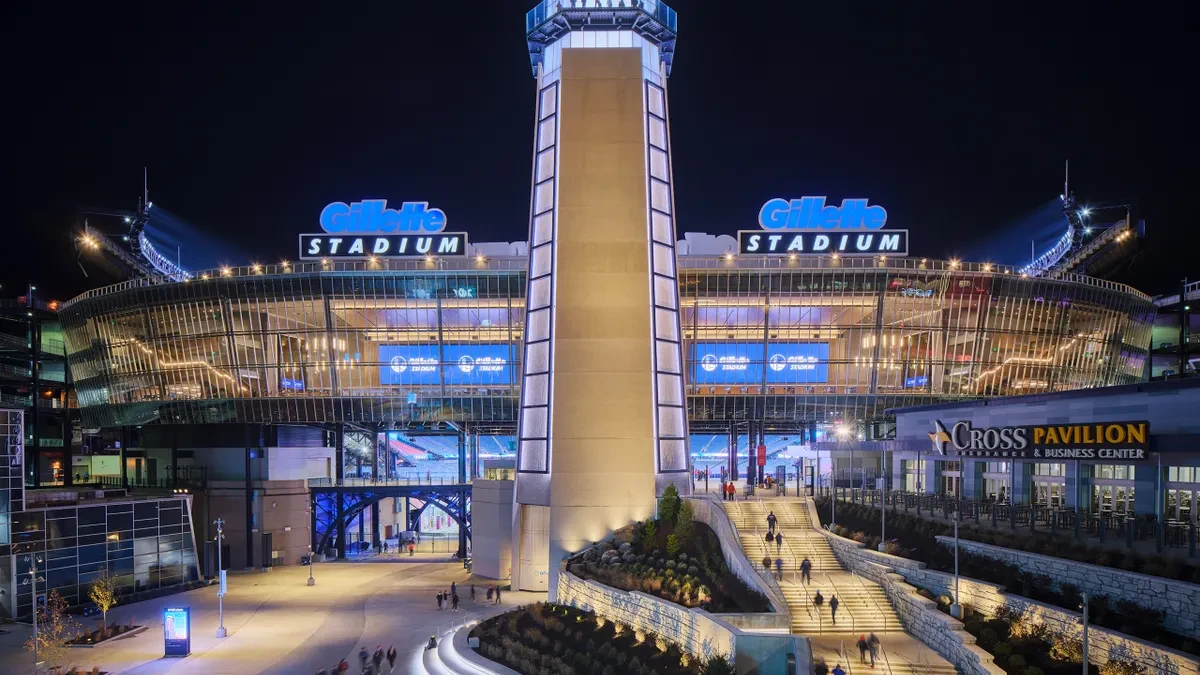
BOSTON — Responding to an escalating nationwide boom in mega-venue development, major contractor Suffolk Construction has officially centralized its operations with the launch of a dedicated national business unit: the Sports Center of Excellence. Announced in early October 2026, the newly minted division is engineered to streamline the construction of high-profile stadiums, arenas, collegiate athletic complexes, and elite training facilities across the United States.
To spearhead this strategic initiative, Suffolk has tapped Matt Swaim, an industry veteran and former Nike executive, as Executive Vice President to lead the unit. Simultaneously, the firm appointed Will Gamba as Vice President of Preconstruction for the Sports and Entertainment sector.
The structural pivot underscores a broader industry reality: modern sports venues are no longer just seasonal game-day hosts. They have transformed into hyper-complex, multi-use entertainment hubs requiring unprecedented levels of technological integration, rapid turnaround times, and immaculate logistical coordination.
Main Facts
The establishment of the Sports Center of Excellence marks a definitive structural evolution for Suffolk Construction, shifting its approach to sports and entertainment builds from regional oversight to a centralized, national powerhouse.
- Leadership: The division is led by Executive Vice President Matt Swaim, a 25-year industry veteran who joined Suffolk in 2024 after serving as Vice President of Real Estate, Design, and Construction at Nike. Will Gamba assumes the role of Vice President of Preconstruction, overseeing design-to-guaranteed-maximum-price (GMP) phases for major projects.
- Scope: The national unit consolidates Suffolk’s capabilities across professional sports stadiums, multi-purpose arenas, collegiate recreation and athletic facilities, and state-of-the-art training compounds.
- Core Objectives: The Center of Excellence aims to standardize preconstruction planning, refine project staffing strategies, mitigate scheduling and financial risk, and optimize execution methodologies across all regional offices handling sports builds.
- Industry Context: The launch is a direct response to soaring client expectations. Developers and team owners increasingly demand that builders integrate sophisticated lifestyle features, premium clubs, and advanced digital infrastructure within notoriously rigid, immovable deadlines.
Chronology: The Evolution of Suffolk’s Sports Footprint
Suffolk Construction’s journey to launching a dedicated national sports unit is anchored by a track record of delivering complex, high-profile mega-projects under tight schedules. Understanding the trajectory of the firm illuminates the necessity of the new Center of Excellence.
Pre-2024: Regional Execution and Foundational Growth
Historically, Suffolk operated major sports and entertainment builds through regional divisions, relying on local teams to handle distinct projects. While successful in delivering high-profile regional assets, the lack of a unified, national sports playbook occasionally created siloes in procurement, preconstruction strategies, and specialized subcontractor coordination.
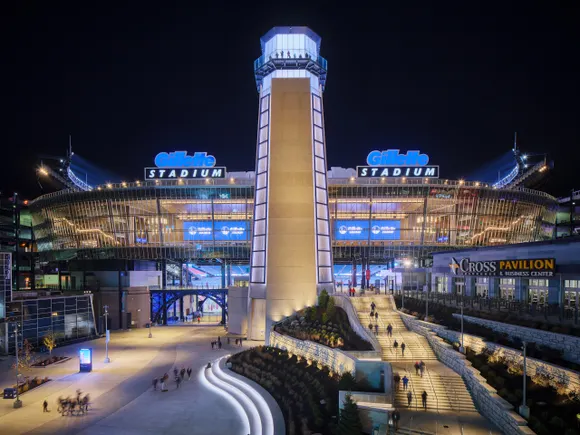
2023: Delivering the Gillette Stadium North End Zone Expansion
A watershed moment for the firm’s national reputation in sports construction came with the completion of the massive North End Zone expansion at Gillette Stadium in Foxboro, Massachusetts. The complex project—executed for the New England Patriots—involved intricate structural engineering, the installation of a massive new video board, and expansive hospitality upgrades, all constrained by the strict timelines of the NFL off-season.
2024: Bringing on Industry Leadership
Recognizing the shifting landscape of stadium architecture and the escalating complexity of venue design, Suffolk recruited Matt Swaim in 2024. Swaim brought heavy-hitting experience from his tenure at Nike, where he had successfully helmed the master planning and execution of a massive 300-acre, 4-million-square-foot corporate campus expansion. This background in large-scale, visionary project delivery provided the blueprint for Suffolk’s future national strategy.
October 2026: Official Launch of the Sports Center of Excellence
Formally announced on October 1, 2026, Suffolk integrated its scattered sports portfolio into a centralized national unit. By appointing Swaim to lead and Will Gamba to manage preconstruction, Suffolk signaled a proactive alignment of its executive talent with the future demands of the sports construction market.
Supporting Data and Market Dynamics
The creation of Suffolk’s new unit does not occur in a vacuum. It mirrors a massive macro-economic and architectural shift across the global sports and entertainment ecosystem.
The Compression of Timelines
According to industry analysis, modern stadium projects face shrinking windows of execution. Historically, builders might have had multi-year, uninterrupted windows to complete a venue. Today, multi-sport facilities, concert venues, and entertainment districts operate on strict 365-day-a-year business models. A delay of even a single week can jeopardize tens of millions of dollars in non-football revenue, ranging from concerts and global soccer friendlies to corporate conventions and e-sports tournaments.
Architectural Complexity and Premium Upgrades
Stadium design has experienced a dramatic evolution over the past decade. Owners are moving away from traditional, single-use seating bowls toward immersive, hospitality-heavy environments. Modern builds require:

- Advanced Premium Clubs: High-end, lounge-style spaces with sightlines directly into player tunnels or on-field spaces.
- Technology Infrastructure: Next-generation telecommunications, massive high-definition LED displays, and robust power grids capable of supporting heavy broadcast and fan connectivity demands.
- Sustainability and Efficiency: LEED certifications, advanced storm-water management systems, and energy-efficient lighting and HVAC networks that reduce long-term operational overhead.
Managing these multi-layered technical requirements alongside standard structural construction demands a specialized preconstruction protocol—a gap that Suffolk’s new unit directly targets.
Official Responses and Executive Perspectives
Leadership at Suffolk Construction has been vocal about the philosophy driving the new Center of Excellence, emphasizing that modern sports construction is as much about community integration and operational foresight as it is about pouring concrete on time.
In the official company announcement, Matt Swaim, Executive Vice President of the Sports Center of Excellence, detailed the unique pressures of the sector:
"Sports projects require a level of planning, coordination, and execution that matches the significance of the opening day deadline," Swaim stated. "But delivering a successful sports facility is about more than meeting a date. It is about understanding how a venue will operate, connect with its community, and perform long after opening day."
Swaim’s philosophy highlights a growing industry consensus: builders must act as strategic partners to sports franchises and municipalities, evaluating how fans transition through concourses, how retail spaces generate continuous revenue, and how structural durability impacts maintenance budgets decades into the future.
Complementing Swaim’s strategic vision is Will Gamba, the newly appointed Vice President of Preconstruction for the sector. Gamba’s role is critical in bridging the gap between architectural ambition and financial reality. By managing projects from conceptual design through the guaranteed maximum price (GMP) phase, Gamba’s team aims to eliminate costly mid-construction change orders, supply chain bottlenecks, and scope creep—common pitfalls in mega-venue development.

Broader Industry Implications
Suffolk Construction’s launch of the Sports Center of Excellence serves as a bellwether for the entire commercial construction sector. As client demands intensify, the industry is witnessing a clear division between general contractors and specialized niche leaders.
1. The Rise of Specialized National Units
Major contractors are increasingly moving away from generalist models in favor of vertical-specific centers of excellence. Whether in healthcare, data centers, or sports and entertainment, clients want builders who speak their language, understand their regulatory environments, and possess pre-vetted national supply chains. Suffolk’s move pressures rival national builders to similarly formalize and brand their specialized sectors.
2. Preconstruction as the Ultimate Competitive Advantage
By placing a heavy emphasis on preconstruction—highlighted by Gamba’s dedicated leadership role—Suffolk is acknowledging that modern project success is won or lost before ground is broken. In an era marked by fluctuating material costs, skilled labor shortages, and complex municipal permitting, rigorous early-stage modeling, clash detection, and value engineering are non-negotiable.
3. Redefining the "Opening Day" Benchmark
Ultimately, Suffolk’s centralized unit redefines what it means to succeed in stadium construction. Opening day is no longer just a logistical finish line; it is the grand opening of a complex, living ecosystem. By consolidating expertise, refining risk management, and leveraging cross-market lessons from iconic builds like Gillette Stadium, Suffolk Construction is positioning itself to capture the lion’s share of the next generation of sports and entertainment infrastructure.
