

Published: October 7, 2026
Author: Agustina Íñiguez (Adapted & Expanded)
Source/Courtesy: Acoustical Surfaces / ArchDaily
Main Facts
Traditional acoustic engineering has long relied on permanent, immovable infrastructure—heavy drywall partitions, fixed drop ceilings, rigid insulation batts, and structural concrete slabs designed to deaden, absorb, or block sound transmission. However, modern environments are rarely static. Industrial production lines shift, manufacturing equipment is continually upgraded or relocated, construction sites morph week by week, and dynamic workspaces must pivot rapidly to accommodate evolving needs.
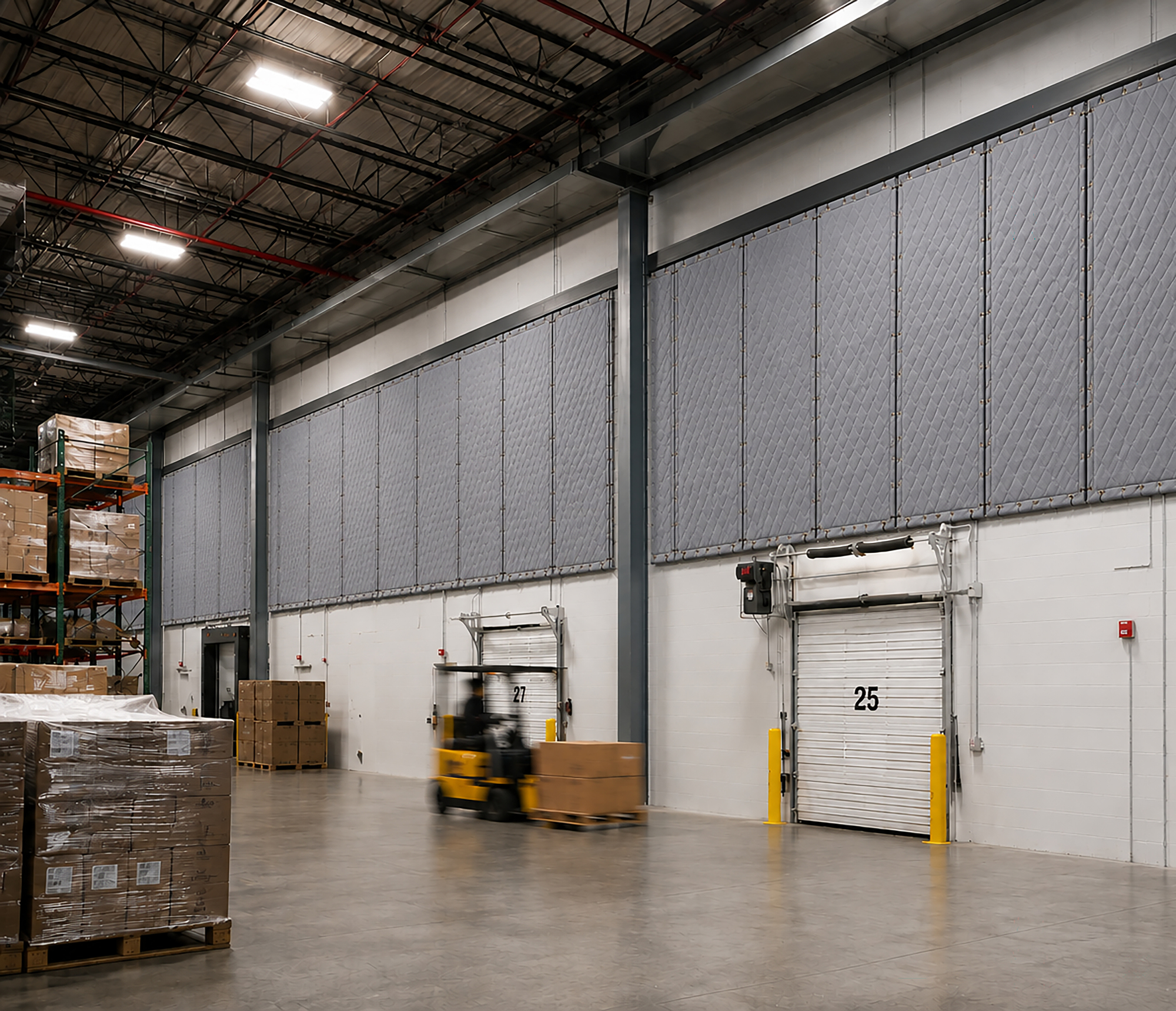
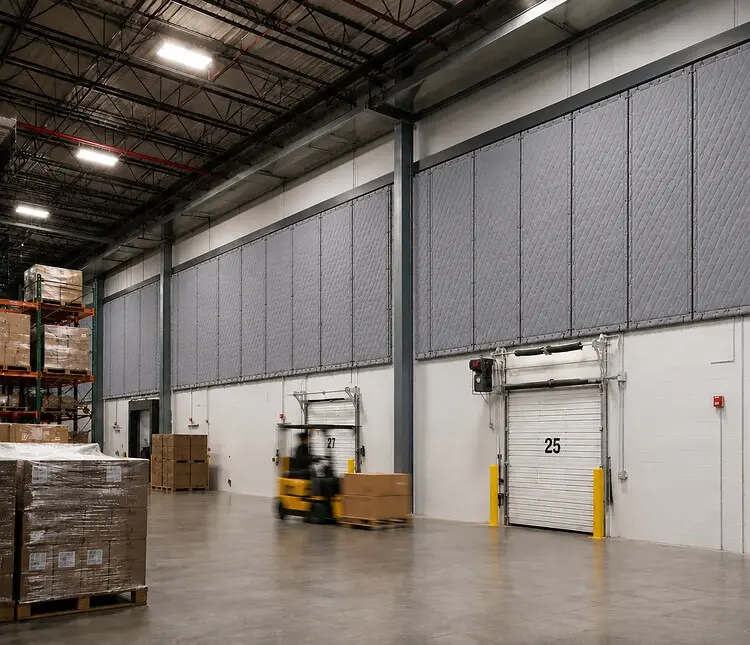
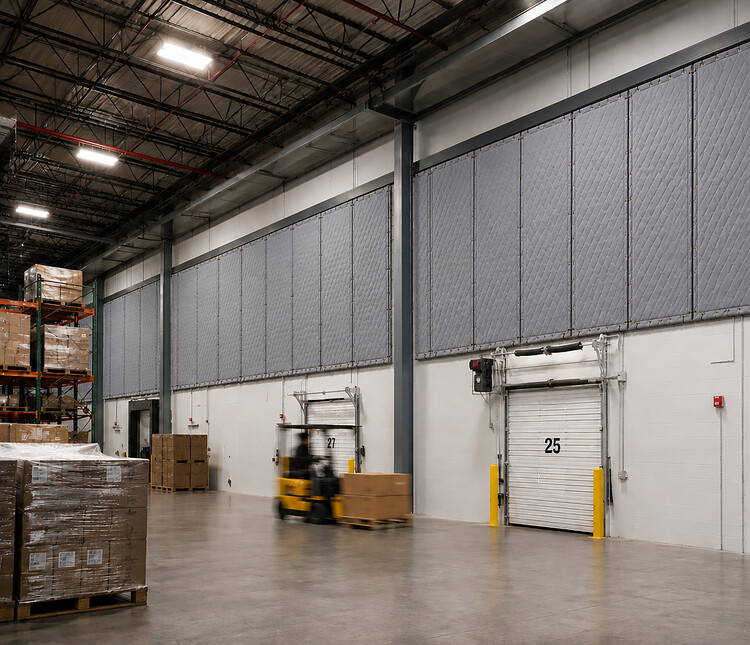
To bridge the gap between immutable building envelopes and fluid spatial requirements, architects and acoustic engineers are increasingly looking toward mobile and temporary acoustic control systems. Pioneered by industry leaders like Acoustical Surfaces, these agile solutions—including soundproof quilted curtains, modular track systems, portable partitions, and temporary acoustic blankets—act as a secondary, flexible infrastructure layer. Rather than permanently locking a layout into place, these movable systems bring targeted noise mitigation directly to the source of the sound, transforming how contemporary architecture handles temporal space utilization.
Chronology of Evolution: From Static Barriers to Fluid Environments
The trajectory of acoustic design has moved through distinct evolutionary phases, driven heavily by changes in industrial manufacturing, urban density, and the rise of flexible, multipurpose workspaces.
- The Mid-20th Century (The Era of Permanence): For decades, sound control was strictly an architectural afterthought or a heavy engineering fix. Factories erected masonry partition walls to isolate roaring machinery, while recording studios and commercial offices relied on permanent wood-stud frames layered with thick drywall and specialized fiberglass insulation. Once built, these barriers could only be altered through costly, disruptive demolition and reconstruction.
- The Late 20th Century (The Rise of Modular Workspaces): As open-plan offices gained popularity in the 1970s and 80s, the need for spatial adaptability clashed directly with acoustic comfort. Early attempts at flexibility resulted in flimsy office cubicles that offered visual privacy but catastrophically failed at sound attenuation, creating the notoriously loud corporate landscapes of the era.
- The Early 2000s (Industrial and Studio Adaptability): Industrial facilities and creative studios began demanding better localized noise control. Heavy machinery could not easily be housed in static rooms because production workflows changed seasonally. This drove the initial engineering of heavy-duty hanging vinyl barriers and specialized industrial curtains that could contain localized noise without halting operations.
- The Present Day (Integrated Dynamic Architecture – 2026): Today, acoustic control is recognized as a variable, ongoing strategy rather than a one-time construction milestone. Modern architectural projects integrate track systems, interlocking modular screens, and high-performance quilted curtains straight out of the blueprint phase, allowing spaces to morph acoustically on demand. Studios, corporate offices, and industrial hubs now treat acoustics as a living layer of infrastructure that moves alongside human routines and machinery updates.
Supporting Data and Technical Mechanics
Achieving high-performance acoustics without rigid construction requires sophisticated material science. Portable acoustic products must bridge the paradox of being lightweight and easily deployable while matching the Sound Transmission Class (STC) ratings of conventional permanent walls.
1. Mass-Loaded Vinyl (MLV) and Quilted Cores
At the heart of advanced mobile systems—such as Acoustical Surfaces’ Indoor Soundproof Quilted Acoustic Curtains—is a dense mass-loaded vinyl core. Available in high-performance densities ranging from 1 to 2 pounds per square foot, MLV provides the dead weight necessary to stop sound transmission dead in its tracks. This dense core is sandwiched between layers of durable, quilted, sound-absorbing fiberglass or specialized textile materials, capturing airborne sound waves on both sides rather than simply bouncing them back into the room.
2. Quantitative Performance Metrics
- STC Ratings: Systems like the STOP-25 fiberglass quilted curtain panels achieve a Sound Transmission Coefficient (STC) rating of 26, effectively dampening mid-to-high frequency speech and operational noise.
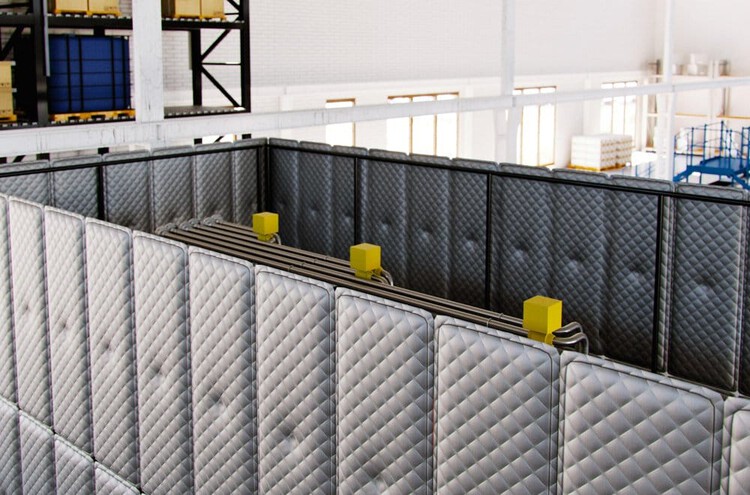
- Equivalent Wall Performance: Specialized portable floor-standing screens (such as the BSC-25 series, utilizing a 1-inch black steel tube frame and a 1/8-inch high-density vinyl core) deliver acoustic sound-blocking capabilities directly comparable to a traditional 2-by-4-inch wood-stud wall finished with drywall on both sides.
- Durability and Environmental Resilience: Designed for harsh industrial environments, these systems frequently feature water- and chemical-resistant exterior facings, ensuring they withstand heavy factory washdowns, moisture, and rigorous daily repositioning.
Case Studies & Real-World Implementations
To understand how flexible acoustics operate in practice, industry applications highlight two starkly different environments utilizing modular solutions from Acoustical Surfaces:
Case Study A: Open Shop Studio – Spatial Fluidity
At Open Shop Studio, designers required an environment that could transition seamlessly from a massive open-plan creative workshop to multiple isolated production rooms and back again.
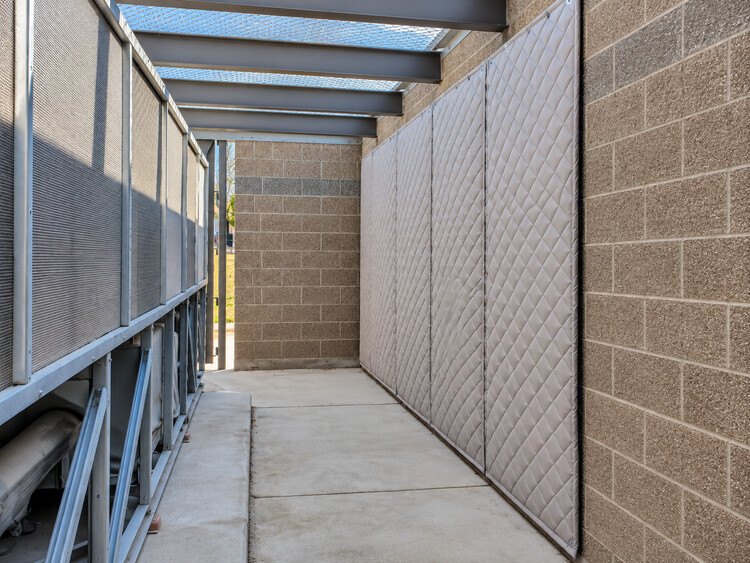
- The Solution: The studio installed Acoustical Surfaces’ STOP-25 fiberglass quilted curtain panels suspended from an overhead track system.
- The Mechanism: The panels feature vertical Velcro seams that interlock securely, creating a continuous, sound-absorbent acoustic wall.
- The Result: Users can effortlessly slide, open, or compartmentalize the space within minutes. The studio gains the acoustic separation of permanent walls when recording or working on loud projects, yet can instantly retract the system to restore a sweeping open-plan floor layout.
Case Study B: Zamboni’s Office – Temporary Privacy Solutions
In modern corporate environments, fixed spatial changes are often prohibited by lease agreements, tight budgets, or rapidly fluctuating team sizes. At Zamboni’s office, optimizing workflow required targeted acoustic barriers between collaborative and quiet zones, but permanent construction was entirely out of the question.
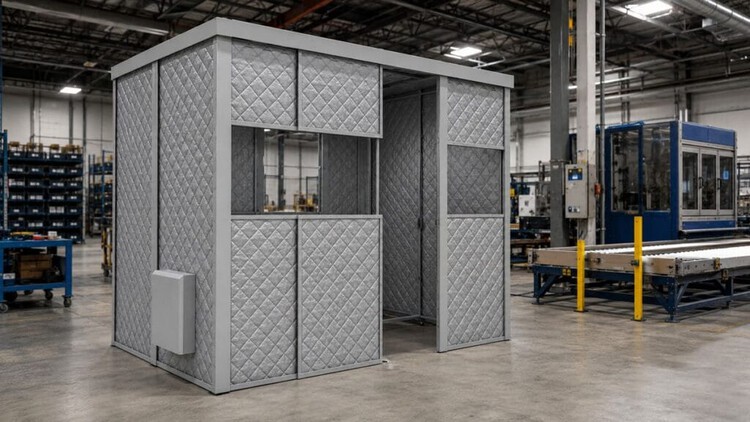
- The Solution: The office deployed BSC-25 quilted acoustic curtains integrated into a self-supporting floor-standing frame made of 1-inch black steel tubes.
- The Mechanism: The curtains feature overlapping material flaps that extend past the metal frame, ensuring that adjacent panels lock together seamlessly to eliminate acoustic leakage gaps.
- The Result: The firm achieved the acoustic isolation of a conventional drywall partition with zero permanent alterations to the building envelope. When office layouts change or teams relocate, the barriers can be easily disassembled, moved, and reinstalled.
Implications for the Future of Architecture and Design
The shift toward mobile acoustic control forces a fundamental rethinking of architectural philosophy. For centuries, buildings have been treated as static containers—rigid shells designed to lock environments into permanent configurations. However, the realities of the modern economy—characterized by agile manufacturing, hybrid workspaces, and rapidly shifting programmatic needs—demand a more responsive built environment.
1. Decoupling Program from Structure
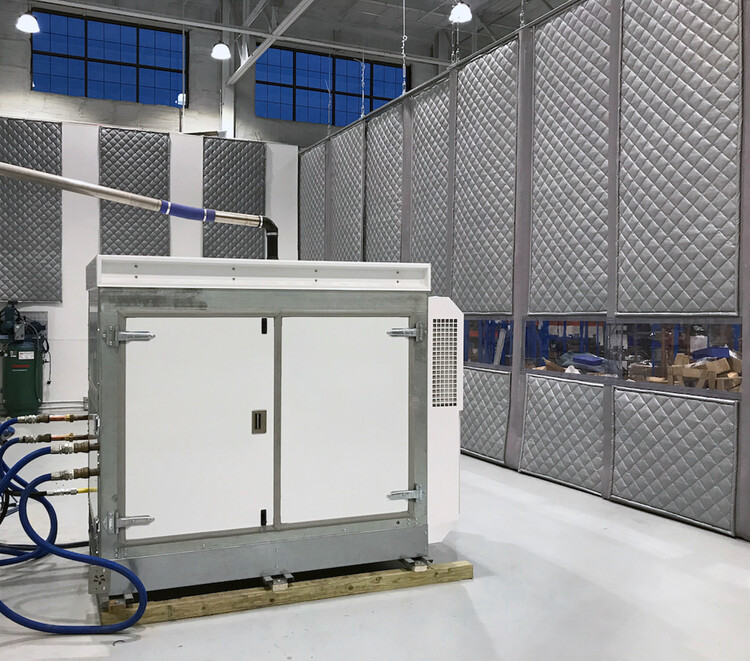
By treating acoustic performance as a mobile infrastructure layer rather than a fixed architectural constraint, architects can design spaces that outlast their original intended uses. A warehouse can temporarily transform into a high-precision manufacturing zone and later revert to a logistics hub without a single sledgehammer touching a wall.
2. Sustainability and Material Efficiency
Permanent interior construction generates massive amounts of demolition waste whenever a layout fails to meet changing tenant demands. Portable acoustic blankets, modular screens, and track-mounted curtains are inherently reusable. They drastically reduce lifecycle carbon footprints by allowing spaces to adapt spatially and acoustically through reconfiguration rather than replacement.
3. Human Well-being and Environmental Control
Noise pollution is a documented hazard to human health, productivity, and mental well-being across offices, schools, and industrial sites. By bringing agile, targeted sound control directly to the source of disruption, organizations can foster healthier, more adaptable environments that prioritize human comfort without sacrificing operational flexibility.
Ultimately, when acoustic control learns how to move, architecture ceases to be a static barrier against the world. Instead, it becomes a dynamic, living strategy capable of dancing in rhythm with the changing needs of the people who inhabit it.
