

By Andrew Liszewski
Senior Technology Reporter
Introduction
Amazon has once again pushed the boundaries of the smart home ecosystem with a major hardware announcement. Leading the charge is the newly unveiled Ring Smart Lock, a device that finally solves one of the most persistent vulnerabilities of keyless entry: dead-battery lockouts.
Departing from the industry standard of hidden USB ports or emergency 9-volt battery terminals, Amazon’s latest security offering incorporates a hand-cranked internal charging mechanism right into the thumb-turn dial. Alongside the lock, Amazon has expanded its ecosystem with a robust suite of high-resolution security products, including its first-ever indoor “Retinal Vision 4K” camera and a versatile 2K Pan-Tilt model.
Main Facts: What You Need to Know
The upcoming Ring ecosystem expansion introduces a mix of innovative mechanical engineering and cutting-edge optical technology. Here are the core facts regarding Amazon’s latest hardware drops:

- The Ring Smart Lock ($249): Scheduled for an early 2027 release in the US (pending FCC approval), this smart lock completely eliminates the physical backup keyhole. If the rechargeable battery dies while you are away, "a few turns" of the thumb-turn dial mechanically generates enough juice to power the lock for entry.
- Access Control: The lock features a fingerprint reader, a backlit touchscreen keypad, temporary access codes, multi-user scheduling, and integration with the Ring app and Alexa voice commands.
- Connectivity: Instead of draining home Wi-Fi bandwidth, the lock connects to Amazon Sidewalk, a low-power, long-range network ensuring reliable updates and remote access even during internet outages.
- Power Source: It utilizes Ring’s signature Quick Release Ultra Battery Pack, requiring no complicated household wiring for installation. It will be available in black, silver, and brass finishes.
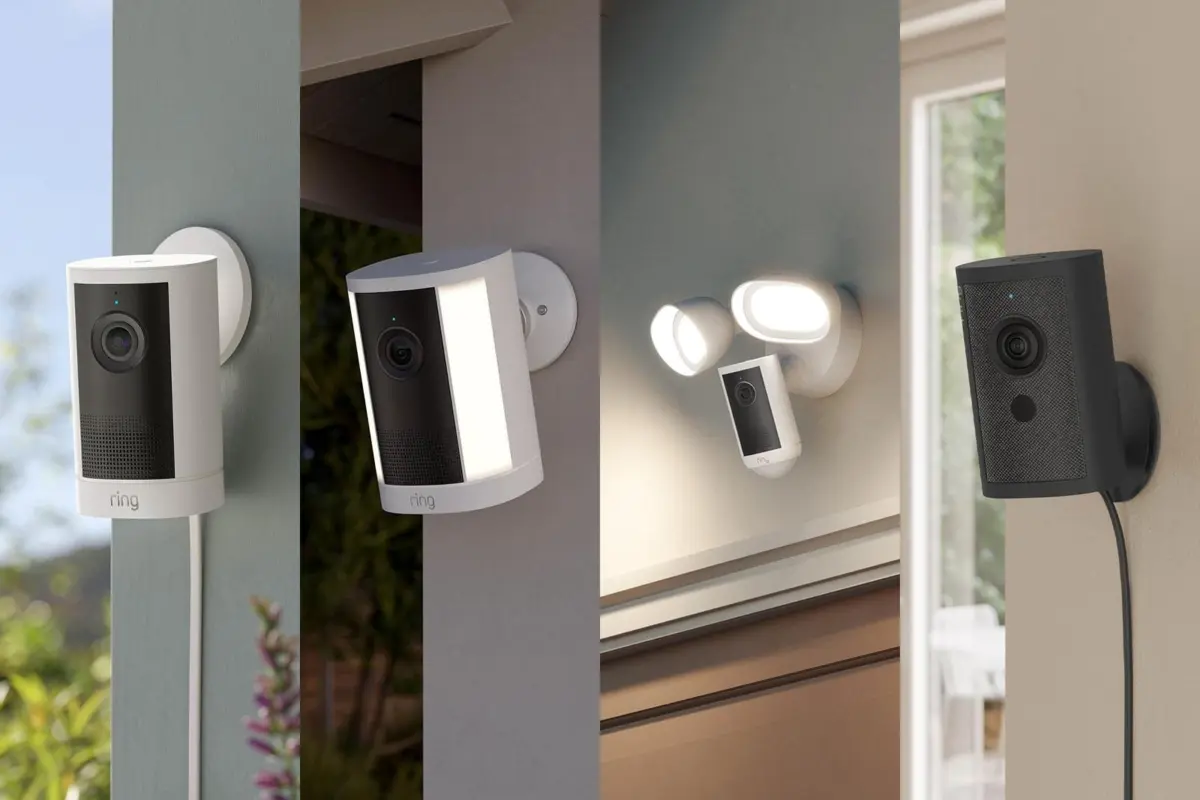
- New Camera Lineup: Amazon has expanded its "Retinal Vision 4K" camera series, introducing the Outdoor Cam 4K Plus ($149.99), Spotlight Cam 4K Plus ($199.99), Floodlight Cam 4K Plus ($219.99), and the brand-new $99.99 Indoor Cam 4K.
- Budget Option: The $69.99 Ring Pan-Tilt Indoor Cam 2K also debuts with computer vision subject-tracking and a physical privacy shutter.
Chronology: The Evolution of Ring’s Smart Home Integration
To understand the significance of the Ring Smart Lock, it helps to look at how smart lock technology has evolved over the past decade:
- The Early Era (2015–2018): Early smart locks focused primarily on retrofitting deadbolts or offering rudimentary Bluetooth and Wi-Fi connectivity. When batteries failed, users were forced to carry physical keys or resort to temporary fixes like applying a 9-volt battery to exterior contact points.
- The Connected Ecosystem Phase (2019–2023): Companies began integrating smart locks deeper into home ecosystems. Amazon acquired Ring, weaving video doorbells and security cameras into a unified app. However, battery anxiety and Wi-Fi dropouts remained a persistent headache for consumers.
- The Infrastructure Shift (2023–2025): Amazon rolled out infrastructure projects like the Sidewalk network, laying the groundwork for low-power, wide-area smart home device communication. Meanwhile, high-resolution sensors began trickling down from professional security gear into consumer hardware.
- The 2026–2027 Horizon: Amazon announces its unified hardware push, highlighted by the Retinal Vision 4K camera expansion and the keyless, self-charging Ring Smart Lock—marking a major pivot toward self-sustaining, hyper-connected smart home appliances.
Supporting Data & Hardware Breakdown
A deeper look at the specs reveals how Amazon is attempting to justify the price tags on its new ecosystem components:
Ring Smart Lock Specifications
- Price: $249
- Expected Launch: Early 2027 (US market, FCC pending)
- Finishes: Black, Silver, Brass
- Authentication: Fingerprint reader, backlit touchscreen, mobile app, Alexa voice control
- Emergency Power: Built-in micro-generator inside the thumb-turn dial
- Network Protocol: Amazon Sidewalk (low-power, long-range wireless)
The New Camera Ecosystem
Amazon’s security camera updates cater to every tier of consumer need, from budget-conscious indoor monitoring to high-end exterior surveillance:
- Ring Indoor Cam 4K ($99.99 – Available Now): Boasts a 115-degree field of view and features a mechanical privacy shutter that physically blocks both the lens and the microphone when privacy is requested.
- Ring Outdoor Cam 4K Plus ($149.99 – Preorder): Available in multiple deployment formats including battery-powered, wired, solar, and Power-over-Ethernet (PoE).
- Ring Spotlight Cam 4K Plus ($199.99 – Preorder): Features a 550-lumen active deterrent light to ward off trespassers.
- Ring Floodlight Cam 4K Plus ($219.99 – Preorder): Designed for large open perimeters, offering 24/7 continuous recording paired with advanced smart-subject detection.
- Ring Pan-Tilt Indoor Cam 2K ($69.99 – Available Now): Uses computer vision to actively track subjects (such as pets) across a full 360-degree rotation and a 175-degree tilt range.
Official Responses and Strategic Intent
While Amazon has historically kept proprietary engineering details under wraps, industry analysts have pointed out the distinct strategic direction of these releases. By relying on Amazon Sidewalk, Amazon is actively solving the reliability paradox of smart home devices: when your internet goes down, your smart home shouldn’t stop working.

Furthermore, the introduction of the manual self-charging thumb-turn addresses a primary friction point identified in consumer feedback. In official press disclosures, Amazon representatives emphasized user independence and fail-safe operation. By eliminating the physical keyhole entirely, the company is betting that consumers trust digital biometrics and mechanical redundancies enough to abandon traditional metallurgy.
Regarding privacy concerns—a historical hurdle for Ring products—the inclusion of physical shutters on both the 4K and 2K indoor cameras serves as a direct olive branch to privacy-conscious buyers, ensuring that software glitches or hacking attempts cannot compromise private indoor spaces when the shutter is manually or digitally engaged.
Implications: What This Means for the Smart Home Market
The launch of the Ring Smart Lock and the broader 4K camera suite carries significant ramifications for the consumer electronics landscape:
1. The Death of the Backup Key?
For decades, the physical key has been the ultimate security blanket for homeowners transitioning to smart locks. If Amazon’s thumb-turn power generation proves reliable in real-world conditions, it could pave the way for a complete industry redesign. Other manufacturers may abandon traditional key cylinders altogether, reducing mechanical vulnerability points that burglars can exploit.

2. Deepening the Amazon Sidewalk Ecosystem
By utilizing Sidewalk instead of local Wi-Fi, Amazon is quietly reinforcing its proprietary mesh network. Devices connected via Sidewalk operate independently of home routers, reducing network congestion and maintaining security loops even during severe internet outages. This makes the entire Ring ecosystem more resilient, but also anchors users deeper into Amazon’s proprietary walled garden.
3. Raising the Resolution Bar
The push for "Retinal Vision 4K" in consumer security cameras changes expectations for digital forensics. While 1080p used to be the industry standard for identifying intruders, widespread 4K adoption—coupled with smart subject detection—will make facial and detail recognition significantly sharper, assisting law enforcement and providing homeowners with crystal-clear evidentiary footage.
Conclusion
Amazon’s latest hardware expansion demonstrates a mature approach to smart home design. By addressing mechanical anxieties (like dead locks) with clever physics, and privacy concerns with physical lens shutters, the company is actively refining the user experience. As these products roll out through 2027, they promise to make connected security more reliable, higher-resolution, and fundamentally more resilient than ever before.
