

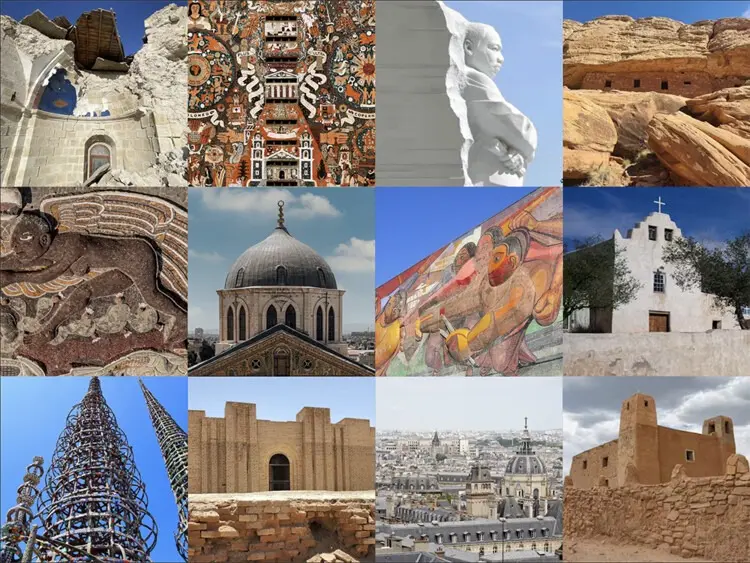
New York, NY — Against a turbulent backdrop defined by escalating climate extremes, geopolitical fragmentation, rapid urbanization, and the disruptive ascent of artificial intelligence, the international cultural heritage community is converging on New York City for the 2026 World Monuments Summit.
Organized annually by the World Monuments Fund (WMF), this year’s premier flagship forum arrives with an existential and urgent question: In a world undergoing radical transformation, what is truly irreplaceable, and what do we collectively owe one another to protect it?
Held every October in New York alongside the prestigious Hadrian Gala, the Summit has evolved far beyond a conventional gathering of preservationists, historians, and architects. It has become a vital geopolitical and cultural roundtable where leaders deliberate on how the stewardship of the past is not merely an act of backward-looking nostalgia, but a fundamental prerequisite for community resilience, climate adaptation, and human survival in the 21st century.
1. Main Facts: The Core of the 2026 Summit
The 2026 World Monuments Summit serves as the foremost global forum for examining the intersection of heritage preservation and modern crisis management.
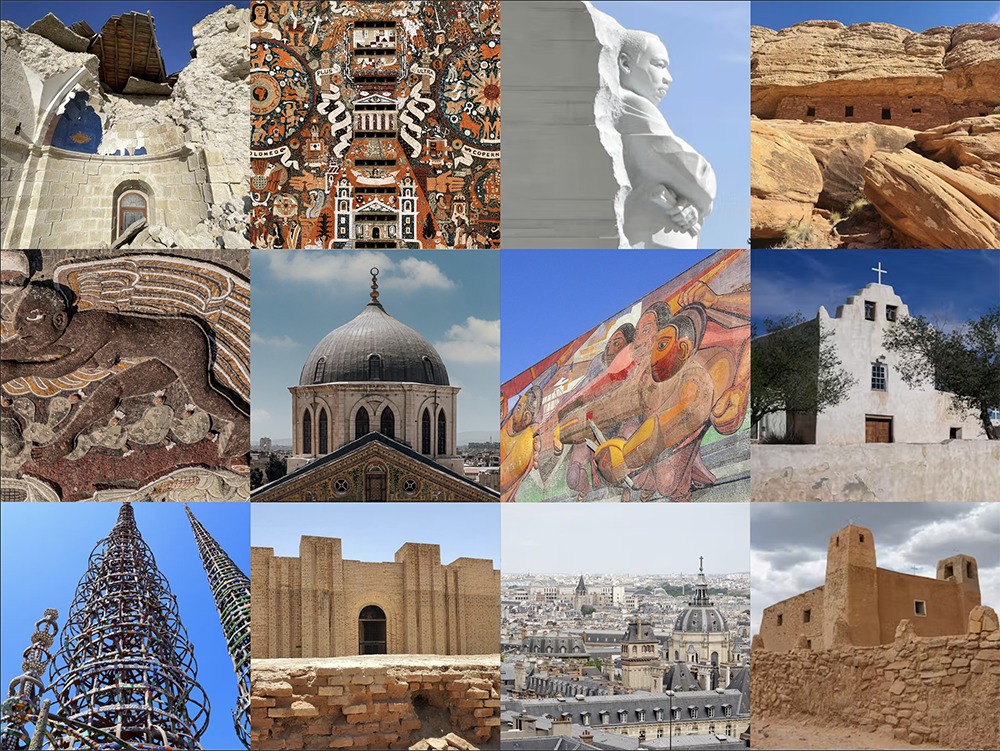
- The Organizer: The World Monuments Fund (WMF), the leading private, international organization dedicated to saving endangered cultural heritage sites around the globe through fieldwork, advocacy, grant-making, and community engagement.
- The Venue & Timing: Convening annually in New York City every October, the multi-day event coincides with the organization’s high-profile Hadrian Gala, drawing international philanthropists, architects, policymakers, and cultural stewards.
- The Core Theme: The 2026 edition centers on navigating systemic global disruptions—specifically armed conflict, climate change, runaway urban development, and technological shifts like AI—and redefining heritage conservation as a proactive engine for future renewal rather than static protection.
- The Fundamental Inquiry: The conference pivots around a philosophical and practical challenge: identifying what constitutes the irreplaceable fabric of human history and evaluating the ethical obligations of the global community to defend it in an era of cascading crises.
2. Chronology: The Evolution of the World Monuments Summit
To understand the weight of the 2026 Summit, it is essential to trace how the dialogue surrounding cultural preservation has shifted over the decades from elitist artifact protection to a holistic, community-centered discipline.
Mid-to-Late 20th Century: The Birth of Emergency Preservation
- 1965: The World Monuments Fund is founded in response to the growing realization that international treasures—particularly in post-war Europe and developing nations—were disappearing at an alarming rate due to neglect, modernization, and lack of resources.
- 1996: WMF launches its flagship World Monuments Watch, a biennial program that uses the power of publicity and targeted funding to bring global attention to cultural heritage sites at risk from natural and man-made forces.
Early 21st Century: Expanding the Scope
- 2010s: The summit format solidifies in New York, shifting from isolated project reports to a comprehensive global forum. Preservation begins to intersect heavily with sustainable tourism, local economic development, and post-disaster recovery.
- Mid-2010s to 2020s: As conflicts in the Middle East and North Africa intentionally target ancient heritage (such as Palmyra and Mosul) as a weapon of cultural erasure, WMF and its summits elevate heritage protection to a matter of international human rights and security.
The 2020s: The Era of Planetary Crisis
- 2023–2025: The focus sharply pivots to climate change as rising sea levels, unprecedented wildfires, and catastrophic flooding threaten coastal monuments, indigenous settlements, and historic landscapes worldwide.
- October 2026: The World Monuments Summit convenes in New York to address the compounding pressures of the current decade. For the first time, artificial intelligence and automated urban planning are brought to the forefront alongside climate and conflict, marking a new phase in how human history is both documented, threatened, and defended.
3. Supporting Data: The Scale of Contemporary Threats
The urgency driving the 2026 World Monuments Summit is backed by sobering empirical data concerning the state of our global cultural commons.
- Climate Vulnerability: According to international environmental datasets cited by heritage organizations, over 30% of UNESCO World Heritage cultural sites and thousands of non-designated local monuments are currently under severe threat from climate-induced hazards, including coastal erosion, extreme precipitation, and desertification.
- Urbanization Pressures: Global urban populations are expanding by approximately 68 million people annually. This rapid, often unregulated urban sprawl routinely bulldozes historical neighborhoods, indigenous community spaces, and vernacular architecture in the Global South and North alike.
- Conflict and Cultural Erasure: Recent geopolitical flashpoints across Eastern Europe, the Middle East, and parts of Africa have demonstrated a renewed weaponization of history. Hundreds of museums, religious structures, and archaeological archives have been damaged or obliterated, creating unprecedented refugee crises of displaced cultural memory.
- Digital Disruption: While AI and advanced 3D scanning offer unprecedented capabilities for archiving sites—such as those spearheaded by initiatives like the CyArk partnership—they also introduce threats like deepfake revisionism, unauthorized digital extraction of indigenous lore, and a dangerous illusion that a digital twin can substitute for physical preservation.
4. Official Perspectives and Key Voices
As panels convene and keynote addresses are delivered at the 2026 Summit, leaders from conservation, governance, and science are framing the debate around cross-disciplinary cooperation.
Redefining Preservation for a Complex World
Architects, conservation scientists, and WMF leadership have increasingly emphasized that heritage sites are not museum pieces frozen in amber; they are living ecosystems.
"When we talk about saving a monument today, we are not just preserving stone, mortar, or timber. We are securing the spatial memory of communities, testing sustainable building traditions that predate modern carbon footprints, and anchoring human dignity in a destabilized world."
— Summary of consensus from WMF policy advisors leading up to the 2026 Summit.
The Ethical Burden of Global Solidarity
A central debate at the 2026 forum centers on the distribution of resources. As climate catastrophes strike regions with the fewest economic buffers—often the very regions that contributed least to global carbon emissions—speakers have challenged wealthy nations and philanthropic bodies to reevaluate their funding models. The prevailing sentiment is that heritage protection cannot remain a luxury good reserved for stable, affluent economies; it must be treated as an essential component of international humanitarian aid and climate justice.
Furthermore, indigenous leaders and local community representatives speaking at the Summit have demanded greater autonomy in decision-making. For decades, preservation projects were frequently dictated by foreign experts. The 2026 agenda heavily spotlights community-led conservation, ensuring that those who live alongside monuments hold the primary authority over their futures.
5. Implications: What the 2026 Summit Means for the Future
The outcomes, declarations, and strategic partnerships forged during the 2026 World Monuments Summit will reverberate far beyond the conference halls in New York, shaping global policy, architectural practice, and cultural funding for the coming decade.

1. Integration of Heritage into Climate Policy
The Summit is expected to accelerate the inclusion of cultural heritage into formal international climate frameworks, such as the United Nations Framework Convention on Climate Change (UNFCCC) COPs. By demonstrating that historic buildings embody "embodied carbon" and offer time-tested vernacular strategies for passive cooling and flood resilience, the preservation community is positioning itself as a vital partner in green architecture.
2. Ethical Guidelines for AI in Conservation
With artificial intelligence playing an increasingly dominant role in site mapping, predictive risk analysis, and virtual reconstruction, the Summit serves as a critical sounding board for establishing ethical guardrails. Discussions focus on preventing the cultural appropriation of indigenous designs through generative AI, ensuring data sovereignty for local communities, and maintaining a strict distinction between digital documentation and physical restoration.
3. A Shift Toward Proactive Preparedness
Historically, heritage funding has been reactive—rushing to stabilize monuments after an earthquake, bomb blast, or flood. The 2026 Summit heavily champions a shift toward predictive risk mitigation. By leveraging satellite telemetry, climate modeling, and grassroots early-warning networks, WMF and its partners are striving to build a global shield that protects vulnerable sites before disaster strikes.
Conclusion
As the 2026 World Monuments Summit draws its sessions to a close, the underlying message remains stark yet hopeful. The convergence of modern crises threatens to sever humanity’s tether to its collective past. Yet, as the discussions in New York have underscored, the act of fighting for what is irreplaceable is ultimately an act of faith in the future. By recognizing that the protection of cultural heritage is intertwined with climate action, human rights, and social justice, the global community is reminded that what we choose to save today will define who we are tomorrow.
