


By the Home Maintenance & Investigative Desk
Published: November 2026
Main Facts: The Hidden Dangers on Your Window Sills
At first glance, it is one of the most satisfying domestic chores: grabbing a roll of paper towels and a bottle of glass cleaner to wipe away a morning smudge, a stray speck of dust, or a mysterious cloudiness on a windowpane. For many homeowners, a clean window is the ultimate symbol of a tidy, well-maintained household.
However, home maintenance professionals are issuing a surprising warning: sometimes, it is far better to leave a mess alone.
Wiping away mysterious markings, damp spots, and "dirt" from window glass, sills, and frames can inadvertently erase the early warning signs of severe underlying structural issues. Rather than solving a problem, a quick wipe with a rag can conceal active water leaks, failing window seals, wood rot, and aggressive insect infestations.
To help homeowners catch hidden property damage before it escalates into thousands of dollars in emergency repairs, we consulted a panel of home inspectors, contractors, and pest control authorities. They have identified five critical visual cues around windows that should never be scrubbed away without investigation.
Chronology: How Minor Window Quirks Morph Into Catastrophic Failures
Understanding how a window issue evolves from a minor inconvenience into a major structural disaster underscores why immediate cleaning can be dangerous.
- Stage 1: The Initial Trigger (Months 0–3)
An environmental or structural catalyst occurs. This could be a sudden shift in indoor relative humidity, an improperly installed piece of exterior flashing, or a microscopic compromise in an insulated glass unit’s thermal seal. Alternatively, wood-boring insects scout the exterior trim for moisture-softened cellulose. - Stage 2: The First Manifestation (Months 3–6)
The window displays its first symptom: a light morning condensation ring, a faint cloudy haze between the panes, a tiny trickle of water after a heavy downpour, or a microscopic pile of frass (insect droppings) resembling sawdust. - Stage 3: The Premature Clean (The Critical Mistake)
The homeowner spots the anomaly during a routine cleaning session. Irritated by the blemish, they grab a sponge, spray, and cloth. The visual evidence is erased. Satisfied that the problem is solved, the homeowner moves on. - Stage 4: Silent Amplification (Months 6–12)
Unchecked by the homeowner, the root cause deepens. Moisture trapped inside the wall cavity begins to soften drywall and rot structural framing studs. Insect colonies expand exponentially inside the window frame. Thermal seals completely rupture, allowing moisture to permanently etch the interior of the glass panes. - Stage 5: Structural Failure (Year 1 and Beyond)
The bill comes due. What could have been resolved with a minor adjustment or targeted pest treatment now requires complete window replacement, remediation of black mold, and structural framing reconstruction costing thousands of dollars.
Supporting Data & Expert Analysis: The Five Signs You Should Never Scrub Away
To protect your home’s structural integrity, industry experts break down the five specific visual markers that demand an investigation—not a washcloth.

1. Persistent Window Condensation
While a light dusting of fog on a freezing winter morning is common, chronic condensation on the interior of windows is a flashing red light.
"Condensation on the inside of windows often points to high humidity in the home," notes Constantine Anest, owner of Ethos Roofing and Restoration in Denver, Colorado. "If you don’t wipe it away, water can run down onto the frame and sill, and over time, that moisture can damage the finish and lead to mold."
When homeowners continually wipe away this moisture without addressing the source, they ignore the environment that breeds black mold (Stachybotrys chartarum) and rots wooden sills. Anest recommends keeping a hygrometer—an instrument used to measure humidity—in the home to monitor baseline moisture levels (ideally kept between 30% and 50%). If overall humidity is normal but a single window is perpetually wet, it points to localized failures, such as compromised weatherstripping or substandard original installation.
2. Piles of "Sawdust" (Frass)
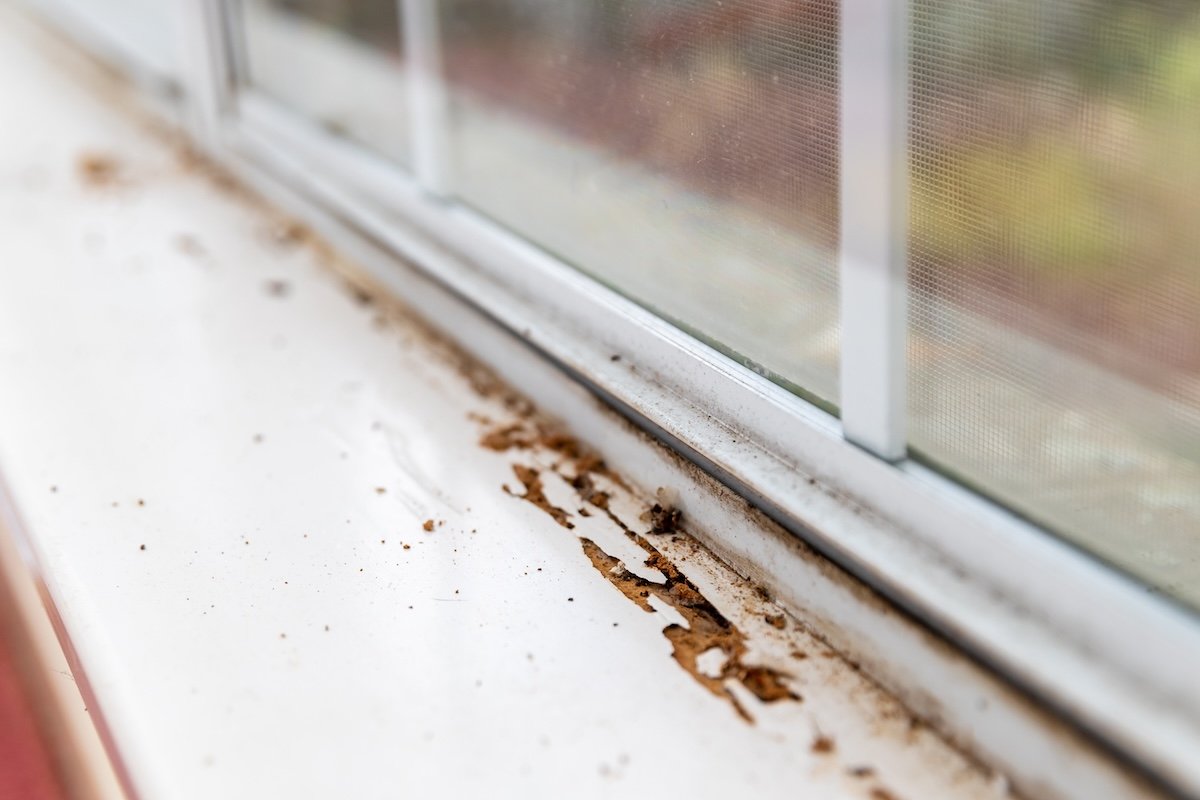
If you wipe away a small pile of fine wood particles near a window sill only to find it reappeared a few days later, you are not dealing with regular household dust.
"If small piles of sawdust keep reappearing near a window frame or sill even after you clean them up, then carpenter ants, wood-boring beetles, or even carpenter bees may be damaging the wood," warns Anest.
Wood-destroying insects push out digested wood fibers—known as frass—from their subterranean tunnels. Scrubbing the pile away offers zero deterrence to the colony chewing through your window headers. Homeowners should inspect the wood directly above the piles for tiny exit holes and immediately consult a certified exterminator to identify the species before the structural load-bearing capacity of the window frame is compromised.
3. Fog Trapped Between the Glass Panes
A smudge on the inside or outside of a window pane can easily be polished away with glass cleaner. However, if a cloudy patch persists regardless of how many times you clean both sides of the glass, the problem is internal.
"If you’ve cleaned the inside and outside of a window and that cloudy patch is still staring back at you, it’s probably between the panes," explains Corbett Proctor, owner of Window World Panama City in Panama City, Florida.
This condition occurs when the perimeter seal of an insulated glass unit (IGU) fails. Once the airtight seal breaks, ambient moisture and atmospheric gases infiltrate the space between the panes. Wiping the glass is entirely futile; the thermal efficiency of the window is permanently ruined, and the entire glass unit typically requires professional replacement.
4. Mold, Mildew, and Dark Staining Around Frames
Dark discoloration or velvety patches of mold cropping up in the corners of window frames or along the drywall below windows indicate a chronic moisture intrusion vector.
According to Anest, homeowners must differentiate between moisture caused by interior condensation running down the glass and water penetrating the building envelope from the outside. "See whether condensation is running down the glass onto those areas. If they’re wet after it rains but the glass is dry, water may be getting in where the window meets the wall," he explains.
Cleaning the mold with bleach without locating and sealing the exterior flashing or envelope leak guarantees that the infestation will return within weeks.
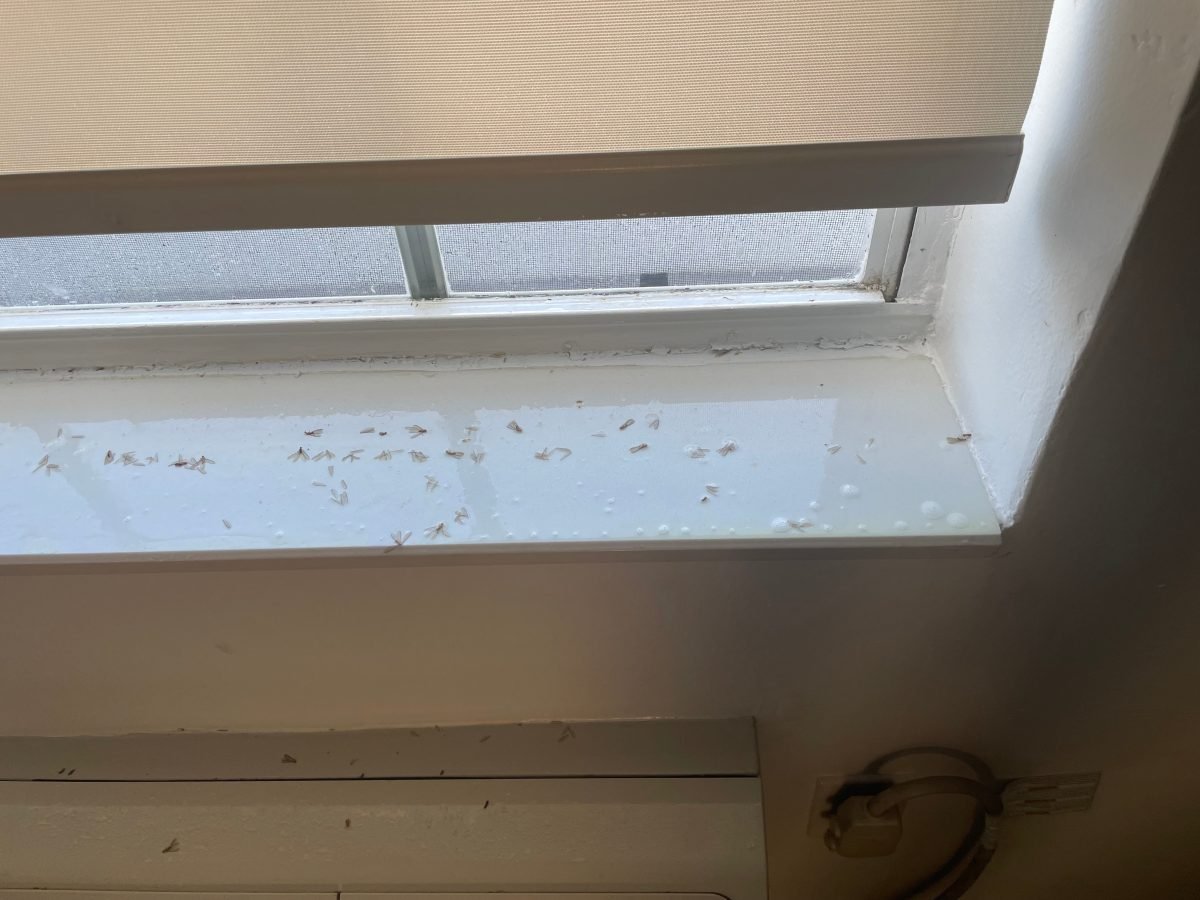
5. Insect Wings, Droppings, Egg Sacs, and Webs
Windows act as natural traps and pathways for wildlife and insects seeking shelter from the elements. Ignoring the biological debris left on window sills can mean missing the early stages of a severe house infestation.
"Many pests leave their ‘marks’ on windows, so checking windows is one of the first things to do when it comes to pest infestation," says Nicole Carpenter, pest control professional and president of Black Pest Prevention in Charlotte, North Carolina. Discarded translucent wings often signal subterranean termite swarmers looking to establish a colony, while clustered dark spots can indicate the presence of spiders, roaches, or moisture bugs.
Official Responses and Industry Guidelines
Building code officials and architectural engineers emphasize that modern windows are designed as complex building envelope systems rather than isolated sheets of glass.
The National Fenestration Rating Council (NFRC) and leading window manufacturers have increasingly stressed that warranties can be voided if homeowners fail to address underlying environmental factors—such as uncontrolled indoor humidity or structural settling—that manifest as window anomalies.
Building inspectors point out that home sale transactions frequently stall or fail during the home inspection phase precisely because sellers attempted cosmetic fixes (like painting over water-stained window trim or scrubbing away mold) without resolving the exterior flashing failures. Professional inspectors utilize thermal imaging cameras and moisture meters to look past clean surfaces, ensuring that concealed rot and insect damage cannot be masked by a clean rag.
Implications: Protecting Your Home’s Long-Term Value
The paradigm shift from "clean it immediately" to "investigate before you clean" carries profound implications for household budgeting and asset preservation.
- Financial Savings: Catching a failed window seal or a minor exterior envelope leak early saves homeowners thousands of dollars compared to waiting until rot has invaded structural wall studs and subflooring.
- Health Protection: Preventing mold colonies from establishing around damp window frames dramatically reduces indoor air quality risks, protecting family members from respiratory allergens and toxic mycotoxins.
- Pest Management: Treating an insect infestation at the window-sill stage—before workers hollow out the timber framing—prevents catastrophic structural failures that can compromise the safety of an entire room.
Ultimately, the next time you spot a strange mark, a persistent haze, or an unexplained pile of debris on your window sill, pause before reaching for the cleaning spray. Take a closer look, assess the environment, and remember that sometimes the best maintenance strategy is to let the mess talk to you.
