

SAN FRANCISCO — Apple is poised to make its most significant push into the interconnected household market in years. According to industry reports, the tech giant will officially announce its long-rumored flagship smart home device, dubbed the HomeView, at a special event this coming Tuesday.
The device, which has been a staple of Silicon Valley rumor mills for over a year under various monikers like the "HomePad," is designed to serve as the ultimate command center for Apple-powered residences. Driven by advanced artificial intelligence and deeply integrated with Siri, the HomeView aims to redefine how consumers interact with their living spaces, going head-to-head with established hardware ecosystems from Amazon and Google.
In addition to the HomeView, insider leaks indicate that Apple will use its high-profile "Welcome Home" showcase to roll out updates across its entire ambient computing ecosystem, including a next-generation Apple TV and a modernized HomePod mini. With a mid-November shipping window targeted for the hardware, Apple is setting the stage for a major holiday retail push centered entirely around the smart home.
Main Facts
The centerpiece of Tuesday’s anticipated announcements is the HomeView smart display. Powered by Apple’s high-performance A18 chip, the device is engineered to handle complex, on-device artificial intelligence tasks locally, ensuring fast response times and enhanced user privacy.
According to supply chain leaks and reporting by Bloomberg’s Mark Gurman, the HomeView will launch in two distinct physical configurations to suit different household layouts:
- The Countertop Model: Featuring a stylish metal speaker base, this version is designed for placement on kitchen islands, nightstands, or living room credenzas, doubling as a high-fidelity audio output device.
- The Wall-Mounted Model: Built with a flat, square base, this variant is tailored for seamless integration into walls, acting as a permanent household control panel for lighting, security, climate, and media.
Serving as a dedicated HomeKit hub, the HomeView will rely heavily on an upgraded, conversational version of Siri. This next-generation assistant is expected to manage complex multi-step routines, contextual home automation, and media streaming across multiple rooms.
Beyond the HomeView, Tuesday’s event is expected to yield two other major hardware refreshes:
- Apple TV Set-Top Box: Upgraded with the powerful A19 chip, promising lightning-fast navigation, enhanced gaming capabilities, and smoother AI-driven content recommendations.
- HomePod Mini: Refreshed with the S10 chip, designed to extend localized voice control, precision music playback, and ambient sensor capabilities deeper into everyday living spaces.
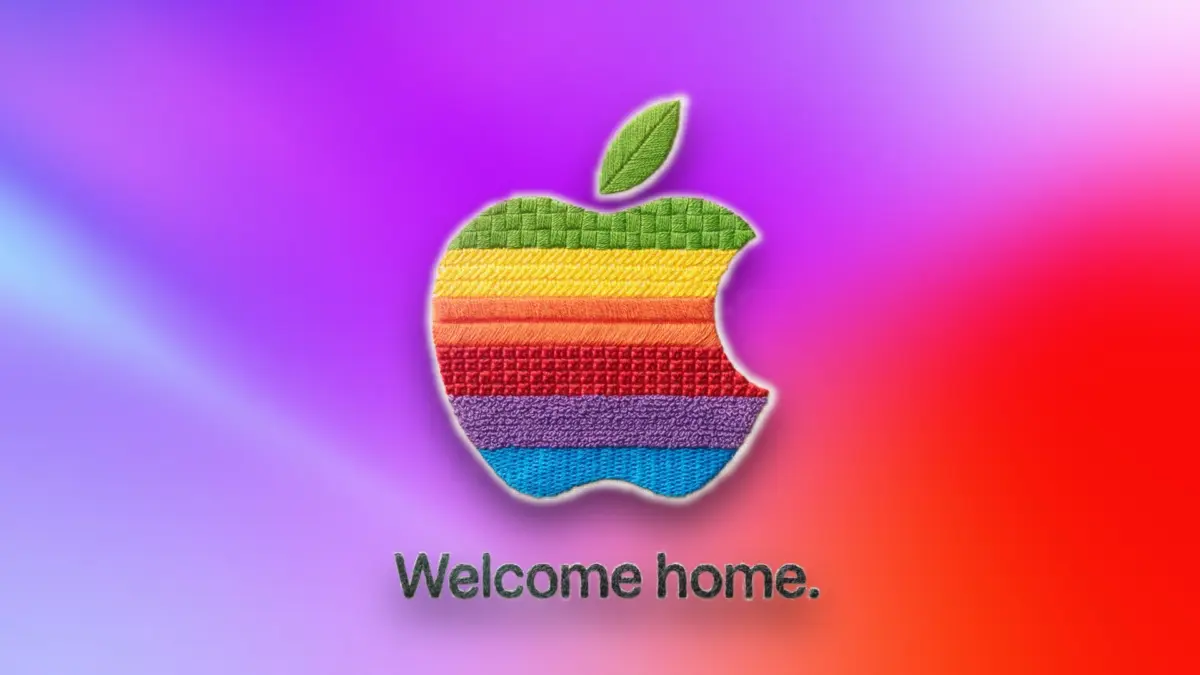
Apple distributed media invitations for the "Welcome Home" event last Thursday, featuring a distinctive, vibrant rainbow-colored Apple logo that immediately fueled speculation regarding a major hardware push. While Apple has declined to issue an official comment ahead of the keynote, retail channels are already bracing for a mid-November rollout of the HomeView and its accompanying ecosystem upgrades.
Chronology
The journey toward Apple’s upcoming smart home hardware lineup has been a protracted one, marked by shifting strategies, internal redesigns, and a growing imperative to catch up in the generative AI race.

- Late 2023 – Early 2024: Rumors begin circulating within supply chain circles that Apple is developing a low-cost, tablet-like device intended to control smart home appliances. Initial prototypes are pegged as wall-mounted panels running a stripped-down version of iPadOS.
- Mid-2024: Reports emerge indicating that Apple has pivoted its strategy to focus heavily on ambient computing and localized AI. The project is temporarily dubbed the "HomePad" internally, with engineers tasked with integrating advanced conversational AI to differentiate the hardware from legacy tablets.
- July 2026: Analysts confirm that Apple is fast-tracking a suite of home-focused hardware, noting that a new Apple TV 4K box, an updated HomePod mini, and a Siri-centric smart display are all progressing through final validation phases.
- October 11, 2026: Bloomberg’s Mark Gurman publishes a definitive report breaking down the official product name (HomeView), its dual configuration options (countertop vs. wall-mounted), its A18 processing core, and a targeted mid-November release date.
- October 15, 2026 (Thursday): Apple formally sends out media invitations for a surprise "Welcome Home" special event scheduled for Tuesday, October 13, featuring the iconic rainbow-colored Apple logo.
- October 20, 2026 (Tuesday – Upcoming): Apple’s "Welcome Home" keynote event, where the HomeView, A19 Apple TV, and S10 HomePod mini are officially unveiled to the public.
- Mid-November 2026 (Projected): Consumer shipments of the HomeView are slated to begin just ahead of the peak holiday shopping season.
Supporting Data
To fully understand the market context of Apple’s latest hardware offensive, it is necessary to examine the broader smart home landscape and the technical specifications reportedly driving the new devices.
Smart Home Display Market Share & Competitors
The smart display sector has long been dominated by two major players:
- Amazon Echo Show Line: Utilizing Alexa, Amazon’s ecosystem has successfully captured kitchen and bedroom spaces, serving as a hub for shopping, video calls, and basic smart home routines. However, Alexa has struggled to evolve rapidly in the era of generative conversational AI.
- Google Nest Hub Line: Powered by Google Assistant (and increasingly transitioning to Gemini AI), Google’s displays excel at media casting, photo frames, and contextual voice recognition, though third-party hardware integration has occasionally lagged behind Apple’s tightly controlled HomeKit framework.
Technical Architecture Overview
| Device | Processor | Primary Function | Form Factor Options | Projected Release |
|---|---|---|---|---|
| HomeView | A18 Chip | Siri AI Command Center & HomeKit Hub | Countertop (Metal Speaker Base) / Wall-Mounted (Flat Square Base) | Mid-November 2026 |
| Apple TV | A19 Chip | Media Streaming, Gaming, & Smart Home Gateway | Set-Top Box | Late 2026 / Early 2027 |
| HomePod mini | S10 Chip | Ambient Audio, Local Voice Control, Intercom | Compact Spherical Speaker | Late 2026 |
The inclusion of the A18 chip in the HomeView is particularly noteworthy. By utilizing a smartphone-grade processor rather than a low-power microcontroller, Apple is ensuring that the device has the raw computational horsepower required to execute complex machine learning models directly on the hardware. This architecture aligns with Apple’s broader privacy commitments, processing sensitive home automation data locally rather than routing every voice command through remote cloud servers.
Official Responses
As is customary for the Cupertino-based company prior to a major product launch, Apple has maintained a strict posture of corporate silence. When approached by journalists following Sunday’s leaks regarding the HomeView name, configuration details, and November ship date, corporate representatives declined to respond or provide on-the-record confirmation.
Industry analysts note that this silence is deliberate, designed to build maximum suspense for Tuesday’s keynote presentation. While supply chain partners—ranging from manufacturing facilities in Asia to retail logistics coordinators in North America—have begun preparing for the mid-November distribution wave, official marketing assets, pricing tiers, and regional availability details remain closely guarded secrets within Apple Park.
Implications
The introduction of the HomeView and its accompanying ecosystem updates carries profound implications for the consumer technology landscape, Apple’s business model, and the future of residential automation.
1. The Realignment of the Smart Home Market
For years, Apple’s HomeKit ecosystem was viewed as a secure but somewhat restrictive walled garden. While loyal consumers praised its focus on privacy and reliability, the lack of an Apple-branded central display put it at a disadvantage against ecosystems where users could readily purchase an Echo Show or Nest Hub. The arrival of the HomeView bridges this gap, providing a dedicated physical anchor for the HomeKit ecosystem and signaling Apple’s intent to dominate the connected living room.
2. The Commercialization of Ambient AI
By embedding the A18 chip into a stationary household device, Apple is redefining how users interact with artificial intelligence. Instead of tethering advanced AI solely to portable iPhones and MacBooks, Apple is making conversational computing an ambient, room-to-room experience. Whether adjusting lighting from a wall-mounted panel or asking the countertop unit to manage a multi-step evening routine, users will experience a more unified, omnipresent digital assistant.
3. Retail Strategy and the Holiday Window
Targeting a mid-November release places the HomeView squarely in the crosshairs of the lucrative holiday shopping season. By bundling the rollout with an updated Apple TV and a refreshed HomePod mini, Apple is offering a comprehensive "ecosystem pitch" to consumers looking to upgrade their home entertainment and automation setups all at once. If execution matches expectations, Tuesday’s "Welcome Home" event may well be remembered as the moment Apple successfully transformed the modern smart home.
