

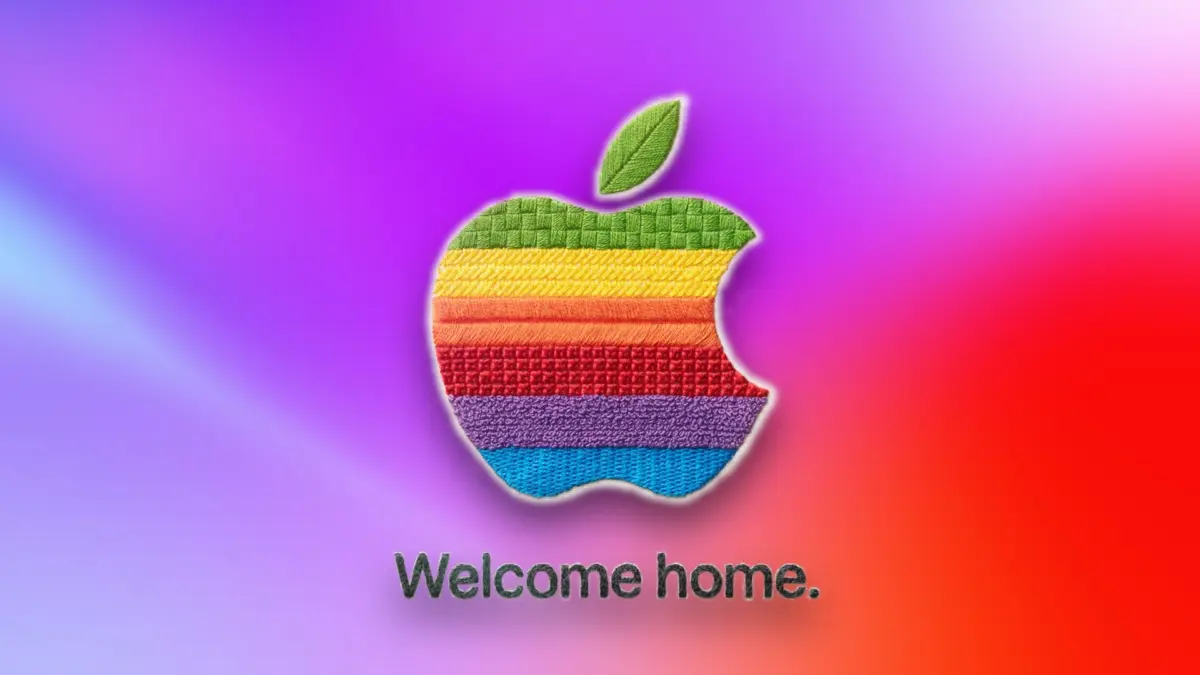
SAN FRANCISCO — Apple is poised to significantly expand its footprint in the consumer Internet of Things (IoT) market this week. According to a comprehensive report published Sunday by Bloomberg’s Mark Gurman, the Cupertino-based tech giant’s highly anticipated foray into the dedicated smart display sector will officially be named HomeView.
Set to be showcased during a special Tuesday event carrying the fitting tagline “Welcome Home,” the device will serve as the physical command center for Apple-powered smart homes, leaning heavily into advanced artificial intelligence integrations. Insiders indicate that consumers will not have to wait long to get their hands on the hardware, with the HomeView slated to hit retail shelves by mid-November.
The upcoming launch represents more than just a new product line; it marks a strategic maneuver by Apple to capture a lucrative segment of the smart home ecosystem that has long been dominated by competitors such as Amazon and Google. With a robust lineup of supporting hardware also expected to break cover this week, Apple is signaling a renewed and aggressive push into the living room and kitchen spaces.
Main Facts: What We Know About the HomeView
The centerpiece of Tuesday’s anticipated announcements is unequivocally the HomeView. For well over a year, industry analysts and tech enthusiasts have tracked rumors regarding an Apple-branded, Siri-focused smart display hub—frequently referred to in supply-chain circles by speculative names like the "HomePad."
The HomeView is designed to operate as an advanced HomeKit and Matter-compatible hub, pulling together disparate smart home devices into a unified, accessible interface. Under the hood, the device will be powered by Apple’s A18 chip, a processor robust enough to handle demanding on-device machine learning tasks and fluid graphical user interfaces.
According to Gurman’s reporting, Apple plans to release the HomeView in two distinct form factors to accommodate varied consumer living spaces:
- The Countertop Model: This version features an integrated metal speaker base designed to sit stably on kitchen islands, desks, or nightstands, doubling as a high-fidelity audio playback device.
- The Wall-Mounted Version: Engineered for centralized placement in hallways or living areas, this iteration utilizes a flat, square base optimized for flush mounting on interior walls.
Both models will heavily prioritize Siri AI, acting as conversational command centers capable of managing household lighting, security cameras, thermostats, and entertainment systems through voice prompts and touch interactions.
Chronology: The Long Road to Apple’s Smart Display Hub
The journey toward Tuesday’s “Welcome Home” event has been years in the making, defined by iterative software updates, hardware testing, and shifting consumer expectations regarding ambient computing.
- Late 2022 to 2023 — Laying the Software Foundation: Apple systematically upgraded its HomeKit architecture, introduced foundational machine learning frameworks, and refined Siri’s contextual awareness across iOS and tvOS. Rumors began to leak regarding internal prototypes of wall-mounted display hardware.
- Mid-2024 — Supply Chain Whispers Intensify: Reports from key Asian manufacturing hubs suggested that Apple was actively developing custom operating systems tailored specifically for a wall-mounted home companion device, distinct from iPadOS.
- Late 2025 — The AI Pivot: With the rollout of broader AI initiatives, Apple reportedly adjusted its product roadmap to ensure its smart home hub would feature advanced, on-device intelligence capable of competing with generative AI features seen in rival ecosystems.
- Thursday, October 11, 2026 — The Invitations Go Out: Apple officially mailed out media invites for a surprise “Welcome Home” special event scheduled for Tuesday, October 13. The invites featured a striking, retro-inspired rainbow-colored Apple logo, immediately sparking speculation of a major smart home hardware offensive.
- Sunday, October 13, 2026 — Bloomberg Report Drops: Mark Gurman published insider details confirming the moniker "HomeView," detailing the A18 chip architecture, the dual form-factor strategy, and a mid-November shipping timeline.
- Tuesday, October 15, 2026 — The Unveiling: Apple is scheduled to officially reveal the HomeView, alongside complementary ecosystem updates, during its broadcast event.
Supporting Data: Ecosystem Updates and Hardware Lineup
While the HomeView will undoubtedly command the lion’s share of attention, Apple is not approaching this launch in isolation. The company is expected to update adjacent product lines to ensure seamless integration across the entire household.
The New Apple TV (A19 Chip)
Alongside the HomeView, Apple is widely expected to unveil a refreshed Apple TV set-top box. Rumored to be powered by the cutting-edge A19 chip, this streaming device will likely offer enhanced performance for spatial audio, high-end gaming via Apple Arcade, and lightning-fast navigation through tvOS. Given the Apple TV’s historical role as a foundational HomeKit hub, the A19-powered box will serve as the high-performance entertainment anchor complementing the HomeView’s interactive display capabilities.

The Updated HomePod mini (S10 Chip)
Audio saturation remains a core tenet of Apple’s home strategy. An updated HomePod mini, featuring the new S10 chip, is slated for announcement. This compact smart speaker will extend voice control, intercom functionality, and seamless music handoff deeper into bedrooms, offices, and auxiliary spaces. With the S10 chip, users can anticipate improved computational audio processing and more reliable, responsive Siri interactions on smaller endpoints.
Market Positioning and Hardware Ecosystem Speculation
| Device | Core Processor | Primary Form Factor | Target Release | Competitive Analog |
|---|---|---|---|---|
| HomeView (Countertop) | A18 Chip | Display with Metal Speaker Base | Mid-November 2026 | Amazon Echo Show 10 / Google Nest Hub Max |
| HomeView (Wall-Mounted) | A18 Chip | Flat, Square Base for Walls | Mid-November 2026 | Dedicated Wall Panels / Control4 Interfaces |
| Apple TV Set-Top Box | A19 Chip | Compact Media Box | Late 2026 / Q4 | Roku Ultra / Amazon Fire Cube |
| HomePod mini (Refresh) | S10 Chip | Spherical Audio Speaker | Late 2026 / Q4 | Amazon Echo Dot / Nest Audio |
Official Responses and Industry Silence
As is customary ahead of major product launches, Apple has maintained its strict corporate policy regarding unreleased hardware. When approached by media outlets for comment regarding Sunday’s Bloomberg report, representatives for Apple did not immediately respond.
Despite the official silence, supply chain partners and accessory manufacturers have dropped subtle hints regarding impending updates. Several prominent smart home brands—specializing in smart locks, automated window shades, and lighting protocols—have spent the past several months updating their firmware to ensure day-one compatibility with Apple’s new ecosystem standards and Matter protocols.
Implications: What HomeView Means for the Smart Home Market
The introduction of the HomeView carries significant strategic implications for both Apple and the broader smart home industry.
1. Direct Challenge to Amazon and Google
For years, Amazon’s Echo Show line and Google’s Nest Hub devices have enjoyed a virtual monopoly on the consumer smart display market. While Apple has long offered the iPad as a makeshift wall tablet or home controller, it lacked a dedicated, stationary display purpose-built for ambient home interaction. The HomeView directly challenges these incumbents by offering an Apple-centric alternative that leverages iCloud integration, FaceTime, Apple Music, and localized privacy controls.
2. Doubling Down on Ambient Computing and Privacy
Unlike competitors whose business models often rely heavily on data collection and targeted advertising, Apple continues to position privacy as a core product differentiator. By utilizing the A18 chip to process Siri requests and smart home commands locally where possible—supplemented by Private Cloud Compute when necessary—Apple is betting that consumers will pay a premium for a smart display that promises robust data security and encrypted home feeds.
3. Strengthening the "Walled Garden"
For existing iPhone, iPad, and Mac owners, the HomeView acts as a natural extension of the Apple ecosystem. Features like Continuity, seamless handoff for audio and video, and native HomeKit automation routines mean that adopting the HomeView requires very little learning curve. However, this deep integration also reinforces Apple’s ecosystem lock-in, making it increasingly difficult for mixed-platform households to justify mixing smart home ecosystems.
4. Retail and Holiday Momentum
By scheduling a mid-November shipping window, Apple has positioned the HomeView perfectly for the lucrative year-end holiday shopping season. If production yields hold steady and supply chains meet demand, the HomeView could quickly emerge as one of the most sought-after consumer tech gifts of late 2026.
As Tuesday’s “Welcome Home” event approaches, consumers and industry analysts alike will be watching closely to see how Apple prices these new devices and whether the company introduces any unexpected software innovations to redefine what a modern smart home can achieve.
