

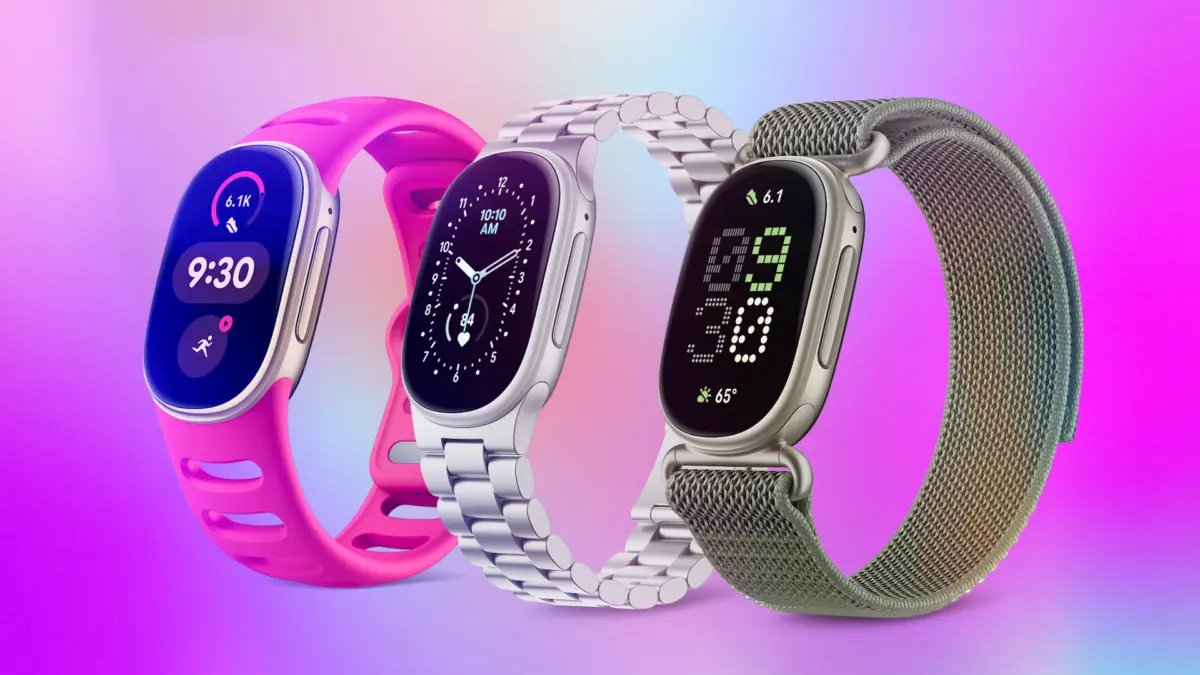
SAN FRANCISCO — In the modern wearable technology market, consumers often face a polarizing dilemma. On one end lie fully featured, expensive smartwatches boasting brilliant color displays, standalone cellular connectivity, and complex app ecosystems—though they often demand daily charging and heavy wrist real estate. On the other end are ultra-minimalist, screenless fitness bands that disappear on the arm and run for weeks, but leave users guessing the time or squinting blindly at a blank piece of silicone.
Recognizing a vast middle ground of hesitant buyers, Google introduced the Fitbit Edge on Monday. Priced at $179, the Edge slots neatly between the $100 screenless Fitbit Air and the premium $400 Pixel Watch 5. It is engineered for consumers who want the comprehensive health metrics and built-in utility of a modern smartwatch, but packaged in a slimmer, lighter, longer-lasting form factor.
Available for preorder starting Monday ahead of an official retail launch on October 27, the Fitbit Edge arrives at a pivotal time for Google’s unified wearable strategy. It combines hardware design philosophies from across the company’s ecosystem while introducing notable repairability milestones to the Fitbit brand.
Main Facts: What is the Fitbit Edge?
The Fitbit Edge is a lightweight fitness tracker equipped with a vibrant color AMOLED display, built-in GPS, an altimeter, and a suite of advanced health sensors.

- Pricing and Availability: Retailing at $179, the Edge is available for preorder now and hits store shelves on October 27. A special Stephen Curry Edition is also available for an additional $50.
- Display and Navigation: It features a 1.34-inch color AMOLED screen—making it 46% larger than the display on the older Fitbit Charge 6—complete with an always-on display (AOD) option and a tactile physical side button for managing workouts and navigating menus.
- Ecosystem Compatibility: Unlike Google’s Pixel Watch lineup, which runs on Wear OS and is restricted to Android, the Edge operates on Fitbit’s proprietary operating system. This allows the device to function seamlessly with both iOS and Android smartphones, widening its potential market.
- Fitness & Health Capabilities: The device features built-in GPS, continuous heart rate monitoring, blood oxygen (SpO2) tracking, skin temperature sensors, and ECG (electrocardiogram) capabilities. It supports over 50 exercise types with automated recognition for more than 40.
- The Catch with Battery Life: Google rates the Edge for up to seven days of battery life, but this metric relies strictly on the "raise-to-wake" setting. Turning on the always-on display drops the battery estimate down to roughly two days.
Chronology: The Evolution of Google’s Fitbit Strategy
To understand the strategic importance of the Fitbit Edge, it helps to examine the trajectory of Google’s wearable division following its acquisition of Fitbit.
Pre-Acquisition to Post-Acquisition Transition
For years, classic Fitbit lines like the Inspire and Charge series anchored the brand by pairing modest, functional screens with multi-day battery life and cross-platform compatibility. However, as Google poured resources into the flagship Pixel Watch series, the Fitbit brand underwent a strategic re-evaluation.
The Swing Toward Extremes
Recently, Google leaned into design extremes. The release of the ultra-minimalist, screenless Fitbit Air championed aesthetic subtlety by hiding all tech behind sleek bands, requiring users to rely entirely on their smartphones for data output. Simultaneously, the Pixel Watch 5 pushed forward as a powerhouse smartwatch running Wear OS, targeted heavily at Android loyalists willing to trade heavy battery consumption for deep app integration.
The Missing Middle
Consumers who loved the slim profile of the Air frequently complained about the friction of having a blank screen on their wrist. Conversely, those eyeing the Pixel Watch balked at its $400 price tag and strict Android limitation. Recognizing this friction, Google accelerated development on a hybrid device that could harvest successful design language from both the Air and the Pixel Watch 5—culminating in the conception of the Fitbit Edge.

Supporting Data & Hardware Specifications
An analysis of the Fitbit Edge’s spec sheet reveals a device designed to deliver high-end tracking capabilities at a mid-tier price point, though it comes with distinct hardware omissions.
Display and Aesthetics
The Edge’s 1.34-inch AMOLED panel represents a significant visual upgrade for the product line. Taking styling cues from the Pixel Watch 5, the Edge ships in colorways including Obsidian, Fog, Olive, and Canyon. Users can further customize the tracker using interchangeable bands, ranging from performance loops to magnetic bands and polished metal links.
Smart Features vs. Smartwatch Limitations
The interface has been redesigned with utility "tiles" mimicking the Pixel Watch UI, offering quick access to workouts, health metrics, and customizable watch faces with complications. Users can view weather forecasts, set alarms and timers, control media playback, and receive turn-by-turn directions.
Furthermore, the Edge mirrors notifications and incoming calls from connected phones, while supporting canned text replies when paired with Android devices.

However, certain high-end smartwatch features were deliberately left out:
- No Microphone or Speaker: Users cannot take phone calls directly from their wrist.
- No NFC: Despite the older Fitbit Charge 6 featuring contactless payment capabilities, the Edge lacks NFC for Google Wallet or tap-to-pay functionality—an omission that may frustrate mobile-payment loyalists.
Health and Fitness Benchmarks
On the fitness front, the Edge punches well above its weight class:
- Built-in GPS & Altimeter: Unlike the Fitbit Air, which piggybacks on a smartphone’s location data, the Edge tracks routes independently.
- Advanced Sensors: Heart rate tracking, SpO2, skin temperature, and ECG monitoring provide clinical-grade insights previously reserved for premium devices. Google claims its updated heart-rate tracking algorithm is 40% more accurate than the Charge 6.
- Automatic Exercise Recognition: Capable of logging over 50 workout types, the updated detection software now recognizes racquet sports automatically.
- Equipment Integration: The tracker can broadcast live heart rate metrics directly to compatible fitness equipment, such as smart treadmills.
Official Responses and Sustainability: A First for Fitbit
In official statements accompanying the launch, Google emphasized not only performance metrics but also longevity and environmental responsibility.
The Move Toward User-Repairability
In a landmark first for the brand, the Fitbit Edge features a user-replaceable battery. For years, compact fitness trackers have been treated as disposable electronics; once the internal lithium-ion battery degraded past functional utility, the entire device had to be discarded.

Google has steadily pushed toward hardware sustainability, notably redesigning the Pixel Watch 4 to eliminate internal adhesives and ease screen replacements. Bringing this modular repairability down to a $179 fitness tracker represents a major win for the consumer "Right to Repair" movement.
Google notes, however, that self-repair options will vary by region and strongly recommends that only individuals with proper technical expertise attempt battery replacements to avoid safety hazards.
Software Support and Google Health Premium
Every purchase of the Fitbit Edge includes a three-month trial of Google Health Premium (which costs $10 monthly or $100 annually thereafter). The subscription unlocks advanced AI-driven features, including the Google Health Coach and Health Guardian, tools designed to track longitudinal health trends such as monthly blood pressure and insulin resistance indicators. Google has confirmed that Health Guardian will eventually roll out to the Fitbit Air as well, though a timeline has not yet been announced.
Implications: Where Does the Edge Fit in the Market?
The launch of the Fitbit Edge shifts the competitive landscape of the sub-$200 wearable market.

Pricing and Value Proposition
At $179, the Edge occupies a unique pricing vacuum. It is nearly double the cost of entry-level trackers like the Fitbit Air, but it undercuts heavyweight competitors like the $249 Apple Watch SE 3 and the $300 Samsung Galaxy Watch 7. For users who prioritize deep fitness tracking, built-in GPS, and a color screen over cellular connectivity or contactless payments, the Edge delivers high-tier value.
Cross-Platform Appeal
Perhaps the device’s greatest strategic advantage is its platform agnosticism. By running on Fitbit OS rather than Wear OS, the Edge remains compatible with iPhones. In a market where Apple dominates iOS wrist share and Samsung/Google dominate Android, the Edge offers a rare, high-quality hardware option for iPhone users who do not want to invest in an Apple Watch, as well as Android users seeking extended battery life.
The Ultimate Verdict Awaits
Whether the Fitbit Edge proves to be the definitive "Goldilocks" wearable—solving the compromises of both screenless bands and power-hungry smartwatches—will depend heavily on real-world testing. Factors such as the responsiveness of the raise-to-wake feature, real-world battery longevity under active GPS use, and the practical utility of the redesigned interface will dictate its long-term success.
As preorders open and the October 27 release date approaches, consumers looking for a balanced, repairable, and cross-platform fitness companion finally have a compelling new contender to consider.
