

By Andrew Webster
Enriched and Expanded Edition
Main Facts
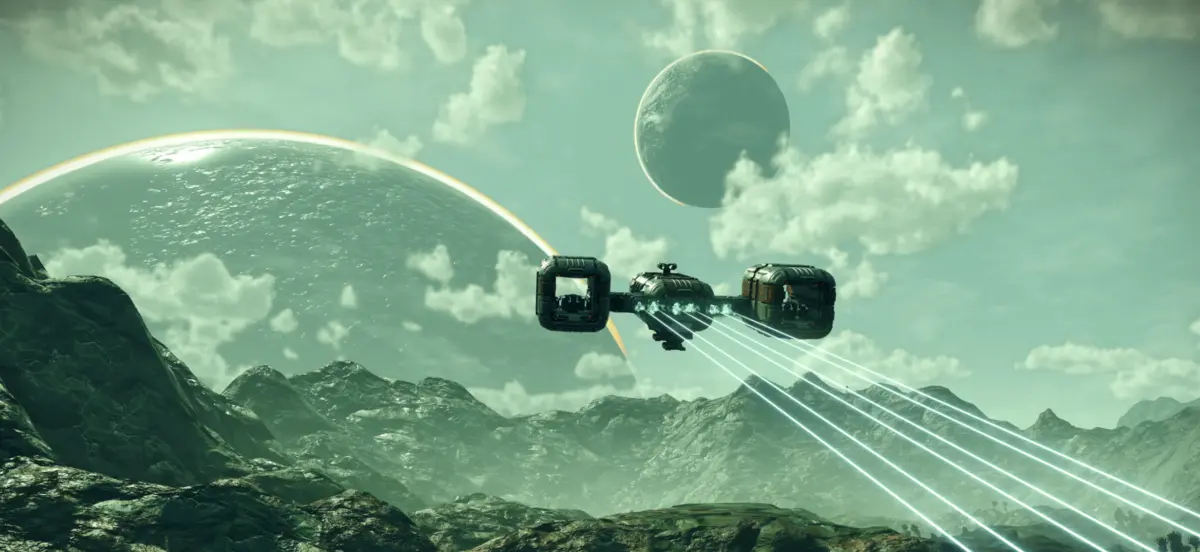
The universe of No Man’s Sky is about to contract, fitting entirely inside the palm of your hand. Developer Hello Games has officially announced that its sprawling, procedurally generated sci-fi exploration epic is making the jump to mobile devices, with full versions for both the iPhone and iPad slated for release on October 28th.
Crucially, studio founder Sean Murray has emphasized that this is not a stripped-down, casual spin-off. Speaking in a recent developer blog post, Murray was definitive: “I guess I should say this is not No Man’s Sky Lite.” Instead, the mobile port delivers the complete, uncompromised core experience of the sprawling space simulator.
Players diving in on iOS will have access to virtually all of the massive, transformative updates that Hello Games has rolled out over the past decade. This includes major content drops like the gargantuan Voyagers expansion and the more recent Cosmos update, which further fleshed out the cosmic canvas with richer planetary ecosystems and deeper lore.
While the port is remarkably robust, technical limitations have necessitated a few compromises. The most notable omissions at launch are multiplayer functionality and planetary settlements. In these respects, the iOS rollout closely mirrors the game’s initial release on the Nintendo Switch. Murray likened the mobile launch strategy to the studio’s past hardware adaptations:
“On Switch we have listened to players and built from there, including with a much expanded version on Switch 2. Based on feedback and player numbers we will support iOS in a similar way.”
Hardware compatibility is surprisingly broad. The game will run on the iPhone 11 and third-generation iPad Air (and subsequent models) and above. Despite the vastness of its simulated universe—spanning quintillions of unique planets—the entire download comes in at a remarkably compact 5GB. To ensure smooth mobile play, Hello Games has engineered completely overhauled touch controls while retaining full support for external game controllers, screen casting, and mouse-and-keyboard setups on the iPad.
Furthermore, the studio has heavily optimized the game for mobile hardware limitations. According to Murray, the team dedicated extensive resources to battery life and thermal management, ensuring that players can embark on extended, comfortable play sessions without melting their devices. The game will follow a "free to try" model at launch, though Hello Games has yet to clarify the final pricing structure for unlocking the full experience.
Chronology: A Decade-Long Voyage
To understand the weight of No Man’s Sky arriving on iOS, one must look back at the tumultuous, unlikely journey of the game itself. The timeline of Hello Games’ masterpiece is one of the most fascinating narratives in modern gaming history:
- August 2016 (The Rough Launch): No Man’s Sky launches on PlayStation 4 and PC amid colossal hype. While the core technological feat—generating an infinite, seamless universe—is celebrated, players and critics find the release version light on promised features, repetitive, and lacking depth. The backlash is swift and severe.
- 2016–2018 (The Redemption Arc): Rather than abandoning the project, Hello Games goes radio silent on PR fronts and pours all energy into development. Over a series of landmark updates (Foundation, Atlas Rises, and NEXT), the studio systematically adds base-building, multiplayer elements, terrestrial ground vehicles, and fully fleshed-out storylines. Public perception begins to dramatically shift.
- 2019–2021 (Expansion and VR): The game enters its stride with major overhauls. Beyond introduces full virtual reality support and reimagines multiplayer. Subsequent updates add living ships, mech suits, deep-space anomalies, and heavily overhauled combat and exploration systems.
- October 2022 (The Nintendo Switch Port): Hello Games achieves a major technical milestone by porting the expansive universe to Nintendo’s hybrid console, proving that the game can thrive on lower-powered mobile architecture.
- 2023–2025 (Next-Gen and Beyond): The studio continues its relentless cadence of free content, introducing massive structural refreshes like Voyagers and the September Cosmos update. The platform footprint expands to include Mac, PC, virtually all modern consoles, and PlayStation VR2.
- October 28, 2026 (The iOS Horizon): No Man’s Sky officially lands on iPhone and iPad, marking its entry into the mobile gaming ecosystem a decade after its initial debut.
Supporting Data & Technical Specifications
Bringing a universe consisting of 18 quintillion planets to mobile devices requires immense technical wizardry. Hello Games has shared several key data points regarding the iOS version:

- File Size: A remarkably lean 5GB download, achieved through advanced procedural generation algorithms that construct content on the fly rather than relying on bloated pre-rendered asset files.
- Hardware Requirements: Compatible with iPhone 11 and newer devices, as well as the iPad Air (3rd generation) and newer iPad models featuring equivalent or superior processing power (A13 Bionic chip or higher).
- Input Methods: Completely redesigned, highly customizable virtual touch controls; native Bluetooth controller support (Xbox, PlayStation, MFi controllers); and iPad-specific support for mouse and keyboard setups.
- Missing Features at Launch: True synchronous multiplayer and automated planetary settlements are absent from the initial mobile build, mirroring the initial Switch release.
- Optimization Focus: Specialized engine profiling designed to curb thermal throttling and drastically reduce power draw, maximizing gameplay time per battery charge.
- Pricing Model: "Free to try" upon its October 28th release date, lowering the barrier to entry for mobile consumers curious about how the sci-fi sandbox translates to phones and tablets.
Official Responses and Developer Insights
The announcement of No Man’s Sky for iOS has given industry analysts and fans plenty to digest regarding the future of mobile gaming. Sean Murray’s reflections on the port highlight Hello Games’ philosophy of hardware-agnostic design and continuous iteration.
Speaking on the challenges of optimizing for iOS, Murray underscored the team’s engineering priorities:
“Perhaps most importantly we’ve put tons of work into battery life and thermodynamics, and we’re super proud that No Man’s Sky can be enjoyed for really long comfortable play sessions.”
For years, high-end mobile gaming has struggled with the perception that smartphone ports are either compromised "lite" versions or battery-draining novelties that overheat devices within minutes. By tackling thermodynamics head-on and refusing to compromise on the simulation’s scope, Hello Games is positioning the iOS version as a legitimate, primary way to experience the game.
Murray also addressed the iterative nature of platform support, noting that the studio plans to treat iOS much like it treated the Nintendo Switch. By listening closely to mobile player feedback, gathering telemetry, and observing user engagement numbers, Hello Games intends to scale and refine the mobile build over time. Just as the Switch eventually received expanded support (including updates tailored for upcoming hardware iterations), the iOS ecosystem can expect ongoing, dedicated attention from the studio.
Implications for the Industry and the Future of Mobile Gaming
The arrival of No Man’s Sky on iOS carries profound implications for the mobile gaming market, the AAA development sector, and the ongoing convergence of console and mobile hardware.
1. The Redefinition of "Mobile Gaming"
For a long time, mobile gaming has been sharply bifurcated: casual, microtransaction-heavy puzzle/strategy games on one side, and heavily streamlined ports on the other. However, Apple’s aggressive push into high-end gaming—bolstered by powerful custom silicon (the M-series and A-series Pro chips) and advanced graphics APIs like Metal—is changing the landscape. When a title as systemic, processor-heavy, and expansive as No Man’s Sky can run natively on a phone using only 5GB of storage, the traditional boundaries separating mobile devices from dedicated gaming consoles begin to dissolve.
2. Procedural Generation as a Technical Savior for Mobile
One of the greatest hurdles in mobile gaming has always been storage space. Modern AAA console games routinely demand anywhere from 50GB to over 150GB of storage, making them impractical for standard smartphone configurations. No Man’s Sky bypasses this bottleneck through procedural generation. Because the planets, flora, fauna, and geography are mathematically calculated rather than manually stored as massive texture files, the game retains infinite depth while maintaining a featherlight mobile footprint. This architecture could serve as a blueprint for other developers looking to bring massive open-world titles to mobile platforms without choking user storage limits.
3. Long-Term Support as a Business Strategy
Hello Games has proven that a disastrous launch does not spell the permanent death of a franchise. By maintaining a ten-year cycle of entirely free updates, the studio has cultivated a fiercely loyal community that rewards them every time the game expands to a new platform. Treating iOS as an ongoing project rather than a one-off cash grab ensures that No Man’s Sky will continue to find new audiences in non-traditional gaming markets.
As October 28th approaches, mobile gamers and space explorers alike will soon find out how well the infinite universe holds up in the palm of their hand. If Hello Games pulls it off, the galaxy will never be out of reach again.
