

By Global Tech & Environment Desk
Published by Bloomberg (Adapted)
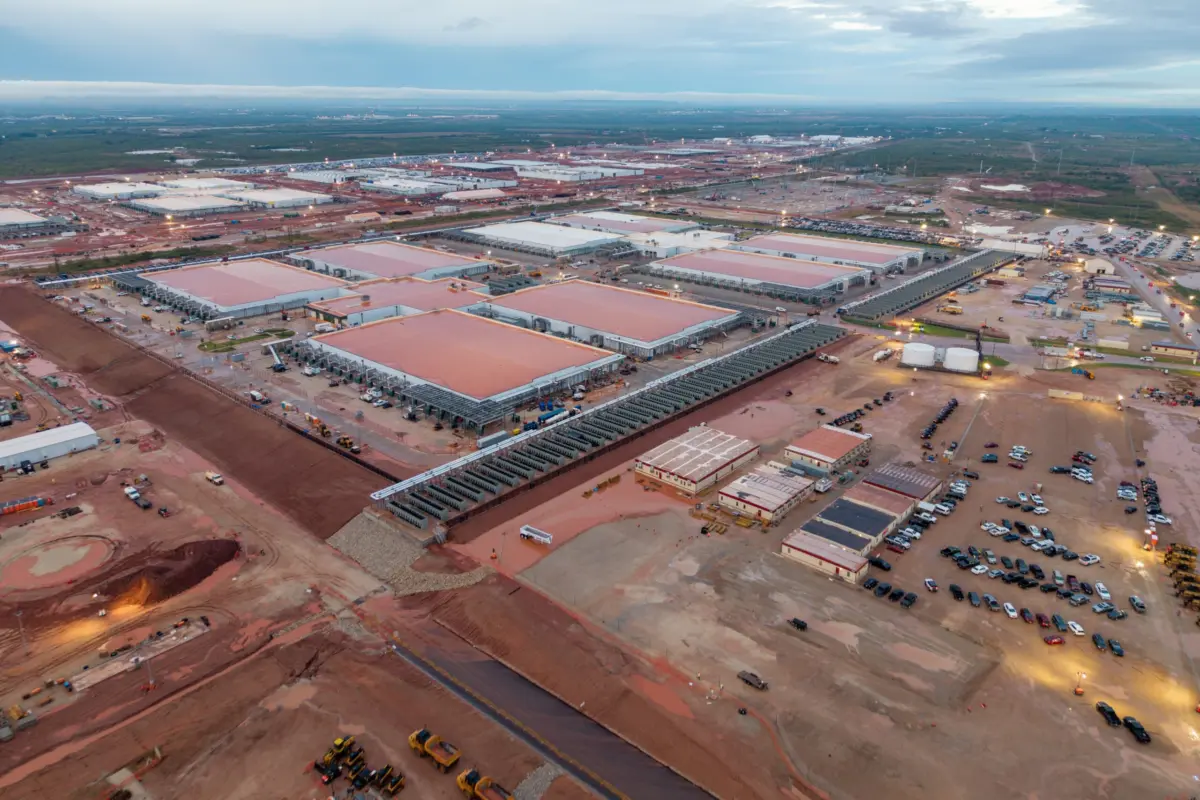
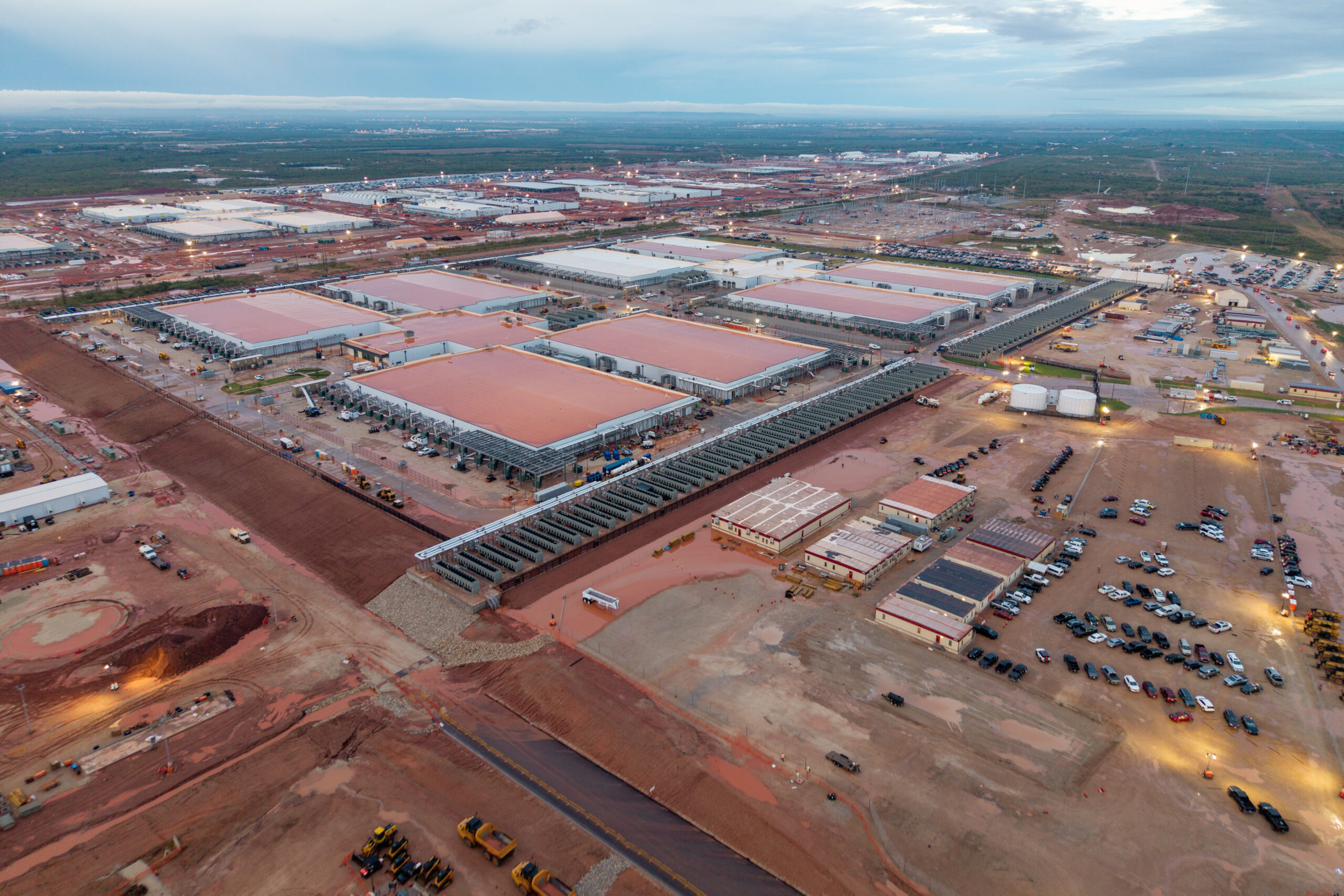
As the artificial intelligence revolution accelerates, the tech industry has made great strides in polishing its public image regarding resource management. Across drought-stressed regions like the American Southwest, data center developers have heavily promoted cutting-edge engineering feats designed to slash the amount of water required to cool feverishly operating servers. Yet, this high-visibility sustainability narrative obscures a staggering reality: these local, on-site conservation efforts fail to address the vast majority of the water actually consumed by the unprecedented AI buildout.
Miles away from the sprawling, windowless server farms multiplying across rural and suburban landscapes, conventional and nuclear power plants are guzzling enormous volumes of water. This off-site consumption is strictly necessary to generate the staggering quantities of electricity required to power modern AI systems—including those very same "water-efficient" cooling technologies.
New academic research indicates that this indirect water consumption is not only massive, but expanding at an alarming rate. As tech giants race to secure compute dominance, the true environmental cost of a digital query is measured not just in drops saved at the server rack, but in millions of gallons evaporated at distant power stations.
Main Facts: The Invisible Water Cost of Digital Intelligence
The core paradox of the modern data center is simple physics: computing-intensive AI workloads require vastly more energy than traditional cloud computing. According to independent researchers, next-generation AI facilities can consume up to 10 times as much electricity as conventional facilities.
To generate that electricity, fossil-fueled (coal and natural gas) and nuclear power plants must produce massive amounts of steam to turn turbines. That thermodynamic process demands extraordinary quantities of water, primarily lost to evaporation cooling towers. Consequently, the water footprint of a data center extends far beyond its perimeter fence.
- The Scale of the Discrepancy: While companies tout their low on-site usage, independent life-cycle analyses reveal that indirect water use dwarfs direct consumption. For example, Meta Platforms Inc. revealed in its sustainability report that indirect water use accounted for roughly 96% of the 21 billion gallons (80 billion liters) the company consumed globally in 2024.
- Wildly Divergent Estimates: Industry-wide estimates of US data center annual indirect water use vary wildly. A 2024 study by the Lawrence Berkeley National Laboratory pegged the figure at 211 billion gallons (800 billion liters), whereas a comprehensive analysis by the environmental nonprofit Ceres estimated indirect usage could reach as high as 4 trillion gallons. To put that higher figure in perspective, it is enough water to supply nearly 37 million average US households per year.
- The Arizona Flashpoint: In water-scarce regions like Arizona—where the Colorado River and its primary reservoirs are experiencing historic shrinkage—the influx of data centers has created immense regulatory and community friction. AI data center projects currently under construction in the state could spike direct, on-site water demand to 5 billion gallons annually in the coming years. Yet, researchers warn that indirect water usage will eclipse that number by orders of magnitude.
Chronology: How the AI Boom Triggered a Resource Collision
Understanding how the tech sector reached this critical juncture requires tracking the convergence of the generative AI boom with systemic climate change.
- Early 2000s–2010s: Cloud computing expands globally. Hyperscalers like Microsoft, Amazon, and Google focus primarily on Power Usage Effectiveness (PUE), minimizing on-site energy and water use by implementing evaporative cooling towers that spray water directly over server intake air.
- November 2022: The public launch of OpenAI’s ChatGPT triggers an unprecedented, multi-billion-dollar corporate gold rush into generative AI. Demand for specialized hardware, such as Nvidia graphics processing units (GPUs), skyrockets.
- 2023–2024: As data center footprints expand exponentially, local communities in states like Arizona, Oregon, and Virginia begin pushing back against high resource consumption. Federal authorities take notice; in August of this year, the federal government announces a mandatory 27% cut to Arizona’s Colorado River water allocation, intensifying local scrutiny on industrial water users.
- Mid-2026: Public backlash hits a fever pitch. Research firm Data Center Watch reports that at least 45 projects valued at nearly $68 billion were blocked or delayed between April and June alone, driven by grassroots opposition over rising electricity bills and environmental degradation. Concurrently, academic papers published by institutions like the University of Michigan and the University of California at Riverside bring indirect water consumption into the mainstream scientific spotlight.
Supporting Data: What the Numbers Tell Us
As regulators and environmentalists attempt to quantify the true cost of the AI boom, data analytics point to a deeply fragmented landscape of reporting and resource consumption.
+-------------------------------------------------------------------+
|                  METRIC BREAKDOWN: META PLATFORM                   |
+-------------------------------------------------------------------+
| Total Global Water Consumption (2024):  21 Billion Gallons        |
| Indirect Water Consumption (Off-site):  96% (~20.16 Billion Gal.) |
| Direct Water Consumption (On-site):     4% (~840 Million Gal.)    |
| Growth in Total Consumption (vs 2021):  ~120% Increase            |
+-------------------------------------------------------------------+
Academic Case Studies
- The Michigan Study: University of Michigan researchers evaluated three large AI data centers planned for their state and estimated that off-site power generation would boost total annual water consumption by a staggering 14 billion gallons.
- The Phoenix Energy-Water Tradeoff: A 2025 study co-authored by University of Arizona engineering professor Kerri Hickenbottom revealed a cruel design irony. In arid climates like Phoenix, data centers utilizing air-cooled chillers (which use virtually zero water on-site) actually trigger more than 2.5 times the indirect water consumption of traditional water-cooled systems. Because air chillers require significantly more electricity to expel heat in extreme 108°F (42C) summer weather, the power plants running them burn through massive amounts of water.
Divergent Industry Reporting
- Amazon Web Services (AWS): Reports that water efficiency has improved by 52% since 2021, driven by advanced hardware cooling and internal heat reduction technologies.
- Microsoft: Claims a 90% reduction in on-site water consumption per kilowatt-hour compared to the early 2000s, anticipating savings of 33 million gallons annually per facility through newly adopted liquid cooling designs.
Official Responses: The Accountability Gap
Despite mounting pressure from researchers, tech leaders and municipal officials remain divided on how to account for and mitigate indirect water consumption. The fundamental barrier, according to developers, is a lack of standardization.
"There has been much less attention to this indirect water usage, even though that oftentimes is significantly higher than the direct water usage and has impacts on watersheds and regional water resources."
— Shaolei Ren, Professor, University of California at Riverside
The Call for Standardization
Brandon Oyer, head of energy and water for Amazon Web Services, pointed out the systemic reporting void during a recent industry briefing. "We need industry alignment on [a standard protocol] if we’re going to collectively report indirect water consumption," Oyer noted, explaining why many major firms exclude power-plant consumption from their public ESG disclosures.
Other tech giants have pursued alternative disclosure strategies or emphasized clean energy transitions:
- Google: Ben Townsend, head of infrastructure strategy and sustainability at Google, stated that the company does not currently track or report indirect water usage. Instead, Google is focusing on direct procurement of renewable energy. "With wind, solar, and storage, these projects have effectively zero water footprint," Townsend argued.
- Microsoft: Emphasizes local stewardship. A Microsoft spokesperson noted, "Our focus is on minimizing the water we use directly in the communities where we operate while maintaining highly efficient data center designs and working with utilities to help meet our power needs responsibly."
Municipal Blind Spots
Local governments are often legally unequipped to evaluate indirect resource usage. Michael Gertzman, a spokesperson for the Phoenix Water Services Department, admitted that while large data center applicants must strictly disclose and mitigate estimated onsite water consumption, "Indirect water use isn’t part of the evaluation."
This regulatory blind spot means that local planning boards in drought-ravaged areas are approving multi-gigawatt facilities without accounting for the hundreds of millions of gallons being evaporated at regional power stations miles away.
Implications: A Crisis of Power, Water, and Public Trust
The revelation that indirect water consumption dwarfs direct usage carries profound implications for the future of artificial intelligence, energy policy, and American infrastructure.
- Strained Electrical Grids and Rising Bills: As AI companies demand block loads of power equivalent to small cities, local utility grids are pushed to the brink. Residential ratepayers across the US are increasingly vocal about rising electricity bills driven by grid upgrades required to service high-density tech hubs.
- Aggravating Climate Extremes: With the American Southwest suffering through a historic 26-year drought, the massive off-site water footprint of AI threatens to exacerbate regional water shortages. Cities like Phoenix—which relies on the shrinking Colorado River for 20% to 50% of its municipal tap water—face difficult policy choices as industrial and municipal demands clash.
- The Threat of Grassroots Moratoriums: The public relations and regulatory risks to Big Tech are real and immediate. When communities realize that "water-free" server cooling designs are secretly shifting the burden to local watersheds via coal and natural gas plants, local opposition swells. The fact that $68 billion in projects were delayed or blocked in a single quarter proves that the expansion of AI is no longer bottlenecked purely by silicon supply chains—it is bottlenecked by the physical limits of land, water, and power.
As Kerri Hickenbottom of the University of Arizona bluntly summarized:
"Demand for data centers is just skyrocketing and the truth of the matter is that the power and water facilities won’t be able to keep up."
Unless tech developers, utility providers, and federal regulators establish unified protocols to track and reduce total water usage—factoring in every watt generated upstream—the explosive growth of artificial intelligence may outrun the very resources required to sustain human life.
