

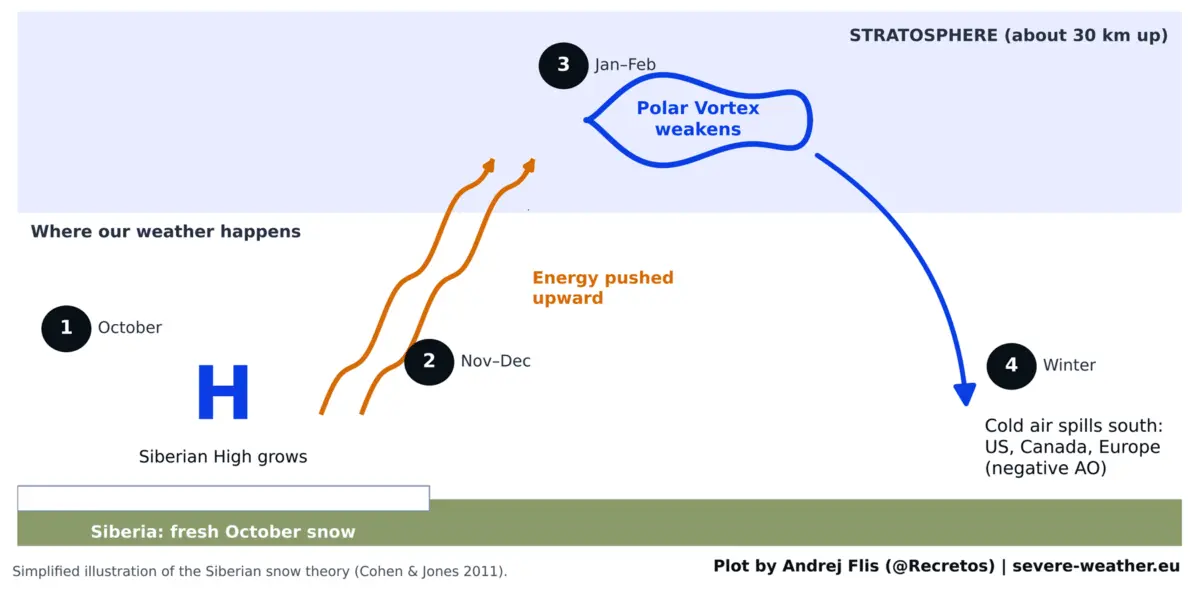
Every autumn, as temperatures drop across the Northern Hemisphere, a familiar discussion ignites across weather forums, meteorological blogs, and social media platforms. Weather enthusiasts and long-range forecasters alike pose the same critical question: Is snow spreading rapidly across Siberia?
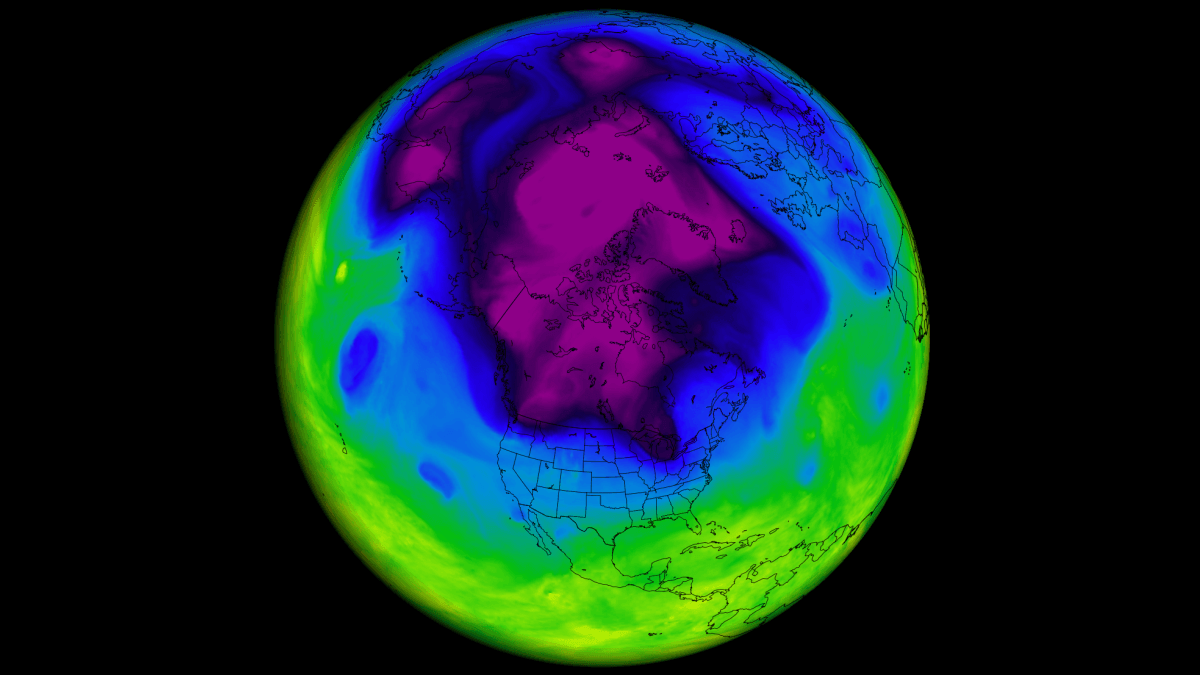
For over a decade, conventional meteorological wisdom has held that a swift October snow advance across Eurasia serves as a reliable harbinger of a harsh, snowy winter across the United States, Canada, and Europe. However, a comprehensive new empirical analysis spanning nearly half a century of meteorological data challenges this long-held theory, suggesting that the famous snow signal may no longer be the crystal ball forecasters once thought it was.
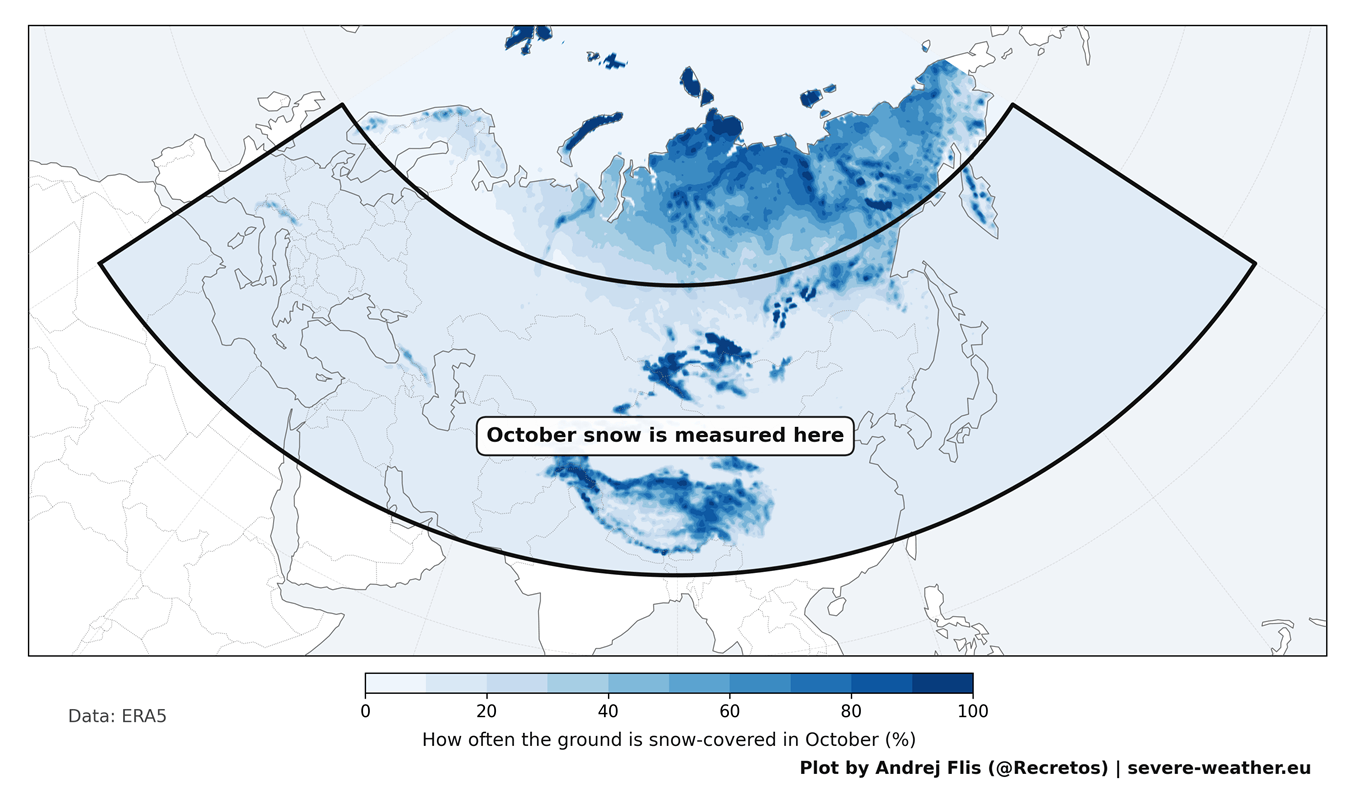
Main Facts: Testing a Pillar of Long-Range Forecasting
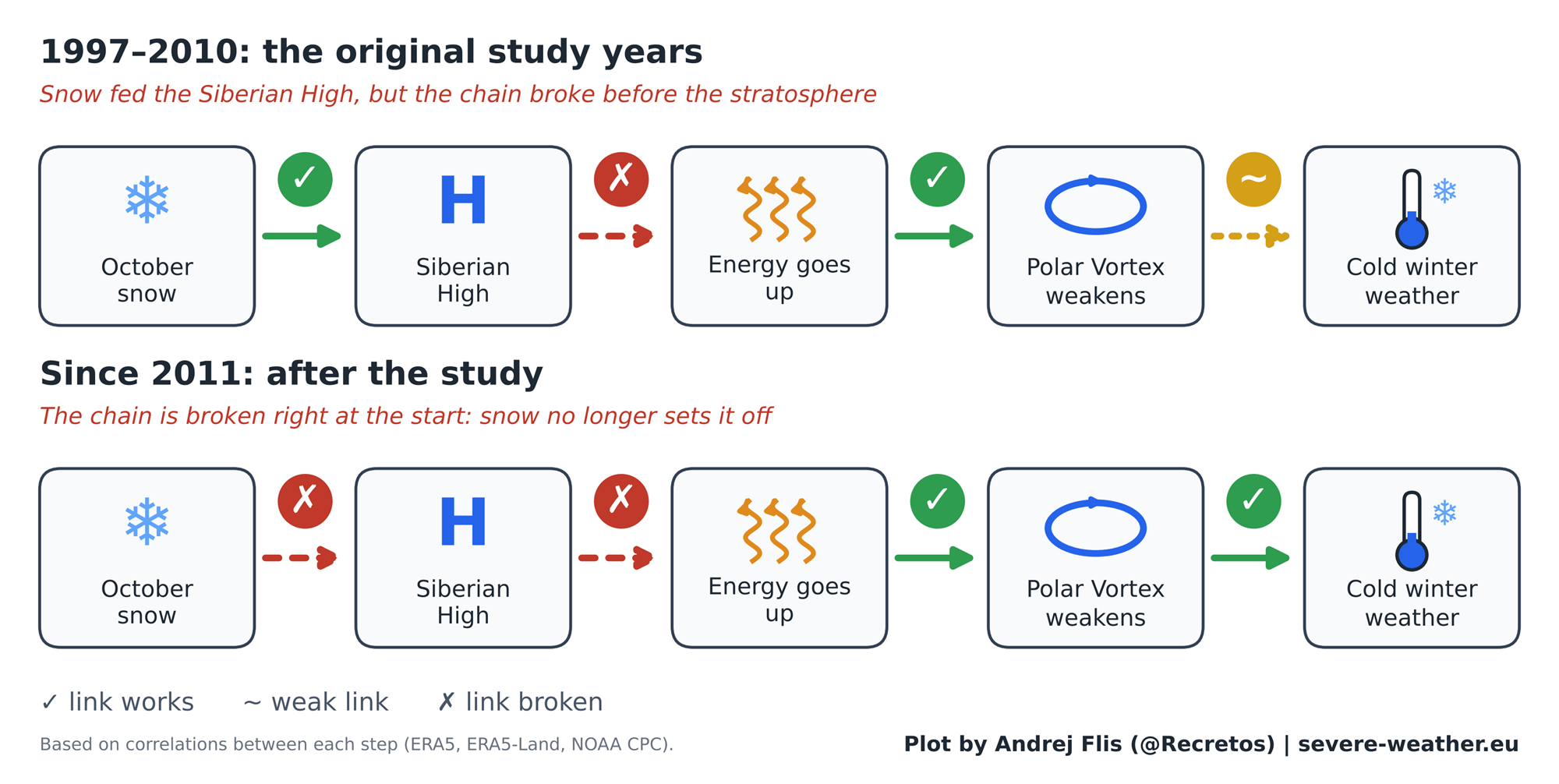
The notion that Siberian snowfall dictates mid-latitude winter weather stems from a landmark 2011 scientific study by researchers Judah Cohen and Justin Jones. Their research established a compelling physical chain reaction:
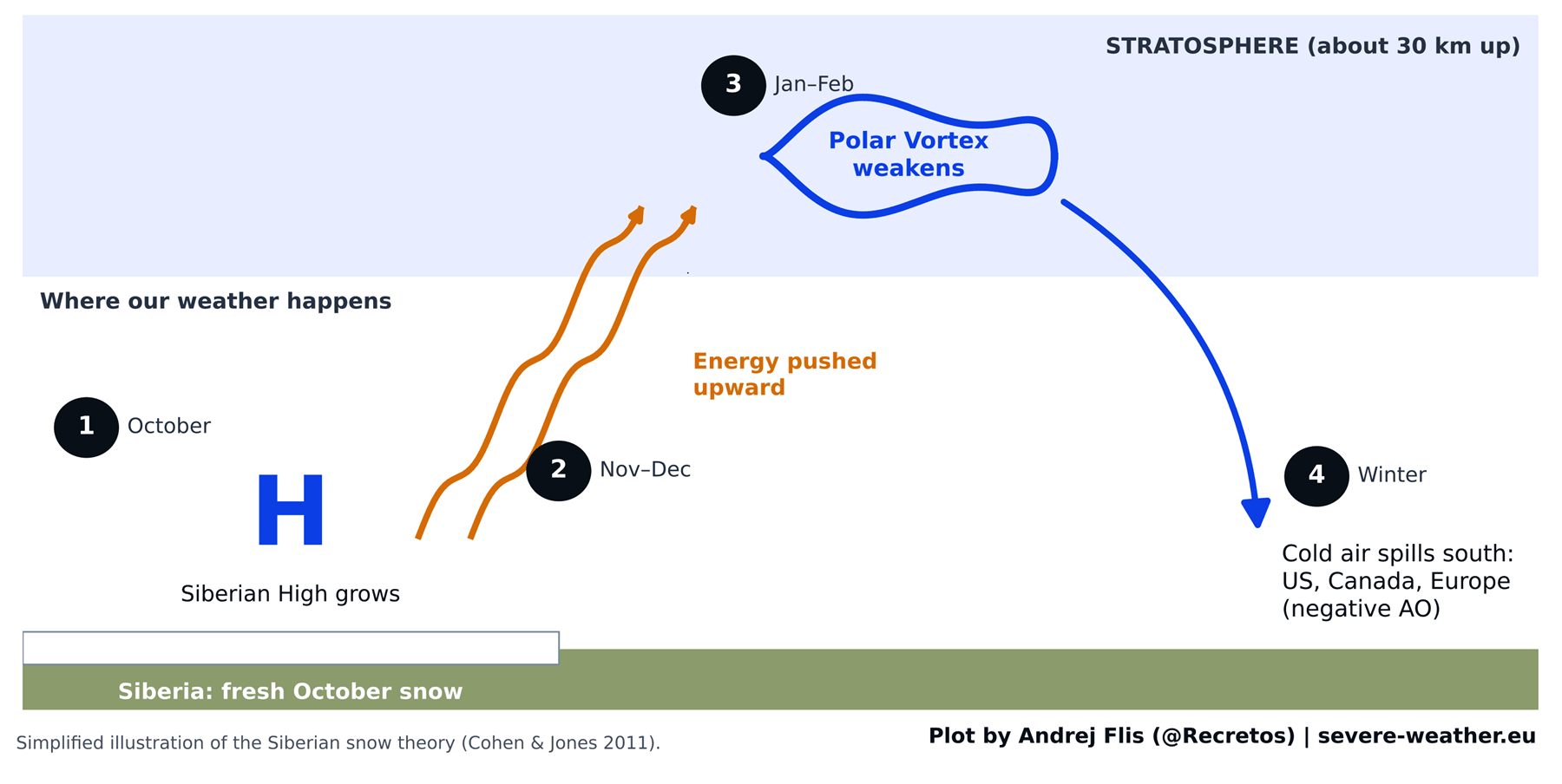
- Rapid October snow accumulation cools the ground and reinforces the Siberian High, a massive semi-permanent pool of cold, dense air over northern Asia.
- This high-pressure system forces upward energy waves into the stratosphere—roughly 30 kilometers (18.5 miles) above the surface.
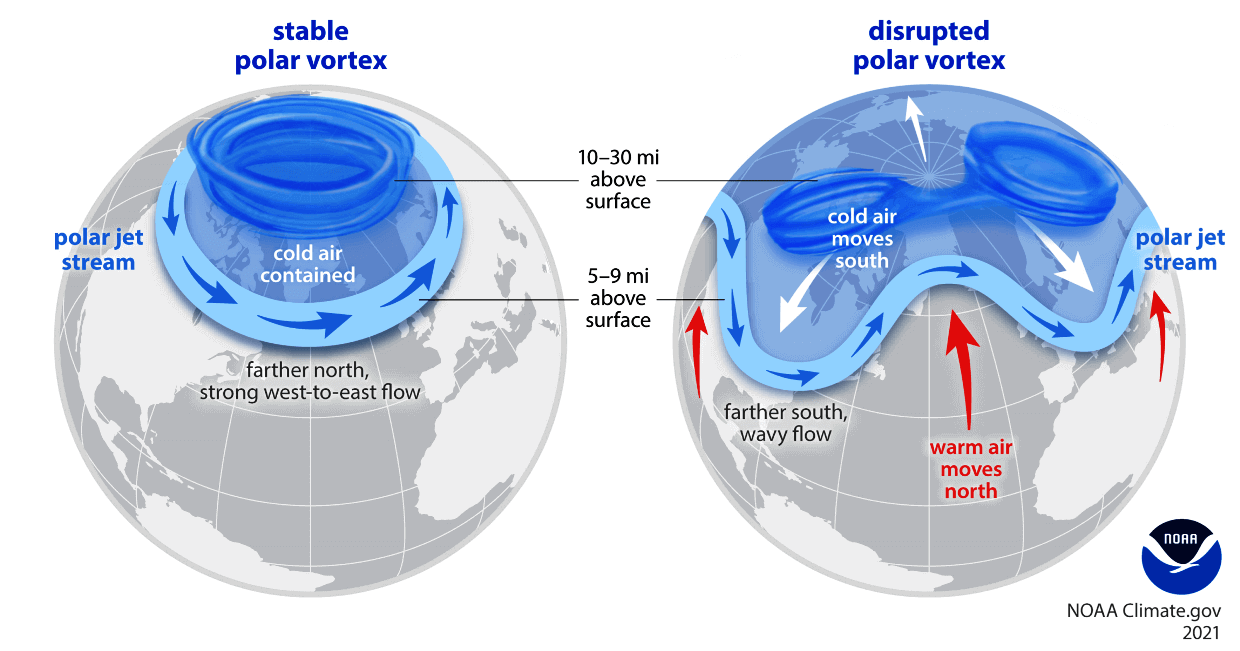
- These waves disrupt the Polar Vortex, the ring of fierce stratospheric winds that normally locks the coldest Arctic air safely around the North Pole.
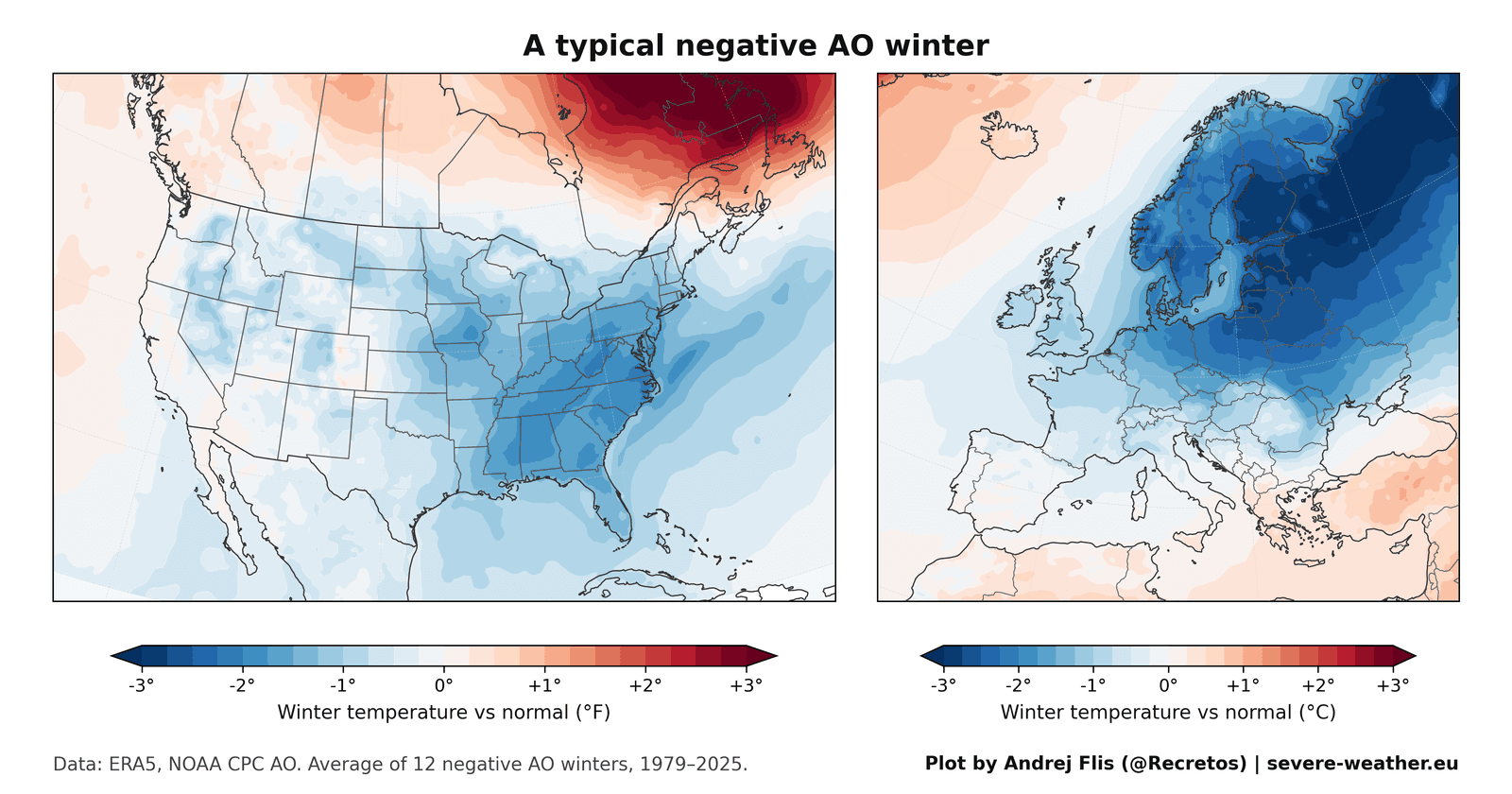
- Once the vortex weakens, stretches, or collapses, lobes of frigid Arctic air break away, spilling southward into North America and Europe, driving a negative Arctic Oscillation (AO) phase.
While the physics of this atmospheric bridge remain sound, the predictability tied specifically to October snow cover has faced severe erosion. To test whether the theory still holds up in the modern era, meteorologists analyzed 47 winters of data (1979–2025) using four independent snow datasets, including the exact satellite observations utilized in the original 2011 research.
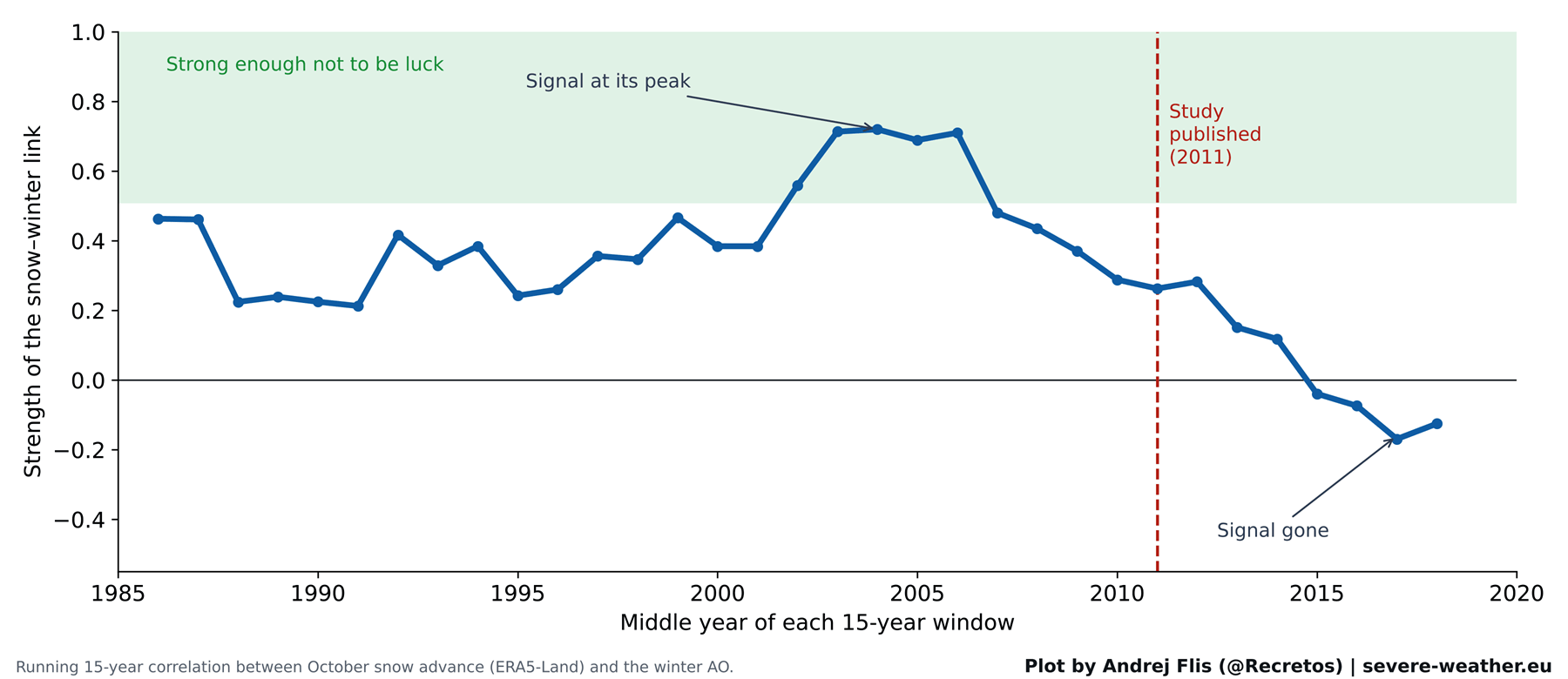
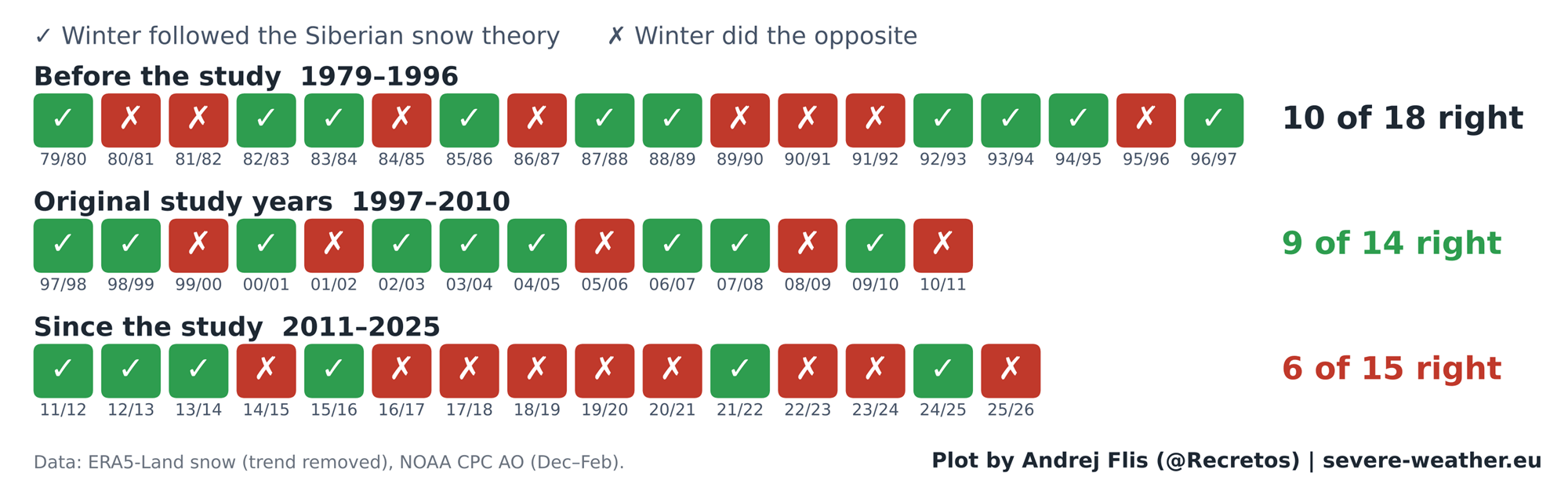
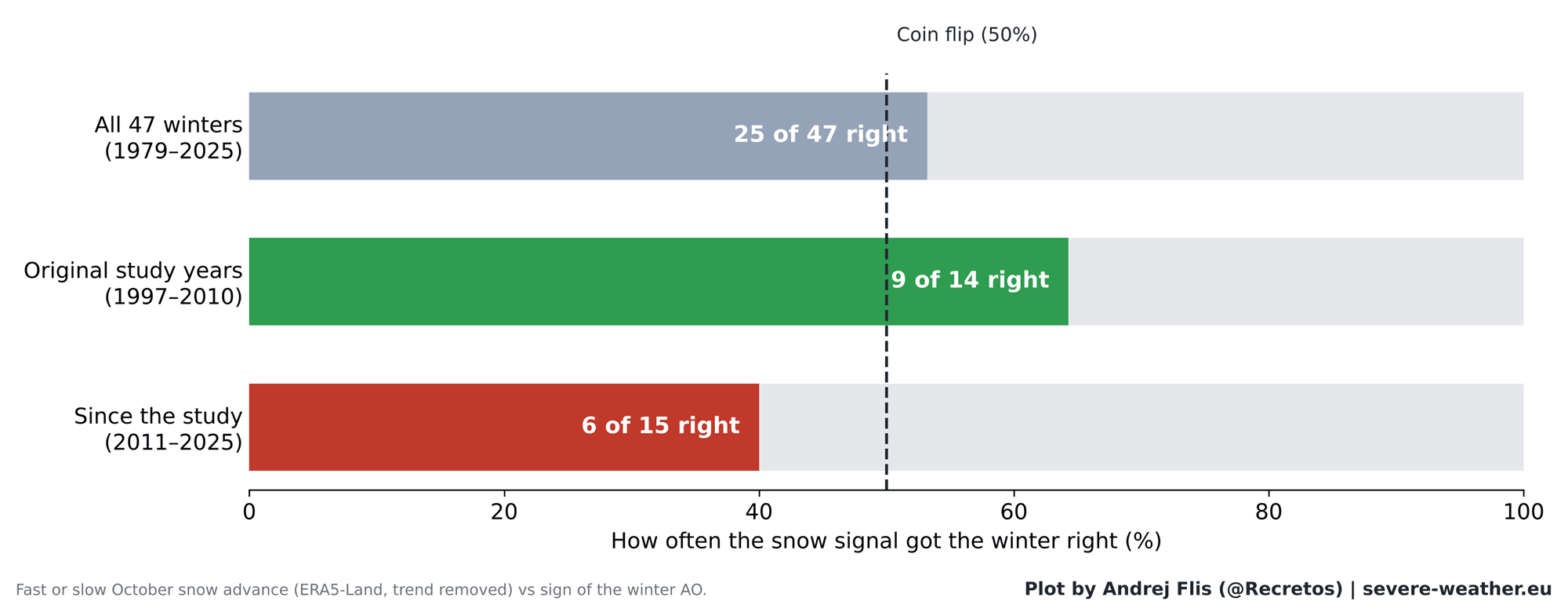
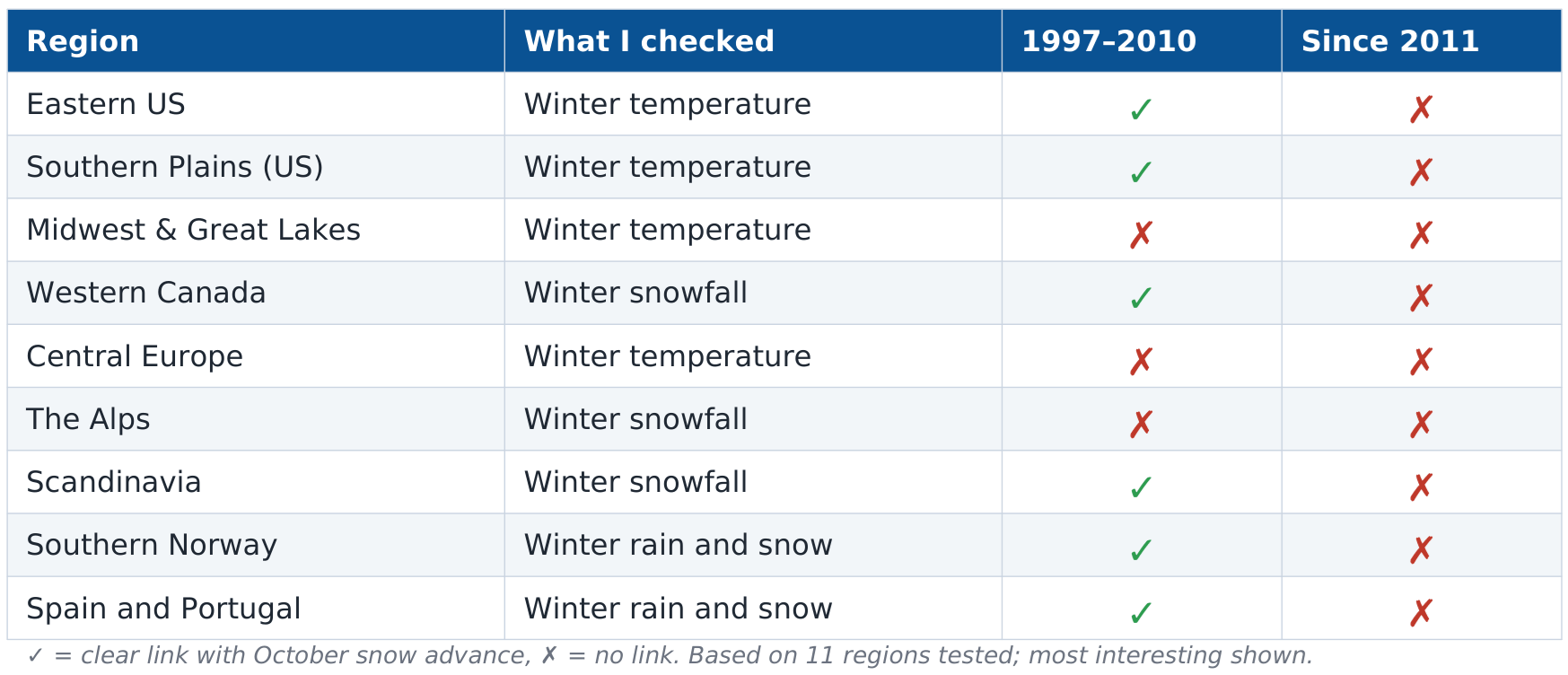
The findings are striking: while the snow signal performed well during the 2000s, its predictive skill has since degraded to little more than a coin flip, yielding a success rate of just 6 out of 15 winters since the study’s publication.
Chronology: The Rise, Fall, and Evolution of the Snow Theory
The Foundation Years (1997–2010)
When Cohen and Jones published their findings in 2011, daily satellite snow maps only extended back to 1997. This gave the original researchers a 14-year baseline to work with. During this window, the correlation was remarkably strong.
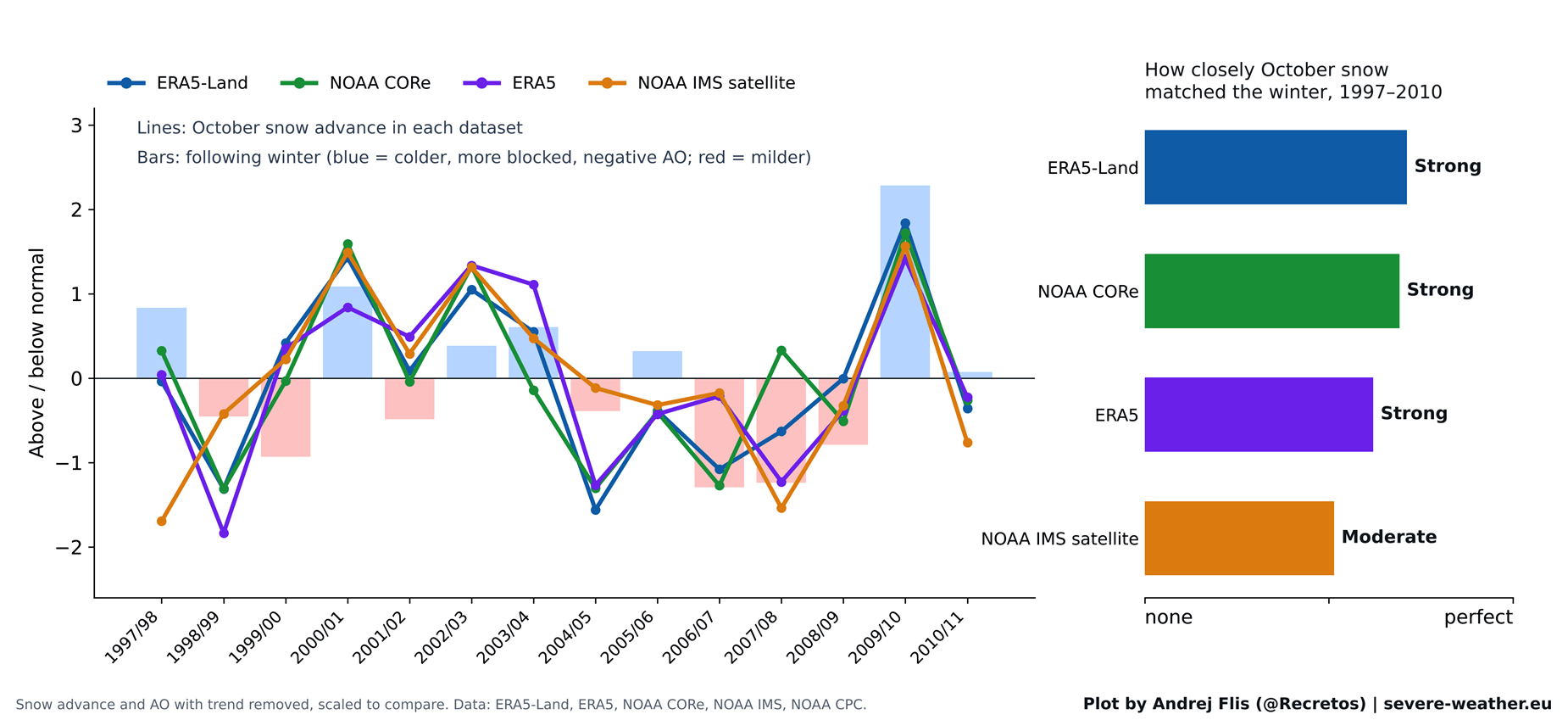
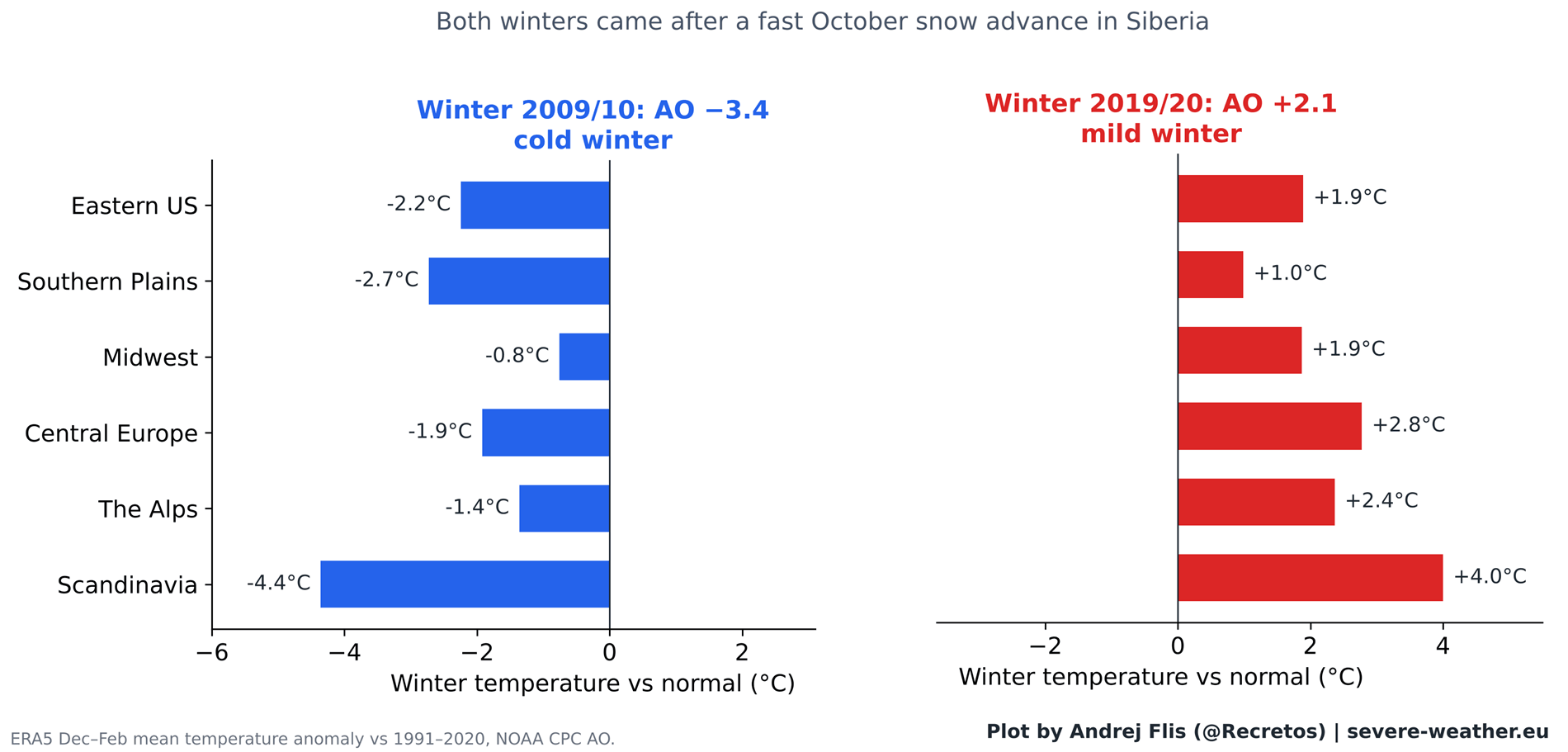
The theory achieved iconic status largely due to Winter 2009/2010. Following one of the fastest October snow advances on record, that winter delivered the most negative Arctic Oscillation index seen up to that time, producing severe cold across Europe and the historic "Snowmageddon" blizzards of February 2010 in the Eastern United States. This single extreme event cemented the theory in the public consciousness, making the Siberian snow index one of the most popular winter forecasting tools in modern meteorology.
The Divergence Era (2011–Present)
As subsequent winters unfolded, the reliability of the signal began to fade. A prime example of this breakdown occurred during Winter 2019/2020. Despite following a rapid October snow advance, that winter turned out to be one of the strongest positive AO phases on record. Europe experienced exceptionally mild, snow-free conditions, while much of the United States remained unseasonably warm.
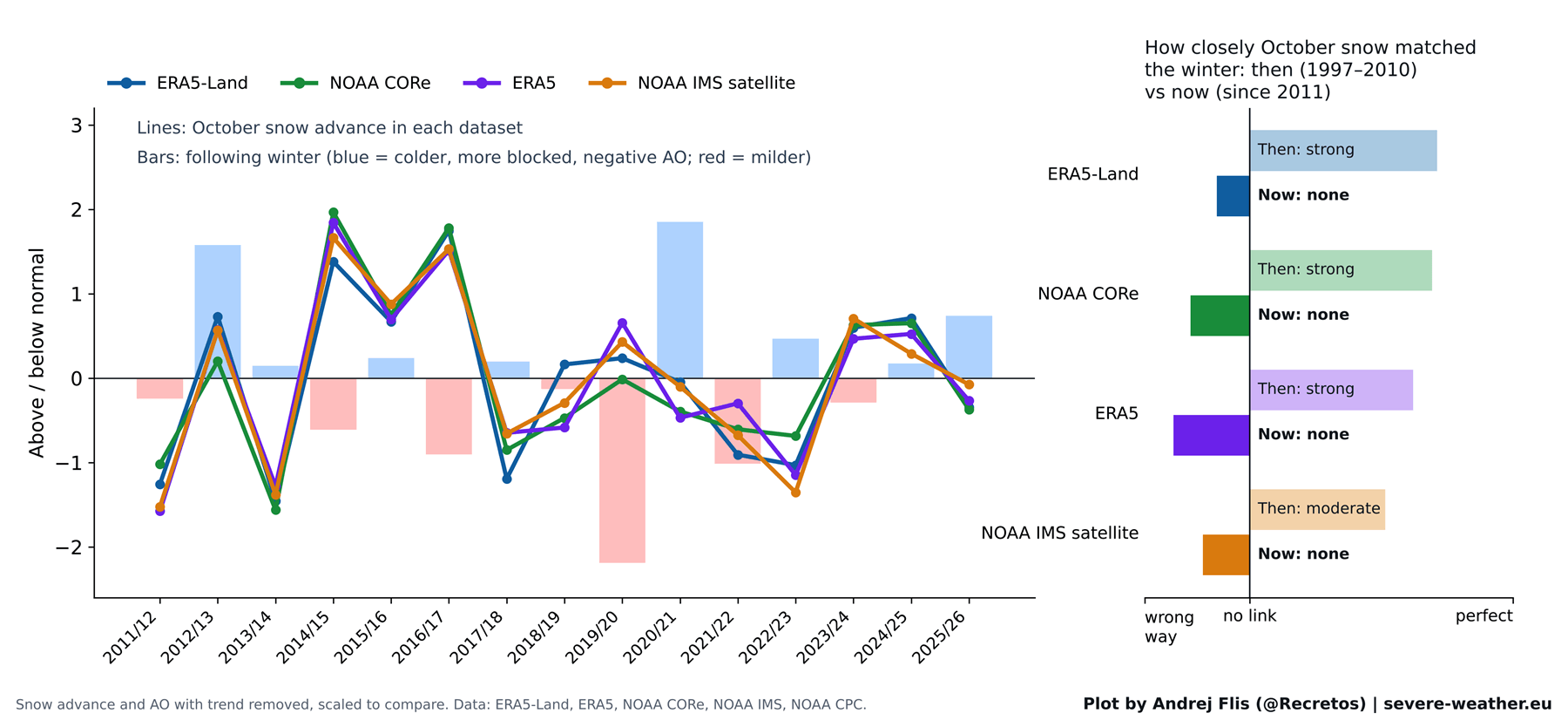
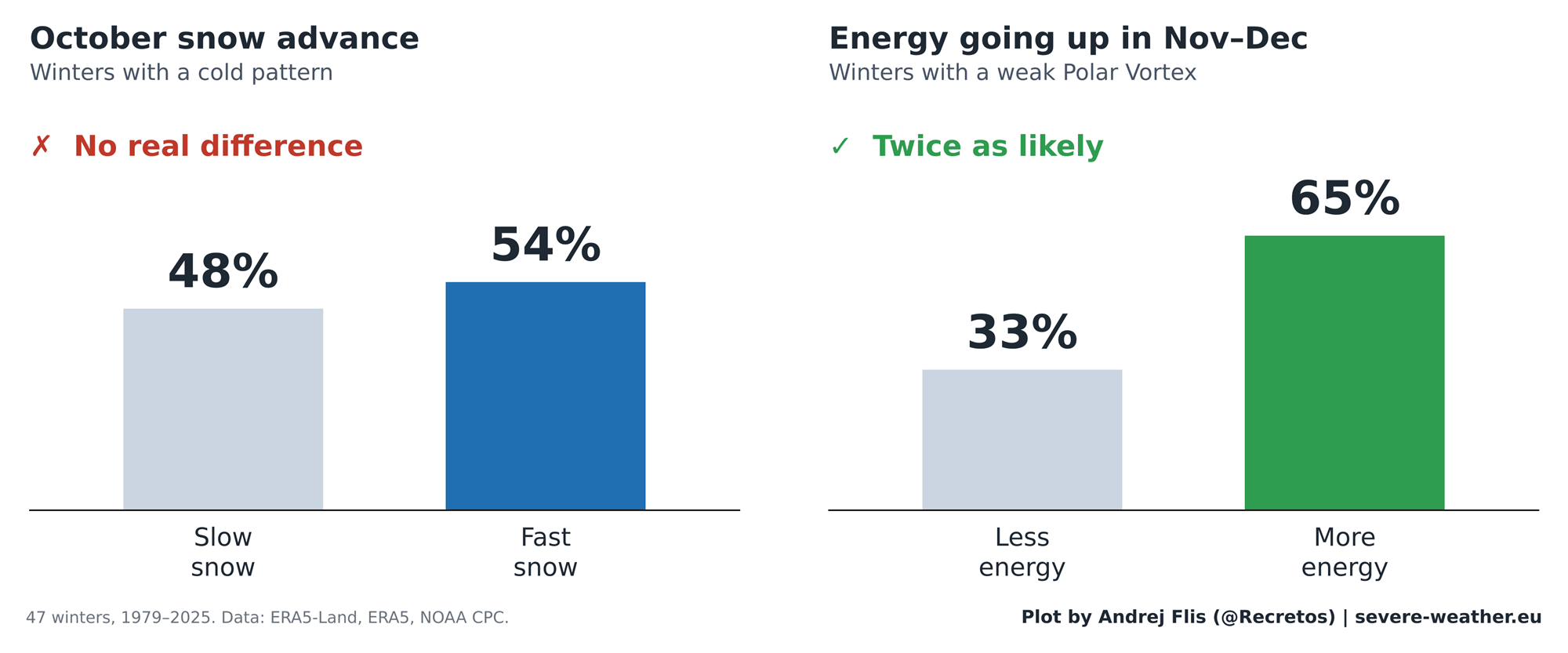
When evaluated across all 47 years of data, the snow signal proved correct 25 times and incorrect 22 times—essentially performing at random chance. Crucially, in the 15 winters following the 2011 study, the signal was correct only 6 times, performing worse than a random guess.
Supporting Data: What the Reanalysis Reveals
To ensure the integrity of these conclusions, researchers cross-verified the data using four distinct sources:
- NOAA IMS 24 km satellite observations
- ERA5 and ERA5-Land reanalysis datasets (Copernicus C3S/ECMWF)
- NOAA CORe historical records
- NOAA CPC Arctic Oscillation indices
The Stratospheric Disconnect
Step-by-step diagnostic testing of the atmospheric chain reaction revealed where the mechanism breaks down. The upper-level physics remain intact: when excess energy successfully propagates into the stratosphere in November and December, the Polar Vortex reliably weakens in January and February, resulting in cold mid-latitude outbreaks.
However, the initial link—connecting October Siberian snow to a reinforced Siberian High that sends that energy upward—has weakened significantly. In recent decades, rapid October snow advances no longer reliably trigger the necessary upward energy flux.
A Critical Data Caveat in ERA5
During the course of the research, a notable artifact was discovered within the standard ERA5 reanalysis dataset. Eurasian October snow cover drops by roughly 40% abruptly in the year 2004, coinciding with the introduction of satellite-based snow mapping into ECMWF reanalysis systems. This missing snow primarily affected Siberian lowland forests between 50°N and 70°N. Fortunately, independent cross-verification with NOAA CORe and satellite records confirmed that the primary statistical conclusions remain unaffected.
Official Responses and Expert Perspectives
Modern climatological research continues to refine how scientists view Arctic-mid-latitude linkages. A newly published study (September 2026) by Songmiao Fan and Judah Cohen suggests that snowy Octobers in Eurasia may still favor "stretched" Polar Vortex configurations, which can channel prolonged cold spells into the eastern United States.
However, operational forecasters emphasize that relying on a single surface indicator like Siberian snow is no longer viable in a rapidly warming climate characterized by retreating Arctic sea ice, shifting ocean temperatures, and changing wave dynamics.
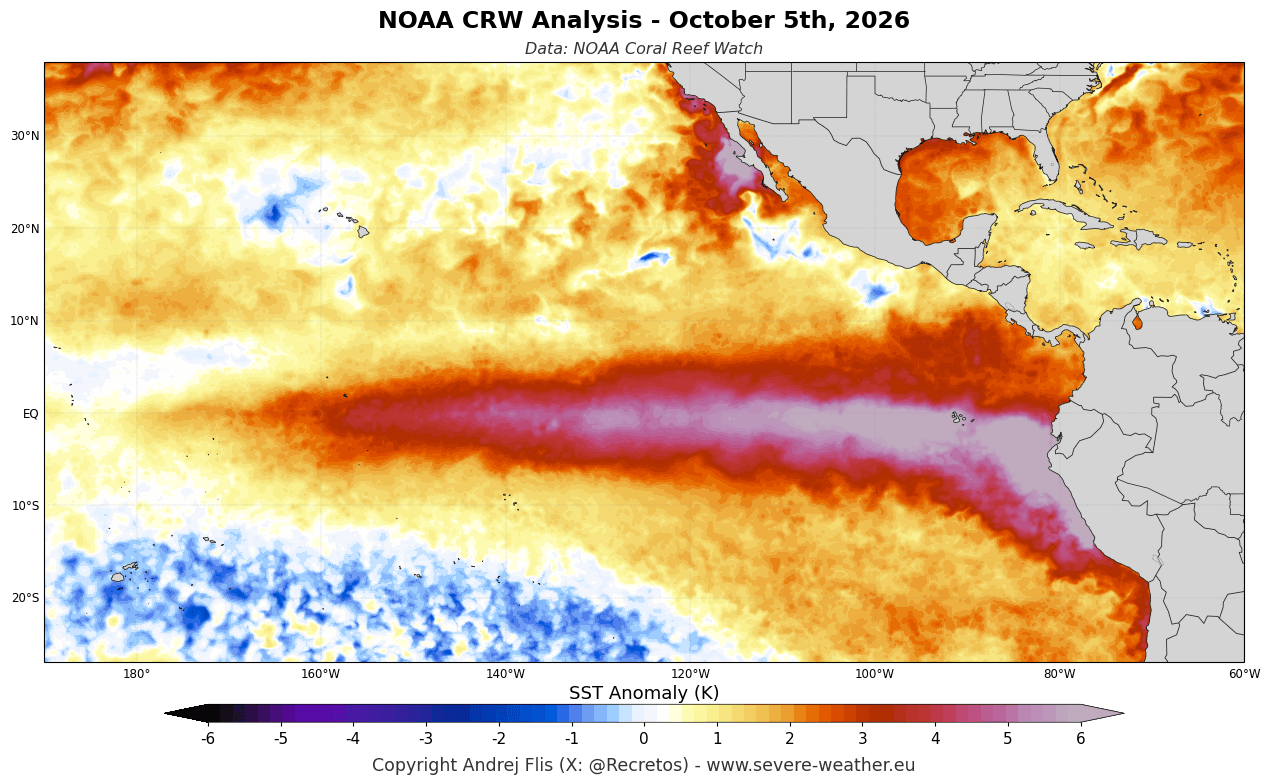
Instead, meteorologists are turning their attention to larger-scale drivers, most notably the ongoing Super El Niño in the Pacific Ocean.
Implications for Winter 2026/2027
As the meteorological community looks ahead to Winter 2026/2027, the current data offers a clear message: October snow cover alone will not dictate the upcoming season.
The October 2026 Setup
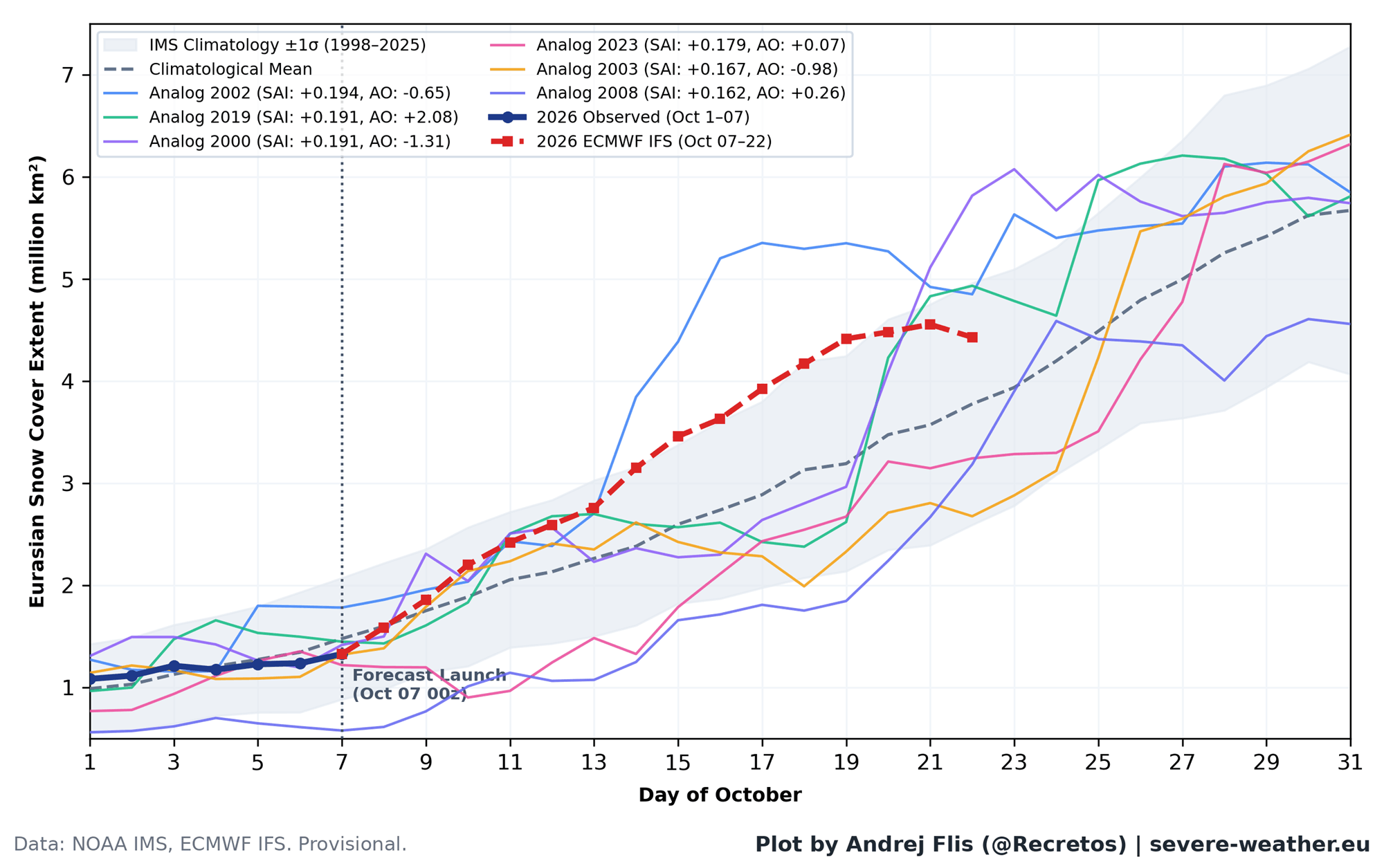
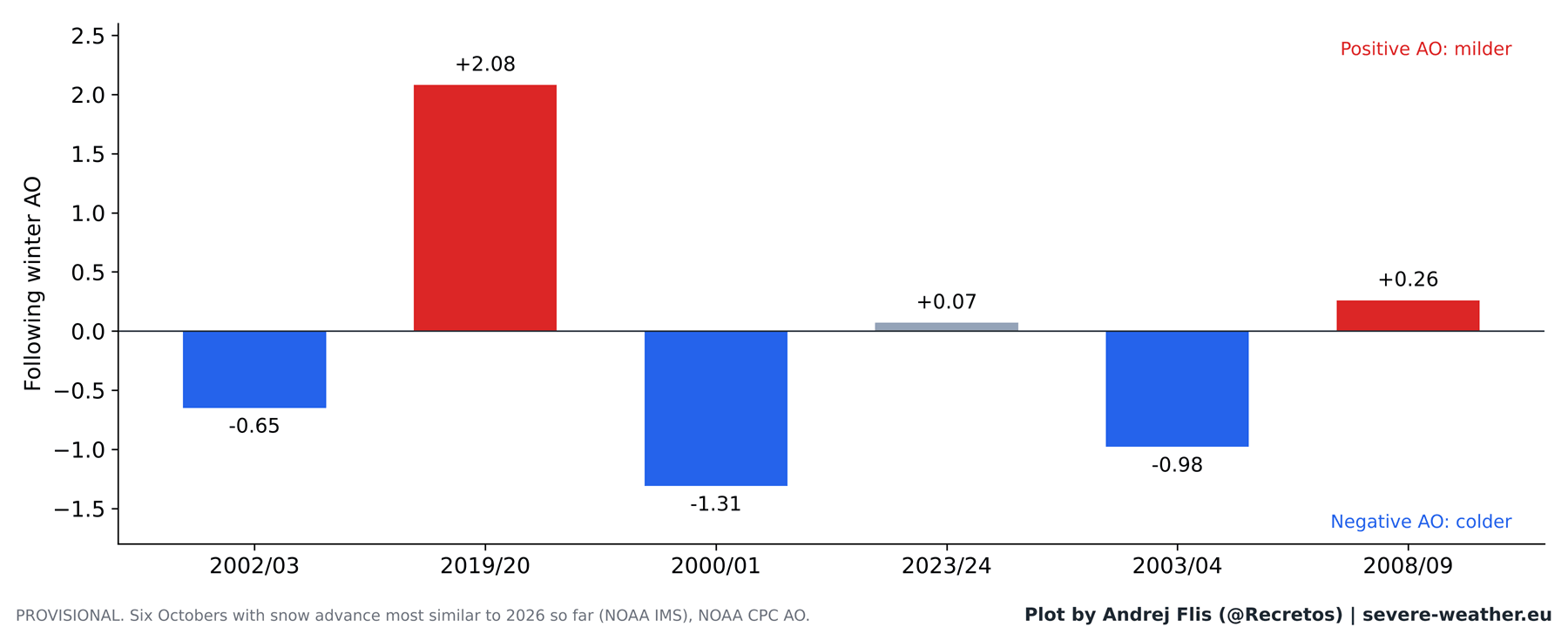
Following a relatively slow start to the month, ECMWF long-range forecasts indicate a substantial surge of snow across Eurasia during the final weeks of October, potentially placing the month’s snow advance within the top 15% of the historical period. Historically, similar October setups have yielded mixed winter outcomes—producing negative AO phases in three instances, a neutral phase once, and positive phases twice.
The Dominant Driver: The Super El Niño
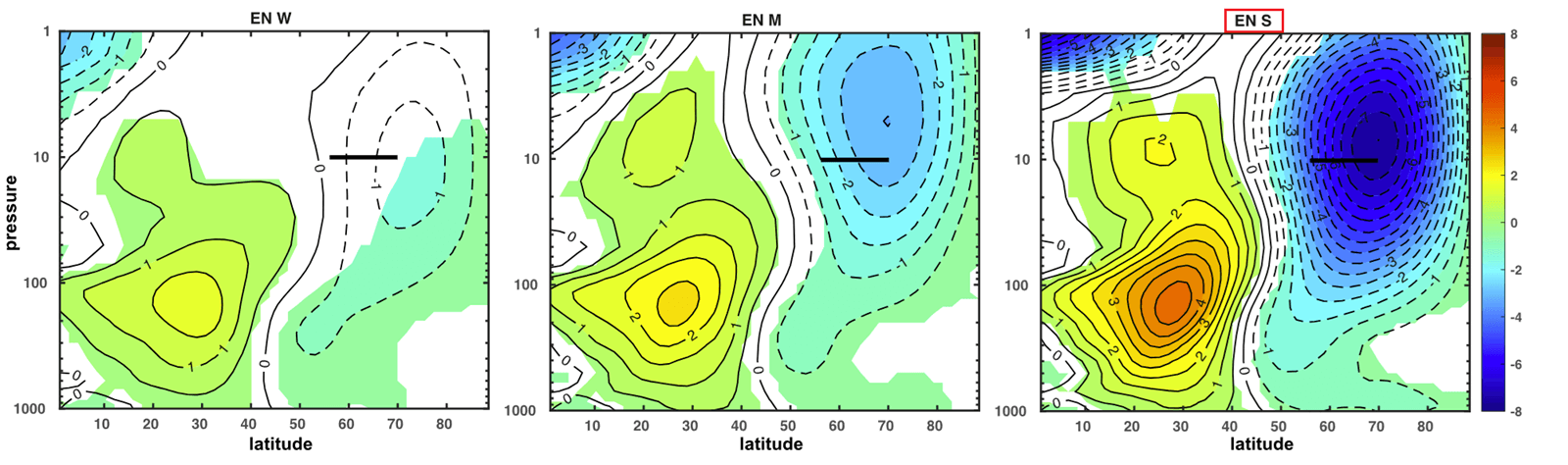
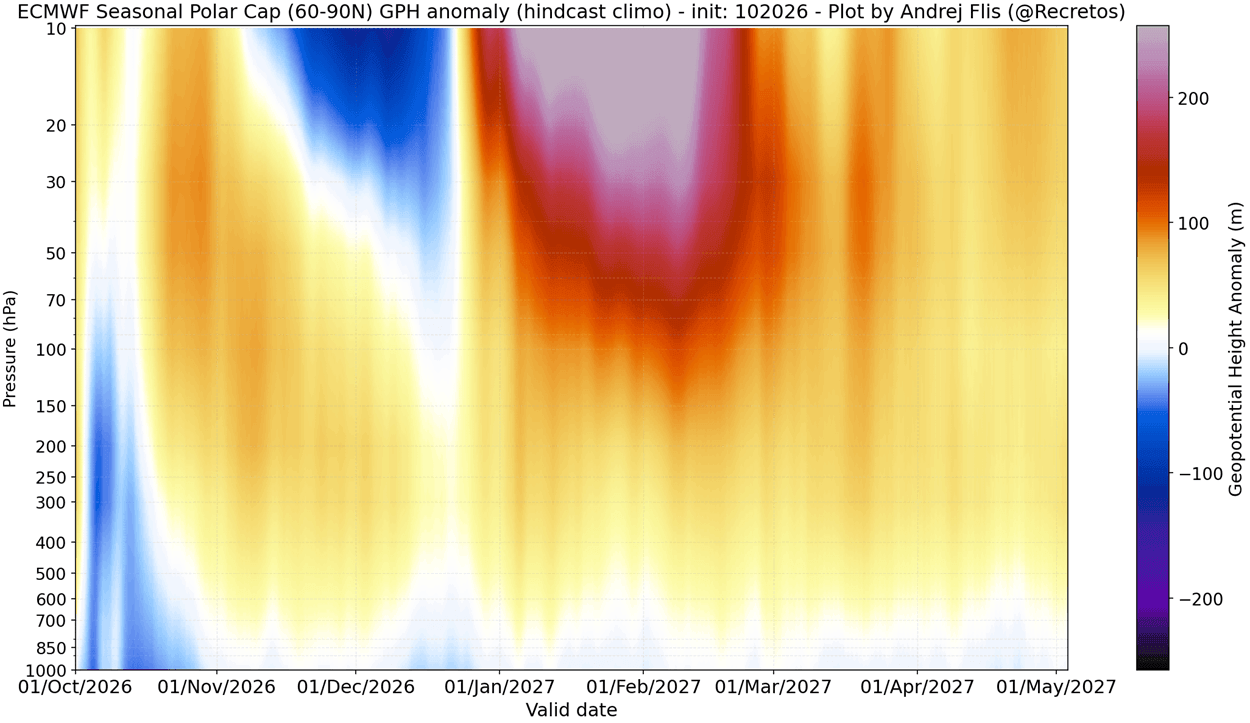
Rather than Siberia, the primary engine driving the Winter 2026/2027 outlook is the record-breaking Super El Niño currently active in the Pacific. Enhanced ocean temperature anomalies are strongly influencing the global jet stream and storm tracks.
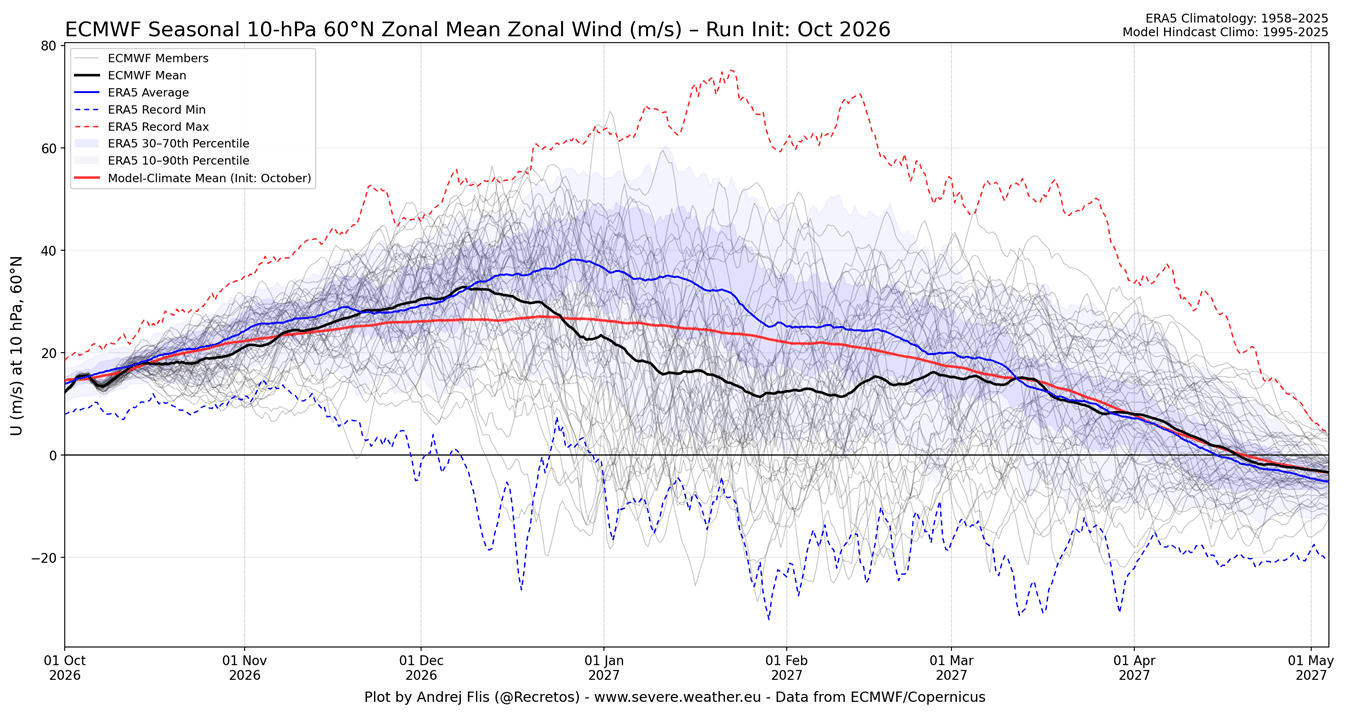
Stratospheric wind forecasts from the ECMWF indicate a significant deceleration of the Polar Vortex heading into January and February 2027. The model guidance points toward a heightened risk of a Sudden Stratospheric Warming (SSW) event—a complete collapse of the Polar Vortex driven by Pacific teleconnections rather than Eurasian snowpacks.
Regional Temperature Expectations
- United States: Ensuing mid-to-late winter temperature outlooks point toward colder-than-average anomalies across the central, southern, and eastern United States, driven by an active, amplified southern jet stream and persistent cloud cover typical of strong El Niño winters.
- Europe: Current medium-to-long-range forecasts suggest a predominantly mild Atlantic flow into continental Europe, with true cold anomalies largely restricted to northern Scandinavia. If the Polar Vortex does collapse, current model projections indicate that the primary delivery path for bitter cold will target North America rather than Europe.
Conclusion
While the folklore of the Siberian snow advance will undoubtedly remain a staple of autumn weather discussions, empirical data from 47 winters proves that it is no longer a dependable forecasting tool. For Winter 2026/2027, forecasters will bypass surface snow indices, focusing instead on stratospheric wave energy fluxes and the formidable atmospheric footprint of the Super El Niño.
