

Main Facts
The HVAC and hydronic heating industries are undergoing a massive transformation, caught between the accelerating march of advanced technology and the timeless demands of the field: simplicity, reliability, and ease of installation. At major industry showcases such as the American Boiler Manufacturers Association’s (ABMA) Boiler Expo and the International Air-Conditioning, Heating, Refrigerating Exposition (AHR Expo), a clear consensus has emerged among contractors, manufacturers, and building owners. While high-efficiency systems are now the environmental and regulatory standard, the true competitive edge no longer lies merely in theoretical efficiency percentages, but in how seamlessly that technology can be deployed in the real world.
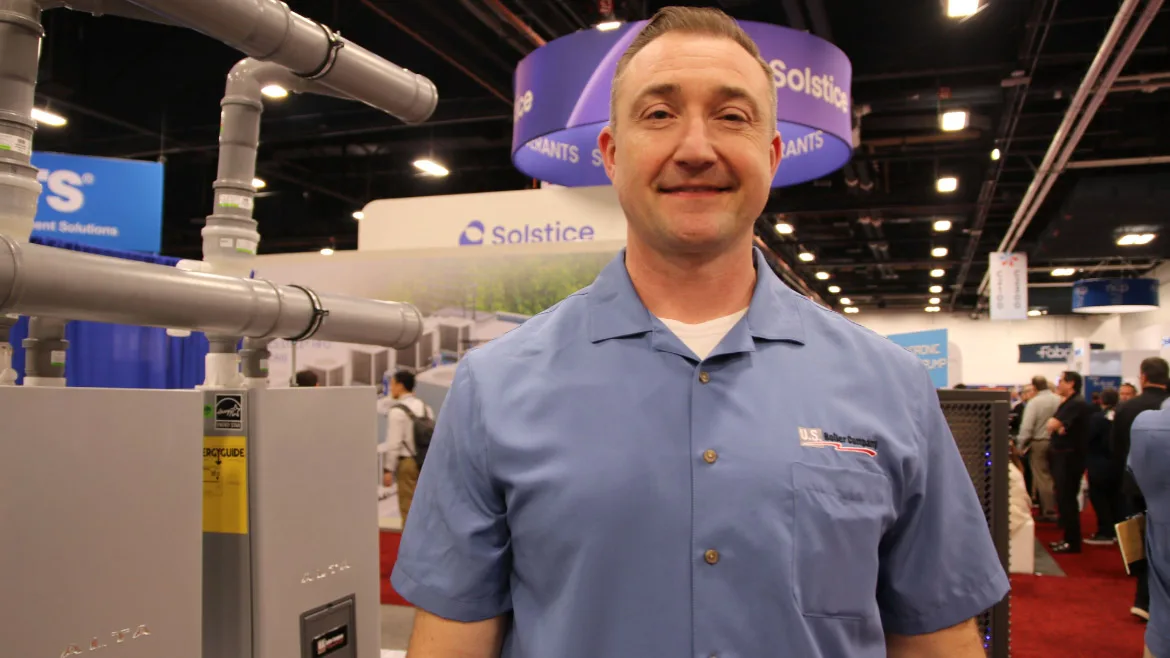
U.S. Boiler Company, a prominent name in residential and light commercial heating solutions, is at the forefront of addressing this industry-wide challenge. According to Charlie Kopplin, director of marketing at U.S. Boiler Company, the organization’s overarching design philosophy centers on stripping away the friction associated with high-tech equipment. By making sophisticated, high-efficiency technology as intuitive to work with as conventional analog systems, the manufacturer allows contractors to focus their expertise on the physical installation and system layout rather than getting bogged down by troubleshooting instruction manuals.
At the core of this strategy are proprietary innovations like OneTouch self-commissioning technology, adaptive combustion controls, and the expandable OneVent common venting system. These developments directly address the everyday pain points of HVAC professionals—chiefly, the labor shortage, the demand for reduced installation times, and the costly burden of post-installation service callbacks. Furthermore, by bridging the gap between residential and light commercial applications through integrated digital platforms like the USB-Connect contractor app, U.S. Boiler is redefining what contractors can achieve with a single product ecosystem.
Chronology
To understand how the modern boiler industry arrived at this crossroads of high-tech efficiency and user-centric simplicity, it is helpful to look at the historical trajectory of heating technology over the past few decades:
- The Late 20th Century (The Analog Era): For decades, residential and commercial boilers were heavy, cast-iron units characterized by relatively low efficiency, simple mechanical controls, and straightforward gas-valve setups. While they lacked modern energy-saving capabilities, they were prized for their mechanical durability and the simplicity of their physical layouts.
- The Regulatory Shift to High-Efficiency (Early 2000s): Driven by federal energy mandates and a growing global focus on carbon reduction, the industry pivoted heavily toward condensing boilers. While these units extracted significantly more heat from fuel, they introduced a wave of complexity. Contractors had to grapple with intricate electronic control boards, precise air-fuel ratio adjustments, specialized PVC/CPVC venting materials, and multi-sensor arrays.
- The Rise of Installation Complexities (2010s): As modulating-condensing (mod-con) boilers became the norm, the commissioning process grew increasingly tedious. Technicians often spent hours on-site with combustion analyzers, manually tweaking parameters to match local gas pressures, altitude, and varying fuel compositions. The learning curve for field personnel steepened sharply.
- The Digital Integration Phase (Late 2010s to 2020s): Recognizing that contractor labor shortages were becoming a critical bottleneck, manufacturers began introducing smart controls and mobile applications. Bluetooth diagnostics and digital interfaces started replacing physical dip switches and multi-meter checks, laying the groundwork for automated tuning.
- The Current Era of Autonomous Self-Commissioning (Present Day): Today, the industry is moving past mere digital connectivity into the realm of true automation. Technologies like U.S. Boiler’s OneTouch systems represent a paradigm shift where the boiler actively manages its own combustion tuning, monitoring local variables in real-time and adjusting its performance autonomously over its lifespan.
Supporting Data and Technical Innovations
The modern consumer and the professional contractor demand hardware backed by rigorous engineering and verifiable field performance. U.S. Boiler’s flagship residential and light commercial offerings—most notably the ALTA high-efficiency boiler line—utilize several interconnected engineering breakthroughs designed to maximize reliability while minimizing human error.
1. OneTouch Self-Commissioning and Adaptive Combustion
Traditionally, commissioning a high-efficiency condensing boiler required a technician to connect an electronic combustion analyzer, measure oxygen and carbon dioxide levels at high and low fire, and manually adjust gas valves and blower speeds. This process required specialized expertise and valuable time on every single job.
The ALTA boiler changes this paradigm through OneTouch technology. With minimal manual input, the system initiates an automated commissioning sequence. Built-in adaptive controls continuously monitor flame characteristics, atmospheric fluctuations, and fuel composition in real time, automatically tuning the combustion process over the life of the equipment.
2. Flexible Fuel Integration
Changing fuel sources from natural gas to liquid propane (LP) has historically been a meticulous, parts-heavy endeavor requiring conversion kits, physical orifice swaps, and careful recalibration. Modern designs prioritize fuel-agnostic flexibility, streamlining the conversion process to reduce inventory overhead for distributors and save time for installers in the field.
3. OneVent Common Venting Architecture
As contractors encounter larger residential applications and light commercial retrofits, the need for multi-boiler installations has grown. U.S. Boiler expanded its system architecture to include the OneVent common venting system. This solution allows multiple ALTA boilers to share a single venting configuration.
Crucially, the advanced electronic intelligence that governs a single standalone unit is scaled across an entire bank of boilers. This enables technicians who are already comfortable with residential-scale equipment to step up to light commercial jobs without needing to master an entirely new control philosophy or architectural layout.
4. USB-Connect Bluetooth Diagnostics
The modern service truck is a mobile office, and field diagnostics have largely migrated from bulky diagnostic tools to smartphones and tablets. The USB-Connect app—originally developed for U.S. Boiler’s residential line and now expanded to commercial applications—leverages Bluetooth technology for on-site setup, monitoring, and troubleshooting.
Significantly, this system operates independently of local infrastructure. Installers do not need to request building Wi-Fi passwords, access secure client networks, or rely on spotty cellular signals to communicate with the boiler’s control board. Technicians can view live operating data, adjust parameters, and pull historical fault codes directly from the equipment enclosure.
5. Elimination of Vulnerable Peripheral Sensors
A major contributor to equipment downtime has always been peripheral hardware—components located outside the primary boiler chassis that are exposed to environmental degradation. A prime example is the traditional outdoor reset sensor, which measures exterior ambient temperatures to modulate water temperatures indoors. These wired sensors are frequently victims of physical damage, UV degradation, or wiring faults.
By designing internal algorithms and smart system architectures that bypass the need for exterior hardware, manufacturers are actively pruning potential points of failure. As Charlie Kopplin notes, eliminating unnecessary peripheral sensors removes "one less thing for a contractor to worry about, and one less thing for a building owner to fail."
Official Responses and Industry Perspectives
The push toward intuitive, self-optimizing heating equipment is not occurring in a vacuum; it is a direct response to macroeconomic pressures facing the skilled trades. Charlie Kopplin, director of marketing at U.S. Boiler Company, emphasizes that the primary design objective for modern manufacturers must be empathy for the contractor’s daily workflow.
"Our approach is to make high-efficiency technology as easy to work with as possible, so contractors can focus on the job, not the manual," Kopplin states. "You just push a button, and it commissions itself. And then it keeps checking, keeps learning, keeps optimizing all on its own."
This sentiment resonates deeply across the broader hydronic heating community. Industry analysts point out that the HVAC sector is currently grappling with a dual challenge: an aging workforce of master technicians retiring from the field, and an influx of newer, less experienced technicians who need equipment that is forgiving and straightforward to install.
When discussing the scaling of residential technology into light commercial spaces via innovations like the OneVent system, Kopplin highlights the commercial viability for small-to-mid-sized contracting firms:
"You can now vent multiple boilers together, and all that intelligence that worked for one, now works across a whole bank of them."
This philosophy addresses a long-standing barrier to business growth for independent HVAC contractors. Historically, crossing the threshold from residential service work into light commercial retrofits required extensive specialized training, different software platforms, and entirely separate equipment inventories. By unifying the software ecosystem—utilizing familiar tools like the USB-Connect app across both categories—manufacturers are effectively lowering the barrier to entry for commercial work.
Implications for Contractors, Building Owners, and the Industry
The convergence of self-commissioning controls, simplified venting, and robust mobile diagnostics carries profound implications for every stakeholder in the hydronic heating supply chain.
For Contractors and Installers
- Reduced Labor Costs: With self-commissioning sequences cutting startup times down to a fraction of their historical duration, labor overhead per job decreases significantly.
- Fewer Callbacks: Equipment that continuously monitors and tunes its own combustion parameters is inherently less prone to drifting out of spec due to seasonal weather shifts or fuel quality variations. This translates directly to fewer emergency service calls during peak heating months.
- Expanded Business Horizons: The ability to scale residential expertise into multi-boiler light commercial applications using familiar hardware and software empowers independent contractors to bid on larger, more lucrative projects.
For Building Owners and Facility Managers
- Enhanced Reliability: The systematic removal of vulnerable external peripherals (such as outdoor reset sensors) and the incorporation of adaptive internal logic significantly boosts long-term equipment uptime.
- Optimized Energy Efficiency: Because the system continuously checks and optimizes its combustion profile rather than relying on a one-time initial tune-up, the boiler maintains peak operating efficiency throughout its seasonal lifecycle, lowering monthly fuel bills.
- Lower Maintenance Overhead: Simpler diagnostic pathways mean that when service is required, technicians spend less time diagnosing phantom issues and more time resolving the core matter efficiently, reducing billable labor hours.
For the Broader HVAC Industry
The overarching trend highlighted by U.S. Boiler’s product trajectory points to a mature phase in the energy transition. The early years of high-efficiency mandates were characterized by a race for technological complexity—adding sensors, valves, and digital readouts simply to hit regulatory targets.
Today, the industry is entering an era of technological maturity where true sophistication is masked by radical simplicity. The ultimate goal for the modern boiler manufacturer is to engineer advanced technology that successfully fades into the background. By letting the equipment handle the micro-adjustments, diagnostics, and self-tuning behind the scenes, the industry is returning power where it belongs: to the reliability of the iron and the expertise of the tradesperson.
