

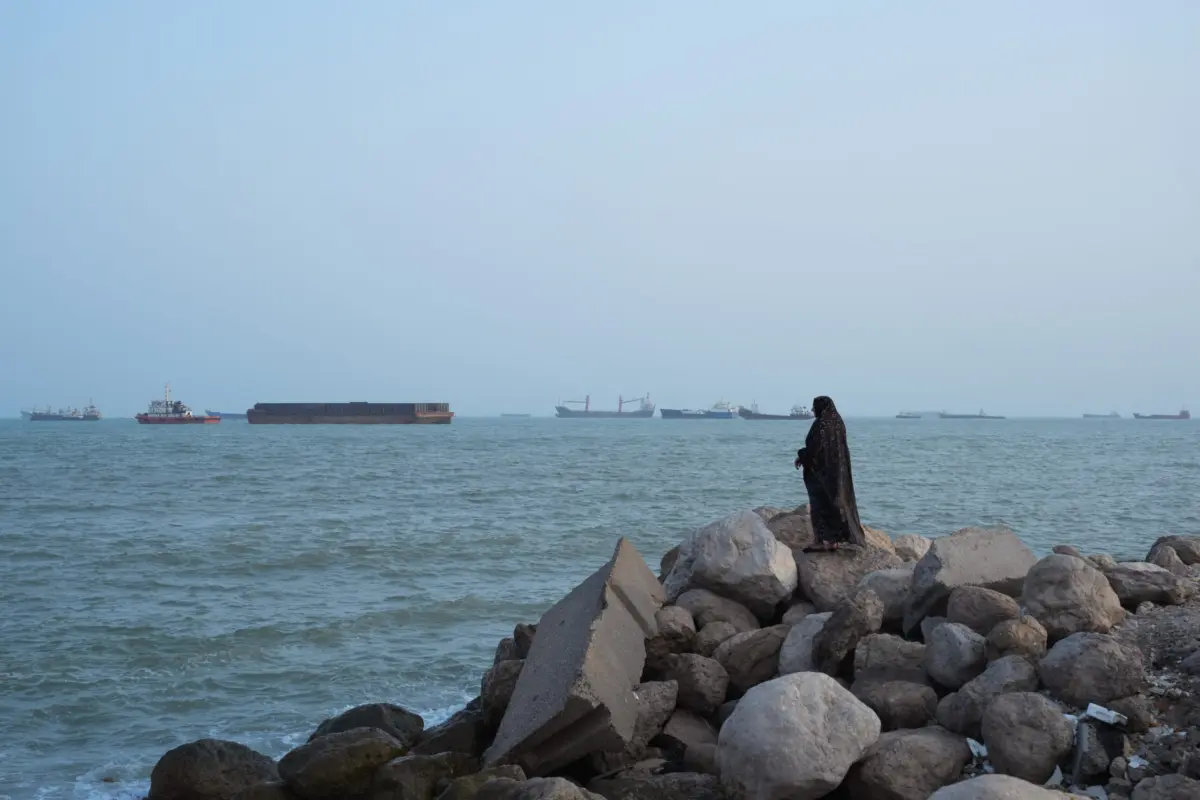
MUSCAT/TEHRAN/WASHINGTON — In what could mark a tentative turning point for global energy markets and regional security, Iranian and Omani officials have advanced discussions on an "interim framework" designed to restore commercial shipping through the strategically vital Strait of Hormuz. The initiative, revealed in a joint statement issued via the Oman News Agency, follows high-level diplomatic maneuvers involving foreign ministers, regional mediators, and competing signals from Washington.
The waterway—a critical global choke point through which roughly one-fifth of the world’s petroleum and liquefied natural gas (LNG) historically flowed—has remained largely shuttered since March. The closure was triggered when Tehran moved to block navigation following joint U.S. and Israeli airstrikes on February 28, an escalation that resulted in the death of Supreme Leader Ali Khamenei.
While the new diplomatic push offers a glimmer of hope for international shipping and stalled broader peace negotiations, it unfolds against a volatile backdrop of fresh American economic sanctions, competing claims over mine clearance, and deep-seated mistrust between Washington and Tehran.
Main Facts
The ongoing diplomatic track between Tehran and Muscat centers on carving out a path toward normalcy in the Persian Gulf. According to the joint statement released by the Oman News Agency following talks between Iranian Foreign Minister Abbas Araghchi and his Omani counterpart, Badr Albusaidi, the two nations are hammering out the blueprint for a "temporary joint maritime corridor."
- The Interim Corridor and Mine Clearance: The proposed framework incorporates a dedicated project for mine clearance within the strait, aimed at neutralizing hazards and establishing a safe, albeit temporary, passage for commercial vessels.
- Technical Road Map: Technical teams from Iran and Oman are slated to continue intensive discussions to establish a permanent maritime corridor. This includes outlining the future administrative structure of the strait, designing mechanisms for real-time information exchange, streamlining vessel traffic management, and providing essential maritime and security services.
- Timeline for Permanent Resolution: Iranian Deputy Foreign Minister Kazem Gharibabadi indicated via the semi-official Tasnim news agency that Tehran and Muscat intend to negotiate a permanent route within the next 30 to 60 days.
- Geopolitical Scope: While Tehran has historically maintained that its navigational talks are strictly bilateral and confined to Oman as a fellow littoral state, the joint statement explicitly noted the importance of broadening the dialogue. Both sides emphasized the necessity of incorporating other Persian Gulf littoral states into upcoming discussions to ensure long-term stability and freedom of navigation.
Chronology of Events
To understand the gravity of the current diplomatic breakthrough, it is necessary to examine the cascading sequence of military escalations and diplomatic interventions that have defined the crisis over the past six months:
- February 28, 2026: A series of targeted U.S. and Israeli airstrikes strike Iran, resulting in the death of Supreme Leader Ali Khamenei. The unprecedented strike shatters a fragile status quo in the Middle East.
- March 2026: In direct retaliation to the late-February attacks and subsequent military posture, Iran moves to officially close the Strait of Hormuz, laying mines and deploying naval assets to halt maritime traffic, effectively choking off a vital artery for global energy markets.
- June 2026: Under intense international pressure and facing severe domestic economic strain, Washington and Tehran sign a 60-day interim peace deal aimed at curbing hostilities and negotiating a permanent cessation of the conflict.
- Mid-August 2026: The 60-day diplomatic window closes without a permanent agreement. Tehran accuses the United States of breaching the terms of the interim deal by encouraging commercial shipping to bypass the strait using alternative, Western-backed routes that undermine Iranian sovereignty. Washington counters that Iranian harassment of commercial and cargo ships violated the spirit and letter of the agreement.
- Early September 2026: Regional mediation intensifies. Pakistani Army Chief Asim Munir visits Tehran to bridge the diplomatic chasm, meeting with senior Iranian officials to relay conditions and open back-channels to Washington.
- Mid-September 2026 (Tuesday): Omani Foreign Minister Badr Albusaidi travels to Tehran, following closely on the heels of the Pakistani delegation. Concurrently, U.S. President Donald Trump announces via social media that the U.S. Navy has cleared mines from the strait, warning Tehran that any subsequent placement of mines will result in immediate military destruction. Later that same day, Iran and Oman publicly announce their "interim framework" for a joint maritime corridor.
Supporting Data & Operational Realities
The closure of the Strait of Hormuz has served as an economic and logistical seismic event for the global economy. Before March, the narrow channel accommodated roughly 20% of the globe’s petroleum and liquefied natural gas supply, making it the single most important energy artery on Earth. Its prolonged closure has forced energy exporters to seek costly, inefficient overland pipelines and alternative maritime detours, driving up global shipping insurance rates and energy futures.
However, operationalizing a reopening remains fraught with logistical hazards:
- The Mine-Clearance Dispute: On Tuesday, U.S. President Donald Trump claimed on social media that the U.S. Navy had successfully cleared mines from the strait, a declaration intended to jump-start commercial transits. However, Trump provided no concrete evidence for the assertion—a claim he has made previously.
- European and Industry Skepticism: European maritime officials and independent security analysts have expressed deep skepticism regarding Washington’s mine-clearance claims. Naval mine-countermeasure operations are inherently complex, meticulous, and time-consuming. Eradicating subterranean and floating hazards from a heavily contested geographic chokepoint requires weeks, if not months, of sweeping operations by specialized minehunter vessels.
- The Enforcement Dilemma: President Trump’s warning that "any ship or boat placing new mines will be immediately and systematically destroyed" underscores the fragile militarized nature of the waterway. Even as diplomats in Muscat and Tehran architect a framework for peace, the presence of forward-deployed U.S. and Iranian naval assets creates a high-risk operational environment where a single miscalculation could trigger a kinetic conflagration.
Official Responses and Diplomatic Maneuvers
The diplomatic architecture underpinning the Omani-Iranian initiative relies heavily on regional intermediaries who have spent months shuttling between Western capitals and Tehran.
The Omani and Pakistani Mediation Track
Oman and Pakistan have emerged as the primary diplomatic conduits for managing the US-Iran stalemate. Omani Foreign Minister Badr Albusaidi’s visit to Tehran came directly on the heels of a high-stakes visit by Pakistani Army Chief Asim Munir.
A spokesperson for the Iranian president’s office hailed General Munir’s visit as "highly fruitful and yielded very valuable diplomatic achievements." According to Tasnim, Munir’s diplomatic outreach was explicitly designed to "create space for negotiations and convey Iran’s conditions and positions to the American side."
Albusaidi echoed the sentiment of cooperative regional diplomacy, stating via social media that ongoing discussions with regional partners "will be conducted in support of peace and cooperation, stability and freedom of navigation."
Washington’s Dual-Track Approach
The U.S. response to the evolving situation has been characterized by a familiar mix of aggressive economic pressure and localized deterrence. Just a day prior to Trump’s announcement regarding mine clearance, the White House rolled out a sweeping new package of economic sanctions designed to strangle Iran’s remaining financial and economic partnerships.
This dual strategy—wielding maximum economic pressure while attempting to unilaterally declare shipping lanes open—complicates the diplomatic maneuvering of regional actors. Washington has consistently blamed Tehran for failing to control rogue military elements that targeted commercial vessels, viewing Iranian behavior in the strait as a direct violation of prior de-escalation agreements.
Strategic Implications and Expert Analysis
Geopolitical analysts view the Iran-Oman interim framework as a pivotal moment, though they urge caution regarding its long-term viability given the immense friction between Washington and Tehran.
"It’s definitely a baby step in the right direction, but the U.S. reaction and coordination will be important in understanding how serious it is," noted Anna Jacobs, a non-resident fellow at the Arab Gulf States Institute.
Jacobs emphasized that while Oman will continue its tireless diplomatic efforts to "find compromises" acceptable to both the White House and the Iranian establishment, unpredictable variables remain. "The wildcard is Trump and whether his administration would support this framework," she noted, pointing to the risk that unilateral U.S. actions or contradictory military posture could derail regional mediation efforts.
Potential Pathways Forward
- Resumption of Broadened Talks: If the Iran-Oman technical talks successfully establish the temporary maritime corridor over the next 30 to 60 days, it could pave the way for a broader resurrection of the stalled U.S.-Iran peace architecture that lapsed in August.
- Integration of Regional Stakeholders: By signaling an openness to include other Persian Gulf littoral states, Tehran may be attempting to dilute bilateral tensions by multilateralizing maritime security, making it harder for individual actors to unilaterally sabotage the peace process.
- The Risk of Impasse: Conversely, if the United States dismisses the Omani-Iranian framework—or insists on complete unilateral control over maritime security and mine clearance—Tehran may view the initiative as a tactical feint, causing the fragile framework to collapse and returning the region to the brink of open naval warfare.
For now, the international community watches the Persian Gulf with bated breath. The blueprints drafted in Muscat offer a technical roadmap out of the crisis, but whether political will in Washington and Tehran can match the diplomacy of Oman remains the ultimate test for the stability of the Middle East.
