

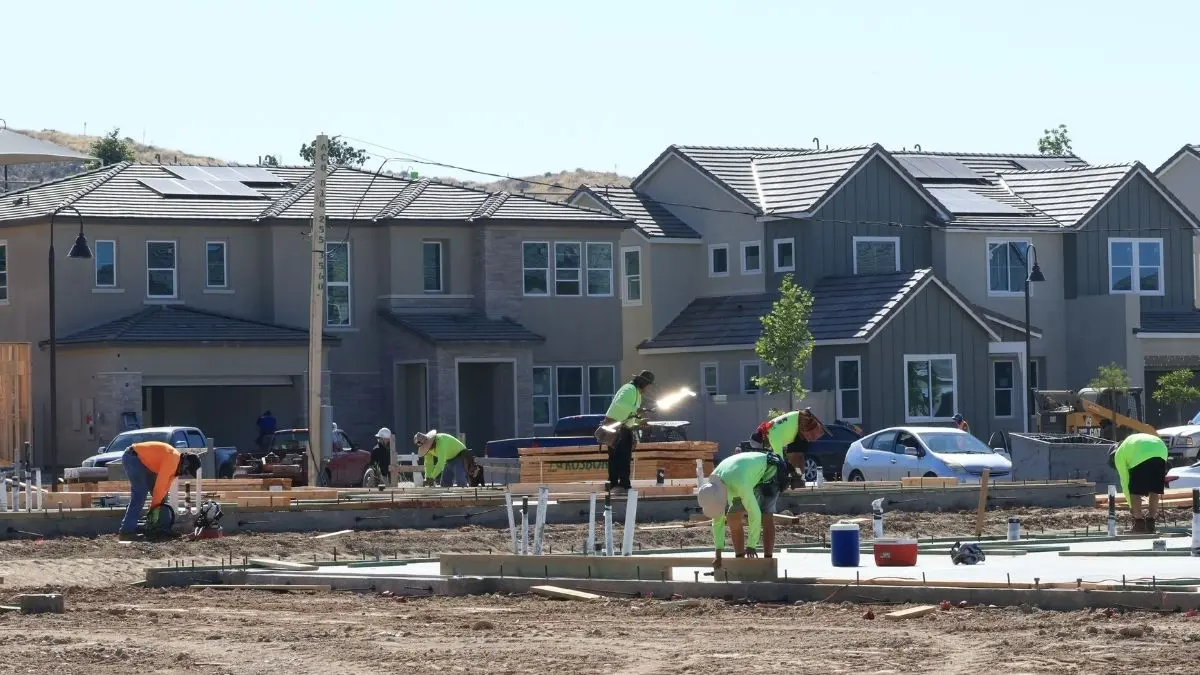
Editor’s note: This is the first of a three-part series exploring disruptions, potential solutions, and the broader business impacts of recent immigration enforcement initiatives on the U.S. residential construction industry. Part 2 will focus on policy solutions and domestic efforts to build skilled labor capacity, while Part 3 will examine how these operational disruptions compound existing financial headwinds, placing homebuilding businesses at risk.
Main Facts: The Ground-Level Reality of Immigration Enforcement
Across dozens of local housing markets nationwide, the U.S. Immigration and Customs Enforcement (ICE) has dramatically escalated enforcement operations at active residential construction sites. What federal authorities frame as a necessary push to secure borders and enforce labor laws has, on the ground, left job sites shaken, labor pools depleted, and homebuilders grappling with unprecedented operational paralysis.
The impacts are particularly acute in states where local law enforcement agencies cooperate directly with federal authorities under programs like Section 287(g). Residential construction—an industry historically reliant on immigrant labor, which accounts for approximately 25% of the workforce—has emerged as a frequent target.
The consequences for homebuilders have been swift and severe. Entire subcontracting crews are refusing to report to work, delivery drivers are turning back at state borders, and foundation pours are sitting idle for weeks. The resulting labor shortages have triggered aggressive bidding wars for remaining trade workers, doubling construction timelines in some regions and threatening the profitability of homebuilders already squeezed by affordability challenges.
Chronology: The Escalation of Raids and Rising Arrests
The current crisis did not materialize overnight; it represents the culmination of a months-long intensification of federal enforcement strategy.
- Spring 2026: ICE operations begin ramping up noticeably in regional corridors like West Virginia’s Eastern Panhandle, roughly 60 miles northwest of Washington, D.C. Weekly raids on new-home subdivisions create initial ripples of anxiety among trade crews.
- January 2026: Federal figures show ICE making 37,933 arrests at the start of the year. High-profile encounters in cities like Minneapolis force authorities to temporarily recalibrate tactics.
- February – May 2026: Monthly arrest totals decline to roughly 30,000, remaining relatively stagnant through the spring as builders monitor localized enforcement patterns.
- June 5, 2026: The U.S. Senate passes a nearly $70 billion immigration enforcement funding bill. This legislative milestone immediately invigorates federal operations, driving June’s monthly arrest total to 43,021. In West Virginia and Texas, local enforcement shifts from weekly subdivision visits to aggressive intersection checkpoints and border stops.
- July 2026: ICE arrests surge to a record-setting 49,571 nationwide. Texas and Florida alone account for nearly 20,000 of these detentions—roughly 40% of the national total. In San Antonio, approximately 1,600 frontline workers are detained during a single week of paralyzing fear.
- August 2026: Enforcement spreads to previously unaffected markets, including the Boise, Idaho metro area (such as Emmett, Nampa, and Eagle), where sudden construction-site raids make local headlines and disrupt local custom homebuilders.
Supporting Data: Numbers Behind the Labor Crunch
The quantitative reality of the enforcement surge is underscored by newly released data from the Deportation Data Project at UC Berkeley and UCLA, paired with housing market reports:
- 49,571: The record number of ICE arrests recorded in July 2026, up significantly from the 37,933 arrests logged in January.
- 2,000: The stated daily arrest target set by the administration and ICE, suggesting monthly totals will continue to climb.
- 25%: The estimated share of immigrant workers making up the total U.S. construction workforce, according to Home Builders Institute (HBI) data.
- 14.3%: The population growth rate in Berkeley County, West Virginia, between 2020 and 2025, driven by homebuyers priced out of Maryland and Virginia suburbs—demand that local builders can no longer service.
- 25% to 50%: The recent spike in framing labor costs reported by central Texas homebuilders over a single month as available labor dwindles.
- $2,000 to $5,000: The estimated per-home cost increase driven solely by labor shortages and out-of-market contractor overhead in heavily impacted regions.
Official Responses and Industry Advocacy
As the operational crisis deepens, homebuilders, trade associations, and regional executives have sought dialogue with state and federal lawmakers—with frustratingly little result.
In West Virginia, management executives and division presidents have held numerous meetings with the governor’s chief of staff, the attorney general’s office, and the state Department of Labor. According to builders, the universal response from state officials has been sympathetic acknowledgement paired with administrative inaction.
Similarly, trade groups such as the Idaho Home Builders Association, the Building Contractors Association of Southwestern Idaho, and the South Texas Builders Association have organized forums, listening sessions, and direct delegations to Washington, D.C.

During recent hearings on Capitol Hill, homebuilding representatives sought clarity on the future trajectory of enforcement. Federal officials delivered an unambiguous message: enforcement efforts will not only persist but are slated to intensify, aligning directly with the core platform of the current administration.
While some industry leaders—particularly in border regions—express support for broader national security and border control objectives, they remain unified in their condemnation of how these operations are executed on domestic job sites. Many emphasize that the indiscriminate nature of the raids is penalizing legal residents, lawful workers, and even U.S. citizens.
Implications: Crippling the Trade Base and Threatening Profitability
The secondary and tertiary effects of intensified ICE enforcement are rippling across every facet of the residential construction ecosystem.
The Human Toll: Fear and Profiling
Builders nationwide report that enforcement operations have fostered an intense culture of fear. Workers of Hispanic origin—regardless of their legal status—are frequently subjected to questioning, harassment, or lengthy roadside detentions if they lack immediate physical proof of citizenship or authorization. Documented instances include legal residents and U.S. citizens being held for up to four hours, leaving workers profoundly shaken. Consequently, many qualified tradespeople are refusing assignments in affected jurisdictions entirely, opting instead to work in neighboring, lower-enforcement counties.
Operational Chaos and Cost Surges
The loss of reliable subcontracting tiers—particularly in critical exterior trades such as framing, masonry, concrete, siding, and roofing—has fundamentally disrupted construction schedules. In West Virginia’s Eastern Panhandle, builders report that foundation pours have sat idle for over a month simply because framing crews cannot be secured.
To bridge the gap, some developers have resorted to desperate measures, hiring out-of-market crews from distant states like Florida or Minnesota, covering their lodging, providing daily food per diems, and renting non-construction vehicles to minimize the risk of traffic stops. These inflated overhead costs are either squeezing builder profit margins or being passed along to consumers.
Stalled Housing and Consumer Disconnect
With build times doubling in heavily targeted markets like South Texas and the West Virginia panhandle, housing supply is failing to meet active buyer demand. Builders who previously anticipated closing dozens of homes within a fiscal year are now slashing their forecasts. Finished homes are at risk of missing delivery deadlines, leaving homebuyers in limbo with no clear timeline on when their properties will be completed.
Ultimately, the compounding pressures of labor shortages, surging subcontractor costs, and prolonged build cycles are forcing some developers to reconsider their presence in affected markets altogether. As one regional homebuilding executive bluntly summarized:
"If you can’t build houses and you can’t get manpower, you can’t be profitable. You’ve got to start questioning if you want to stay in this market for a long time, or if you bug out for a while until they get this straightened out."
