

Main Facts: A Modern Take on Historic California Cooking
For decades, the backyard charcoal grill has reigned supreme as the quintessential American outdoor cooking vessel. From the classic kettle shape to modern kamado-style ceramic cookers, backyard chefs have relied on passive venting, ash management, and static grate heights to manage their fires. Enter the Blackstone Bronco Open-Flame Grill, a distinct and ambitious departure from conventional grilling architecture.
Rooted deeply in the heritage of mid-19th-century Southern California, the Bronco draws its direct lineage from traditional Santa Maria-style grills. Historically, local vaqueros (Spanish-Mexican cowboys) would celebrate the conclusion of massive cattle roundups by hosting open-air feasts. They utilized massive, open-flame pits and adjustable grates to cook substantial cuts of beef—chiefly tri-tip and thick-cut, bone-in ribeyes—over native red oak coals.
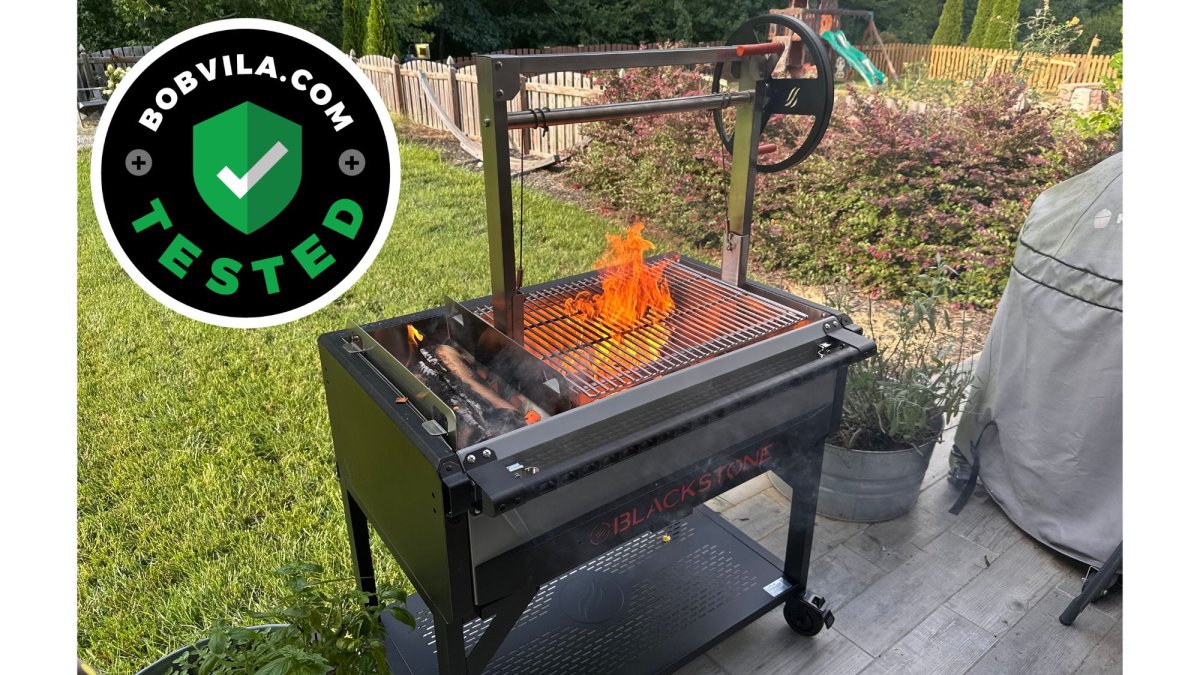
The Blackstone Bronco translates this historic, open-hearth culinary technique into a backyard-friendly footprint. Weighing in as a heavy-duty, live-fire machine, it offers a hybrid experience bridging traditional charcoal barbecuing, authentic wood-burning offset cooking, and high-intensity steakhouse grilling.
Core Takeaways:
- Design Heritage: Modeled after historical Santa Maria-style live-fire pits.
- Fuel Versatility: Engineered to handle both standard charcoal and full-size split hardwood logs.
- The Crank System: Features an adjustable-height grate operated via a side-mounted crank wheel and heavy-duty wire suspension.
- The Trade-Off: Rewards the user with exceptional temperature control and authentic smoke flavors, but demands patience with a lengthy assembly and fire-building process.
Chronology: From Box to Burn—The Life Cycle of a Cook
Working with a live-fire system like the Bronco requires a fundamental shift in mindset compared to flipping the switch on a gas grill or lighting a chimney starter of briquettes for a 15-minute weeknight burger cook. Reviewing the chronological workflow reveals what an owner can expect from setup to the final plate.
Phase 1: Unboxing and Assembly (The Two-Hour Investment)
The journey with the Blackstone Bronco begins long before any food touches the grates. Out of the box, the grill requires significant assembly. Clocking in at approximately two hours of unboxing, hardware sorting, and bolt-tightening, the build process demands a dedicated afternoon. Because of the heavy-gauge steel components, robust cookbox, and crank-wheel assembly, having a second set of hands during assembly is strongly recommended.
Phase 2: Fire-Building and Ember Management (The One-Hour Pre-Game)
Once assembled, firing up the Bronco is an exercise in intentional patience. While standard backyard grills ask you to dump hot coals and start cooking within 20 minutes, the Bronco is built around burning solid fuel down to its foundational elements.
The user has two primary methods for generating heat:
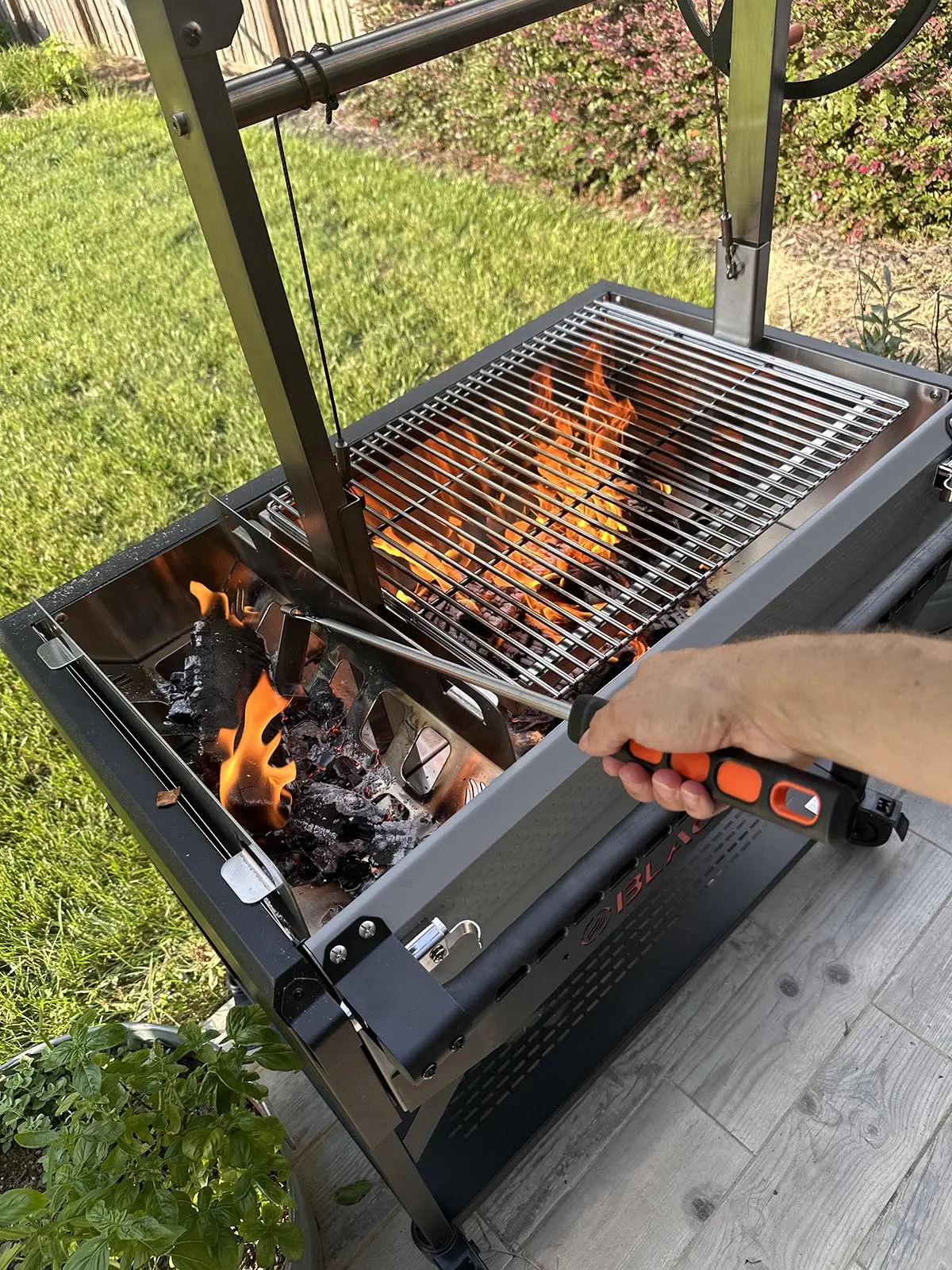
- Direct Cookbox Loading: The entire front panel of the Bronco folds downward, dropping open to grant unobstructed access to the massive interior cookbox. This allows the pitmaster to load full-size split hardwood logs directly inside.
- The Brasero Method: Alternatively, users can load wood into the Bronco’s brasero—a dedicated metal basket situated on the side of the cookbox. As the wood consumes itself, glowing embers naturally fall through the basket and pool on the floor of the cookbox. The user then utilizes the included steel coal rake to maneuver these hot embers directly underneath the cooking surface.
No matter which method is chosen, transitioning raw wood into prime cooking coals takes time. Reviewers note that it easily takes upwards of an hour to break down four medium-sized logs into the bed of glowing, radiant embers required to achieve optimal grilling conditions.
Phase 3: The Cook and Thermal Manipulation
With the fire established, the operational phase begins. This is where the Bronco truly separates itself from traditional grills. Instead of moving food around a static grate to find hot and cool zones, the pitmaster adjusts the cooking surface itself.
By turning the crank wheel, the heavy-duty steel grates rise or lower on their steel support wires. Lowering the food brings it into terrifyingly close proximity to the ember bed—where temperatures can routinely exceed 1,200 degrees Fahrenheit. Raising the grates distances the food from the thermal source, allowing for slower, gentler convection cooking.
Supporting Data: Performance Metrics and Specifications
To understand how the Blackstone Bronco performs under real-world conditions, it helps to examine its operational parameters, physical construction, and culinary outcomes side-by-side with conventional grilling options.
Technical Performance Analysis
| Feature / Metric | Blackstone Bronco Open-Flame Grill | Traditional Kettle Charcoal Grill | Gas / Pellet Grills |
|---|---|---|---|
| Primary Fuel Source | Split Hardwood Logs / Charcoal | Charcoal Briquettes / Lump Charcoal | Propane / Wood Pellets |
| Temperature Control Method | Adjustable Crank Grate + Venting | Air Vents + Coal Placement | Digital Thermostats / Valves |
| Max Grate Heat Zone | 1,200°F+ (Direct Ember Proximity) | 650°F – 800°F standard | 500°F – 700°F standard |
| Setup & Pre-Heat Time | 60 to 90 minutes | 20 to 30 minutes | 10 to 15 minutes |
| Assembly Time | ~2 Hours | 30 to 45 minutes | Varies (Often 1+ Hours) |
| Flavor Profile | Intense, authentic hardwood smoke | Standard charcoal char | Clean gas or mild smoke |
Real-World Culinary Testing Data
When put to the test with demanding cuts of meat, the Bronco yields distinct results:
- The 2-Inch Ribeye Test: Tested with a thick-cut, 2-inch ribeye steak, the grill’s ability to lower the grate within inches of a 1,200-degree ember bed produced a profound, dark, caramelized crust in seconds. Raising the grate allowed the interior to coast gently to a precise medium-rare, locking in natural juices without overcooking the outer band of the meat.
- The Poultry Render Test: Tested with chicken thighs, the high-grate setting allowed for a prolonged, low-intensity smoke bath that slowly rendered heavy fats without flare-ups. Dropping the grates during the final five minutes crisped the skin to a golden-brown finish.
Official Perspectives and Expert Consensus
The broader culinary and product review community has weighed in heavily on the rise of open-flame live-fire cooking units, positioning models like the Blackstone Bronco as a specialized tool for dedicated outdoor cooking enthusiasts rather than casual weekend grillers.
According to veteran product testers and outdoor cooking columnists, the Bronco fills a specific niche that has long been neglected by mainstream manufacturers:
"What makes this style of grill different from other charcoal or wood-burning grills is the ultimate freedom of physical temperature control. By raising and lowering the grate over the coals rather than relying solely on choke vents, you gain a tactile, instantaneous command over your heat zones."
At the same time, industry experts are quick to temper expectations regarding user convenience. Master pitmasters and reviewers emphasize that the Bronco is fundamentally an experience-driven appliance:
"If you’re looking for a grill that offers speed and convenience for a quick Tuesday night dinner, the Blackstone Bronco open-flame grill simply isn’t built for that workflow. But if you embrace the process—the fire-building, the wood management, and the hands-on engineering—it rewards you with cooking results you cannot replicate on standard backyard setups."
Implications: Who is the Blackstone Bronco For?
The introduction and growing popularity of live-fire, Santa Maria-style consumer grills signal a broader shift in backyard culture. For years, the market has trended heavily toward technological automation—Wi-Fi-enabled pellet smokers, digital temperature probes, and push-button ignition systems designed to make outdoor cooking as mindless as operating an indoor oven.
The Blackstone Bronco moves deliberately in the opposite direction. It forces the cook to slow down, engage with the elements, understand wood combustion, and physically interact with the cooking fire via crank wheels and coal rakes.
The Verdict
- Ideal Buyer: The dedicated backyard chef, barbecue hobbyist, and steak aficionado who views cooking as an immersive craft. Anyone willing to invest time into fire management will find the Bronco to be a rewarding, durable, and exceptionally high-performing centerpiece for outdoor gatherings.
- Who Should Pass: Casual cooks, individuals pressed for time, and those seeking instant gratification. Because of its lengthy assembly, dedicated pre-heating schedule, and active fire management requirements, the Bronco is not optimized for quick, effortless weeknight meals.
Ultimately, the Blackstone Bronco proves that while modern convenience has its place, the ancient allure of open flames, hardwood smoke, and raw, controllable heat remains one of the most satisfying ways to prepare a meal in the great outdoors.
