

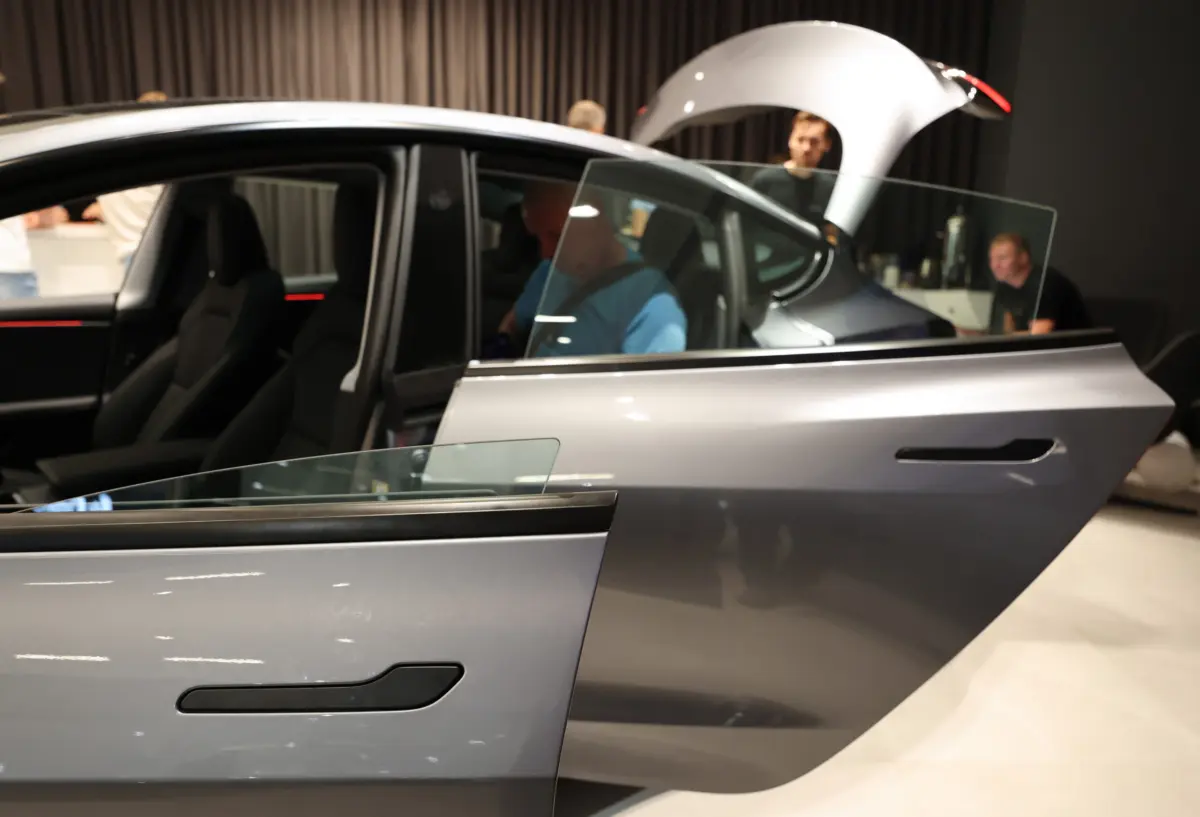
BEIJING — In one of the most sweeping regulatory interventions in the history of the world’s largest automotive market, China’s State Administration for Market Regulation (SAMR) has forced Tesla Inc. and at least eight other major automakers to recall more than 4 million vehicles. The massive safety action targets design flaws tied to flush, electronically controlled door handles—a sleek modern aesthetic that has increasingly become a lethal trap for occupants during high-impact collisions and subsequent vehicle fires.
The sweeping enforcement underscores Beijing’s growing intolerance for safety compromises in the name of aerodynamics and minimalist design. As electric vehicles (EVs) saturate global roads, the fatal intersection of loss of electrical power, mechanical entrapment, and post-crash fires has transformed a stylistic trend into an urgent international crisis.
Main Facts: The Scale and Scope of the Chinese Recalls
The coordinated recall campaign affects approximately 4.27 million vehicles from nine different manufacturers, making it one of the largest safety actions ever launched in China over a singular mechanical and electrical defect.
Tesla bears the lion’s share of the burden. The American EV pioneer is recalling just under 3 million vehicles in China—spanning its popular Model 3, Model Y, and imported lineups—to address catastrophic risks associated with its electrically actuated door release mechanisms.
According to SAMR’s official findings, Tesla’s flush door handles rely on continuous electrical power to function. In severe collisions, sudden power failure can render the handles entirely inoperable from both the inside and the outside.
"This could hinder occupants from quickly opening the doors to escape and impede rescue efforts by those outside the vehicle, posing a serious safety hazard," SAMR stated in its regulatory advisory.
To remedy the hazard, Tesla has agreed to deploy a mandatory over-the-air (OTA) software update designed to automatically lower the vehicle’s windows following a severe accident, while simultaneously affixing physical warning labels to guide panicked occupants toward hidden emergency mechanical door releases.
Following Tesla, local consumer tech and automotive giant Xiaomi Corp. accounts for the second-largest portion of the recall, pulling back 390,435 units of its high-profile SU7 electric sedan. Meanwhile, Zhejiang Leapmotor Technology Co. Ltd. has initiated the recall of 371,200 vehicles under the same regulatory pressure. Seven other domestic and international automakers comprise the remainder of the 4.27-million-vehicle total.
Li Yanwei, an influential adviser to the China Automobile Dealers Association, noted that this enforcement action represents a watershed moment for the Chinese automotive industry, marking the largest concurrent recall for a uniform quality and safety issue in the nation’s history.
In a compounding blow to Tesla’s regulatory compliance team, the company announced a second, separate recall on Friday targeting roughly 2.7 million vehicles in China. This secondary action aims to overhaul and tighten monitoring systems for Tesla’s controversial driver-assistance software, ensuring that motorists remain attentive to road conditions and actively mitigate collision risks.
Chronology: From Innovative Design to Fatal Traps and Regulatory Bans
The path from sleek showroom appeal to a government-mandated recall has been punctuated by tragedy, investigative journalism, and swift legislative backlash.
- The Rise of Flush Styling: Over the past decade, automakers chasing improved aerodynamic efficiency and ultra-clean exterior aesthetics increasingly adopted flush, motorized door handles that sit completely flat against the body panels until activated by a digital signal, capacitive touch, or light manual pressure.
- Investigative Exposés: Investigative reporting by Bloomberg News brought international attention to the fatal design flaw, documenting at least 15 deaths across a dozen isolated incidents where trapped occupants or frantic first responders were physically unable to pry open the doors of post-crash, burning Tesla vehicles.
- Internal Warnings Ignored: Reports late last year revealed that Tesla Chief Executive Officer Elon Musk aggressively championed and insisted on retaining electronic door mechanisms despite internal engineering concerns raised regarding crash-scenario power loss.
- China’s Legislative Ban: Following a series of high-profile, fiery crashes involving Xiaomi electric vehicles, Chinese regulators accelerated their scrutiny of EV design standards. Earlier this year, China made history by becoming the first country in the world to officially outlaw concealed door handles on new electric vehicles.
- The August 2026 Enforcement: Culminating months of investigation and regulatory tightening, SAMR officially issued its directive forcing Tesla, Xiaomi, Leapmotor, and six other automakers to pull more than 4 million vehicles off the road for emergency remediation.
Supporting Data: The Anatomy of Modern EV Entrapment
The technical vulnerabilities exposed by the Chinese recall highlight a fundamental friction point between modern digital vehicle architecture and legacy safety protocols.
The Physics of Failure
Traditional vehicles utilize direct, mechanically linked metal linkages between interior and exterior door handles and the latches themselves. Even if a car’s battery is completely destroyed or disconnected in a crash, a physical pull of the handle mechanically retracts the latch.
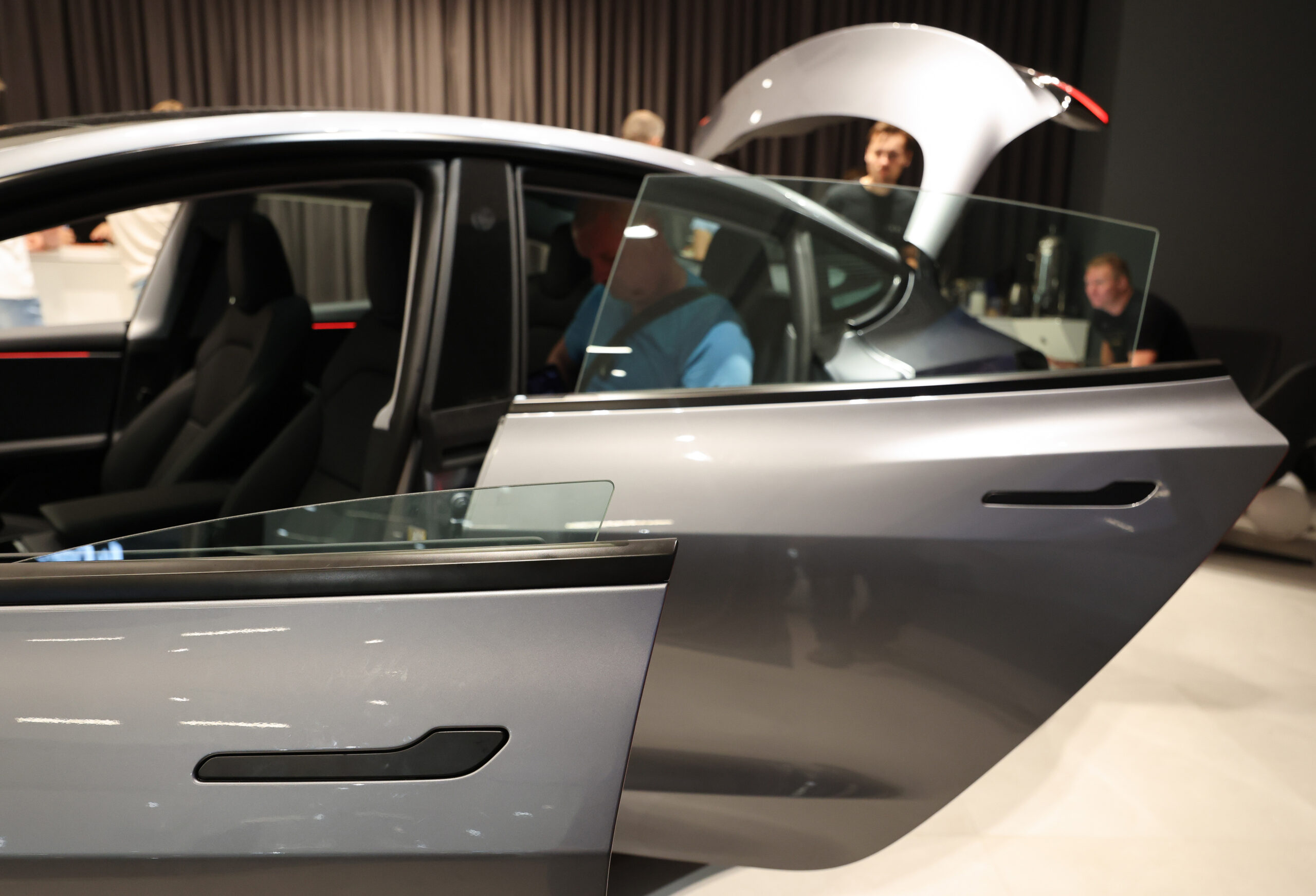
In contrast, modern EVs rely heavily on "shift-by-wire" and "door-by-wire" systems. When a user interacts with a flush handle:
- A microswitch detects pressure or proximity.
- An onboard computer signals an electric actuator to push or pivot the handle outward.
- An electronic solenoid or motor unlatches the door mechanism.
During a severe collision, several failure points routinely cascade:
- Primary Battery Disconnection: High-voltage safety pyro-fuses instantly sever the connection to the main lithium-ion battery pack to prevent electrical fires, killing the low-voltage 12-volt auxiliary system in the process.
- Body Panel Deformation: Impact forces warp the aluminum and steel body panels, jamming flush-mounted handles into their recesses so they cannot pivot outward, even if backup manual releases exist.
- Post-Impact Thermal Runaway: When compromised battery cells enter thermal runaway, cabin temperatures spike rapidly and toxic smoke fills the interior within seconds. Every second lost trying to locate obscure mechanical override levers or waiting for outside rescuers exponentially increases mortality rates.
According to automotive industry databases, the average development lifecycle for a new Chinese EV has shrunk to roughly half the time required by legacy Western and Japanese automakers. Regulators argue that this breakneck pace of innovation has occasionally outpaced rigorous human-factors testing, particularly regarding emergency egress under extreme stress.
Official Responses and Global Spillover
The shockwaves from Beijing’s decisive crackdown are already reverberating across global automotive hubs, sparking immediate policy reviews in the United States and Europe.
The United States Response
In Washington, the National Highway Traffic Safety Administration (NHTSA) announced last month that it is actively laying the groundwork to draft aggressive new federal regulations targeting unsafe, power-dependent door handles.
NHTSA is currently conducting an active engineering analysis and formal probe into certain Tesla Model Y crossovers following a mounting volume of consumer complaints regarding vehicle entrapment. Concurrently, members of the U.S. Congress have introduced federal legislation that would mandate the inclusion of prominent, easily accessible mechanical door releases in all newly manufactured vehicles, alongside standardized exterior grab points to guarantee first-responder access during total electrical failures.
Industry and Corporate Reactions
Automakers caught in the Chinese sweep have scrambled to comply with SAMR’s mandates without permanently damaging the consumer appeal of their lineups.
For Tesla, the requirement to affix bright warning labels highlighting emergency mechanical releases runs counter to the minimalist interior philosophy championed by Musk. However, failing to comply with SAMR directives risks an immediate ban on vehicle sales and imports in the world’s most competitive EV market—a financial catastrophe few manufacturers are willing to risk.
Xiaomi and Leapmotor have similarly committed to rolling out software patches and physical modifications across their respective service networks to satisfy regulatory auditors.
Implications: The End of the Minimalist Era in EV Design?
The mass recall in China signals a profound philosophical shift in how governments and consumers view the intersection of automotive design and human safety. For years, futuristic aesthetics—smooth surfaces, touch-sensitive panels, and hidden controls—served as primary marketing differentiators for electric vehicle startups attempting to break away from traditional manufacturing tropes.
The events in China demonstrate that the era of unfettered, form-over-function design in automotive engineering is drawing to a close.
- Mandatory Mechanical Redundancy: Regulators globally are expected to codify mandatory mechanical backups for all vehicle exit points, ensuring that digital and electrical failures never again compromise basic human survival.
- Stricter Global Harmonization: As safety agencies share crash-test data and consumer incident reports across borders, policies pioneered in Beijing—such as the outright ban on concealed handles—may soon find their way into European and North American vehicle safety standards.
- A Balancing Act for Designers: Automakers will now be forced to engineer aerodynamic surfaces that incorporate fail-safe mechanical affordances, proving that sleek design does not have to come at the cost of life safety in a crisis.
As the dust settles on the multi-million-vehicle recall, the message from regulators is unequivocal: innovation in automotive technology must always remain subordinate to the fundamental right of a trapped occupant to open a door and escape.
