

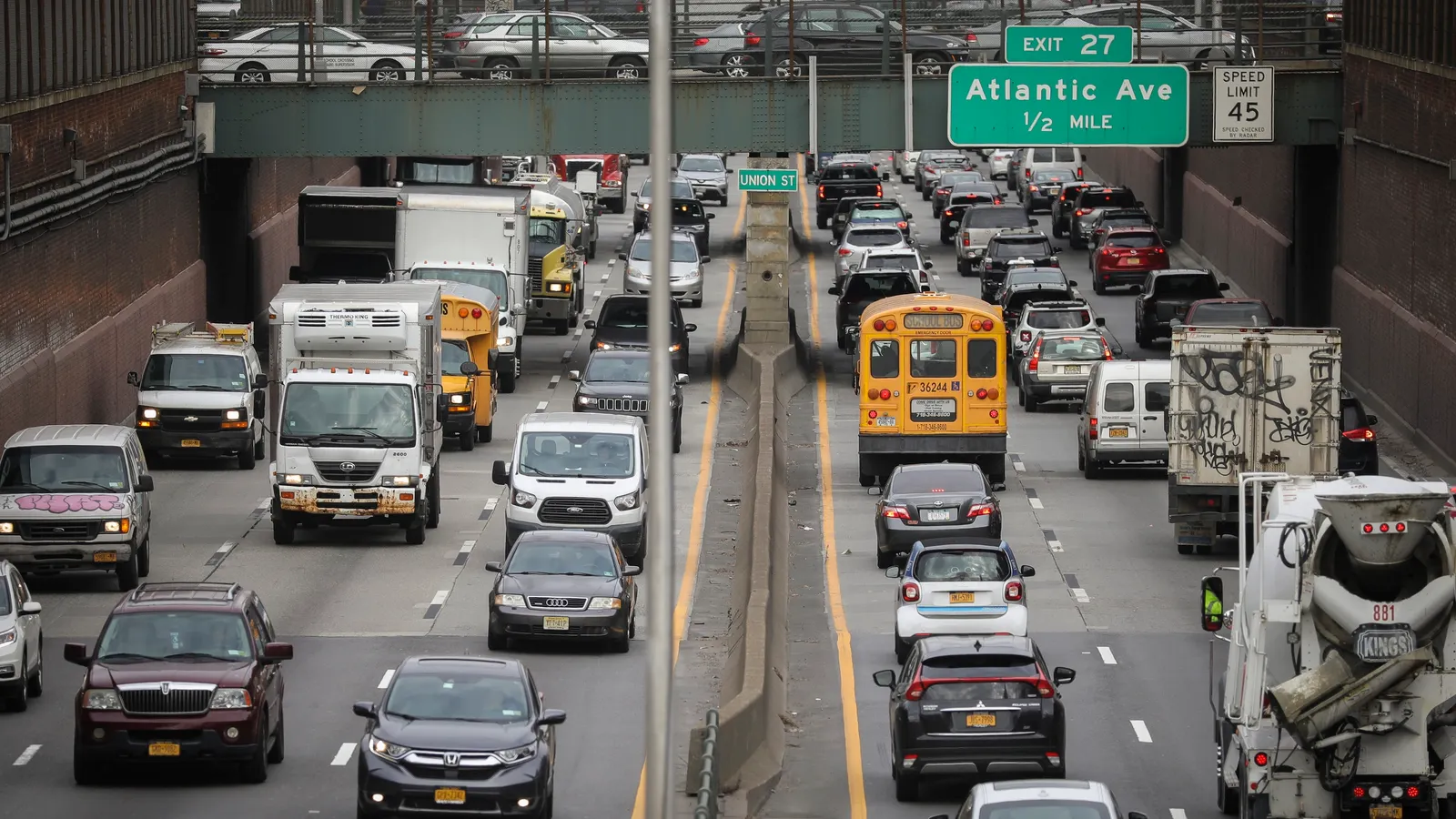
NEW YORK — Facing a ticking clock against severe structural degradation, New York City officials have announced a monumental $4 billion infrastructure overhaul to rescue the critical, heavily trafficked Brooklyn-Queens Expressway (BQE) Central. The ambitious, decade-long modernization project, slated to break ground in 2030, aims to address decades of wear and tear, repair compromised concrete, and secure the safety of the famous triple-cantilever section before catastrophic failure occurs.
The announcement brings a definitive timeline to one of the most contentious and heavily debated civil engineering puzzles in the five boroughs. While industry leaders have widely praised the decision to finally put shovels in the ground, local officials and urban planners emphasize that the colossal undertaking is merely the first step in addressing a much broader regional transportation crisis.
Main Facts
The core of the initiative targets BQE Central, a vital artery that has outlived its original structural design life by two decades. Carrying an immense daily load of approximately 130,000 vehicles—including roughly 13,000 heavy commercial trucks—the corridor is the literal and figurative backbone of regional freight and commuter movement.
According to details outlined by city leadership, the $4 billion rehabilitation project will center primarily on repairing aging, cracked concrete, addressing exposed and corroded steel reinforcement bars, and completely revitalizing the iconic triple-cantilever structure. To prevent gridlock during the extensive construction phase, the project will incorporate the installation of two temporary bypass structures. These temporary roads are designed to maintain current traffic capacity, keeping cars and heavy freight on the highway rather than spilling them onto vulnerable local neighborhood streets.
Once the grueling 10-year construction schedule reaches completion, city engineers project that the overhaul will successfully extend the structural design life of BQE Central by an additional 40 years.
Chronology and Project Timeline
The path to the 2030 groundbreaking is the result of years of political stalemates, community resistance, and escalating repair estimates.
- Historical Context: Built in the mid-20th century under the direction of master builder Robert Moses, sections of the BQE—particularly the triple-cantilever beneath the Brooklyn Heights Promenade—quickly began absorbing traffic volumes far beyond their initial engineering projections.
- The 20-Year Overdue Threshold: By the mid-2020s, BQE Central had officially surpassed its intended lifespan by 20 years, marked by recurring structural inspections revealing advanced concrete spalling and structural fatigue.
- August 25, 2026: Mayor Zohran Mamdani officially unveiled the $4 billion rehabilitation framework in a video announcement posted to social media, setting a definitive start date for 2030 and laying out the framework for the 10-year construction window.
- 2030 (Projected): Heavy construction is scheduled to officially commence, beginning with the engineering and installation of temporary bypass structures to manage traffic mitigation.
- 2030–2040 (Projected): A decade-long phased execution of drainage upgrades, railing replacements, concrete patching, and steel remediation across the triple-cantilever and surrounding BQE Central corridor.
- 2040 (Projected): Estimated project completion, securing the structural integrity of BQE Central through the year 2080.
Supporting Data and Financial Pressures
The impetus behind the accelerated timeline is as much economic as it is structural. City officials have made it clear that delaying action carries a staggering financial penalty.
Every year that passes without comprehensive rehabilitation adds an estimated $160 million in escalation costs to the city’s ledger, driven by inflation, material price volatility, and the increasing complexity of patching rapidly degrading infrastructure. Left unaddressed, the structural degradation threatens not only severe economic disruption through emergency lane closures and weight restrictions for commercial trucks, but also the physical safety of millions of annual motorists.
Furthermore, the scale of the financial commitment is vast. The $4 billion price tag represents one of the largest single municipal infrastructure investments in recent New York City history, focused exclusively on the 1.5-mile central stretch under city jurisdiction.
Official Responses and Industry Reactions
The announcement has triggered a wave of cautious optimism, particularly from construction and engineering sectors that have spent years warning of an impending infrastructure crisis.

Carlo Scissura, president and CEO of the New York Building Congress, issued a strong statement welcoming the administration’s decisive stance.
"The sooner we can get a shovel in the ground to deal with the disastrous BQE before it completely fails, the better and safer this city will be," Scissura said. "While many questions remain about construction and timeline, they are 100% right to start the clock now on action."
Mayor Mamdani framed the project as a victory for pragmatic governance over prolonged indecision.
"We’re going to fix the aging concrete, repair the deteriorating triple cantilever and build temporary roads that keep the highway operable during construction to avoid sending tens of thousands of cars and trucks onto local streets," Mamdani stated during the release of the initiative. "This plan allows us to safely fix the BQE without slowing our city down or wasting decades more on magical thinking."
Implications for the Future
While the $4 billion plan provides a clear path forward for BQE Central, significant structural and jurisdictional questions remain regarding the rest of the corridor.

The current project is strictly limited to the portion of the highway under New York City control. The remaining segments of the Brooklyn-Queens Expressway fall under the jurisdiction of New York State, creating a complex patchwork of ownership, funding responsibilities, and bureaucratic hurdles. Industry advocates point out that a localized fix, while necessary, does not solve the long-term systemic issues plaguing the entire regional transit network.
Scissura and other planning advocates have emphasized that while the city’s focus on the triple cantilever is commendable, conversations must continue with state and federal partners. The ultimate goal remains a holistic, corridor-wide vision that could eventually modernize—or even radically reimagine—the remaining roadway through targeted teardowns and replacements.
Such a comprehensive vision leaves open the potential for transformative urban planning: the creation of new green open spaces, parks, and the physical reunification of Brooklyn neighborhoods that were historically divided and fractured by mid-century highway construction. As the city prepares for the 2030 groundbreaking, the bridge between immediate structural survival and long-term visionary urban design remains the central challenge for New York’s transit future.
