

By Real Estate Desk
In the traditional playbook of real estate investing, the path to wealth is laid out like a slow-burning fuse: you purchase a single-family rental, learn the intricate ropes of tenant management and repairs, gradually upgrade to small multifamily units, and slowly snowball your portfolio over a decade or more.
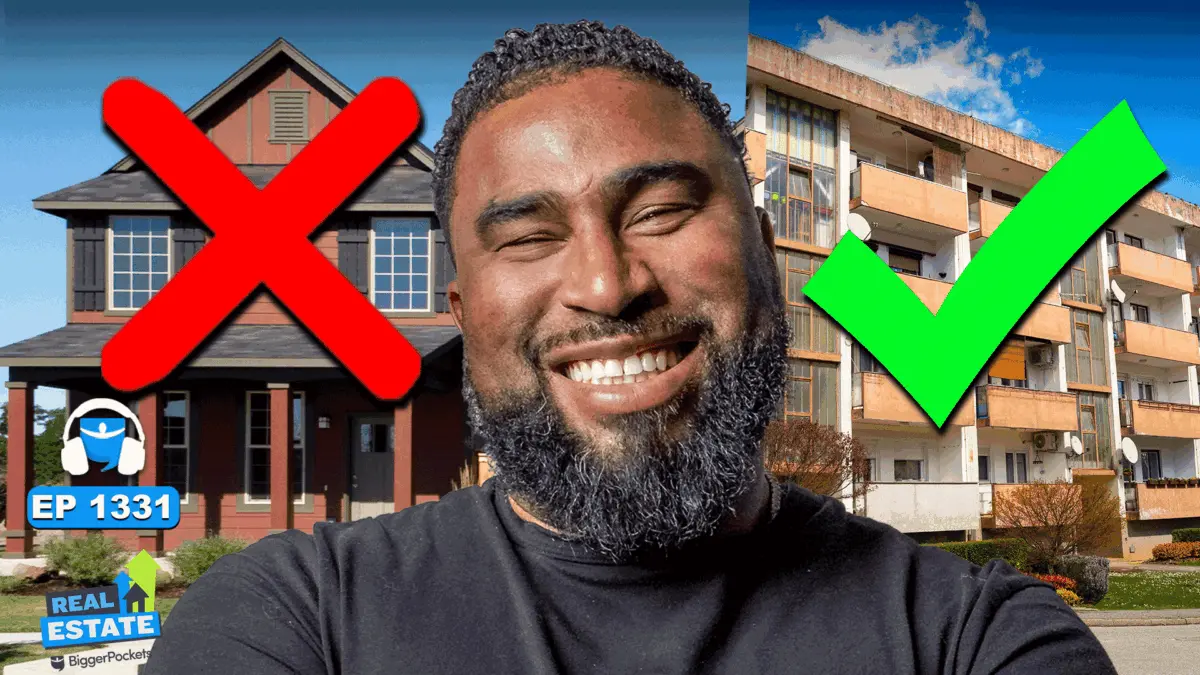
But what if you could bypass the foundational crawl entirely? What if, on your very first real estate transaction, you bypassed single-family properties and stepped directly into a sizable multifamily portfolio—say, a 16-unit apartment complex?
This high-stakes question, alongside other burning dilemmas, took center stage during a recent episode of the BiggerPockets Podcast. Filling in for regular co-host Dave, seasoned real estate investor Henry Washington sat down with special guest Chauncey Pham—a Dallas-Fort Worth broker, turnkey flipping expert, and veteran of nearly 11 years in the industry—to tackle real questions pulled straight from the BiggerPockets Forums.
From the perils of diving headfirst into commercial-sized assets to the brutal realities of contractor negotiations and brokerage relationships, Washington and Pham dissected the psychological and financial blueprints required to survive modern real estate.
Main Facts: The Core Debates of Modern Investing
The discussion centered on three primary crossroads facing today’s aspiring real estate entrepreneurs:
- The First-Deal Leap: Whether a newcomer with sufficient capital should skip single-family homes and buy a larger multifamily asset (such as a 16-unit building) to fast-track their portfolio.
- The Youth Factor: How a 19-year-old with a modest $20,000 savings account, construction experience, and a desire to build generational wealth should strategically deploy their capital without risking financial ruin.
- The Contractor Conundrum: Whether an investor should disclose their total renovation budget upfront to a contractor or keep the figures hidden to prevent inflated bids.
- The Brokerage Illusion: The hard truths about real estate brokerages, licenses, and why new agents often suffer from misplaced expectations regarding mentorship and corporate hand-holding.
Chronology: A Deep Dive into Forum Dilemmas
Act I: The 16-Unit Temptation—To Crawl or to Sprint?
The episode kicked off with a dilemma submitted by Nekesh from Charlotte, North Carolina. Nekesh found himself staring down the barrel of a potential 16-unit apartment complex. Armed with enough cash for a down payment, he questioned whether pulling the trigger on a large commercial asset for his very first deal was a brilliant shortcut or a disastrous mistake.
Washington initially leaned toward caution, arguing that brand-new investors risk getting completely wiped out if a major variable goes wrong on a large-scale project. However, Pham offered a more aggressive perspective.
"I tend to think that this whole ‘crawl before you walk, walk before you run’ mentality is groupthink in these forum settings, primarily from people that can’t run first," Pham asserted. She argued that securing 16 doors in a single transaction, complete with one inspection and immediate exposure to commercial loan products, saves years of exhausting single-family acquisitions.
Ultimately, the experts found common ground: while jumping into the deep end can accelerate wealth, it must be done with informed risk management—ideally by partnering with an experienced operator or securing a seasoned mentor.
Act II: The 19-Year-Old Entrepreneur and the Power of Cheap Failure
Next up was Jackson, a 19-year-old from Columbus, Ohio, working a steady W-2 job while renting his own home. With $20,000 saved, good credit, and a background in construction packed with contractor connections, Jackson wanted to build a business for his future son. Yet, he feared public failure and financial missteps.
Washington emphasized time as Jackson’s greatest asset, advising him to focus on mastering his first individual deal—preferably a house-hack—rather than trying to scale immediately.
Pham, however, saw a unique window of opportunity. "At 19 years old, failure right now is the cheapest that it’s ever going to be," she noted.
Rather than standard house-hacking, Pham suggested Jackson leverage his construction background into wholesaling. By providing accurate scopes of work, realistic bids, and offering his construction services on the back end of wholesale deals, Jackson could stack assignment fees and construction capital. Once his reserves grew closer to $75,000 or $100,000, he would be positioned to choose his long-term investment vehicle safely.
Act III: Transparency vs. Trapdoors in Contractor Bidding
The third forum question came from Ollie in Houston, who wrestled with a classic renovation dilemma: Should you tell your contractor your maximum budget upfront? Ollie feared that telling a contractor a $70,000 budget would magically transform a quote into a $69,800 bill.
Pham answered with an emphatic "Yes," but added a crucial caveat: most investors fail because they do not have a finalized design plan before seeking bids. Without a defined scope—down to whether faucets mount on the wall or the countertop—costs inevitably spiral, leaving investors furious at their contractors.
Washington agreed that transparency builds healthy business relationships, emphasizing that an accurate scope of work matters more than hiding a budget. "If you give a good contractor a well-designed, well-thought-out scope of work, they will get you an accurate bid, period," Washington said.
Supporting Data: Perspectives from the Front Lines
The discussion underscored the widening gap between theoretical real estate education and practical execution:
- Capital Realities: While $20,000 is a substantial emergency fund for daily life, both experts agreed it acts as an extremely tight constraint in real estate investing, requiring creative entry strategies like house-hacking or service-based capital building.
- The Agent Advantage: When debated which professional network role is most vital, Pham championed the project manager (ideally one with real estate licensing) to control timelines, subcontractor costs, and budgets. Washington advocated for the investor-friendly real estate agent as a master connector, paired closely with a CPA/bookkeeper to monitor true asset profitability.
- Licensing Realities: Pham strongly recommended that investors get their real estate license to understand consumer psychology and retail demand. Washington countered that licensing can sometimes serve as an avoidance tactic to delay the psychological friction of executing a real deal.
Official Responses: Dispelling the Brokerage Myth
The final and perhaps most eye-opening segment addressed Sophia, a newly licensed agent who joined a commercial brokerage hoping to specialize in multifamily real estate. Frustrated by a lack of formal training and realizing she was essentially "on her own," Sophia lamented that the industry lacked trustworthy guidance for beginners.
Pham launched into a passionate defense of the foundational realities of entrepreneurship:
"Your brokerage is nothing more than the strip center or shopping mall that you decide to house your store in… Their job is one thing and one thing only: to create a safe environment for consumers to conduct real estate transactions. They are not here to teach you how to be a business owner."
Pham pointed out that other agents view newcomers as direct competition, making organic mentorship rare unless actively purchased or negotiated. Washington echoed this sentiment, emphasizing that the isolation Sophia felt was the true definition of entrepreneurship.
"What does a real estate brokerage sell?" Pham challenged. "Real estate brokerages sell agents. Agents sell houses. And you’re expecting a brokerage that sells agents to teach you how to sell houses."
Implications: What This Means for Aspiring Investors
The insights shared by Washington and Pham carry profound implications for the current real estate landscape:
- Shattering "Group-Think": Traditional advice mandates starting small, but modern market conditions and capital availability mean aggressive investors can successfully scale early if paired with proper mentorship and risk mitigation.
- Skills Over Capital: Young investors with specialized trades (like construction) possess hidden leverage that far outweighs raw cash. Combining service-based execution with real estate acquisition creates a safer, faster pathway to capitalization.
- Redefining Professional Relationships: Agents and investors must stop treating brokerages like corporate employers. Success in modern real estate requires operating as an independent business owner, taking full accountability for marketing, skill acquisition, and financial literacy.
For those eager to test their own strategies, the BiggerPockets Forums remain open, offering a community of over three million members navigating the exact same high-stakes waters.
