

In the modern household, technology is everywhere. From wall-mounted 4K televisions and high-powered gaming rigs to smart home hubs, routers, and an endless rotation of personal device chargers, our living spaces have become epicenters of digital connectivity. However, this convenience comes with a highly visible—and frustrating—trade-off: the dreaded cord jungle.
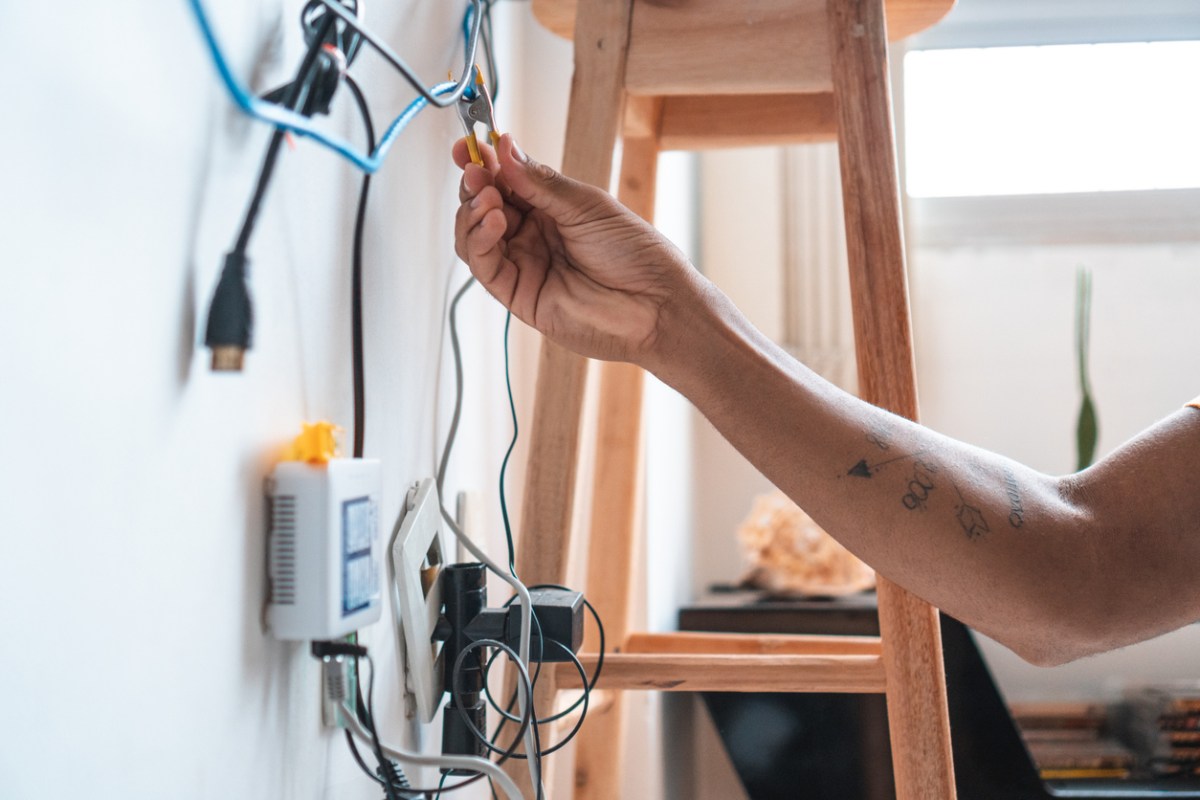
A tangled web of black, white, and brightly colored cables snaking across baseboards, dangling from wall-mounted displays, and pooling behind entertainment centers can instantly sabotage an otherwise meticulously designed interior. Fortunately, eliminating unsightly wire clutter does not require swearing off technology altogether. A robust array of consumer products, DIY hacks, and architectural upgrades can permanently conceal and organize every wire in sight.
Main Facts: The Modern Cable Crisis
The modern architectural and interior design challenge revolves around a simple paradox: while consumer electronics are getting progressively sleeker, wireless, and streamlined, they still require an intricate web of power cords, HDMI lines, ethernet cables, and peripheral wires to function.
- The Visual Impact: Exposed cords break the clean lines of interior decor, drawing the eye away from focal points like architectural features, artwork, and furniture.
- Safety Hazards: Loose cables running across floors represent significant tripping hazards, particularly for children and elderly residents, while tangled power strips can pose thermal and electrical risks if mismanaged.
- The Solution Spectrum: Cord management ranges from temporary, renter-friendly fixes—such as adhesive clips and surface-mounted raceways—to permanent, structural modifications like in-wall routing and custom cabinetry.
Chronology: The Evolution of Home Cord Management
Understanding how we arrived at today’s sophisticated cord-management solutions highlights how home technology and interior styling have evolved over the past several decades.
- Pre-Digital Era (Mid-20th Century): Households featured minimal electronics—typically a single floor-standing radio, a bulky television set, and a few lamps. Cords were few, short, and easily tucked behind heavy wooden furniture.
- The Personal Computer Boom (Late 20th Century): The advent of home computing, multi-component stereo systems, and early video game consoles introduced a massive influx of peripheral wires into the average living room and home office. Early remediation was largely crude, relying on simple plastic twist ties or rubber bands.
- The Flat-Screen Revolution (Early 2000s): As cathode-ray tube (CRT) televisions were replaced by ultra-thin, wall-mounted flat screens, consumers faced a glaring new aesthetic problem: cables hanging vertically down wide-open drywall, completely exposed to view. This triggered the development of surface raceways and paintable cord covers.
- The Smart Home Era (Present Day): Today’s homes support dozens of connected devices simultaneously—smart speakers, mesh Wi-Fi routers, tablets, smartwatches, and smartphones. This explosion of charging needs has driven innovation toward integrated furniture solutions, custom drawer charging stations, and architectural camouflage like baseboard cord channels and modified wainscoting.
Supporting Data & Popular Strategies
According to home improvement experts and interior designers, tackling cable clutter requires a tailored approach depending on the room, the type of wiring, and whether the homeowner rents or owns. Below are 12 of the most effective strategies categorized by application.
1. Anchor Cords to the Back of Furniture
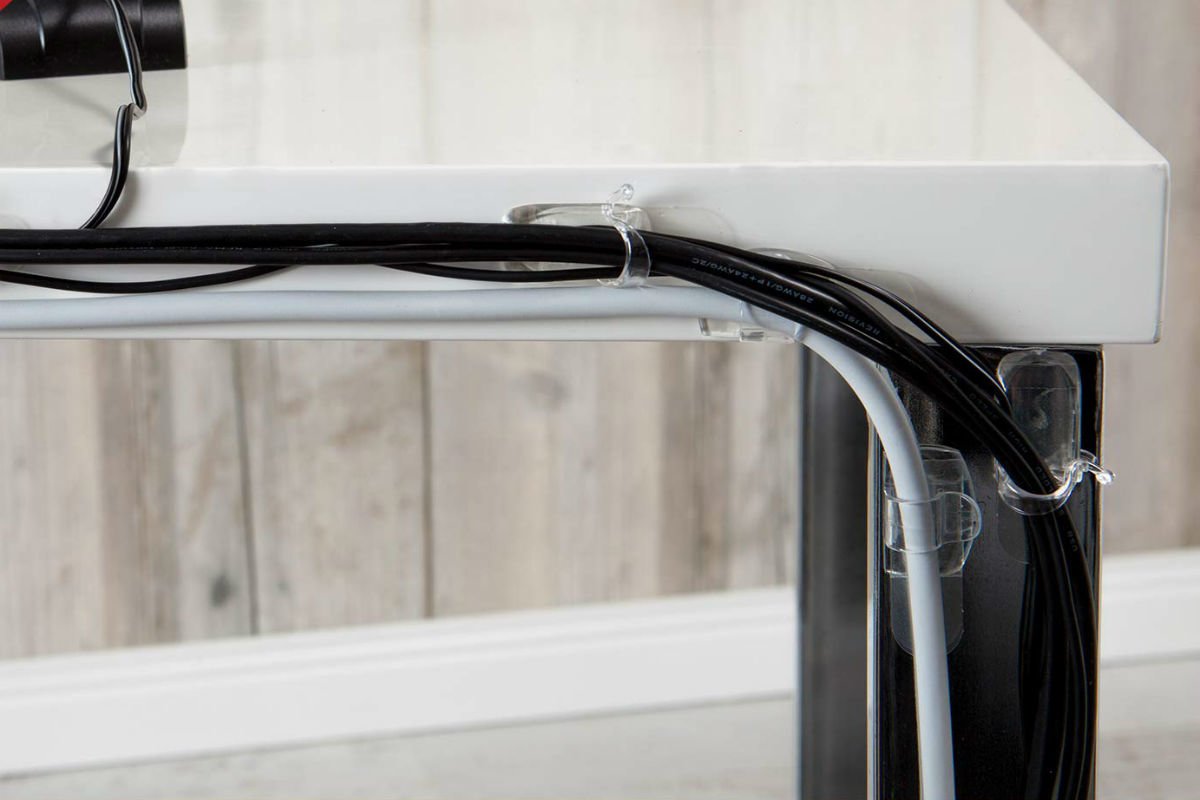
For dangling cords behind desks or media consoles, clear adhesive clips (such as Command cord clips) offer a fast, renter-friendly solution. Pressing the clips along the back edges of furniture for 30 seconds allows you to neatly channel cords down the legs of a console within an hour.
- DIY Alternative: Craft a custom TV stand featuring a recessed groove cut down the middle rear leg using a table saw. This built-in channel keeps entertainment system cables entirely out of view.
2. Corral Cables Behind the Couch
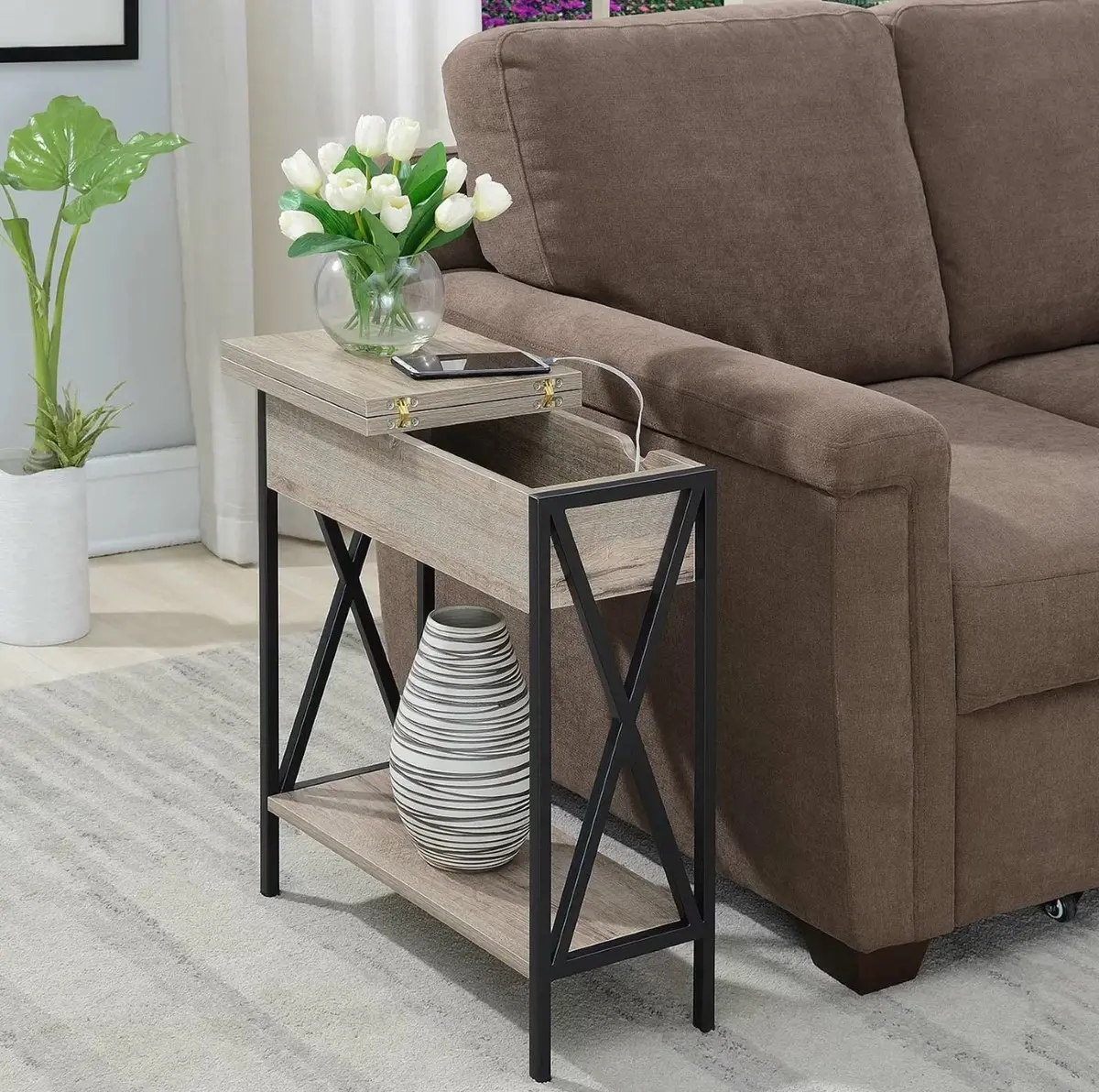
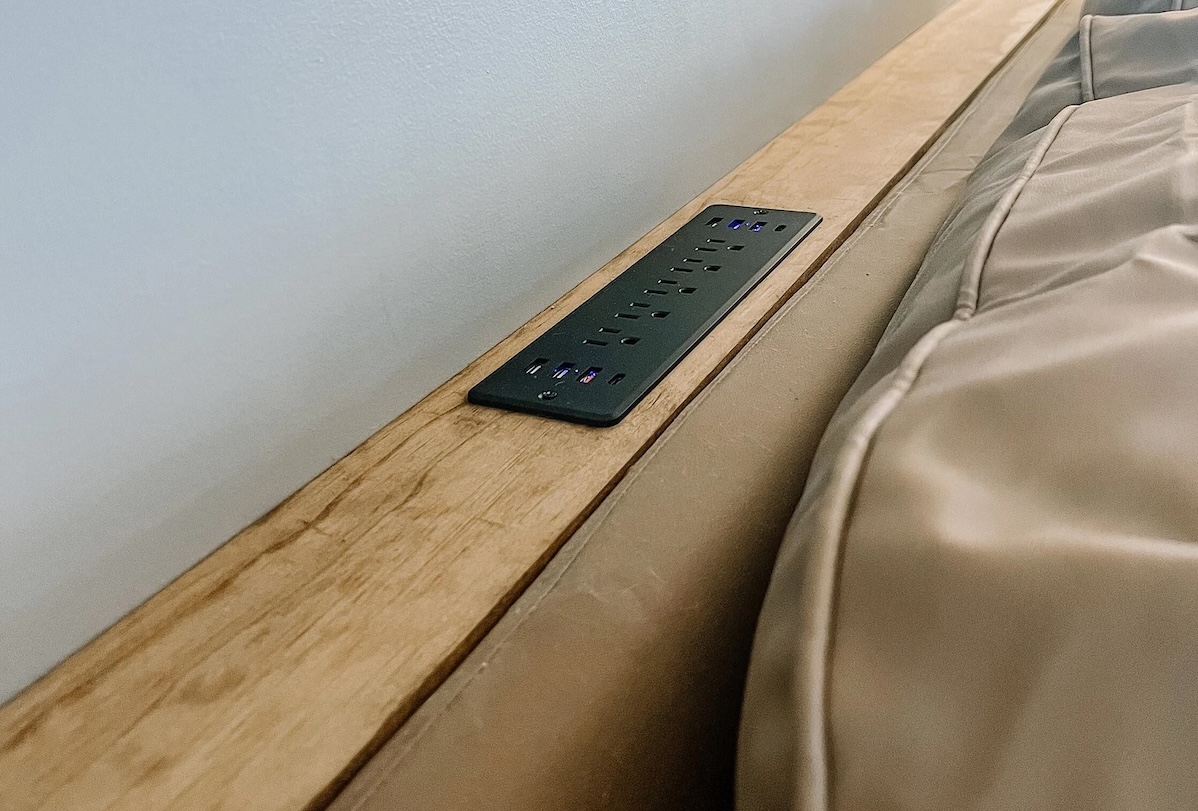
Slim sofa tables (measuring as little as 3.5 inches deep) can be tucked directly behind a living room couch. Many specialized models feature built-in power panels that allow you to charge personal electronics, plug in an accent lamp, and display decor completely out of sight.
3. Hide TV Wires in Plain Sight
Surface-mounted plastic tracks, such as the D-Line Cable Raceway, attach directly to drywall over exposed wall-mounted TV wires. Measured to fit and cut with a hacksaw, these channels can be painted using latex-based paint to precisely match the wall color, rendering them virtually invisible.

4. Run TV Wires Inside the Wall
For a truly seamless look, homeowners can route wires directly through the drywall behind a wall-mounted TV using a recessed cable plate kit (such as the DataComm Easy Mount Cable Organizer Kit). By locating stud-free zones with a stud finder, installers cut two small holes—one behind the screen and one near a floor outlet—to feed cords safely through the wall cavity.
5. Tuck Cord Chaos into Tubing
Home offices dealing with a multi-device tangle of PC cords, monitor lines, and printer cables can benefit from flexible cable sleeves or wraps (like the AGPTEK 5-foot cable sleeve). These wraparound tubes consolidate dozens of loose wires into a single manageable bundle while allowing individual cords to break out along the stretch.
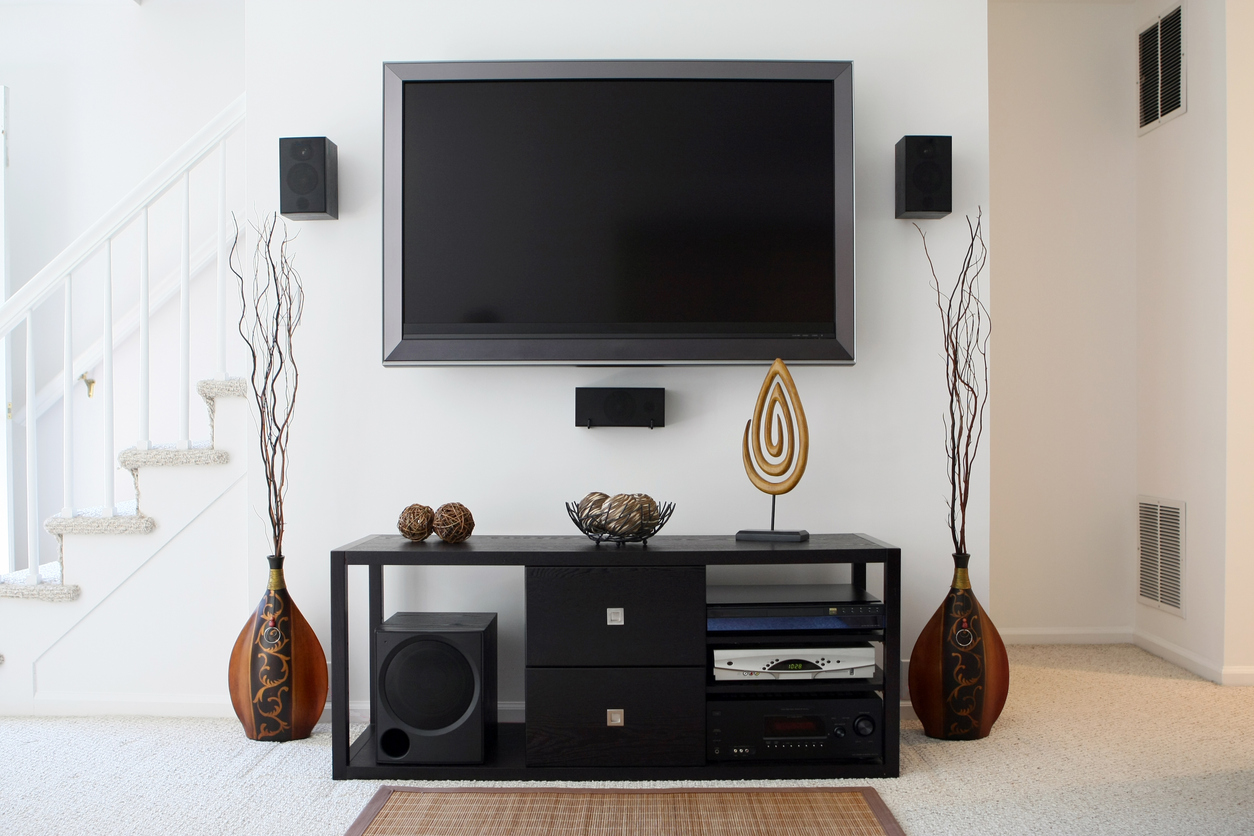
6. Slip Power Strips into Drawers
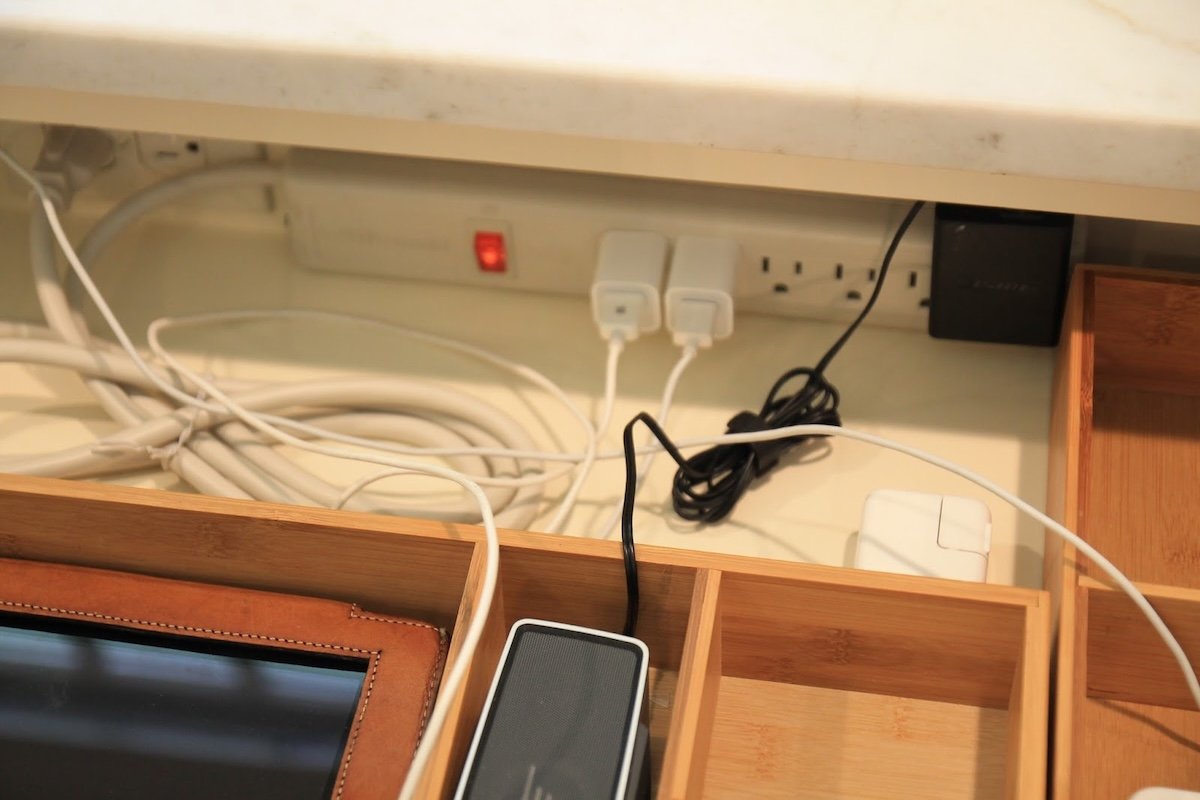
Eliminate clunky floor-bound power strips by modifying a desk or kitchen cabinet drawer. Using a hole-saw drill bit, cut an access hole in the back panel near an outlet, feed the power strip cord through, and mount the strip to the drawer interior using double-sided adhesive. This creates a dedicated, hidden charging station.
7. Snake Cords Through Baseboard Channels
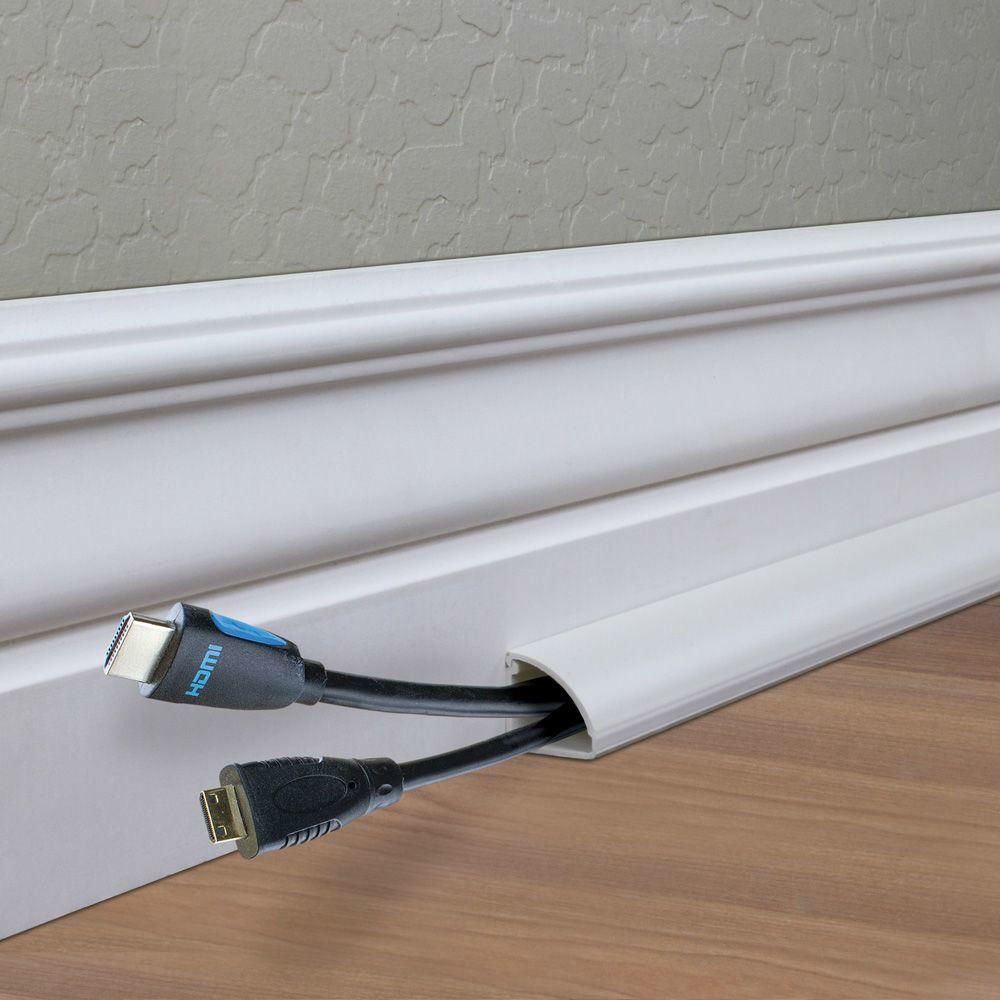
To eliminate floor-based tripping hazards in hallways and home offices, install self-adhesive baseboard cord channels. These impact-resistant plastic moldings mimic standard quarter-round shoe molding, allowing ethernet and power cables to run safely along the perimeter of the room.

8. Stash Routers and Wires in "Books"
Wi-Fi routers and modems often disrupt shelf aesthetics. Disguise bulky hardware by using decorative router cover boxes designed to resemble books, or DIY a cover by repurposing a wide binder decorated with scrap fabric, sandwiching it vertically among real books on a shelf while routing cords discreetly down the back wall.
9. Follow the Chair Rail
Homeowners installing chair rail molding can repurpose corner cable hiders by rotating them 90 degrees and positioning them beneath 1-by wood material running the length of the wall. Painted to match the surrounding decor, the concealer mimics architectural molding.
10. Invest in Furniture with Integrated Outlets
Minimize the total number of wall-plugged cords by purchasing end tables, nightstands, and media consoles equipped with built-in AC outlets and USB ports (such as the Lark Manor Avetis end table). Rather than running five individual cords to the wall, only the furniture’s main power cord remains visible.
11. Camouflage Cords on the Floor
When furniture cannot be moved closer to outlets, wood-look floor cord covers (such as Electriduct strips) provide a flat, durable pathway that blends seamlessly with hardwood or laminate flooring in finishes ranging from cherry to dark brown.
12. Add Wainscoting to Create In-Wall Channels
Installing beadboard wainscoting spaced slightly away from the drywall creates a hidden architectural cavity. Homeowners can run PVC conduits behind the panels to conceal television wiring and even reposition electrical outlets without the need to finish raw drywall.
Official Responses and Expert Recommendations
Home improvement authorities emphasize that while cord management is largely an aesthetic pursuit, safety must remain a primary consideration.

- Electrical Safety: Experts warn against overloading power strips or running high-wattage appliances (such as space heaters or kitchen micro-units) through enclosed drawer spaces or tightly wound cable sleeves without adequate ventilation.
- Professional Intervention: According to certified electricians, any project involving cutting into drywall near unknown electrical lines, or installing new recessed electrical boxes behind walls or wainscoting, should be executed by a licensed professional to comply with local building codes.
- Renter Considerations: Property management associations routinely recommend non-permanent solutions—such as 3M adhesive clips, surface raceways, and furniture-integrated charging stations—to ensure tenants can organize their spaces without violating lease agreements regarding wall modifications.
Implications: The Future of Clean Living Spaces
The rising popularity of sophisticated cord management points toward a broader cultural shift in how we interact with domestic technology. As smart homes become more deeply integrated into daily life, consumer expectations for interior cleanliness have risen proportionally.
- Aesthetic Harmony: By eliminating visual clutter, homeowners can enjoy the benefits of advanced entertainment and computing systems without sacrificing peace, tranquility, and intentional interior design.
- Increased Property Appeal: Clean, well-organized living spaces with professionally concealed wiring contribute to a higher perceived value during home appraisals and real estate staging.
- Enhanced Safety Standards: Proactive cable management significantly reduces household accidents, protecting children, pets, and electronic investments from wear, tear, and accidental damage.
