

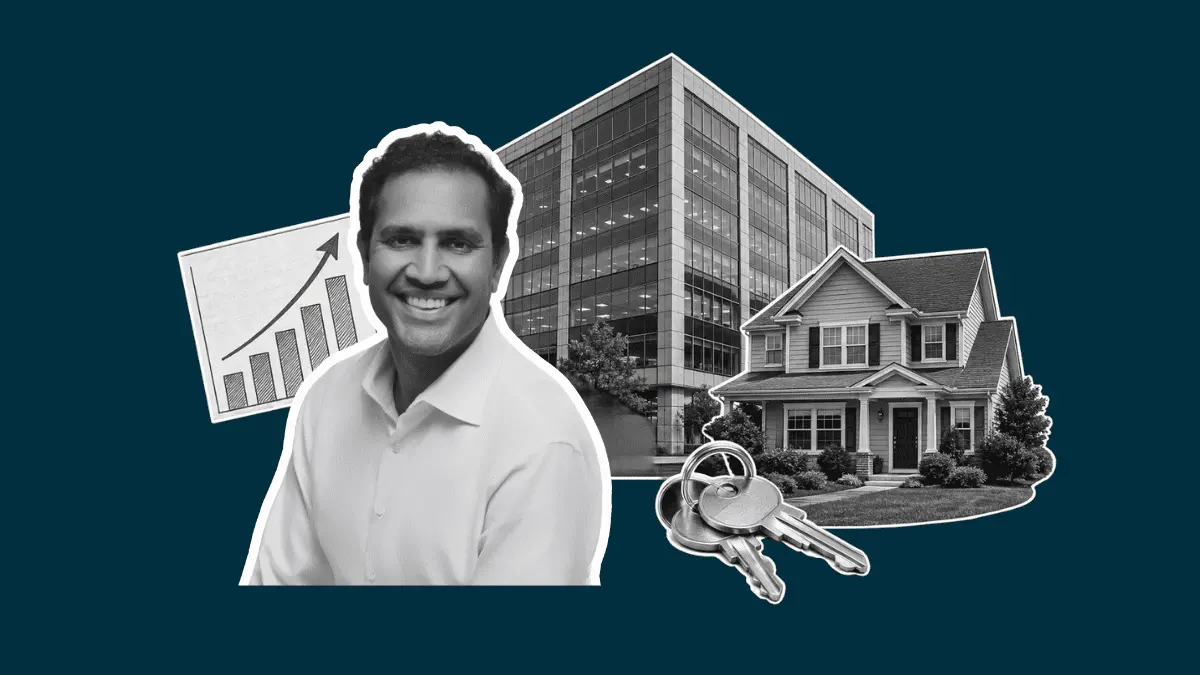
NEW YORK — In a dramatic boardroom coup that has once again upended the leadership structure of a major fintech player, Vishal Garg has officially regained control of Better Home & Finance Holding Co.
Just a day after emerging victorious in a high-stakes consent solicitation that effectively purged his primary adversaries from the company’s governing body, Garg took to the virtual airwaves on Tuesday afternoon for an exhaustive shareholder call. Dubbed the “Better 2.0” presentation, the session served as both a victory lap and a rigorous operational roadmap designed to steer the embattled digital mortgage platform back toward profitability, slash overhead, and restore investor confidence.
The leadership shuffle, confirmed by a flurry of Securities and Exchange Commission (SEC) filings, marks a turbulent new chapter for a company that has long walked a tightrope between technological innovation and executive controversy. As Garg outlines his aggressive 90-day turnaround plan, market watchers, investors, and industry competitors are left assessing whether the polarizing founder can successfully execute a financial rescue mission.
Main Facts: The Boardroom Purge and Executive Shakeup
The foundational development underpinning Tuesday’s shareholder briefing is the absolute restructuring of Better’s board of directors. Following a bitter two-month leadership dispute that paralyzed parts of the company’s operations, Garg and his aligned faction successfully executed a consent solicitation resulting in the sweeping removal of five sitting directors: interim CEO Daniel Lewis, Arnaud Massenet, Bhaskar Menon, Prabhu Narasimhan, and Harit Talwar.
Additionally, Hugh Frater—who had previously stipulated that he would resign should Garg ever assume an executive role within the company—formally stepped down from the board upon the execution of the removals, as detailed in the company’s SEC filings.
With the board effectively cleared, Garg operated as the sole remaining director to unilaterally appoint a fresh slate of governance talent. He installed Bing Gordon, Steven Sarracino, Paula Tuffin, and Nicholas Calamari to fill the immediate vacancies. However, the company still faces structural compliance hurdles; Garg noted that Better has approximately 45 days to submit a formal remediation plan to satisfy specific Nasdaq board-composition requirements, with a 180-day window to fully cure the deficiency through the addition of independent directors.
Simultaneously, the executive suite is undergoing a profound transition. According to regulatory disclosures, the board officially terminated Daniel Lewis as interim CEO, effective October 5, sparking an active search for a permanent successor. Garg stated that the company has already identified a prime candidate for an interim CEO and is actively finalizing contractual terms. Meanwhile, the search for a permanent chief executive is prioritizing candidates possessing deep, specialized expertise in credit mechanics, artificial intelligence (AI), and broader financial technology (fintech).
While Garg intends to remain the primary public-facing executive and brand architect of the company—jokingly or pragmatically referring to himself as "the face of" the business—he delivered a remarkably candid assessment of his own executive limitations during the shareholder Q&A session.
“I think that real leaders are able to lead with empathy while driving results,” Garg told attendees. “I’m able to drive results without empathy, and so I can’t be a real leader of the company. We’re going to get a real leader of the company that can drive results and take the things that I’m really, really good at, and then drive them with empathy.”
Chronology of Events: From August Ouster to October Restoration
To fully understand the weight of Tuesday’s announcements, one must trace the rapid-fire timeline of governance friction that has gripped Better Home & Finance over the past two months:
- August 2023: Tensions between the company’s board and its founder reach a boiling point, culminating in the board stripping Vishal Garg of his CEO responsibilities and installing Daniel Lewis as interim chief executive. The move sets off a prolonged internal power struggle.
- August through September 2023: The two-month leadership dispute begins to visibly impact Better’s operational ecosystem. Critical B2B partnership discussions stall, pipeline conversions slow down, and industry relationships are strained as external partners hedge their bets amidst the executive uncertainty.
- Early October 2023: Garg and his supporting shareholder group mount a concerted counter-offensive, utilizing a consent solicitation mechanism to challenge the legitimacy and direction of the existing board.
- Monday, October (Exact Date in Early October): Better announces that a buyer consortium has placed 10 million pounds in escrow for the proposed acquisition of Birmingham Bank, signaling a major asset divestiture to shore up liquidity. Simultaneously, reports confirm that Garg’s consent solicitation has succeeded, forcing the removal of Lewis and four other directors.
- Tuesday, October 5 (Effective Date / SEC Disclosures): The SEC filing officially documents the removal of Daniel Lewis and Hugh Frater, alongside the appointment of Garg’s four new board designees.
- Tuesday Afternoon, October: Garg hosts the “Better 2.0” shareholder call and extended Q&A session, unveiling a granular blueprint for cost reduction, capital restructuring, commercial expansion, and a forthcoming share repurchase program.
Supporting Data: Financial Metrics, Cost-Cutting, and Asset Sales
Garg’s “Better 2.0” agenda is anchored by hard financial targets, aggressive expense rationalization, and capital liberation through international asset sales.
Operating Expenses and Revenue Targets
Better’s current operating expenses hover at approximately $65 million per quarter. Under Garg’s directive, the company is targeting an aggressive contraction of overhead down to $50 million per quarter. Concurrently, management aims to scale quarterly revenues from the current $50 million range to more than $65 million.
The arithmetic of this turnaround, according to Garg, is straightforward: "If we get halfway to our goals in either direction, we’re at break-even."
The Birmingham Bank Divestiture
A cornerstone of the near-term liquidity strategy involves the planned sale of Better’s U.K. banking subsidiary, Birmingham Bank. Garg revealed that the transaction is projected to release approximately $65 million in cash back to the parent company, with the final tally dependent on the bank’s exact loan book and ongoing operational performance.
With a buyer consortium having already placed 10 million pounds in escrow, the deal remains subject to standard regulatory approvals and closing conditions. Garg anticipates the transaction will officially close within three to four months. Once completed, Better expects to command a combined cash reserve exceeding $140 million, a cushion that management insists will eliminate any requirement to raise additional capital over the next 12 months.
Stock Repurchase Program
Buoyed by expectations of fortified liquidity, Garg announced plans to initiate a share repurchase program "as soon as practical." He argued emphatically that Better’s current equity valuation severely undervalues the firm relative to peer technology-focused mortgage origination platforms.
Official Responses and Strategic Pivots
During the expansive Q&A session, Garg addressed how the summer’s boardroom drama affected external relationships and laid out specific growth vectors designed to capture market share in a high-interest-rate environment.
Fallout from the Leadership Dispute
Garg openly conceded that the two-month leadership schism caused friction with key partners. While some discussions paused, he sought to reassure investors that the foundational pipeline remains robust.
“We may have lost one or two who went and decided to pick someone else,” Garg noted regarding stalled partnerships. “But the pipeline is very full.”
HELOCs and Credit Karma Partnership
Home equity products are slated to become a primary growth engine for the platform. Better has formally signed an agreement to launch its Home Equity Lines of Credit (HELOCs) directly on Credit Karma. Furthermore, Garg is actively working to restart negotiations with five additional household-name enterprise partners whose integration talks stalled during the executive standoff.
Wholesale Expansion and Channel Diversification
Historically recognized for its direct-to-consumer digital model, Better is signaling a major pivot toward an omni-channel strategy. Garg declared that the company’s wholesale mortgage push is moving "full speed ahead." Better now intends to service originations across direct, retail, and wholesale channels alike. Additionally, the company is exploring a marketplace-style framework that could allow multiple retail and wholesale brands to operate concurrently on its proprietary software platform.
Efficiency and Artificial Intelligence Integration
Operational conversion rates represent a massive, untapped financial opportunity for the firm, according to management. Garg asserted that optimizing lead-to-lock and lock-to-fund funnel conversion metrics to match broader industry benchmarks could virtually double company revenue without requiring any incremental increase in marketing or operational spend.
To achieve this, Better continues to lean heavily on proprietary artificial intelligence infrastructure. By weaving large language models (LLMs) and advanced machine learning algorithms together with a deterministic processing engine, the company aims to drastically lower loan production costs while driving unprecedented processing consistency and speed.
Implications: What “Better 2.0” Means for the Industry
The reinstatement of Vishal Garg and the rollout of the “Better 2.0” strategy carry profound implications for the digital mortgage sector, investors, and the broader fintech ecosystem.
- Founder-Led Volatility vs. Pragmatic Execution: Garg’s return proves that despite corporate governance controversies and intense public scrutiny, founder-led voting blocks can successfully wrest back operational control. However, the market will closely watch whether Garg can deliver on his promise to recruit an empathetic, results-driven CEO to temper his own aggressive operational style.
- Path to Profitability: For quarters, digital mortgage platforms have struggled against the macroeconomic headwinds of elevated mortgage rates and shrinking origination volumes. By targeting a strict reduction in quarterly burn to $50 million and leveraging the U.K. bank sale to net $140 million in cash, Better is attempting to engineer a self-sustaining financial model that bypasses the need for dilutive capital raises.
- Strategic Realignment in Lending: Better’s pivot into wholesale lending and expanded HELOC partnerships—highlighted by the Credit Karma integration—signals that monoline direct-to-consumer models face limitations in volatile rate environments. By diversifying into a marketplace architecture, Better is attempting to morph from a single-brand lender into a diversified infrastructure provider.
As Better Home & Finance navigates its 90-day execution window, the ultimate test will lie in conversion metrics, cost discipline, and regulatory clearance of the Birmingham Bank sale. For now, Vishal Garg is firmly back at the helm, charting an uncompromising course toward profitability and operational reinvention.
