

By Anthony Capkun
Published August 7, 2026
Main Facts
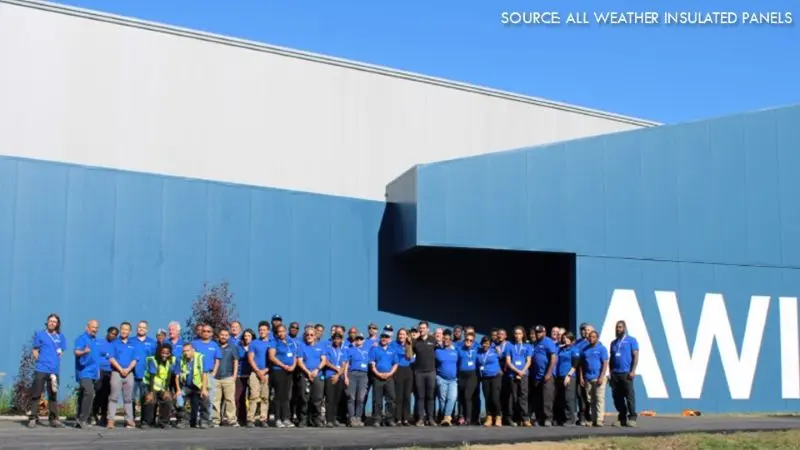
All Weather Insulated Panels (AWIP), a premier provider of advanced insulated metal wall and roof deck solutions for the North American construction sector, is officially commemorating its 20th anniversary. Founded in 2006 in Vacaville, California, the company has grown from a regional disruptor into a continental powerhouse, shaping the landscape of modern sustainable architecture, cold storage facilities, and high-performance commercial buildings.
Over the past two decades, AWIP has maintained an unwavering focus on high-efficiency thermal envelopes, transforming how architects, contractors, and building owners approach energy efficiency. As the construction industry faces mounting pressures to decarbonize and adopt circular economy principles, AWIP’s milestone anniversary arrives at a pivotal juncture in its corporate trajectory.
The company marked the occasion by reflecting on two decades of technological evolution, expanded manufacturing footprints, and ambitious environmental stewardship. Central to this celebration is AWIP’s strategic shift toward lower embodied carbon (LEC) solutions, aggressive reductions in greenhouse gas emissions, and a steadfast corporate philosophy encapsulated by company President Greg Lusty: "For 20 years, our vision has been to help our customers build better, which has guided every product, facility, and partnership."
Chronology: Two Decades of Growth and Expansion
The history of All Weather Insulated Panels is a narrative of calculated expansion, technological refinement, and geographical scaling to meet the surging demands of the North American building envelope market.
Phase One: Foundation and West Coast Roots (2006–2012)
AWIP was established in 2006 in Vacaville, California, during a period of shifting building codes and a nascent demand for high-performance insulation in commercial and industrial structures. Recognizing the architectural limitations of traditional multi-component wall assemblies, the company focused its early years on engineering composite insulated metal panels (IMPs) that combined thermal insulation, structural integrity, and exterior and interior finishes into a single, highly efficient installation step.
During these formative years, AWIP built its reputation on product reliability, architectural versatility, and energy code compliance, establishing a loyal customer base across the Western United States.
Phase Two: National Scale and Strategic Manufacturing (2013–2020)
As demand for IMPs accelerated—driven by the rapid expansion of e-commerce, cold storage logistics, and temperature-controlled distribution centers—AWIP recognized the necessity of a transcontinental manufacturing footprint. Shipping heavy, voluminous panels across thousands of miles ran counter to the company’s emerging sustainability goals.
This realization prompted a phase of aggressive capital investment. AWIP expanded its operations eastward, optimizing its supply chain to better serve the Midwest, East Coast, and Canadian markets. The company invested heavily in continuous-line manufacturing technology, which allowed for tighter production tolerances, greater core foam density consistency, and faster lead times for contractors working on tight schedules.
Phase Three: Eastern Expansion and Modernization (2021–Present)
A defining milestone of AWIP’s recent history occurred with the grand opening of its state-of-the-art manufacturing plant in East Stroudsburg, Pennsylvania, in 2022. This strategic Mid-Atlantic facility radically altered AWIP’s logistical capabilities, reducing delivery times and transportation-related carbon footprints for projects stretching from New England down to the Mid-Atlantic and Southeastern states.
Concurrently, the company integrated advanced automation, enhanced quality control systems, and shifted its research and development focus heavily toward environmental metrics. By the mid-2020s, AWIP had evolved from a traditional panel manufacturer into an environmental technology leader within the building materials sector, culminating in its current 2026 crystal anniversary.
Supporting Data: Environmental Metrics and Operational Efficiency
While architectural aesthetics and thermal performance have always been core to AWIP’s value proposition, the company’s recent operational data underscores a profound commitment to environmental, social, and governance (ESG) metrics. In an industry notoriously difficult to decarbonize—owing to the energy-intensive nature of steel rolling and foam insulation manufacturing—AWIP has set aggressive internal benchmarks and achieved measurable progress against its 2020 baseline.
Key Sustainability Achievements (Since 2020 Baseline)
- Scope 1 and 2 Emissions: AWIP has successfully reduced its direct and indirect operational greenhouse gas emissions by 39.2%. This reduction has been achieved through equipment upgrades, intelligent plant heating and cooling systems, and optimized manufacturing line speeds.
- Renewable Energy Integration: The company made massive strides in its energy procurement strategy, reaching 53.8% renewable energy use across its facilities by the close of 2025. This includes green-tariff utility programs and localized solar initiatives.
- Waste Diversion: By refining its cutting processes, recycling scrap metal, and repurposing foam byproducts, AWIP has cut its waste sent to landfills by 52%.
Future Environmental Roadmap
Rather than resting on its laurels at the 20-year mark, AWIP has laid out a rigorous roadmap for the next decade of environmental stewardship. The company’s near-term strategic initiatives include:
- ISO 50001 Certification: Formally pursuing the international standard for Energy Management Systems (EnMS) to institutionalize continuous energy performance improvements across all plants.
- Onsite Generation Expansion: Scaling up photovoltaic (PV) solar installations on the expansive roof spaces of its manufacturing facilities, such as the East Stroudsburg plant, to increase self-generated clean energy.
- Circular Economy Initiatives: Introducing formal product take-back programs and advanced recycling protocols to ensure that end-of-life insulated panels can be systematically reprocessed rather than discarded.
- Embodied Carbon Reduction: Continuing the aggressive research and development of lower embodied carbon (LEC) formulations, optimizing blowing agents, and utilizing sustainably sourced steel substrates.
Official Responses and Industry Perspective
The milestone anniversary has prompted reflections from executive leadership as well as industry observers who have watched AWIP mature over the last two decades.
In his official statement, President Greg Lusty emphasized that the company’s longevity is inextricably linked to its collaborative approach with builders, architects, and developers.
"For 20 years, our vision has been to help our customers build better, which has guided every product, facility, and partnership," Lusty noted.
This customer-centric ethos has allowed AWIP to navigate economic downturns, supply chain disruptions, and shifting regulatory landscapes. By maintaining open lines of communication with the architectural community, AWIP has frequently tailored its product offerings to meet emerging design trends, such as hidden-fastener architectural wall panels, fire-rated assemblies, and net-zero energy building facades.
Lusty also looked toward the horizon, reaffirming the organization’s long-term corporate compass:
"For the next 20 years, we remain committed to innovation, sustainability, and the customer relationships that have defined our success."
Industry analysts point out that AWIP’s success mirrors a broader macro-trend in North American construction: the rapid displacement of traditional built-up wall systems (such as concrete masonry units, field-assembled metal siding, and batt insulation) by high-performance insulated metal panels. Because IMPs provide continuous insulation (ci), airtightness, vapor control, and weather barriers in a single installation sequence, they significantly reduce labor costs and thermal bridging—a critical advantage as energy codes grow increasingly stringent.
Implications for the Future of North American Construction
As All Weather Insulated Panels steps into its third decade of operation, its trajectory offers significant implications for the wider construction, architectural, and manufacturing ecosystems.
1. Raising the Standard for Building Envelopes
The thermal performance of a building envelope is the single most effective defense against operational energy loss. By continuously improving the R-value density and airtightness of its metal panels, AWIP directly helps building owners lower heating and cooling loads. As cities and states adopt stringent building performance standards (such as Local Law 97 in New York or state-level building decarbonization roadmaps), products that minimize operational carbon will dictate market share.
2. The Mandate for Lower Embodied Carbon (LEC)
While operational carbon (energy used to heat, cool, and power a building) has historically dominated architectural discussions, embodied carbon (emissions associated with the extraction, manufacturing, transportation, and disposal of building materials) is drawing intense regulatory and market scrutiny. AWIP’s proactive reduction of Scope 1 and 2 emissions, alongside its push for LEC solutions, positions the company as a preferred supplier for corporate clients and institutional developers bound by strict ESG reporting requirements.
3. Regional Resiliency and Supply Chain Security
The establishment of multi-plant operations—symbolized by the foundational Vacaville facility in the West and the East Stroudsburg plant in the East—highlights a crucial post-pandemic lesson for the construction industry: localized manufacturing enhances supply chain resilience. By producing panels closer to major metropolitan markets, AWIP reduces transit emissions, mitigates freight volatility, and provides contractors with dependable, regional supply lines.
Conclusion
Celebrating 20 years in business is a testament to All Weather Insulated Panels’ resilience, strategic foresight, and dedication to quality. From its roots in Vacaville to its current continental footprint, AWIP has helped redefine what is possible in modern building design. As the company embarks on its next chapter—anchored by aggressive sustainability targets, ISO certification goals, and circular economy commitments—it stands well-prepared to help North American builders construct a more efficient, resilient, and sustainable future.
