

By Terrence O’Brien
Enriched and Expanded Report
Introduction: A Quiet Evening in Farragut Bay Interrupted
Sailing through the majestic, glacier-carved waters of Southeast Alaska is typically an exercise in tranquil isolation. Passengers aboard cruise ships and private vessels alike spend their days marveling at breaching humpback whales, towering spruce forests, and sheer granite cliffs that plunge precipitously into frigid waters. However, the delicate intersection of high-luxury maritime tourism, modern ultra-wealth, and age-old nautical traditions of mutual aid abruptly shattered this serene atmosphere earlier this week near Farragut Bay.
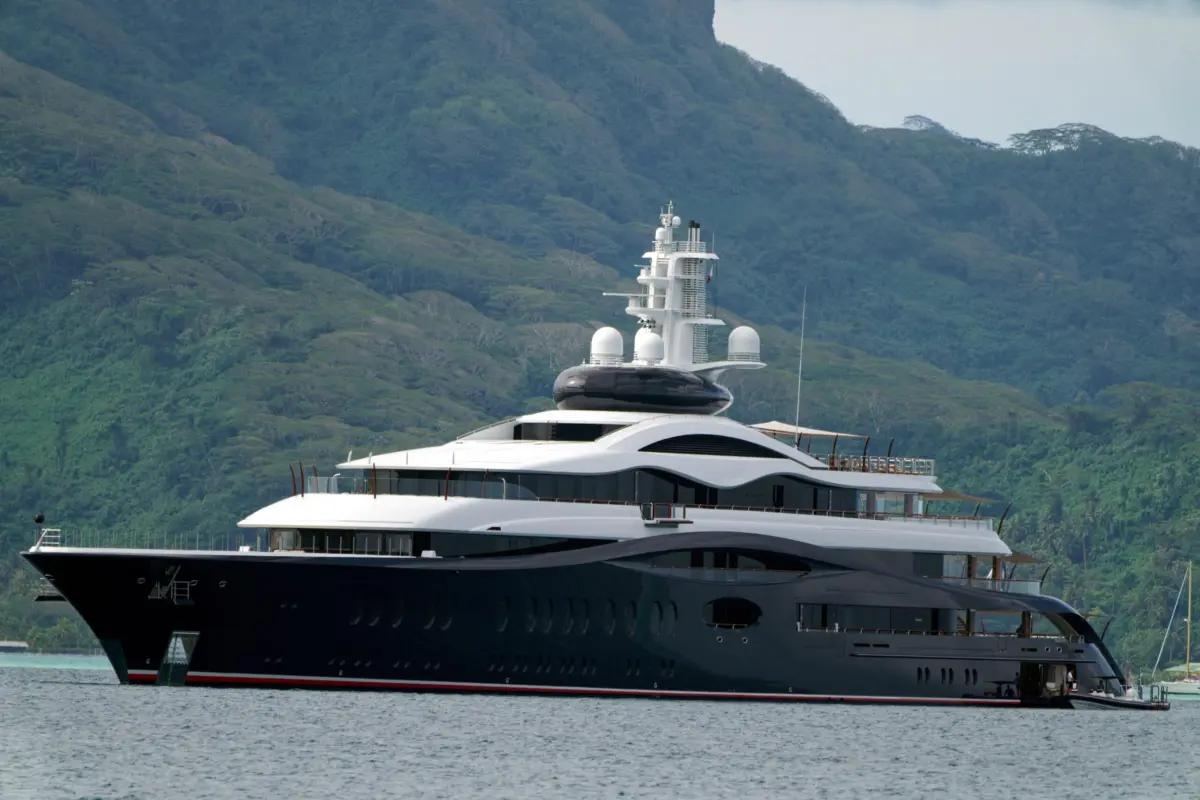
What began as a routine rescue of a disabled, fuel-starved small boat has quickly escalated into a viral internet controversy and a subject of intense maritime scrutiny. The central point of contention? A passenger-reported snub by one of the most recognizable and expensive private vessels on the planet: Launchpad, the mega-yacht reportedly owned by Meta CEO Mark Zuckerberg.
While the stranded skiff and its occupants ultimately returned to safety thanks to the timely intervention of the Alaskan cruise ship Wilderness Legacy, tracking data, passenger accounts, and conflicting statements from yacht representatives have sparked a wider debate regarding the ethical and legal obligations of mega-yacht crews navigating remote wilderness corridors.
Main Facts: The Anatomy of an Alaskan Maritime Incident
The core events of the incident center around a minor mechanical oversight that could have easily turned perilous in Alaska’s unforgiving environment.
- The Stranded Vessel: A small skiff carrying an unspecified number of crew members found itself completely immobilized after running out of fuel in the vicinity of Farragut Bay, a deep indentation on the mainland coast of Southeast Alaska situated within the Tongass National Forest.
- The Rescuer: The Wilderness Legacy, an intimate, expedition-style cruise ship operated by American Safari Cruises (part of the UnCruise Adventures fleet), was transiting the area and diverted its course to take the disabled skiff under tow, guiding it back to safety.
- The Controversy: According to eyewitness accounts from passengers aboard the Wilderness Legacy—corroborated by Automatic Identification System (AIS) tracking data—the cruise ship was not actually the closest vessel to the emergency. That distinction belonged to the Launchpad, a massive $300 million superyacht associated with tech billionaire Mark Zuckerberg.
- The Allegations: Passengers onboard the Wilderness Legacy reported that their captain announced over the public address system that the Launchpad was closer to the distressed skiff but had "repeatedly refused to respond" to radio calls. This announcement was reportedly met with audible booing from the cruise passengers.
- The Official Reality: The United States Coast Guard later clarified that while the skiff was disabled and out of fuel, it was never officially classified as being "in distress" (a technical distinction meaning immediate threat to life or property). Consequently, the Coast Guard broadcast a Marine Assistance Request rather than launching an emergency rescue operation.
Chronology: A Step-by-Step Reconstruction of Events
Piecing together the timeline requires synthesizing eyewitness testimonies, public maritime tracking logs, and statements provided by official bodies and yacht representatives.
Phase 1: The Drift in Farragut Bay
As daylight began to wane in the remote reaches of Southeast Alaska, the small skiff exhausted its fuel supply. Adrift in waters known for unpredictable currents, shifting winds, and dangerously cold temperatures, the skiff’s occupants found themselves unable to make headway. In maritime regions this isolated, self-reliance is paramount, but the dense concentration of marine traffic—ranging from commercial fishing vessels to multi-million-dollar yachts—usually ensures that help is never truly far away.
Phase 2: Proximity and Silence
According to maritime traffic records reviewed by regional outlets including the Alaska Beacon and the Halifax Shipping News, the Launchpad was stationed nearby, seemingly loitering or moving slowly near the entrance of Farragut Bay.
As the situation unfolded, nearby mariners attempted to establish radio contact. Passengers on the Wilderness Legacy would later recount that their bridge crew tried hailing the mega-yacht to coordinate a response, given its superior proximity to the disabled skiff. Silence, however, allegedly met these hails.
Phase 3: The Wilderness Legacy Steps In
Realizing that assistance was not forthcoming from the nearby luxury vessel, the captain of the Wilderness Legacy made the decision to alter course. AIS tracking logs show the cruise ship navigating past the stationary Launchpad, pressing forward toward the coordinates of the stranded boat.
The Wilderness Legacy reached the skiff, secured a towing line, and reversed its tracks. In a visual irony captured by tracking maps, the cruise ship towed the stranded skiff right back past the hulking silhouette of the Launchpad, safely escorting the boat and its crew away from potential peril.
Supporting Data: What the AIS Tracking Reveals
In the modern era of transparent maritime traffic, AIS (Automatic Identification System) data serves as an infallible digital witness. Every commercial vessel and large yacht above a certain tonnage is required to broadcast its position, speed, course, and identity continuously.
A review of the spatial data surrounding the Farragut Bay incident confirms several key assertions made by passengers:
- Spatial Advantage: At the time the call for assistance was acknowledged, the Launchpad maintained a significantly shorter physical distance to the stranded skiff than the Wilderness Legacy. Under standard maritime courtesy and the unwritten code of the sea, the vessel closest to a stranded or disabled party is typically expected to at least evaluate the situation and offer aid if safe to do so.
- The Stoppage: AIS playback indicates that the Launchpad slowed its progression significantly and loitered near the bay’s entrance, creating a stationary beacon that made its lack of movement all the more conspicuous to passing ships.
- The Interception: Tracking lines clearly depict the Wilderness Legacy executing a detour, converging on the skiff’s coordinates, and executing a textbook towing maneuver. The juxtaposition of the 288-foot superyacht idling while a commercial adventure cruise ship performed the rescue quickly fueled speculation across maritime forums and social media platforms like Bluesky.
Official Responses: Explanations and Defenses
As the story gained traction across regional news outlets and digital platforms, various stakeholders stepped forward to clarify their roles, policies, and whereabouts during the incident.

The United States Coast Guard
The US Coast Guard, alongside the Marine Exchange of Alaska, initially remained tight-lipped as inquiries began to pour in. However, Coast Guard Public Affairs Specialist Shannon Shepard provided crucial context to the Alaska Beacon, diffusing notions of an unheeded life-or-death emergency.
Shepard noted that at approximately 9:56 p.m., the Coast Guard evaluated the situation and determined that the skiff and its crew were not in distress. Because the occupants faced mechanical/fuel failure rather than an immediate threat of sinking, medical emergency, or environmental hazard, the Coast Guard issued a standard Marine Assistance Request Broadcast (MARB). A MARB alerts nearby commercial towers and private vessels that assistance is requested, but it does not mandate a compulsory rescue response under international maritime law unless life is in imminent danger.
The Representation for Mark Zuckerberg and Priscilla Chan
In response to inquiries from The Verge, Brian Baker, a spokesperson for Mark Zuckerberg and Priscilla Chan, issued a statement shedding light on the internal conditions aboard the Launchpad during the incident:
"Mark and his family were not on board at the time of the incident. As the Coast Guard noted, the boat was not in distress, and by the time the crew reviewed the Coast Guard contact on a different radio channel from the one they were operating on, the assist was already underway. We’re grateful all parties are safe."
This explanation introduces several logistical factors common to operating mega-yachts:
- Absence of the Owners: The high-profile billionaires were entirely absent, meaning the yacht was operating under the sole discretion of its professional captain and crew.
- Radio Channel Discrepancies: The crew was reportedly monitoring a different VHF marine radio channel than the one utilized for the Coast Guard broadcast or local hails, explaining the lack of real-time responsiveness.
- Timing of Awareness: By the time the bridge crew checked the appropriate channels and understood the situation, the Wilderness Legacy had already intervened and initiated the tow.
Implications: Superyachts, Etiquette, and the Code of the Sea
While the incident concluded without injury, property loss, or formal legal action, it opens up a broader conversation regarding the cultural and ethical responsibilities of ultra-luxury mega-yacht operations in remote wilderness environments.
1. The Erosion of Maritime Tradition
For centuries, the unwritten "Code of the Sea" mandated that any mariner capable of rendering assistance to another in trouble must do so, regardless of formal distinctions between "inconvenience" and "distress." While modern commercial shipping and private yachting are heavily regulated by legal definitions (such as SOLAS—Safety of Life at Sea), the moral expectation of mutual aid remains a cornerstone of seafaring culture.
The perception that a $300 million floating palace ignored a smaller vessel in a remote wilderness region—leaving a commercial cruise ship to pick up the slack—taps directly into contemporary populist frustrations regarding wealth inequality and social responsibility. Even if the yacht’s crew was genuinely caught monitoring alternate radio frequencies, the optics of the situation proved damaging in the court of public opinion.
2. The Operational Realities of Mega-Yachts
Maritime experts point out that mega-yachts like the Launchpad are essentially floating corporate facilities operated by professional mariners who must adhere to strict liability, insurance, and safety protocols. Deploying a tender or maneuvering a massive 88-meter yacht in tight, unfamiliar coastal waters to assist a minor fuel-out skiff carries inherent operational risks.
Captains are trained to weigh the safety of their own crew and vessel against the severity of an external situation. Because the Coast Guard had already categorized the skiff as non-distressed, the professional calculus aboard the Launchpad may have favored maintaining station over intervening in a situation already manageable by local commercial traffic.
3. Public Scrutiny in Remote Paradises
As more ultra-high-net-worth individuals purchase mega-yachts and explore fragile, isolated ecosystems like Alaska, Antarctica, and the South Pacific, their vessels become high-visibility fishbowls. Every movement is tracked by amateur sleuths via open-source intelligence tools like AIS, and every perceived misstep is amplified across social media networks.
For owners like Mark Zuckerberg, whose philanthropic and business ventures are under constant public microscope, the actions of a contracted yacht crew can instantly transform a private transit into a public relations headache.
Conclusion: A Safe Resolution Overshadowed by Optics
Ultimately, the stranded skiff incident in Farragut Bay ended without tragedy. The occupants returned to shore unharmed, the Wilderness Legacy lived up to the best traditions of expedition cruising by stepping in when called upon, and the Launchpad continued on its itinerary—albeit trailing a wake of internet commentary and public debate.
While the technical defense offered by the yacht’s representatives—that the owners were absent, the boat was not legally in distress, and radio channels were misaligned—holds up under standard maritime protocols, the incident serves as a stark reminder of changing expectations. In an era of ubiquitous digital tracking and heightened sensitivity to corporate and billionaire accountability, the old adage remains true: at sea, everyone is watching, and nobility—or the lack thereof—is measured by how one treats those stranded in the wake.
