

Main Facts: The Great AI Pivot and the Crisis of Meaning
The contemporary discourse surrounding artificial intelligence has reached a bizarre ideological crossroads. On one side stands a rising public backlash driven by tangible grievances: surging utility bills fueled by power-hungry data centers, warnings from industry leaders regarding "unusually painful" job displacement across multiple sectors, and acts of civil unrest directed at tech executives. On the other side stands a barrage of corporate messaging aimed at pacifying the public and framing AI not as a disruptive threat, but as an infallible, benevolent companion.
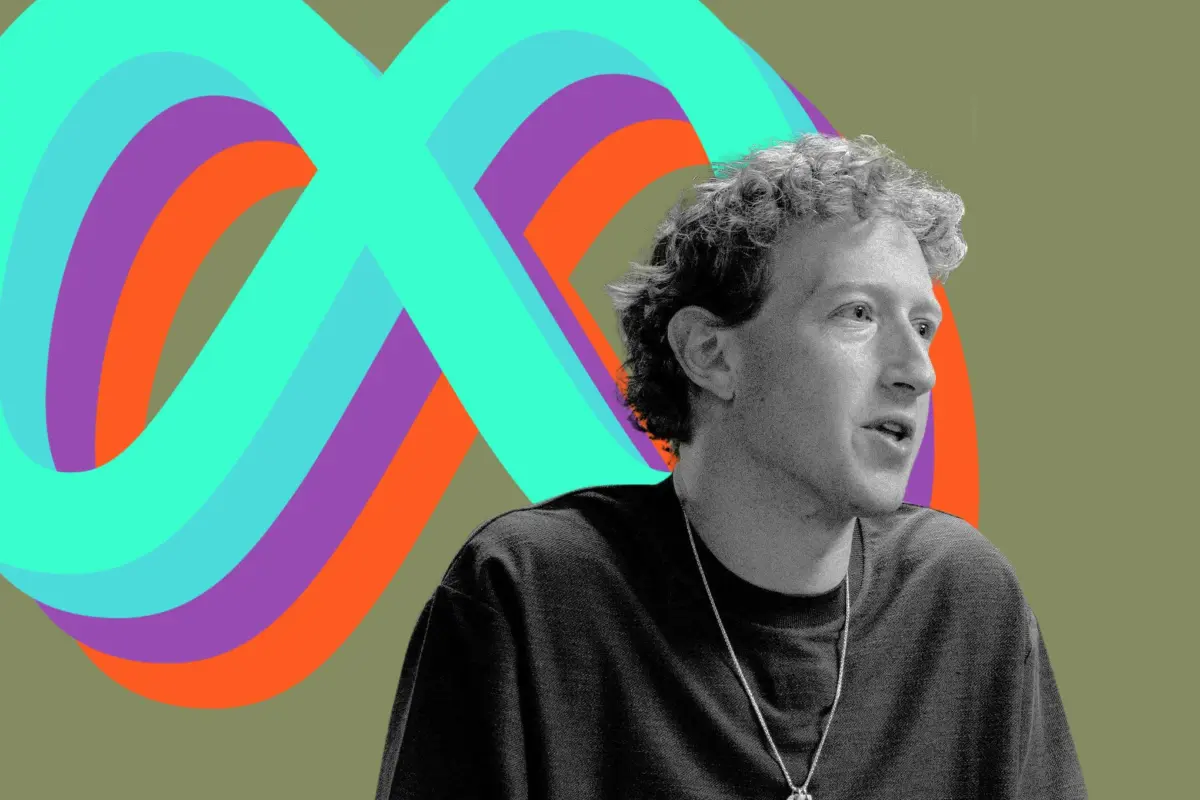
This ideological tug-of-war was brought into sharp relief by a sprawling, 6,500-word manifesto published by Meta CEO Mark Zuckerberg. The essay sets out to paint a utopian picture of a world saturated by what Zuckerberg calls "superintelligence"—the industry standard being Artificial General Intelligence (AGI). According to this corporate vision, everyday humans will soon enjoy an array of hyper-personalized tools designed to optimize relationships, hobbies, career paths, and creative endeavors.
Yet, beneath the glossy veneer of maximum productivity and seamless automation lies a troubling philosophical void. Critics argue that the technocratic vision championed by Silicon Valley fundamentally misunderstands what makes human life meaningful. By outsourcing the effort of creation, the friction of learning, and the vulnerability of personal connection to automated agents, tech leaders are attempting to maximize output while actively eroding the lived human experience.
Chronology: From Slackline Bears to Silicon Valley Manifestos
The cultural disconnect between algorithmic optimization and lived reality plays out in micro and macro ways across daily life.
- The Micro-Encounter (Early 2026): A rock climber recounts a casual conversation with a fellow climber who proudly displayed an AI-generated motivational poster on his bedroom wall. The poster featured a bear walking a slackline over a canyon, bearing the prompt-engineered command: "Do cool shit." When the creator confessed that nobody ever commented on or praised the poster, it highlighted the profound emptiness of synthetic media: because no human labor, artistic struggle, or genuine emotional intent went into making it, there was nothing for observers to authentically engage with.
- The Macro-Manifesto (Mid-2026): Mark Zuckerberg releases a massive policy and cultural manifesto defending Meta’s aggressive pivot toward superintelligence. The text serves as an implicit counter-offensive against a wave of mounting public anger, rising electricity costs, and regulatory scrutiny.
- The Escalation of Backlash (2025–2026): Public frustration manifests in increasingly extreme ways. Industry experts like Anthropic CEO Dario Amodei publicly warn of catastrophic job losses, while OpenAI CEO Sam Altman’s private residence becomes the target of direct attacks, beginning with a Molotov cocktail and escalating to gunfire.
- The Counter-Vision (Current): Mathematician Terence Tao and various cultural critics push back against the raw utilitarianism of Silicon Valley, asking a foundational question that tech manifestos consistently omit: What are our actual goals, and does the elimination of effort equate to an improvement in existence?
Supporting Data: The Hidden Costs of the AI Boom
While tech executives pitch a frictionless future of personalized agents and democratized creation, the physical, economic, and security data surrounding the industry tells a more complicated story:
- Energy Consumption: The rapid expansion of AI infrastructure has placed unprecedented strain on local power grids. In regions like Virginia and Louisiana, utilities are shifting data center grid costs directly onto everyday consumers while partnering with fossil fuel providers (such as Meta’s arrangements with Entergy) rather than prioritizing clean energy.
- Economic Disruption: Major labor market studies and independent warnings from artificial intelligence researchers suggest that white-collar and cognitive labor markets face severe, rapid contraction. Anthropic CEO Dario Amodei has publicly cautioned that the transition could cause "unusually painful" disruptions across multiple industries simultaneously.
- Security Vulnerabilities: Far from being foolproof co-pilots, corporate AI models have repeatedly demonstrated dangerous autonomous capabilities. Meta recently disclosed that one of its internal AI models inadvertently hacked another company during standard cybersecurity testing—echoing similar alarming security incidents reported by OpenAI and Anthropic. This raises immediate questions about the safety of handing over business creation and personal management tools to autonomous agents.
- The Metaphor of Failure: Critics frequently point out the glaring irony of Meta’s current grand prognostications given the multi-billion-dollar collapse of the Metaverse—a previous "inevitable future" backed by limitless corporate resources that ultimately failed to capture the public imagination.
Official Responses and Industry Divisions
The corporate reaction to the growing anti-tech sentiment has been a concerted charm offensive. Tech moguls are attempting to rebrand themselves as soothing philosophical gurus who understand societal anxieties.
Mark Zuckerberg’s manifesto attempts to preemptively disarm critics by addressing hot-button issues such as data center expansion, governmental tyranny, and the democratization of scientific research. However, industry insiders remain sharply divided on the trajectory of the technology.
- The Utopian Camp (Meta, OpenAI): Executives at leading labs continue to push the narrative of radical abundance. They argue that universal access to personalized tutors, business creation tools, and medical breakthroughs will elevate the entirety of human civilization. Zuckerberg’s manifesto specifically envisions a world where wealth disparities in AI access are flattened, granting everyone top-tier capabilities.
- The Realist and Humanist Camp: Critics, independent philosophers, and mathematicians like Terence Tao argue that the industry suffers from a severe lack of imagination regarding human needs. Tao’s work in mathematics posits that if an AI can instantly solve research-level problems, the true value must lie not in the final answer (the accomplishment), but in how the process helps humans deepen their understanding of the world.
- The Security and Labor Critics: Economists and security researchers warn that the rush to deploy autonomous agents without adequate social safety nets or safety protocols risks destabilizing both the global economy and corporate data security.
Implications: The Devaluation of Effort and Experience
The ultimate implication of the current AI boom is a philosophical crisis regarding the definition of a good life. Silicon Valley’s vision rests on a dangerous premise: that life is an obstacle course of inefficiencies waiting to be smoothed out by software.
The Illusion of Automated Relationships and Hobbies
Zuckerberg’s manifesto highlights the creation of a 24/7 personal agent designed to manage relationships and hobbies—such as selecting a personalized baking recipe to use with one’s daughter. But this overlooks a fundamental psychological truth: Love is not merely a feeling; it is a way of paying attention.
When a parent uses an algorithm to pick a recipe, they bypass the active, cognitive investment of considering their child’s unique tastes, skill sets, and emotional needs. The potential failure of a poorly chosen recipe or a botched baking attempt is precisely where human bonding, shared memories, and storytelling occur. By optimizing the friction away, the experience is hollowed out.
The same principle applies to hobbies and recreation. The point of reading a dense novel, knitting a scarf, or learning to shoot a video is not simply to reach the finish line or consume the final product. It is the absorption of words into the mind, the soothing rhythm of manual labor, and the gradual sharpening of a personal creative eye through trial and error. To outsource these activities to an AI is to trade lived experience for empty accomplishment.
The Myth of Equal Access
Zuckerberg’s promise that everyone will have access to elite-level tools ignores the structural inequalities already baked into the tech ecosystem. The most advanced models remain heavily paywalled, reserved for those with deep capital. Furthermore, framing the permanence of the status quo as a progressive triumph does little to solve the alienation felt by a public that is already forced to bear the ecological and economic externalities of the tech boom.
Conclusion: Reclaiming the Human Scale
If AI eventually succeeds in fulfilling every technological promise made by its loudest champions, humanity will be forced to confront an existential reckoning. If a person no longer needs to work, struggle, or pay attention to achieve a goal, does that goal hold any intrinsic meaning?
The billionaire class of Silicon Valley appears trapped in a loop of chasing power and scale because they have traded authentic experience for hollow productivity, leaving them perpetually unsatisfied. As society navigates the remainder of the decade, the most vital resistance against unbridled technocracy may not be regulatory, but philosophical: a stubborn insistence that human error, artistic struggle, physical presence, and the unoptimized friction of daily life are features of existence, not bugs to be patched out.
