

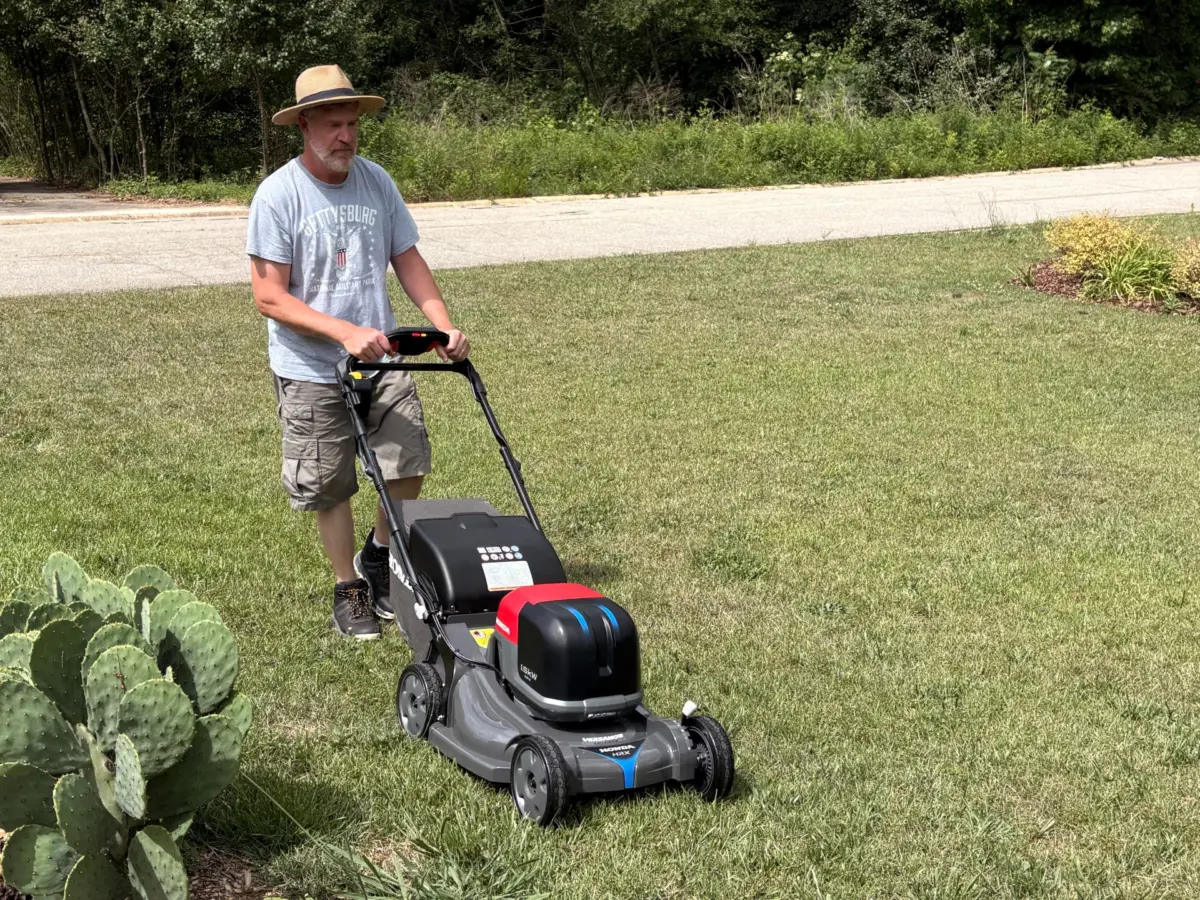
For decades, Honda held an undisputed crown in the residential and professional landscaping markets. Its self-propelled walk-behind lawn mowers were widely regarded as the gold standard, combining legendary engine reliability with innovative cutting systems. Consumers and commercial lawn care professionals routinely paid a premium for these gas-powered machines, confident that the investment would yield decades of pristine cuts and virtually trouble-free operation.
When Honda announced it was phasing out its iconic small gas engines to pivot toward electrification, industry watchers and loyalists held their collective breath. The pivotal question loomed large: Could a battery-powered unit possibly replicate the raw power, reliability, and cut quality of the beloved gas forerunners?
After a rigorous, month-long field test conducted by green industry veteran Mark Wolfe, the verdict is finally in. The new Honda HRX BE self-propelled lawn mower successfully bridges the gap between gas legacy and battery innovation, delivering pro-level performance—though not without a few notable design quirks and a staggering price tag.
Main Facts: The Anatomy of the Honda HRX BE
To understand the HRX BE, one must first look at what Honda carried over from its celebrated past. Rather than reinventing the wheel, engineers essentially took the chassis, deck, and blade systems of their top-tier gas models and swapped out the internal combustion engine for an advanced electric power head.
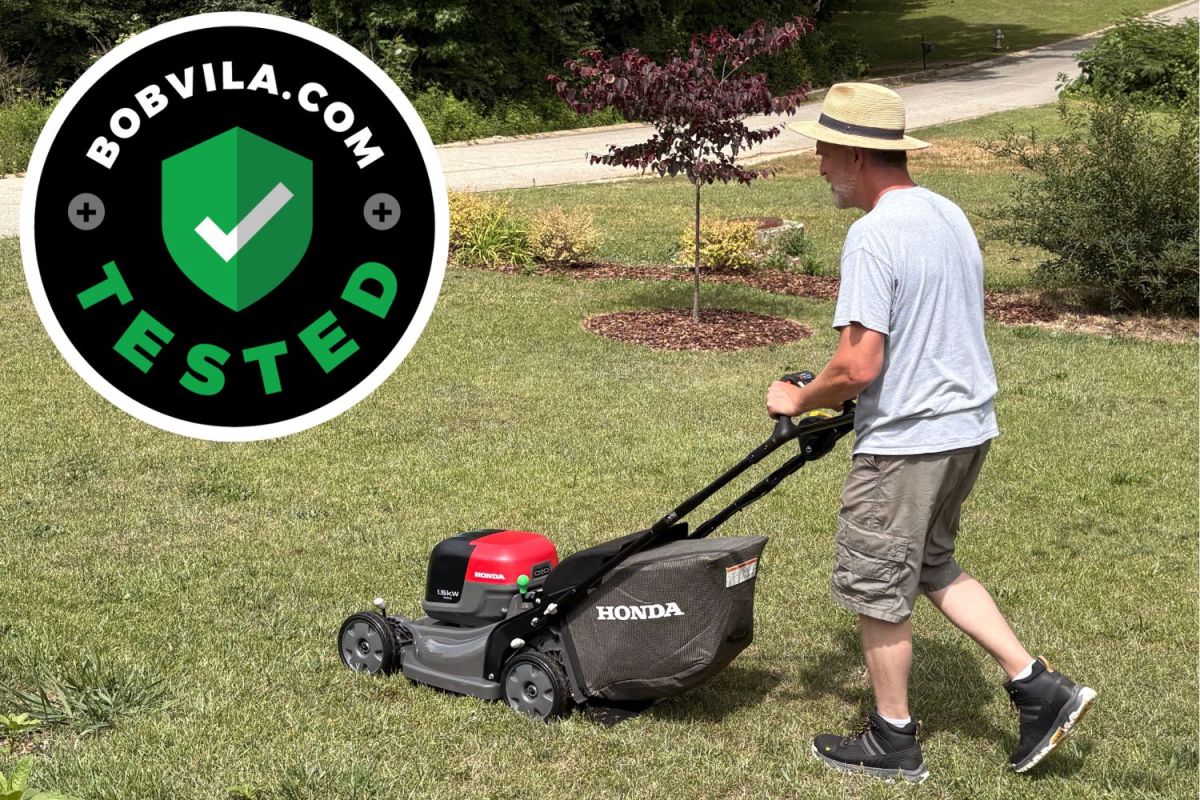
- The Deck and Cutting System: The mower features Honda’s signature impact-resistant, rustproof Nexite deck, paired with the twin-blade MicroCut system and the VersaMow 4-in-1 clipping management system.
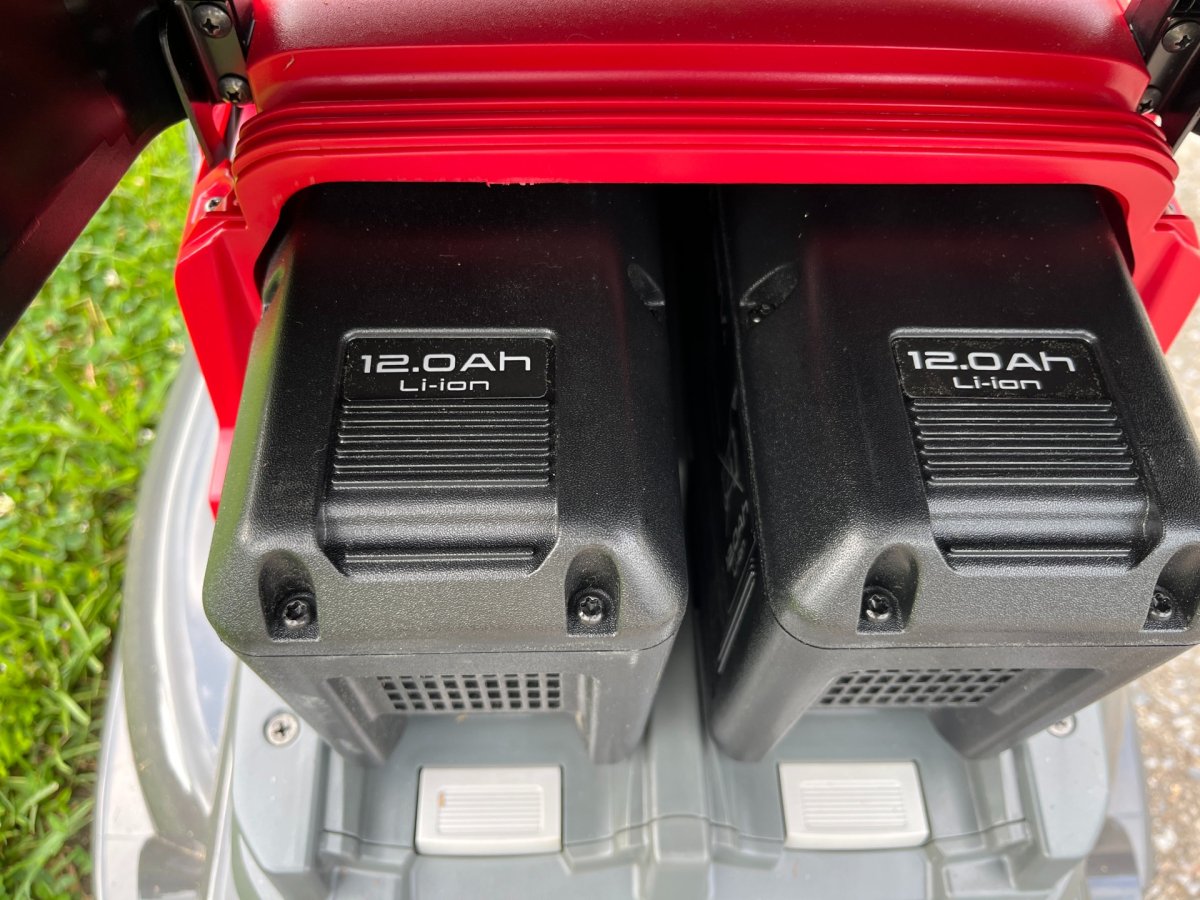
- The Power Source: Operating on a robust 58-volt, 12Ah (amp-hour) lithium-ion battery architecture, the HRX BE utilizes a high-torque 1.5 kW brushless motor.
- Battery Ports and Configurations: The mower accommodates dual battery ports. While the base kit includes a single battery and a standard 2-amp charger (which takes roughly 6 hours to fully replenish), the upgraded kit features two batteries and an 8-amp fast charger capable of resurrecting a depleted 12Ah battery in just 90 minutes.
- Run Time: Each 12Ah battery provides up to 45 minutes of continuous run time—translating to roughly 16,000 square feet per charge. When dual batteries are loaded, the machine intelligently and automatically switches to the fresh battery the moment the first is exhausted.
Chronology of the Evaluation: A Month-Long Field Test
To put the HRX BE through its paces, tester Mark Wolfe subjected the unit to a demanding month-long trial across diverse real-world landscapes.
Week 1: Setup, Unboxing, and First Impressions
Upon unboxing the upgraded kit, the immediate observation was the heavy-duty build. While the mower’s baseline weight mirrors that of a traditional gas mower, the addition of two 8-pound lithium-ion batteries pushes the ready-to-work weight up significantly. Wolfe noted that this added heft is a double-edged sword: it provides exceptional traction and prevents the bouncing common in lightweight electric mowers, but it requires more physical effort when manually maneuvering the machine in tight, non-propelled spaces.
Weeks 2 and 3: Half-Acre Stress Testing
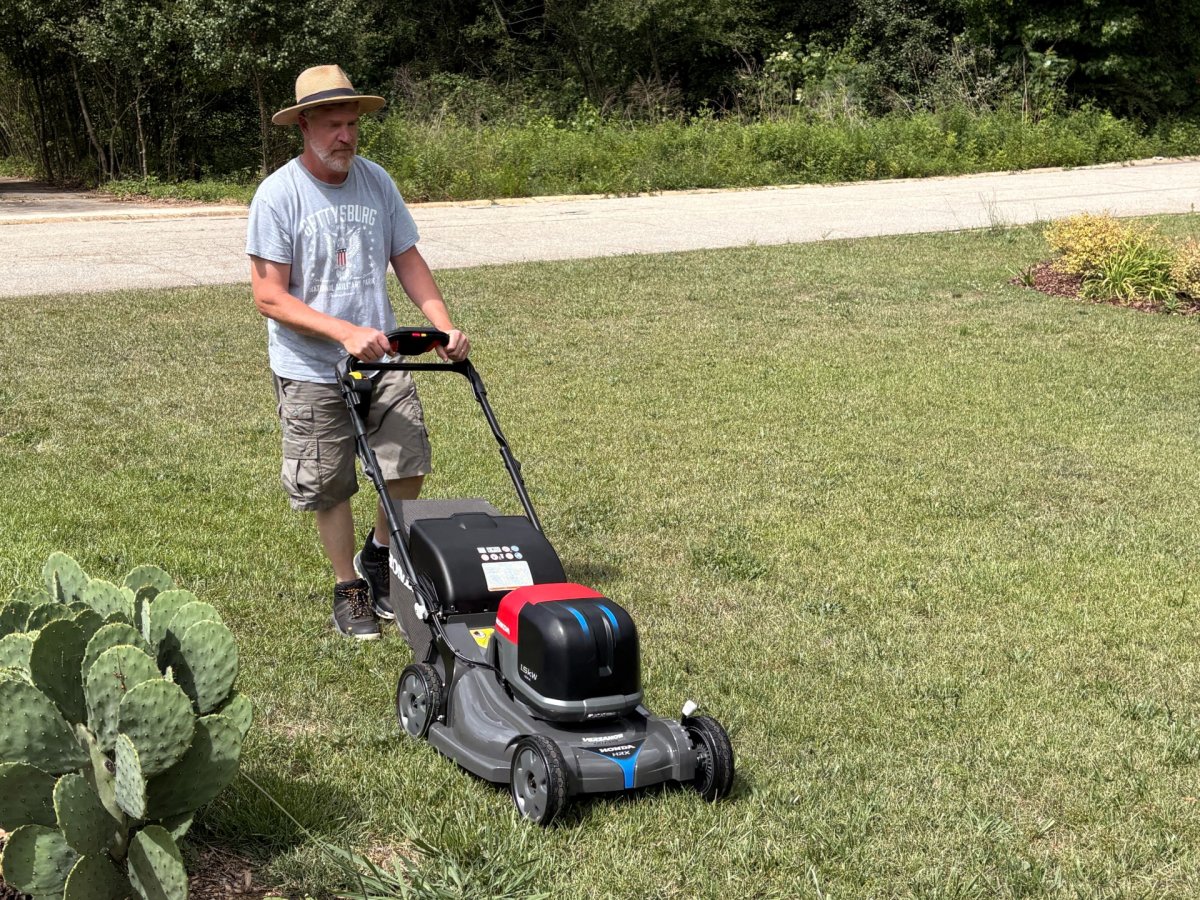
The mower was deployed on a sprawling 0.75-acre half-acre lawn featuring varying grass types, density levels, and uneven terrain. Testing parameters tracked run times, charging intervals, noise output, and overall cut performance. The dual-battery configuration comfortably cleared the property per charge. Notably, the e-Select Drive variable-speed self-propel system proved surprisingly aggressive; settings above level 3 tested the user’s running speed rather than a comfortable walking pace.
Week 4: Extreme Conditions and Pollinator Gardens
In the final week of testing, the HRX BE was pushed into extreme conditions, including the annual clearing of a dense, 1,000-square-foot pollinator garden filled with thick, overgrown stalks. Despite the high-demand environment, the twin-blade system refused to bog down, creating fine mulched clippings and powerful upward airflow that cleanly straightened unruly vegetation.
Supporting Data and Performance Metrics
When battery-powered outdoor equipment enters the market, manufacturers frequently throw around buzzwords like "gas-like performance." In the case of the HRX BE, the data largely backs up the marketing claims.
| Performance Metric | Honda HRX BE Spec / Recorded Data |
|---|---|
| Motor Type | 1.5 kW High-Torque Brushless |
| Battery Voltage & Capacity | 58V, 12Ah Lithium-Ion |
| Decibel Output | 77 dB (Average) |
| Run Time (Per Battery) | Up to 45 Minutes |
| Coverage Area (Dual Battery) | ~0.75 Acres |
| Fast Charger Recharge Time | 90 Minutes (8-Amp Charger) |
| Standard Charger Recharge Time | 6 Hours (2-Amp Charger) |
Acoustic and Operational Comparisons
Compared to a traditional Honda gas mower, the HRX BE’s most immediate and welcome difference is acoustic output. Operating at an average of 77 decibels, the electric motor is roughly 20 decibels quieter than legacy gas units, allowing for early-morning mowing without disturbing the neighborhood.
Furthermore, the integration of the Roto-Stop blade-stop system allowed Wolfe to temporarily disengage the rotating blades while keeping the self-propel drive engaged—ideal for safely navigating gravel driveways or crossing paved paths.
Official Responses and Market Positioning
Honda has positioned the HRX BE as the ultimate bridge for brand loyalists who have resisted the transition to electric lawn care due to perceived losses in power and build quality.
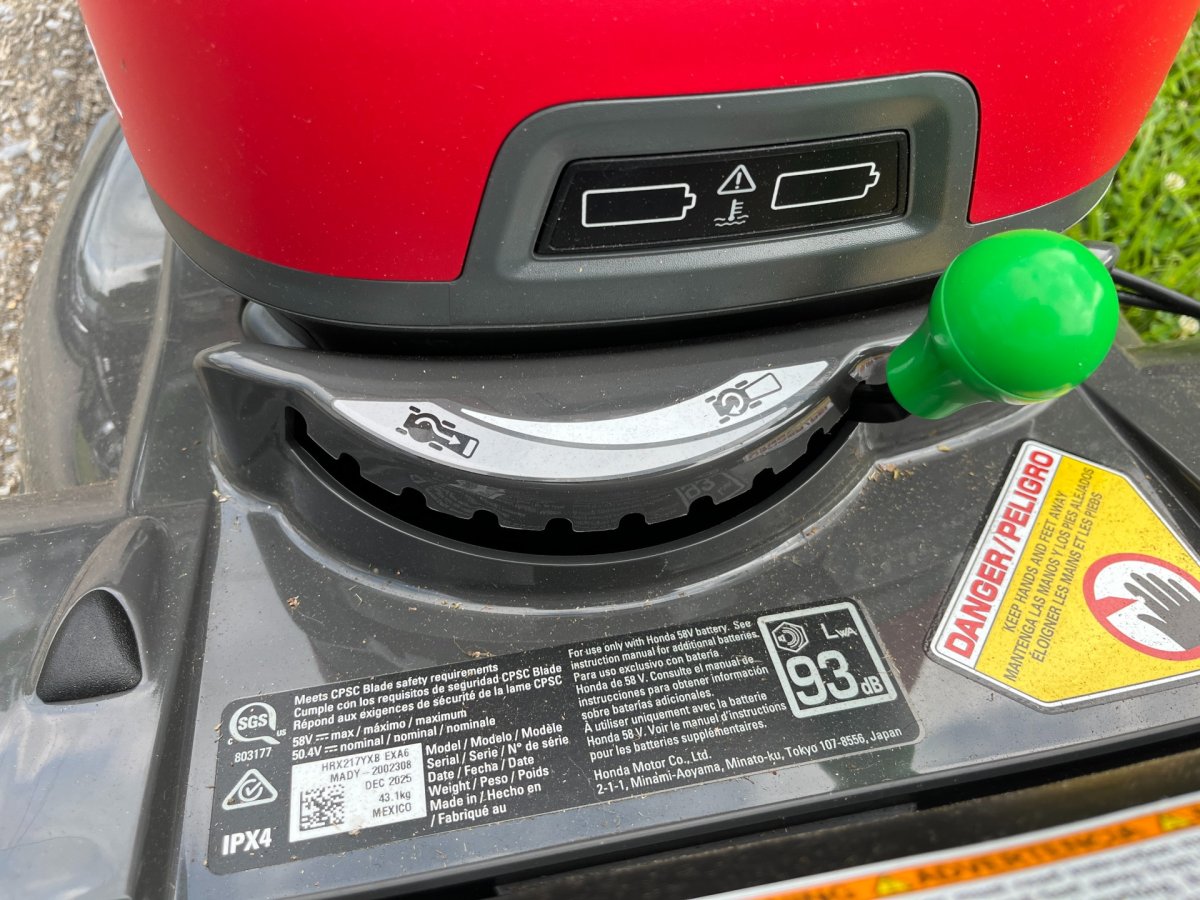
Industry analysts point out that while Honda has successfully retained the physical DNA of its gas powerhouses, the battery landscape has evolved rapidly. Competitors in the battery-powered space have popularized features that Honda notably omitted from the HRX BE. For instance, the shape of the Nexite deck prevents the mower from being stored vertically—a massive space-saving feature standard on many modern electric mowers. Additionally, adjusting the height-of-cut requires a clunky two-step process rather than a single fluid motion, and the 6-hour recharge time on the standard charger lags far behind industry pacing.
Financial Implications: Premium Performance, Premium Price
The most significant barrier to entry for the Honda HRX BE is financial. Excellence has always demanded a tax, and Honda’s entry into the high-end battery market is no exception.
- Base Model (Single Battery & 2-Amp Charger): Retails at approximately $1,299.
- Upgraded Kit (Dual 12Ah Batteries & 8-Amp Fast Charger): Reaches a staggering $2,497.
These figures place the HRX BE at the absolute apex of the consumer walk-behind mower market, outpricing nearly every comparable electric competitor evaluated over the past four years of comparative testing.
However, industry experts suggest that the upfront cost must be weighed against long-term operating and maintenance expenses. Devoid of spark plugs, air filters, oil changes, and carburetor maintenance, the lifetime cost of ownership drops dramatically. If the HRX BE’s durability matches the bulletproof reputation of its gas-powered ancestors, the steep price tag may ultimately prove justifiable for dedicated landscaping enthusiasts.
Final Implications: Is the HRX BE Right for You?
The transition from internal combustion to battery power is no longer an experimental frontier; it is the present reality of the green industry. With the HRX BE, Honda has proven that it does not need a gas engine to deliver a pro-grade, immaculate cut.
For property owners deeply invested in the Honda ecosystem, or those seeking uncompromising cut quality and reliable heavy-duty construction, the HRX BE is a formidable machine worthy of serious consideration. Conversely, budget-conscious consumers or those prioritizing modern convenience features like vertical storage and rapid standard charging may find themselves looking toward aggressively priced alternatives.
Ultimately, the Honda HRX BE sets a high water mark for electric mower performance—proving that while the fuel source has changed, Honda’s commitment to a pristine lawn remains entirely intact.
