

By Global Climate & Insurance Desk
Published August 2026
Executive Summary: A Continent on the Brink
As Europe grapples with its grueling fifth heatwave of the year, the continent finds itself at the epicenter of a rapidly transforming global climate landscape. While intermittent relief has historically punctuated European summers, the meteorological patterns of 2026 are rewriting the rules of environmental risk. Leading reinsurance giants, including the Swiss Re Institute and Munich Re AG, have issued stark warnings that the staggering human and economic toll currently being witnessed is not an anomaly, but rather the leading edge of a chronic, systemic crisis.
Beneath the veneer of a statistically muted first half of the year for global insured natural catastrophe losses—pegged at $42 billion by Swiss Re—lies an escalating, localized emergency. Europe is warming at nearly twice the global average, driving an unprecedented surge in extreme weather phenomena. From soaring heat-related fatalities exceeding 25,000 to rivers shrinking to trickles and choking agricultural harvests, the compounding impacts of sustained scorching temperatures and prolonged droughts are testing the limits of European infrastructure, economic resilience, and insurance models.
Main Facts: The 2026 European Heat and Wildfire Crisis
The convergence of persistent atmospheric heat domes, below-average rainfall, and structural vulnerabilities has turned large swathes of the European continent into tinderboxes.
- Staggering Economic Toll: According to preliminary data released by weather-tracking firm AccuWeather, ferocious wildfires sweeping through France, Spain, and Greece have already inflicted between €15.6 billion and €19.1 billion ($18 billion to $22 billion) in total damage and economic loss this summer.
- Unprecedented Human Cost: The relentless heatwaves have claimed a tragic human toll, with cumulative heat-related fatalities across the continent surpassing 25,000 as vulnerable populations struggle to cope with sustained extreme temperatures.
- Rapid Regional Warming: Data compiled by the Swiss Re Institute indicates that Europe’s temperatures are rising at almost twice the rate of the global average. The continent now endures 64% more hot days—defined as days where maximum temperatures reach or exceed 30°C (86°F)—compared to the baseline averages of the 1950s.
- Agricultural and Industrial Disruptions: Most of England is currently gripped by severe drought conditions that are directly impacting crop harvests. Across continental Europe, vital commercial waterways and rivers used for transporting key commodities are drying up, choking supply chains.
- A Masked Global Insurance Trend: While global insured losses from natural catastrophes stood at a benign $42 billion in the first half of 2026—well below historical long-term trends, heavily influenced by major international events like the devastating Venezuela earthquakes—insurance leaders warn that this "quiet period" provides a false sense of security.
Chronology of an Escalating Disaster: From Spring Warnings to Autumn Threats
The unfolding catastrophe of 2026 did not materialize overnight; it represents the culmination of shifting meteorological phases that began months prior to the peak summer tourist season.
Early 2026: The El Niño and Global Warming Convergence
In July 2026, Munich Re AG published a comprehensive mid-year natural disaster report warning of a "dangerous mix" forged by the tail-end effects of El Niño interacting with accelerating global warming. Insurers noted that while severe convective storms—such as spring thunderstorms, localized hail, and tornadoes—generated lower initial losses in the first half of the year compared to previous records, storm activity itself remained undiminished.
June – July 2026: The Arrival of the First Heatwaves
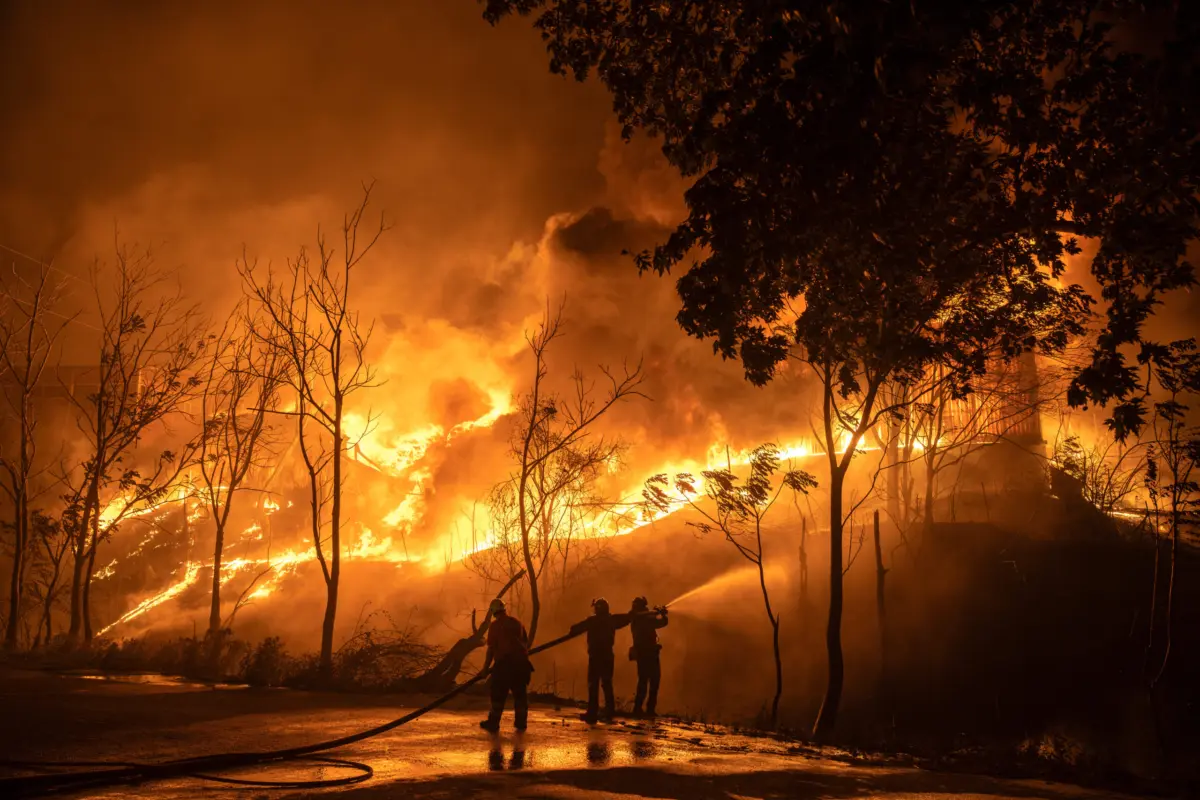
By early summer, Southern Europe was plunged into its initial rounds of extreme heat. On July 4, 2026, severe wildfires broke out near Oraiokastro, a major suburb of Thessaloniki, Greece, forcing emergency responders to frantically defend industrial warehouse facilities against advancing fire fronts. Throughout June and July, consecutive heatwaves rolled across the Mediterranean basin, desiccating soils and depleting municipal water reserves.
August 2026: The Fifth Heatwave and Industry Alarm
As August unfolded, Europe found itself trapped beneath its fifth distinct heatwave of the year. On August 10, data regarding surging heat mortality rates sparked fresh public health alarms. Simultaneously, the Swiss Re Institute published its mid-year risk assessment on August 11, formally upgrading its evaluation of European wildfire threats. Weather forecasters warned that the combination of entrenched heat and dry soil conditions would maintain elevated wildfire risks well into the autumn months, preventing any immediate seasonal respite.
Supporting Data: Numbers Behind the Catastrophe
To fully grasp the magnitude of the 2026 climate crisis in Europe, analysts rely on a growing matrix of empirical data points provided by meteorological institutions, reinsurance research units, and private forecasting agencies.
| Metric / Indicator | Value / Finding | Source |
|---|---|---|
| Total Summer Wildfire Losses (France, Spain, Greece) | €15.6B – €19.1B ($18B – $22B) | AccuWeather (Preliminary Estimates) |
| Cumulative European Heat Deaths | Exceeding 25,000 | Public Health Tracking / Insurance Journal |
| Global First-Half Insured Catastrophe Losses (H1 2026) | $42 Billion | Swiss Re Institute |
| Increase in European Hot Days (vs. 1950s) | +64% (Days $ge$ 30°C / 86°F) | Swiss Re Institute |
| Regional Warming Rate | Nearly 2x the global average | Swiss Re Institute / Climate Science Data |
| Most Destructive Global Event (H1 2026) | Venezuela Earthquakes (>5,000 fatalities) | Swiss Re Institute |
Official Responses: What Industry Leaders and Insurers Are Saying
The escalating frequency of high-impact climate events has triggered urgent commentary from top risk analysts and corporate executives, who are redefining how capital and property are protected across the continent.
Balz Grollimund, Head of Catastrophe Perils at Swiss Re, highlighted the changing nature of European fire risk in a recent public statement:
"Europe’s recent wildfires highlight how hotter and drier conditions are making large wildfires more likely, and — with more homes, businesses, and infrastructure built in risk-exposed areas — also more costly."
Echoing these concerns, authors of the Swiss Re Institute report emphasized the structural shift in European climate dynamics:
"Record heat underscores Europe’s chronic heat risk… Though Europe’s wildfire risk is still considered moderate, the increase in fire activity warrants closer attention. As heat in Europe increases, wildfire-conducive conditions are likely to become more frequent."
Furthermore, industry experts caution against complacency derived from the lower-than-average insured losses recorded in the first half of 2026. Swiss Re explicitly noted that a “quiet first half is not necessarily indicative of below-average annual losses,” reiterating that the long-term upward trajectory of financial exposure remains entirely intact.
Implications: The Future of Risk, Infrastructure, and Insurance in Europe
The convergence of multi-week heatwaves, agricultural droughts, and expanding wildfire zones carries profound long-term implications for European society, governance, and financial markets.
1. The Wildland-Urban Interface Vulnerability
Historically, catastrophic wildfires were viewed as a primary threat in regions like California, Australia, or rural parts of southern Europe. However, the relentless expansion of housing developments, commercial parks, and transport corridors into peripheral forested areas—known as the wildland-urban interface (WUI)—has fundamentally altered the risk equation. Swiss Re has warned that Europe’s extensive WUI zones mean that even a moderately severe fire breaking out near densely populated urban centers could trigger unprecedented economic destruction.
2. Evolution of Insurance Models and Underwriting
Insurers are being forced to re-evaluate underwriting strategies. Traditional actuarial models, which rely heavily on historical weather data spanning the past several decades, are increasingly obsolete in a world where baseline temperatures are rising at twice the global rate. Reinsurers are beginning to price policies to account for systemic, chronic heat stress rather than isolated seasonal storms. This shift threatens to increase insurance premiums significantly, potentially pricing out homeowners and businesses in high-risk zones unless aggressive adaptation measures are implemented.
3. Economic and Supply Chain Pressures
The disruption of inland waterways, such as the Rhine and other major European commercial arteries, demonstrates that climate change is not merely a property loss issue but a macro-economic bottleneck. When cargo barges cannot navigate low-river channels, manufacturing plants stall, energy supplies tighten, and consumer prices rise. Coupled with agricultural losses in breadbasket regions like England and parts of Southern Europe, the financial fallout extends deep into food security and industrial productivity.
4. The Imperative for Adaptation and Policy Action
Ultimately, the 2026 heatwaves serve as a clarion call for policymakers. Experts argue that building resilience will require massive capital investments in urban greening, advanced early-warning satellite networks, stricter zoning laws in fire-prone regions, and robust public health infrastructure designed to protect aging populations from lethal thermal stress. Without coordinated, continent-wide adaptation strategies, Europe’s chronic heat risk will continue to outpace its economic capacity to absorb disaster.
