

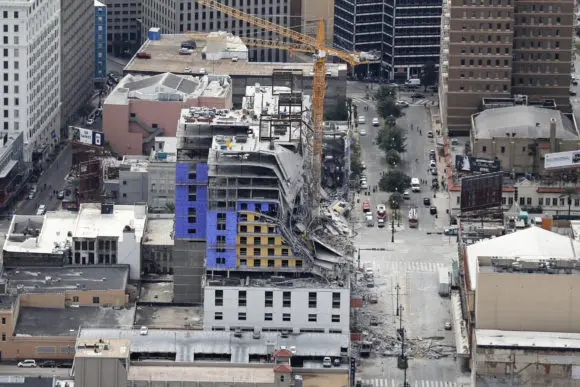
NEW ORLEANS — A Louisiana state judge on Thursday officially approved a sweeping $106 million settlement, bringing formal closure to a protracted, yearslong legal battle stemming from the catastrophic and deadly partial collapse of the Hard Rock Hotel construction site in downtown New Orleans.
The tragic incident, which unfolded in October 2019, shocked the local community, disrupted a major commercial corridor, and ignited an exhaustive investigation into construction practices, municipal oversight, and corporate accountability.
Orleans Parish Civil District Court Judge Kern Reese signed off on the massive financial resolution, according to court documents and statements from plaintiffs’ legal counsel. The agreement successfully consolidates and resolves scores of distinct claims, providing a measure of financial closure to hundreds of individuals and businesses whose lives and livelihoods were upended by the disaster.
Main Facts of the Settlement
The newly approved $106 million financial package is the culmination of a massive legal consolidation effort that brought together nearly 500 individual plaintiffs and 21 corporate defendants.
According to Mark Glago, co-lead counsel for the plaintiffs, the litigation pool comprises a total of 490 plaintiffs. This group includes injured construction workers who survived the ordeal, families of the victims who lost their lives, and surrounding businesses that suffered catastrophic economic losses due to street closures, property damage, and utility disruptions in the heart of New Orleans’ historic commercial district.
“This will be an honor to, you know, these claimants that have been through so much,” Glago stated following Thursday’s court approval. “We are very, very happy with this $106 million.”
Under the terms of the settlement, the combined pool of funds will not be distributed immediately by the court or attorneys. Instead, the administration and eventual disbursement of the $106 million will be overseen by a specially appointed special master, who will review individual claims to ensure a fair and equitable distribution based on the extent of injuries, losses, and damages sustained.
Despite the monumental financial resolution, the civil settlement arrives in the shadow of a notable absence of criminal accountability. Although a grand jury convened in the wake of the disaster to investigate potential criminal wrongdoing, it ultimately decided against issuing criminal indictments against any individuals or corporate entities connected to the project. Consequently, the civil litigation overseen by Judge Reese became the primary avenue for victims and affected stakeholders to seek justice and compensation.
Chronology of the Disaster and Legal Battle
To understand the magnitude of Thursday’s $106 million settlement, it is necessary to examine the timeline of events that began more than six years ago.
October 12, 2019: The Collapse
The 18-story Hard Rock Hotel project, situated at the corner of Rampart Street and Canal Street on the edge of the French Quarter, was actively under construction. Suddenly, in the early morning hours, the upper floors of the structure suffered a catastrophic structural failure. The partial collapse sent tons of concrete, twisted steel, and construction debris crashing onto the streets below.
The disaster claimed the lives of three construction workers: Quinnyon Wimberly, Anthony Magrette, and Jose Ponce. Dozens of others sustained severe injuries as they scrambled to escape the raining debris. The collapse also left two massive, unstable construction cranes teering precariously over the site, prompting weeks of emergency street closures, evacuations, and a tense, slow-motion demolition process that paralyzed downtown New Orleans.
August 2020: The City Files Suit
In the months following the disaster, federal and local safety agencies, including the Occupational Safety and Health Administration (OSHA), launched rigorous investigations into the causes of the structural failure. As findings began to emerge detailing systemic issues with engineering plans, construction materials, and oversight, civil lawsuits began to pile up.
In August 2020, the City of New Orleans took aggressive legal action, filing a major lawsuit against the building owners, development partners, and various primary and subcontractors involved in the project. The city sought to recoup millions of dollars in emergency response costs, infrastructure damage, and economic disruption.
Consolidation and Years of Legal Maneuvering
As individual lawsuits filed by injured workers, families of the deceased, and neighboring business owners multiplied, the state court system recognized the inefficiency of hearing hundreds of parallel cases. The various legal actions were eventually consolidated into a single, massive class-action-style proceeding before Judge Kern Reese in the Orleans Parish Civil District Court.
Over the next several years, the litigation involved complex discovery processes, intense mediation sessions, and fierce legal battles among the 21 corporate defendants—which included developers, general contractors, engineering firms, and architectural consultants—and the 490 plaintiffs. The process dragged on for more than six years before finally culminating in the comprehensive $106 million settlement approved this week.
Supporting Data and Stakeholder Impact
The financial fallout of the Hard Rock Hotel collapse extends far beyond the headline-grabbing $106 million figure. The disaster triggered one of the most complex economic and legal recovery efforts in modern Louisiana history.
- Plaintiffs: 490 distinct plaintiffs, encompassing surviving workers with life-altering injuries, grieving families, and local business entities.
- Defendants: 21 corporate entities, including project developers, owners, primary contractors, and specialized subcontractors.
- Duration: More than six years of active litigation, discovery, and mediation before final judicial approval was secured.
- Human Cost: Three fatalities and dozens of physical injuries, many of which permanently impacted the victims’ abilities to work in the construction industry or other trades.
- Economic Toll: Millions of dollars in lost revenue for hotels, restaurants, retail shops, and professional services located within the Canal Street and Rampart Street corridors, which were cut off from normal traffic for months following the disaster and subsequent crane demolitions.
The distribution process handled by the special master will require meticulous auditing of medical bills, lost wage documentation, property damage assessments, and corporate revenue losses to ensure the $106 million is portioned out appropriately among the hundreds of claimants.
Official Responses and Perspectives
Reactions to the judicial approval of the settlement reflect a mixture of hard-fought relief and lingering sorrow over a tragedy that many believe could have been entirely avoided.
Plaintiffs’ attorneys emphasized the emotional and psychological toll the six-year legal battle took on their clients. For many injured workers and families of the deceased, the lengthy courtroom proceedings prolonged the trauma of October 2019.
"This will be an honor to those claimants that have been through so much," reiterated Mark Glago, highlighting the resilience of the plaintiffs who stood firm throughout years of corporate legal defenses and procedural delays.
Legal analysts point out that while a $106 million settlement is one of the largest in Louisiana history for a construction-related civil case, it also highlights the limitations of the American civil justice system in delivering complete closure when criminal charges are absent. The decision by the grand jury not to indict any individuals left a vacuum of accountability that no civil settlement check can entirely fill, according to community advocates and labor representatives who have monitored the case closely since 2019.
City officials, meanwhile, expressed satisfaction that the legal avenues addressing municipal damages and public resource expenditures have reached a resolution, allowing the city to close a painful chapter in its modern history.
Broader Implications for the Construction Industry and New Orleans
The conclusion of the Hard Rock Hotel litigation carries significant ramifications for the construction and real estate development sectors, both locally in New Orleans and across the broader Gulf Coast region.
Heightened Scrutiny on Construction Safety
The 2019 disaster served as a brutal wakeup call regarding construction oversight, engineering reviews, and municipal permitting processes. In the wake of the collapse, industry experts and regulatory bodies scrutinized the use of substandard building materials, rapid construction schedules, and communication gaps between developers, structural engineers, and on-site contractors.
The sheer financial weight of the $106 million settlement—shared among 21 corporate defendants and their respective insurance carriers—sends an unmistakable message to developers and contractors operating in major urban markets. Negligence, poor oversight, or cutting corners on safety protocols can result in corporate liability that threatens the financial viability of all firms involved in a major project.
Urban Renewal and the Site’s Future
For downtown New Orleans, the legal closure marks a symbolic turning point. The site of the partial collapse, located at a prominent downtown intersection, has remained a stark reminder of the tragedy for over half a decade. With the civil litigation finally put to rest, municipal leaders and real estate stakeholders hope the area can eventually move forward toward redevelopment, helping to heal the physical and psychological scars left on the Canal Street corridor.
As the special master begins the intricate work of allocating the $106 million to the 490 plaintiffs, the New Orleans Hard Rock Hotel disaster will undoubtedly remain a permanent case study in urban planning, workplace safety, civil litigation, and the high cost of construction failure.
