

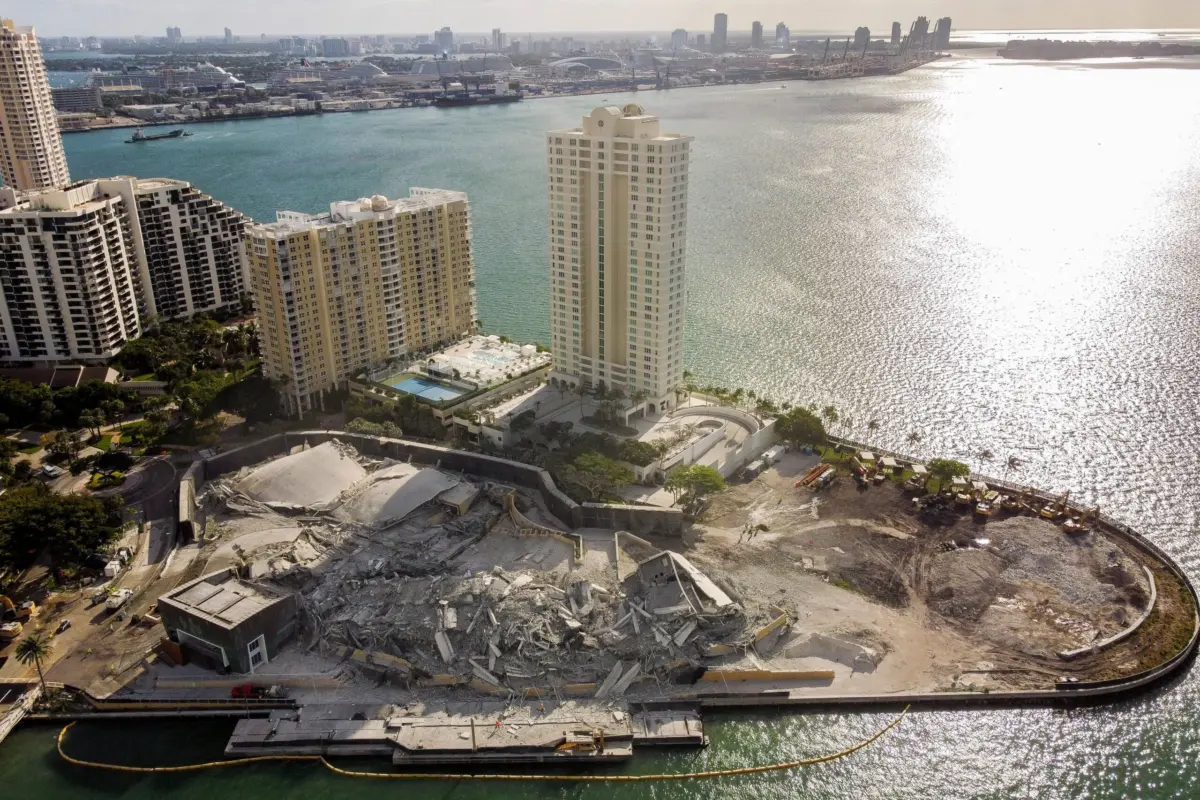
While vast segments of the wider Miami condominium market have cooled off or plateaued amid shifting economic currents, high interest rates, and localized inventory saturation, one rarefied tier is defying gravity. The ultra-luxury sector—specifically for off-plan, pre-construction developments—is experiencing an unprecedented boom. Leading this charge is The Residences at Mandarin Oriental Miami, a monumental project situated on Brickell Key, a secluded manmade island flanking Miami’s bustling financial core.
According to David Martin, president of the project’s developer, Swire Properties, the development has already amassed a staggering $1.7 billion in condo sales before a single shovel has even broken ground. This historic milestone underscores a fundamental transformation in Miami’s wealth landscape, driven by corporate relocations, an influx of domestic wealth from traditional coastal powerhouses, and an insatiable appetite for world-class vertical living.
Main Facts: Breaking Down the $1.7 Billion Milestone
The sheer scale of the sales figures at The Residences at Mandarin Oriental Miami highlights a monumental shift in how high-net-worth individuals are deploying capital.
- Pre-Construction Sales Record: Swire Properties has locked in $1.7 billion in sales for the dual-tower development prior to its official groundbreaking ceremony.
- Record-Breaking Penthouses: The sales ledger includes two ultra-exclusive penthouses commanding roughly $50 million each, setting a benchmark for luxury real estate on Brickell Key.
- The Buyer Demographic: Contrary to Miami’s historical reliance on international buyers from Latin America and Europe, 65% of the buyers are domestic. These out-of-state investors are primarily migrating from financial and tech hubs in California, New York, and Massachusetts.
- Financing Structure: Swire Properties is aggressively self-financing the multi-tower construction. Funding relies on capital generated from the disposition of its Brickell City Centre assets alongside robust buyer deposits.
- Pricing Momentum: Since sales officially launched for the south tower in 2024, property values have surged by 30%, reflecting fierce demand and tightening luxury inventory.
- Intended Use: Approximately 30% of buyers intend to make the residences their primary home, while 60% view the properties as elite second homes.
Chronology: From Brickell Pioneer to Vertical Empire
Swire’s success on Brickell Key is not an overnight fluke; it is the culmination of a multi-decade strategy that transformed an overlooked industrial island into one of the most prestigious ZIP codes in the United States.
The Late 1970s: Planting the Flag
Swire Properties—a lineage tracing back to a 200-year-old parent corporate family tree that also owns Cathay Pacific Airways Ltd. and operates extensively across Asia—first entered the Miami market more than 40 years ago. In the late 1970s, visionary executives began quietly acquiring parcels of land on Brickell Key, a triangular island sitting just off the coast of Miami’s downtown financial district.
Decades of Master-Planned Development
Over the next several decades, Swire methodically master-planned Brickell Key, transforming it into a secure, landscaped, pedestrian-friendly enclave. The developer also left an indelible mark on the broader downtown fabric by creating Brickell City Centre, a massive mixed-use development that redefined urban retail, dining, and commercial life in the city.
2024–2026: Demolition and the Launch of a New Era
The current chapter began earlier this year with the strategic demolition of the legacy Mandarin Oriental hotel that had long anchored the island’s southern tip. In its place, Swire initiated plans for a breathtaking two-tower architectural marvel.
Sales for the larger south tower launched in 2024, instantly catching fire among elite buyers. By mid-2026, sales velocity prompted the developer to ready the site for official construction. The project milestone is being commemorated with a high-profile groundbreaking ceremony and private reception on Thursday evening. Current projections slate the entire development for completion by 2030.
Supporting Data: The Architecture, the Market, and the Shift
To truly understand why buyers are committing tens of millions of dollars to blueprints and digital renderings, one must examine the physical scope of the project and the macroeconomic tailwinds supporting it.
Architectural Layout and Sales Progress
The development comprises two distinct towers rising from the footprint of the former hotel:
- The South Tower: Standing at a soaring 66 floors, this tower houses 228 ultra-luxury residences. Benefiting from immense demand, 80% of these units are already sold.
- The North Tower: Rising 33 floors, this building will integrate a 121-room Mandarin Oriental hotel alongside private residences. Sales for this building currently stand at 25%.
The Single-Family Home Alternative
One of the most revealing metrics shared by David Martin is how these luxury condos compete directly against traditional single-family real estate.
- “We’re competing with single-family homes at an $8 million to $10 million price range,” Martin noted.
- This trend demonstrates a fundamental evolution in luxury lifestyle choices. High-net-worth buyers are increasingly eschewing the maintenance, security concerns, and sprawling footprints of suburban estates in favor of turnkey, hyper-amenitized vertical communities that offer five-star hotel services, security, and panoramic Biscayne Bay views.
Brickell’s Five-Year Runway
The real estate momentum on Brickell Key does not exist in a vacuum. It is being heavily catalyzed by massive commercial developments taking shape within walking distance:
- Banco Santander SA Tower: Currently constructing a sleek, approximately 50-story tower at 1401 Brickell Avenue.
- Citadel Headquarters: Financial titan Citadel has officially commenced work on its massive new headquarters site just a few blocks south of the Mandarin Oriental project. This tower is also expected to reach roughly 50 stories.
Together, these corporate anchors are injecting billions of dollars into the local economy, bringing thousands of high-earning executives, legal professionals, and technologists to the immediate neighborhood, thereby securing a robust five-year runway of housing demand.
Official Responses and Developer Insights
Swire Properties has deliberately kept certain financial details close to the vest, declining to comment on total construction costs or the precise aggregate revenue it expects to collect upon sellout. However, leadership has been vocal about the sociological and economic shifts making these numbers possible.
David Martin emphasizes that the speed and volume of all-cash transactions are indicative of a profound, permanent maturation of Miami’s financial ecosystem.
"The economy of Miami has changed at the top end almost beyond recognition," Martin stated during an interview. "People are just beginning to understand what that means."
He elaborated on the buyer profile, noting that heavyweights from the nation’s technology and finance sectors are leading the acquisition charge. Rather than speculative investors flipping units for short-term gains, many of these purchasers are captains of industry securing generational assets.
Furthermore, the choice to self-finance—leveraging proceeds from the successful monetization of the Brickell City Centre assets alongside substantial buyer deposits—illustrates Swire’s formidable balance sheet and unwavering institutional confidence in the Miami market, insulating the project from traditional commercial real estate credit crunches.
Implications: What This Means for Miami’s Future
The runaway success of The Residences at Mandarin Oriental Miami carries broad implications for the urban landscape of South Florida, real estate investment trends, and global wealth migration.
1. The Decoupling of Luxury and Broader Market Trends
While entry-level and mid-tier condominium markets across South Florida face headwinds from elevated borrowing costs, insurance crises, and cooling buyer pools, the ultra-luxury tier operates under an entirely different set of rules. Funded heavily by all-cash buyers who are insulated from interest rate fluctuations, this segment proves that elite global wealth views prime Miami real estate as a non-negotiable asset class.
2. The Final Transformation of Brickell into Manhattan-South
The consolidation of financial giants like Citadel and Banco Santander, paired with ultra-high-end residential projects like Swire’s twin towers, solidifies Brickell’s status as the undisputed financial capital of the Southeast. The neighborhood has evolved past its historical reputation as a nightlife and weekend destination; it is now a 24/7 global metropolis where executives live, work, and conduct international business within a few walkable blocks.
3. Setting a New Ceiling for Vertical Living
With multiple penthouses hitting the $50 million mark and overall prices climbing 30% in just two years, the project has permanently recalibrated pricing expectations for pre-construction developments in Miami. Future developers will look to the Mandarin Oriental model—integrating legendary hotel brands, ultra-private amenities, and massive square footage—as the gold standard for capturing domestic wealth migrating from northern financial capitals.
As construction crews officially break ground this week with celebrations slated for Thursday evening, all eyes in the global real estate community will be fixed on Brickell Key. For Swire Properties and the buyers betting millions on its future, the 2030 completion date marks not just the delivery of two towers, but the physical realization of a brand-new economic era for the Magic City.
