

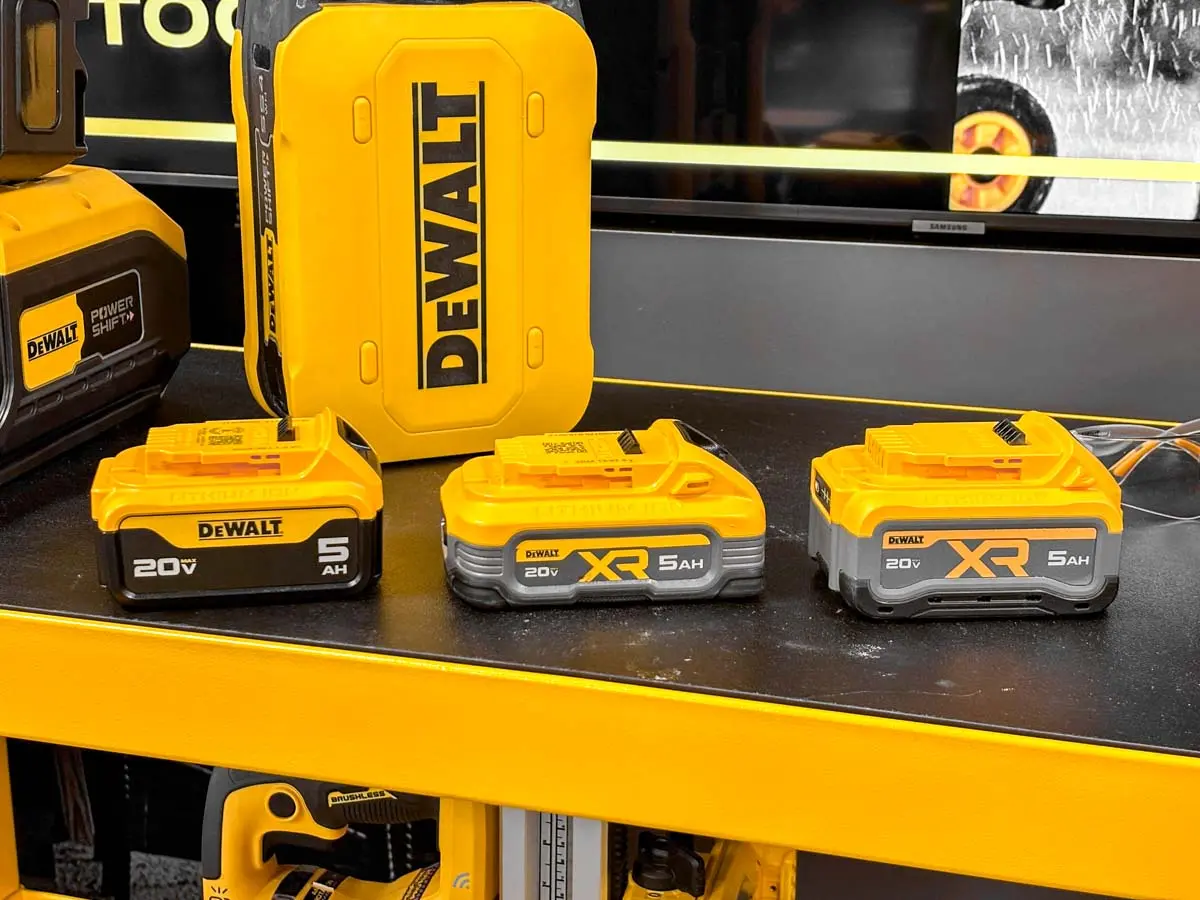
BALTIMORE — At DeWalt’s flagship "Built Black and Yellow" industry experience event in Baltimore, tool enthusiasts and trade professionals gathered to get a firsthand look at the company’s latest innovations. While new tools always generate significant buzz, a quieter, yet arguably more consequential, operational shift commanded the attention of industry analysts: a sweeping overhaul of DeWalt’s 20V Max battery branding architecture.
For years, navigating the landscape of DeWalt power sources meant deciphering a growing glossary of sub-brand monikers. Terms like "Powerstack" and "Powerpack" were introduced to market groundbreaking internal chemistries and cell designs, but they also introduced a layer of complexity for retail buyers and busy contractors alike.
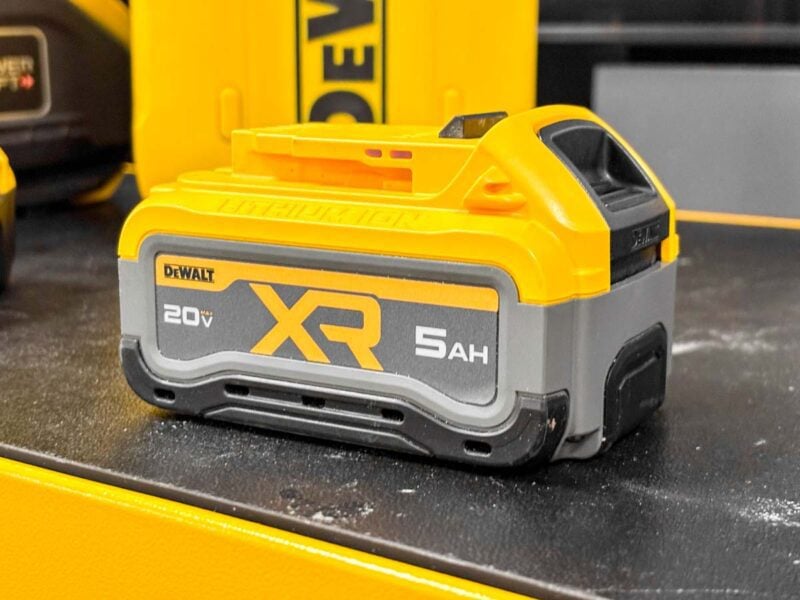
According to product experts on the ground in Baltimore, DeWalt is moving to streamline this ecosystem. The core takeaway for trade professionals is simple: the underlying technology is not going away, but the familiar "Powerstack" and "Powerpack" names are being retired in favor of a unified "XR" designation.
This strategic rebranding aims to demystify battery selection, helping professionals quickly distinguish between standard and advanced power solutions on crowded distributor shelves. However, because distinct underlying technologies—specifically pouch cells and tabless cylindrical cells—are now sharing the same overarching XR badge, understanding the nuances of the new naming convention is critical for anyone looking to invest in new power solutions.
Main Facts: What is Actually Changing?
To cut through the marketing shift, it is essential to separate nomenclature from engineering. The internal physics, energy densities, and performance metrics of DeWalt’s lithium-ion power cells remain robust and unchanged. What has fundamentally altered is the way these products are labeled, categorized, and marketed to the end user.
The restructuring can be broken down into two primary tiers:
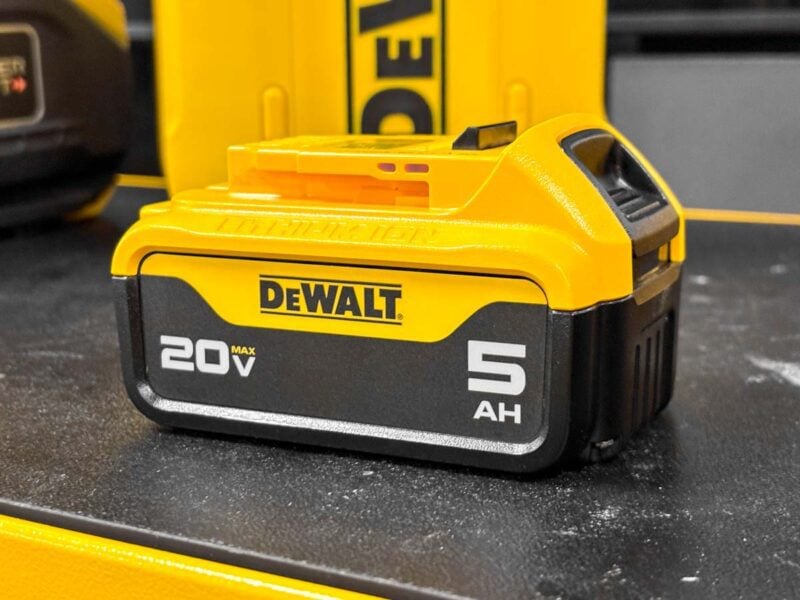
- Standard Batteries: The traditional cylindrical-cell battery lineup is dropping the legacy "XR" branding on the physical housing. Moving forward, these will simply be designated as standard DeWalt 20V Max batteries. Because most major retailers already omitted "XR" from their everyday descriptions and internal model numbers remained untouched, this visual change serves mostly to align physical pack labeling with retail reality.
- Advanced Batteries: Both Powerstack (pouch cell) and Powerpack (tabless cell) batteries are transitioning entirely to the XR (Xtreme Runtime) badge. This means advanced technologies—historically siloed under separate proprietary names—are now being consolidated under DeWalt’s flagship performance umbrella.
In addition to these standard and advanced tiers, DeWalt confirmed that specialized variants—such as oil-resistant housings and tether-ready models designed for work at height—will continue to be offered within specific lines, ensuring that industrial users operating in hazardous or demanding environments retain access to job-specific protections.
Chronology of an Evolution: From Niche Innovations to Mainstream XR
To understand why DeWalt is restructuring its battery designations now, it helps to examine the chronological progression of how these technologies entered the market over the past several years.
Phase One: The Cylindrical Standard
For over a decade, DeWalt’s 20V Max ecosystem was built around traditional 18650 and, later, 21700 cylindrical lithium-ion cells. During this era, the "XR" badge was deployed selectively to denote premium packs featuring higher-grade cells, enhanced electronic protection against thermal overload, and superior overall longevity compared to base-tier contractor packs.
Phase Two: The Pouch Cell Disruption (Powerstack)
DeWalt shocked the industry by introducing the Powerstack battery platform, which abandoned traditional cylindrical cells in favor of stacked lithium-ion pouch cells. Originally marketed heavily under the Powerstack banner, these batteries offered a flatter form factor, significantly lower internal resistance, higher power output, and a more compact footprint. Pros quickly learned that Powerstack meant maximum power delivery in a smaller, lighter package.
Phase Three: The Tabless Revolution (Powerpack)
Shortly after the pouch-cell rollout, DeWalt introduced the Powerpack lineup, leveraging tabless cylindrical cell architecture (often utilizing formats like the 21700 cell structure). Tabless technology addresses the thermal and electrical bottlenecks of traditional tab-connected cells, allowing electrons to flow more freely across the entire edge of the electrode. This resulted in massive continuous current delivery, reduced heat generation during heavy-load applications, and extended runtime for high-drain tools like grinders, rotary hammers, and miter saws.
Phase Four: The Unified Rebranding (Present Day)
With multiple advanced cell architectures coexisting in the marketplace, the previous naming convention risked overwhelming the consumer. DeWalt’s presence in Baltimore marked the official pivot to phase four: consolidating advanced pouch and tabless designs under the master XR banner, while relying on Ah (Amp-hour) ratings, physical form factors, and model numbers to separate the underlying tech.
Supporting Data: Navigating the New XR Landscape
While the elimination of the Powerstack and Powerpack names simplifies the overarching brand architecture, it introduces a momentary learning curve for contractors accustomed to looking for specific sub-brand logos. Because both pouch-cell and tabless architectures now share the XR designation, users must rely on capacity ratings and physical dimensions to identify what kind of battery they are holding.
Mapping the Advanced Lineup
Fortunately, for the initial roster of advanced batteries currently available on the market, the transition is relatively straightforward due to a lack of Amp-hour (Ah) overlap between the two distinct technologies.
- Pouch Cell Heritage (Formerly Powerstack): These batteries are optimized for compact power, ultra-low resistance, and lightweight tool balancing. Under the new system, they carry the 20V Max XR designation. Users should look for specific compact Ah capacities associated historically with the Powerstack line.
- Tabless Cell Heritage (Formerly Powerpack): These packs are engineered for high-draw applications where sustained output and thermal management are paramount. They also transition to the 20V Max XR nomenclature.
The 5.0Ah Tabless Complication
The single biggest point of potential confusion in the near future involves capacity overlap driven by new product development. DeWalt has announced the upcoming release of a new 5.0Ah tabless battery.
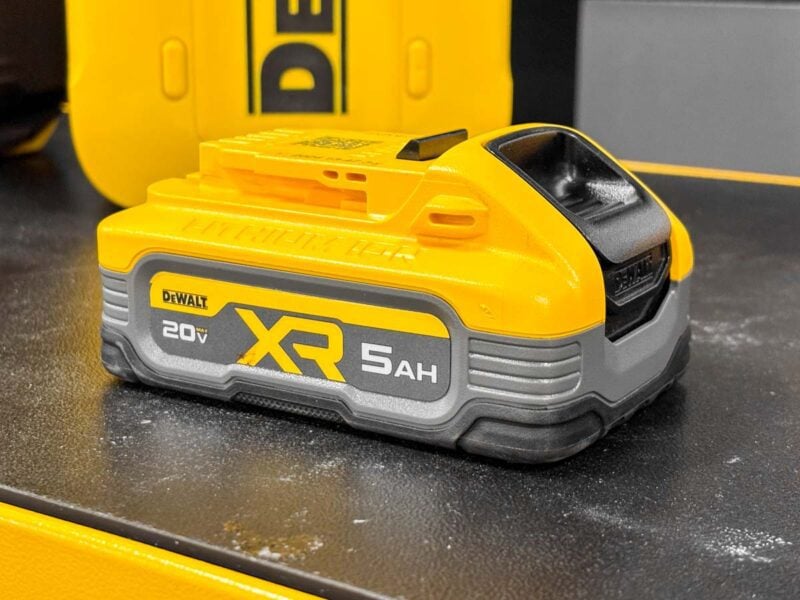
Under the legacy naming matrix, a high-capacity advanced pack of this nature would have automatically defaulted to the Powerpack moniker. However, adhering strictly to the new strategy, it will launch under the 20V Max XR banner.
Because 5.0Ah configurations have historically existed in traditional cylindrical formats as well, users will need to exercise caution.
Field Identification: Tabless vs. Pouch Cell
For professionals trying to differentiate between a tabless XR pack and a pouch-cell XR pack in a dark service truck or on a busy workbench, visual and tactile inspection is key:
- Tabless Cells (Ex-Powerpack): These packs tend to be shorter from front to back, but noticeably thicker from top to bottom compared to their pouch-cell counterparts. Their internal geometry is optimized for high-current throughput in larger-capacity formats.
- Pouch Cells (Ex-Powerstack): These packs are characterized by a flatter, more streamlined profile, trading massive bulk for an ergonomic footprint that fits flush into compact drills, impact drivers, and fastening tools.
Official Responses and Industry Context
Representatives for DeWalt at the Baltimore showcase emphasized that the rebranding is entirely customer-centric. Market research indicated that while tech-savvy contractors appreciated the engineering terminology, everyday retail buyers often found themselves hesitating in the aisle when forced to choose between standard XR, Powerstack, and Powerpack options without an immediately intuitive hierarchy.
"Our goal has always been to deliver maximum productivity to the jobsite," noted a senior DeWalt product manager during the technical briefings. "As our battery technologies evolved faster than our packaging could comfortably accommodate, it created unnecessary friction at the point of sale. By pivoting to a unified XR classification for all advanced power solutions, we are empowering the Pro to instantly recognize performance capability based on tier, while letting the Amp-hour rating and model number dictate specific application choices."
Industry analysts have largely praised the move as a necessary maturation of the cordless power tool market. As lithium-ion technology diversifies into solid-state, tabless, pouch, and specialized hybrid architectures, legacy naming conventions often buckle under the weight of technological advancement. By establishing a clear binary—Standard (20V Max) versus Advanced (20V Max XR)—DeWalt has built a flexible framework capable of absorbing future chemical and structural innovations without requiring another disruptive marketing overhaul.
Practical Implications for Contractors and Retailers
For the average trade professional, this transition requires a brief adjustment period. When ordering replacement batteries or outfitting a new crew, relying solely on historical buzzwords will no longer suffice.
Key Takeaways for Buyers:
- Check the Model Numbers: When purchasing online or through industrial distributors, always verify the specific alphanumeric model number rather than trusting general category descriptions. Model numbers remain unchanged, making them the ultimate source of truth.
- Understand the XR Distinction: Remember that seeing "XR" on a 20V Max battery now simply means you are looking at DeWalt’s advanced tier of power packs—encompassing both the compact power delivery of pouch cells and the heavy-duty current output of tabless cells.
- Inspect the Physical Form Factor: If you are unsure whether an advanced 5.0Ah XR pack utilizes pouch or tabless technology, check its physical proportions. The shorter, thicker profile indicates tabless construction, ideal for high-drain tools, while lower-profile configurations point toward pouch-cell architecture.
Ultimately, DeWalt’s rebranding effort is designed to clear away the marketing noise and let the performance of the tools speak for itself. While the names on the plastic casing are changing, the commitment to driving heavy-duty jobsites forward remains as solid as ever.
