

Main Facts: The Evolution of Ryobi’s Hard-Floor Maintenance System
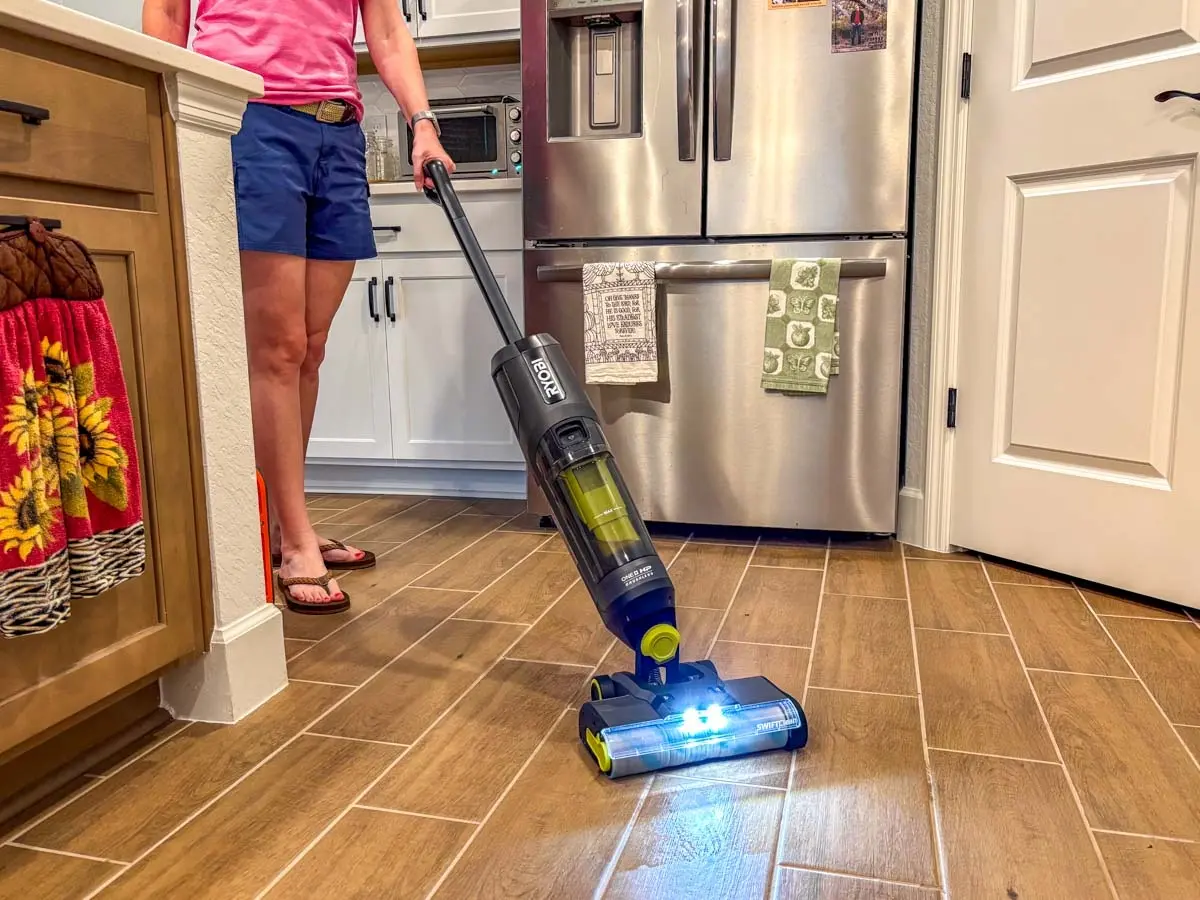
Maintaining large expanses of hard-surface flooring can be an arduous weekly chore, requiring homeowners to juggle brooms, traditional vacuum cleaners, string mops, and heavy buckets of water. Seeking a streamlined alternative for a newly purchased 1,700-square-foot home featuring entirely hard-surface flooring, testing was initiated on the second-generation Ryobi 18V One+ HP SwiftClean Wet Dry Vacuum Mop (Model PBLUV748).
Representing an upgrade over its predecessor (Model PBLSV747), this latest iteration retains the core cleaning capabilities that made the original popular while introducing a vital quality-of-life feature: an integrated charging dock. Priced at $349 as a bare tool or $399 as a full kit—which includes a 4.0Ah High Performance battery and the upgraded charging base—the SwiftClean aims to redefine efficiency by combining dry vacuuming, wet-mess cleanup, and active mopping into a single cordless pass.
However, prospective buyers should note its specific design parameters. While it excels on tile, hardwood, luxury vinyl, and laminate, it is strictly engineered for hard floors and cannot replace a traditional carpet vacuum.

Chronology: Hands-On Evaluation and Real-World Testing
The testing timeline spanned several weeks of rigorous, real-world deployment across a household managing heavy daily foot traffic, kitchen meal prep, and occasional accidental spills.
Initial Unboxing and Setup
Upon unboxing the kit from Home Depot, the immediate takeaway was the convenience of the newly designed charging base. Unlike the previous-generation stand—which required users to pull the battery out and transport it to a separate wall charger—the Gen-2 stand features built-in electrical contacts. Placed in the laundry room, the vacuum now docks and charges automatically without requiring battery management.
Routine Maintenance and Operation Timeline
- Initial Dry Vacuuming Runs: Testing began with pure dry vacuuming. Operating on standard mode, the plush front roller demonstrated immediate utility by maintaining intimate surface contact, effortlessly capturing fine sand and light particulate matter that stiffer rollers often skip.
- Max Mode Transitions: Switching to Max mode for heavier debris under the dining room table revealed an almost self-propelled forward pull, generated by the rotation of the front roller. While this reduces user fatigue, it requires a firm hand on the pullback stroke.
- Simultaneous Vacuuming and Mopping: Testing the simultaneous wet-and-dry function in the kitchen—subjected to flour dust, dropped food, and dried sauces—proved that skipping the preliminary sweep is entirely viable. The unit dispensed cleaning solution, dislodged stubborn spots, and extracted dirty water in one fluid motion.
- Self-Cleaning Cycle: Post-cleaning maintenance was evaluated using the automated 60-second self-cleaning cycle on the dock, which flushes the roller and internal channels with minimal user intervention.
Supporting Data: Specifications and Performance Metrics
A direct performance comparison between the previous generation (PBLSV747) and the new generation (PBLUV748) highlights the engineering adjustments made by Ryobi:

| Feature | PBLSV747 (Previous Generation) | PBLUV748 (New Generation) |
|---|---|---|
| Cleaning Width | 10 inches | 10 inches |
| Suction Rating | 50 IOW (Awatts) | 47 IOW (Refined calculation) |
| Operational Modes | On / Max / Solution | On / Max / Solution |
| Auto Wet Shut-Off | Yes | Yes |
| Self-Cleaning Mode | Yes | Yes |
| Edge Cleaning | Yes | Yes |
| Clean/Dirty Tank Capacity | 22 oz clean / 14 oz dirty | 22 oz clean / 14 oz dirty |
| Rated Noise Level | 65 decibels | 65 decibels |
| LED Headlights | Yes | Yes |
| Base Functionality | Self-Cleaning Only | Self-Cleaning & Integrated Charging |
| Self-Standing Design | Yes | Yes |
Runtime and Coverage Analysis
Equipped with the bundled 4.0Ah High Performance 18V One+ battery, runtime benchmarks yielded impressive metrics:
- Standard Mode: Reached 33 minutes and 9 seconds of continuous operation, covering the home’s entire 1,700+ square feet of hard flooring with reserve power remaining.
- Max Mode: Delivered 18 minutes and 41 seconds of runtime, successfully clearing approximately 1,100 square feet before depletion.
For larger households or intensive deep-cleaning sessions, users heavily invested in the Ryobi 18V ecosystem can easily swap in a secondary battery to complete extensive floor plans without interruption.
Acoustics
Rated officially at 65 decibels, the acoustic output proved remarkably restrained. In standard mode, normal conversational speech can be maintained in the same room without raising one’s voice. Max mode increases the decibel output noticeably, yet it remains significantly quieter than legacy corded uprights and competing stick vacs with comparable suction metrics.

Official Responses and Manufacturer Insights
When questioned regarding the slight numerical adjustment in suction power between generations—dropping on paper from 50 Air Watts (IOW) to 47 IOW—technical representatives from Ryobi clarified that the underlying motor architecture remains identical. The revised figure represents a more precise, standardized rating methodology implemented for the updated production run rather than a reduction in real-world pneumatic performance.
Regarding design constraints, engineering feedback highlights that the balance between low-profile cleaning (reaching under furniture) and fluid delivery systems dictates the physical tilt angle of the vacuum head. While users may desire a completely flat handle lay-down angle to reach deep beneath low-clearance furnishings, maintaining continuous floor contact for suction and liquid extraction necessitates a controlled pivot threshold.
Implications: Market Position and Consumer Guidance
The introduction of the Ryobi 18V One+ HP SwiftClean Wet Dry Vacuum Mop (PBLUV748) carries significant implications for the cordless appliance market and DIY-oriented homeowners alike.

The Value Proposition
At $399 for the complete kit, the device undercuts many premium direct-to-consumer wet-dry vacuums while leveraging an existing battery platform. For the millions of homeowners already outfitted with Ryobi 18V One+ power tools, integrating a specialized floor-care appliance that utilizes identical batteries eliminates the friction of proprietary charging ecosystems.
Operational Caveats
Despite its impressive multi-surface hard-floor capabilities, buyers must recognize its limitations:
- No Carpet Application: The soft-roller brush assembly and wet-extraction systems are fundamentally unsuited for pile carpets or rugs. Households with mixed flooring will still require a dedicated standard vacuum for carpeted bedrooms.
- Default Mode Behavior: Upon power-up, the unit defaults to active solution delivery. Users wishing to perform dry vacuuming must remember to manually toggle the mop function off via the digital control pad to prevent running the fluid pump dry.
- Auto-Protection Awareness: The dirty water tank features an automatic shut-off mechanism triggered when fluid reaches capacity. While highly effective at protecting the motor from water ingress, the sudden acoustic change can sound like a disconnected hose—a design feature rather than a mechanical failure.
Final Verdict
For residences dominated by hard flooring, the Ryobi SwiftClean successfully eliminates redundant cleaning steps by combining sweeping and washing into a single, cohesive workflow. Its low noise footprint, excellent edge-cleaning capabilities, and newly integrated charging base make it a standout addition to the 18V One+ lineup, earning a permanent place in home maintenance routines.
