

HOUSTON — In an aggressive legal challenge that could reshape how state-backed insurers handle catastrophic disaster claims, three Texas homeowners have filed a federal racketeering lawsuit against the Texas Windstorm Insurance Association (TWIA). The complaint accuses the insurer of orchestrating a systematic, fraudulent scheme to drastically reduce property damage estimates for homes battered by Hurricane Beryl, leaving policyholders facing tens of thousands of dollars in funding shortfalls for necessary repairs.
The class-action complaint, lodged in the U.S. District Court for the Southern District of Texas, bypasses traditional state insurance code violations in favor of the federal Racketeer Influenced and Corrupt Organizations (RICO) Act. By invoking federal racketeering statutes, the plaintiffs are targeting not just alleged bad-faith insurance practices, but an enterprise-level conspiracy allegedly executed in tandem with third-party claims-handling vendors.
The lawsuit underscores mounting tensions along the Texas Gulf Coast, where property owners already grappling with surging insurance premiums and increasingly destructive weather events now find themselves locked in high-stakes disputes with the state’s insurer of last resort.
Main Facts: The Allegations of the RICO Lawsuit
At the center of the federal lawsuit is an intricate, technology-driven workflow that the plaintiffs allege was weaponized to quietly slash payouts on legitimate storm damage claims. According to the court filing, TWIA and its contracted partners utilized an illegitimate claims-adjustment pipeline designed to artificially depress repair costs without the knowledge or consent of the policyholders.
The Mechanics of the Alleged Scheme
When Hurricane Beryl struck, TWIA was inundated with tens of thousands of property damage claims. To manage the operational overload, the organization engaged external vendors to supply temporary field adjusters and administrative personnel. Among these vendors was Leading Edge Claims Service—a firm that now operates under the name Hansen—which contracted with TWIA to furnish field-adjusting and claims-related services.
Under standard operating procedures, a certified field adjuster inspects a damaged property, documents the destruction, and formulates an initial damage estimate using specialized claims software. However, the lawsuit alleges that a fraudulent secondary layer was quietly introduced into this process:
- Electronic Hijacking: After a field adjuster submitted their comprehensive, on-the-ground estimate, an out-of-state supervising adjuster—specifically, an Ohio-based supervisor employed by Leading Edge—would assume electronic control of the file.
- Material Alterations: The supervisor would then execute sweeping, unauthorized reductions to the scope of work, systematically removing line items, lowering material costs, or deleting damaged property components from the estimate.
- Concealment of Authorship: Despite the drastic changes made by remote supervisors, the final document sent to the policyholder continued to bear the name of the original field adjuster as the primary estimator. The lawsuit claims this created a false impression that the document represented an unaltered, professional assessment of damage conducted by the person who physically inspected the property.
- Internal Complicity: Once altered, the reduced estimate was fed back into TWIA’s central claims system. Plaintiffs argue that built-in electronic audit trails and metadata would have made these alterations immediately visible to TWIA supervisors and senior management, rendering the organization fully aware of—and complicit in—the deflationary practice.
Staggering Financial Disparities
The complaint illustrates the severe human and financial toll of these adjustments through specific plaintiff experiences. In one cited instance, an original field adjuster assessed a homeowner’s property damage at roughly $91,000. Following the intervention of the out-of-state supervisory review, that figure was slashed by 66% down to approximately $31,000—a difference of $60,000.
Across the representative plaintiffs, losses are measured in tens of thousands of dollars per property, forcing homeowners to either abandon necessary structural repairs, tap into personal savings, or incur high-interest debt to make their homes habitable.
Chronology of Events: From Landfall to Federal Court
Understanding the trajectory of this litigation requires examining the timeline of Hurricane Beryl, its aftermath, and the swift mobilization of legal action by policyholders seeking accountability.
July 8, 2024: Hurricane Beryl Makes Landfall
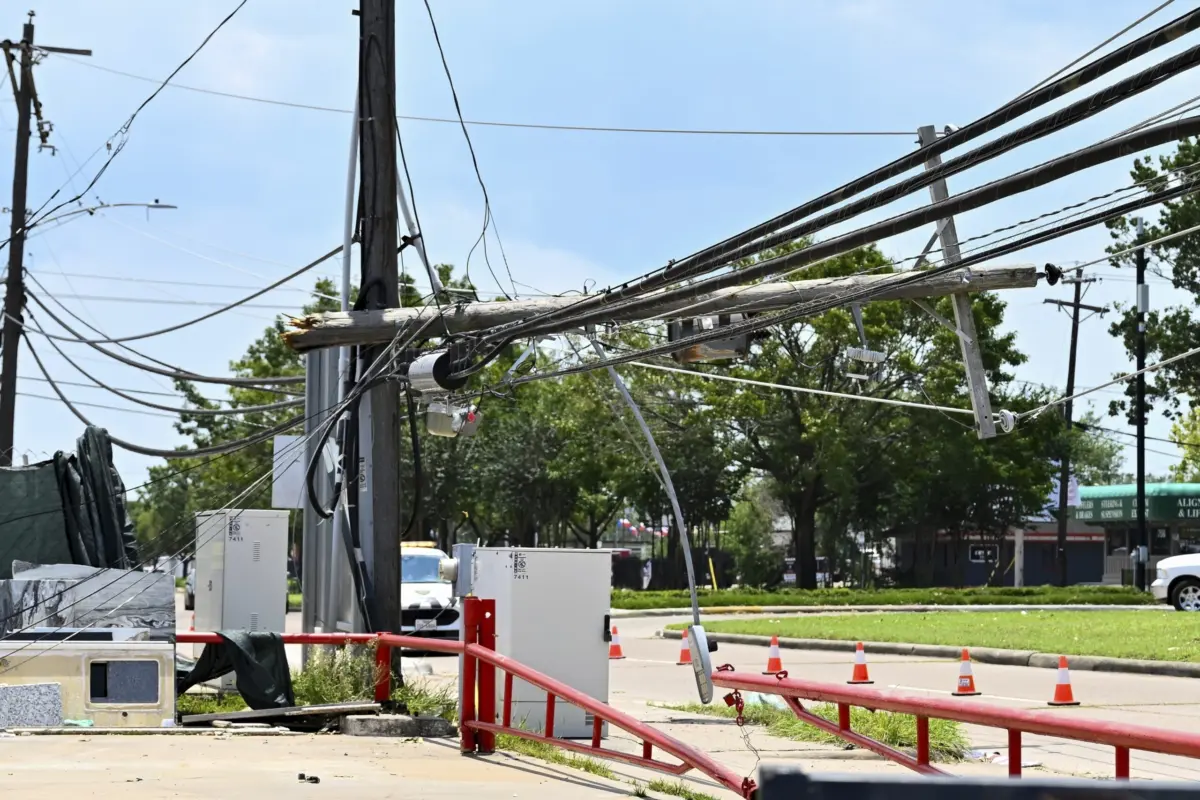
Hurricane Beryl slammed into the Texas Gulf Coast near Matagorda as a Category 1 hurricane. While its winds weakened slightly as the storm moved inland, its sprawling wind field and torrential rains wrought widespread devastation. The storm knocked out power to more than 3 million homes and businesses across the Greater Houston area and surrounding coastal counties, uprooting trees, tearing roofs off residential structures, and triggering massive flooding.
Summer and Fall 2024: The Claims Deluge and Payouts
In the wake of the disaster, TWIA faced an unprecedented influx of claims from desperate property owners along the coast and inland counties. As the state-created insurer of last resort—established specifically to provide wind and hail coverage when private market options are unavailable—TWIA became the financial lifeline for thousands of Texans.
By late 2024, TWIA reported processing approximately 34,000 policyholder claims related to Hurricane Beryl, distributing roughly $336 million in payouts. However, behind these aggregate disbursement figures, growing numbers of policyholders began realizing that their settlement checks fell catastrophically short of actual contractor repair bids.
Mid-November 2024: Filing the Federal Lawsuit
Recognizing a pattern of severe, unexplained reductions in their repair estimates, three Texas homeowners formally banded together to file a federal class-action lawsuit. By filing in the U.S. District Court for the Southern District of Texas, the plaintiffs bypassed the traditional Texas state regulatory apparatus and state courts, opting instead for federal jurisdiction under the RICO Act—a statute historically deployed against organized crime syndicates, but increasingly utilized in civil litigation against corporate enterprises engaged in patterns of fraudulent behavior.
Supporting Data and Context: The Insurance Crisis in Texas
The legal battle against TWIA does not occur in a vacuum; it is part of a broader, highly volatile insurance and environmental landscape in Texas and across the American Gulf Coast.
TWIA’s Unique Structural Role
Established by the Texas Legislature in the wake of devastating hurricanes, TWIA serves as a residual market insurer. It provides windstorm and hail insurance exclusively to designated catastrophe areas—primarily 14 coastal counties and parts of Harris County (including Houston)—where private insurers have retreated due to catastrophic risk exposure. Because policyholders in these zones often have no alternative coverage options, TWIA holds a quasi-monopolistic position, making disputes over its claims-handling integrity matters of profound public interest.
Climate Pressures and Escalating Costs
Destructive storms like Hurricane Beryl are becoming increasingly frequent and intense, driven by warmer Gulf waters and shifting climatic patterns. The economic fallout from these disasters has placed immense pressure on insurance balance sheets.
Property insurers operating in Texas have responded to these escalating risks by aggressively increasing premium rates, tightening underwriting guidelines, and narrowing coverage terms. For policyholders, facing both skyrocketing insurance premiums and a diminished ability to collect on legitimate claims when disaster strikes represents a dual financial squeeze.
The Mechanics of Civil RICO Claims
By pursuing a civil RICO class action rather than standard breach-of-contract or state insurance bad-faith claims, the plaintiffs are aiming high. To succeed under civil RICO, a plaintiff must prove:
- The existence of an "enterprise."
- A pattern of racketeering activity involving specified predicate acts (such as mail fraud or wire fraud).
- That the enterprise’s activities directly caused injury to the plaintiffs’ business or property.
Crucially, civil RICO provisions allow successful plaintiffs to recover treble damages (three times the actual financial losses incurred) alongside attorney fees. This potential multiplier is expected to significantly raise the stakes for TWIA and any corporate vendors implicated in the claims-production chain.
Official Responses and Stakeholder Positions
As the legal proceedings get underway, reactions from the defendants and related entities highlight the contentious nature of the allegations.
TWIA’s Official Stance
In response to inquiries regarding the federal lawsuit, TWIA spokesman Aaron Taylor issued a concise statement emphasizing the organization’s policy regarding active litigation while defending its operational integrity.
"The Association does not comment on active or potential litigation. The Association’s claim adjusting procedures are compliant with applicable Texas and federal laws."
TWIA maintains that its workflows, including the utilization of third-party vendors and supervisory review layers, are designed to ensure accuracy, consistency, and compliance with statutory mandates when processing massive waves of catastrophe claims.
Vendor Silence
Leading Edge Claims Service (now operating under the name Hansen)—the Ohio-based claims vendor singled out in the lawsuit for employing the supervisors who allegedly altered field estimates—has not yet issued a public statement addressing the specific allegations contained in the federal complaint. As the litigation progresses, legal scrutiny is expected to intensely focus on the contractual and operational relationships binding TWIA, Hansen, and individual adjusters.
Policyholder Advocates and Legal Experts
Consumer advocates and insurance litigation attorneys are watching the case closely. Many point out that if the allegations are proven true, the practice of secretly modifying field estimates while maintaining the original author’s name could be interpreted as a sophisticated, wire-fraud-enabled scheme designed to deceive policyholders into accepting artificially deflated settlements.
Implications: What This Means for Texas Policyholders and the Insurance Industry
The resolution of this federal racketeering lawsuit carries profound implications that extend far beyond the immediate litigants.
1. Potential Overhaul of Catastrophe Claims Handling
If the plaintiffs successfully certify the class and advance their RICO claims, insurance companies operating in catastrophe-prone regions may be forced to radically restructure how they manage outsourced adjusting networks. The practice of remote supervisors altering field estimates without transparent disclosure to policyholders could face severe legal roadblocks, compelling insurers to implement stricter governance and audit controls over third-party vendors.
2. Financial Vulnerability for TWIA
As a residual market insurer backed in part by assessments on other insurance companies and the state’s catastrophe reserve fund, TWIA operates under strict financial parameters. Facing class-action liability featuring demands for treble damages could introduce significant financial strain, potentially rippling across the Texas insurance market and impacting future premium structures for coastal homeowners.
3. A Precedent for Future Disaster Litigation
The utilization of federal RICO statutes in property insurance disputes is relatively novel compared to standard bad-faith claims governed by state insurance codes. If this legal strategy gains traction, it could pave the way for policyholders across disaster-vulnerable states—from Florida to California—to bypass restrictive state insurance laws and target institutionalized claims-reduction practices through federal racketeering frameworks.
As the litigation moves through the U.S. District Court for the Southern District of Texas, homeowners, regulators, and insurance executives alike will be monitoring the docket, awaiting judicial determinations that could fundamentally redefine the balance of power between disaster-stricken property owners and the multi-billion-dollar insurance apparatus designed to protect them.
