

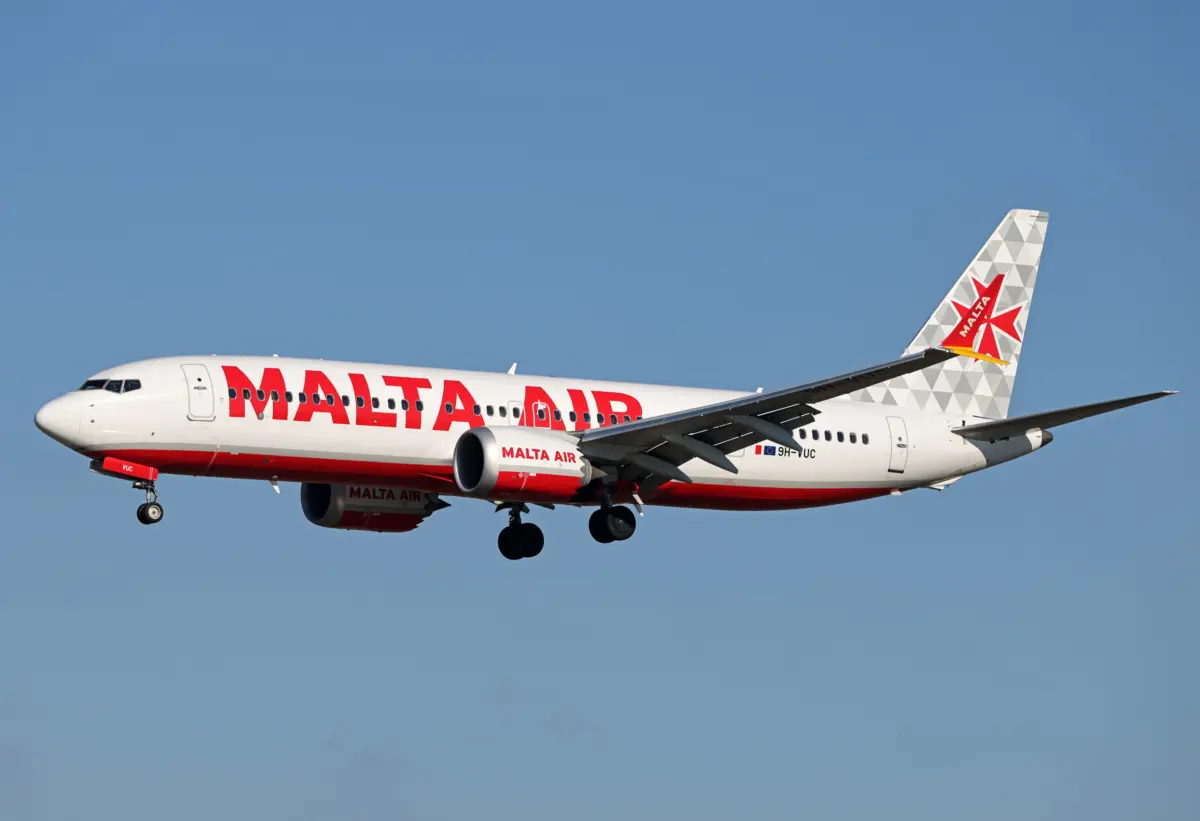
WASHINGTON — Investigators examining a harrowing mid-air emergency involving a Ryanair subsidiary flight have uncovered bird remains, including feathers, embedded within the wreckage of a shattered engine. The gruesome discovery, detailed in a preliminary report released on Thursday, August 13, by the U.S. National Transportation Safety Board (NTSB), provides crucial physical evidence pointing to a suspected bird strike as the root cause of a catastrophic mechanical failure.
The incident, which occurred on July 10, involved a Boeing Co. 737 operated by Ryanair subsidiary Malta Air. The flight was bound for Germany from Greece when a fan blade violently sheared off from one of the aircraft’s engines during the climb phase. The resulting shockwave and debris field propelled high-speed metal fragments into the fuselage, puncturing the aircraft’s skin and shattering a passenger cabin window.
The structural breach created an immediate pressure differential that resulted in a terrifying ordeal for one traveler, who was partially sucked out of the broken window before quick-thinking fellow passengers intervened to pull them back to safety inside the cabin.
While the NTSB’s investigation remains ongoing and a final determination regarding the probable cause will not be issued until the probe concludes, aviation safety experts say the physical evidence strongly implicates avian wildlife ingestion. The bird remains recovered from the damaged engine components have been transferred to the Smithsonian Institution Feather Identification Lab in Washington for specialized forensic analysis to determine the species of bird involved.
Main Facts: Anatomy of a Mid-Air Crisis
The preliminary findings released by the NTSB shed light on the cascading sequence of mechanical and structural failures that transformed a routine international commercial flight into a life-threatening emergency.
According to the federal safety agency, the Boeing 737 aircraft was operating a scheduled service from Greece to Germany when the disaster began to unfold. Shortly after takeoff, as the twin-engine jetliner climbed through the atmosphere, the flight crew received a sudden "high vibration" alert originating from one of the engines.
Standard operating procedures dictate immediate evaluation and mitigation steps by flight deck crews when engine anomalies occur. The pilots on duty executed the necessary protocols to address the vibration warning. Initially, the counter-measures appeared successful, and the vibration levels subsided. However, the respite was brief. The vibration quickly intensified once again, culminating in a deafening explosion as a fan blade snapped off the engine hub.
The catastrophic fracture of the rotating fan blade sent high-energy debris tearing through the engine cowling. Projectiles struck the exterior of the aircraft, piercing the fuselage and completely shattering a nearby passenger cabin window. The sudden compromise of the cabin envelope triggered an explosive decompression event, generating a powerful outward suction force.
Caught in the immediate vicinity of the ruptured window, a passenger was partially pulled out of the aircraft by the rushing slipstream. In a display of extraordinary courage and quick thinking, nearby travelers lunged across the aisle to grab the endangered passenger, battling the fierce aerodynamic forces to haul them back into the safety of the cabin.
Despite the chaos and structural damage, the flight crew managed to maintain control of the crippled aircraft and executed a safe return to the departure airport in Greece. While several occupants were evaluated for injuries and trauma, the swift intervention of fellow passengers prevented an even greater tragedy.
Chronology of Events: From Takeoff to Emergency Landing
The NTSB’s detailed timeline reconstructs the frantic moments aboard the Malta Air flight on July 10, outlining the rapid escalation from a standard instrumentation warning to a full-scale structural emergency.
- Pre-Flight and Departure: The Boeing 737, operating under Malta Air (a subsidiary of European low-cost carrier giant Ryanair Holdings Plc), prepares for an international journey originating in Greece and terminating in Germany. All pre-flight checks are completed, and the aircraft departs.
- The Climb and Initial Warning: As the aircraft ascends to its cruising altitude, the flight crew receives a "high vibration" alert on one of the engines. The pilots immediately initiate troubleshooting procedures to isolate and reduce the vibration.
- Brief Stabilization: The corrective actions taken by the flight deck appear to temporarily mitigate the issue, causing the engine vibration readings to drop.
- The Catastrophic Failure: The stabilization is short-lived. The vibrations escalate rapidly once again. Seconds later, a deafening explosion rocks the aircraft as a fan blade structural failure occurs within the engine.
- The Decompression and Window Breach: High-speed fragments from the broken fan blade tear outward, striking the fuselage and completely shattering a cabin window. The sudden failure punctures the aircraft’s skin, causing an immediate drop in cabin pressure and creating a severe vacuum effect.
- Heroic Rescue: A passenger seated near the shattered window is partially sucked out into the freezing slipstream. Alert passengers nearby mobilize instantly, grabbing the victim and pulling them back into the cabin interior against immense aerodynamic resistance.
- The Return to Base: The flight crew, maintaining composure amidst severe aircraft damage and a terrified cabin, declares an emergency and successfully navigates the Boeing 737 back to the departure airport, landing safely without further incident.
- The Investigation Begins: Regulatory bodies, led by the NTSB, launch a formal investigation into the structural and mechanical failures, recovering engine debris and ordering forensic testing of biological materials found on the powerplant.
Supporting Data: Maintenance Records and Regulatory Gaps
As investigators dig deeper into the mechanical history of the aircraft, questions have emerged regarding maintenance tracking, prior wildlife encounters, and existing federal safety directives concerning engine durability.
Maintenance History and Prior Bird Strikes
A rigorous review of the incident aircraft’s maintenance logs revealed that the fan blades for the compromised engine had undergone a routine physical inspection as recently as May 24—just weeks prior to the July 10 accident. At the time of that inspection, maintenance technicians reported no findings, clearing the engine for continued flight operations.
However, a broader look into the engine’s operational history uncovered a troubling pattern of wildlife interactions. The NTSB reported that flight crews had logged four separate suspected bird strikes affecting the same engine within the 12-month period leading up to the accident.
While subsequent maintenance checks conducted after those previous incidents failed to uncover any structural damage to the powerplant, investigators noted that bird remains were "reportedly found in two of the cases." The discovery of these biological traces suggests that minor wildlife ingestions may have occurred previously without triggering immediate, visible mechanical degradation, raising questions about whether repeated low-level impacts could have compromised the structural integrity of the fan blades over time.
To analyze the physical evidence retrieved from the latest incident, the NTSB shipped the recovered bird remains and feathers directly to the Smithsonian Institution Feather Identification Lab in Washington, D.C. Experts there will analyze the DNA and structural morphology of the feathers to identify the exact bird species involved, helping researchers understand the altitude and environmental context of the strike.
FAA Airworthiness Directives and Compliance Timelines
One of the most significant technical revelations in the NTSB’s preliminary report centers on mandatory safety enhancements and their current implementation status.
According to the safety board, the engine in question lacked certain structural enhancements designed to strengthen the powerplant against excessive vibrations when a fan blade fractures. These specific upgrades were outlined in three separate Airworthiness Directives (ADs) issued by the U.S. Federal Aviation Administration (FAA).
Crucially, however, the aircraft was operating entirely within legal compliance boundaries at the time of the accident. The NTSB noted that the federal compliance deadline for incorporating those particular engine enhancements is set for July 2028—giving operators years to implement the fixes. Because the deadline had not yet arrived, Malta Air and Ryanair were under no regulatory obligation to have the modifications installed on the aircraft yet.
The revelation has immediately sparked debate within the aviation safety community regarding the adequacy of implementation timelines for critical hardware upgrades.
"Based on the findings from this accident, the FAA and NTSB will reexamine those previous mandates," said Jeff Guzzetti, a prominent aviation safety consultant and former accident investigation chief for the FAA. Guzzetti, who is not directly involved in the current NTSB probe but has reviewed its preliminary findings, noted that the investigation strongly points to an avian ingestion event acting as the catalyst for the blade’s ultimate structural failure.
Official Responses and Regulatory Friction
The high-profile nature of the incident, combined with the dramatic details of the passenger’s brush with danger, has placed intense scrutiny on both Ryanair corporate leadership and international aviation regulatory bodies.
Ryanair’s Official Stance
A spokesperson for Ryanair Holdings Plc stated that the low-cost carrier will refrain from issuing detailed public comments or speculating on the mechanics of the disaster until the NTSB and cooperating international agencies officially conclude their comprehensive investigation.
The corporate silence contrasts sharply with public statements made by top company executives shortly after the accident occurred—statements that drew a swift and severe rebuke from American safety regulators.
The NTSB Rebuke of Michael O’Leary
Last month, tensions flared between the budget airline and the American investigative agency when NTSB officials formally warned Ryanair Chief Executive Officer Michael O’Leary regarding public remarks he made about the broken window incident.
According to the NTSB, O’Leary’s commentary during a corporate earnings call violated strict international rules governing aircraft accident investigations. Under global civil aviation frameworks—specifically Annex 13 of the International Civil Aviation Organization (ICAO)—designated parties and operators are heavily restricted from releasing unverified investigative theories, premature conclusions, or selective operational details to the public while an official state-led probe is actively underway.
The NTSB’s public reprimand served as a stark reminder to corporate leaders that independent safety investigations must be allowed to follow due process without interference from commercial stakeholders attempting to shape public perception or mitigate reputational damage.
Implications for Global Aviation and Engine Safety
As the NTSB continues its meticulous work alongside Boeing, engine manufacturers, and European aviation authorities, the ramifications of the Malta Air incident extend far beyond a single flight or a single airline.
- Re-evaluating Wildlife Mitigation: The confirmation of bird remains on the damaged engine underscores the persistent and deadly threat that wildlife poses to modern commercial aviation. With thousands of bird strikes reported globally each year, airports and airlines face renewed pressure to evaluate local wildlife management protocols, particularly along high-density migratory routes.
- Accelerating Safety Directives: The revelation that safety enhancements mandated by the FAA carry compliance windows extending as far out as 2028 has ignited a debate over the pacing of regulatory rollouts. Industry watchdogs are questioning whether structural modifications proven to mitigate the catastrophic consequences of a broken fan blade should be subject to multi-year grace periods, or if airlines should be incentivized to expedite retrofits across their existing fleets.
- Cabin Integrity and Structural Engineering: The terrifying reality of a passenger being partially sucked through a shattered aircraft window will undoubtedly prompt aerospace engineers to re-examine cabin window framing, dual-pane integrity, and the physical dynamics of rapid decompression events in narrow-body commercial airliners.
For the passengers aboard that Malta Air flight, July 10, 2026, will forever be remembered as a terrifying brush with mortality. For the aviation industry at large, the ongoing NTSB investigation serves as a sobering reminder of the complex interplay between nature, mechanical engineering, and regulatory oversight—lessons that will ultimately shape the safety protocols of tomorrow.
