

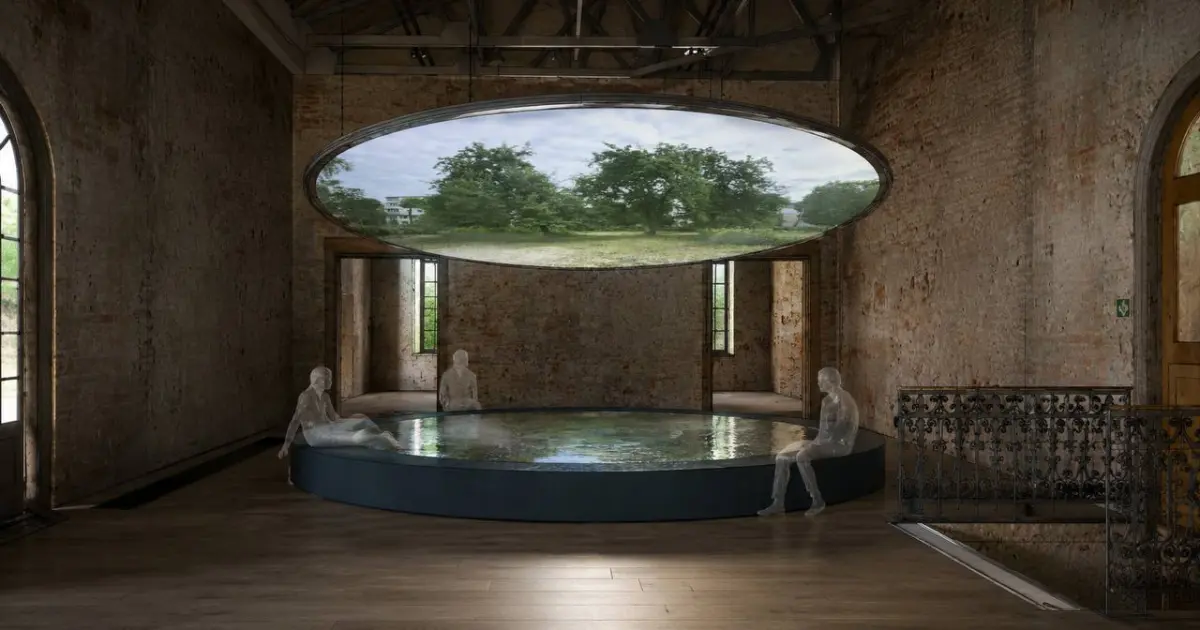
VENICE, ITALY — As the international architecture community prepares for the 20th International Architecture Exhibition—La Biennale di Venezia, operating under the overarching theme "Do Architecture" curated by Wang Shu and Lu Wenyu—nations are defining the scope of their contributions. Among them, the Ukrainian Pavilion stands out as a profound meditation on survival, humanitarian crisis, and spatial politics. Titled "Pool of Questions," the pavilion is designed by CO-HATY, a pioneering local volunteer initiative that transforms abandoned structures into stable, long-term homes for internally displaced persons (IDPs) across Ukraine.
Rather than offering traditional architectural blueprints or idealistic post-war masterplans, the pavilion tackles an urgent, often overlooked paradox: In the midst of an ongoing war of attrition, when can displaced individuals stop worrying purely about survival and begin to actually live?
Main Facts: The Concept of "Pool of Questions"
At its core, "Pool of Questions" shifts the definition of architecture away from physical forms, volumetric square meters, and static objects. Instead, it positions architecture as an active, continuous socio-political process.
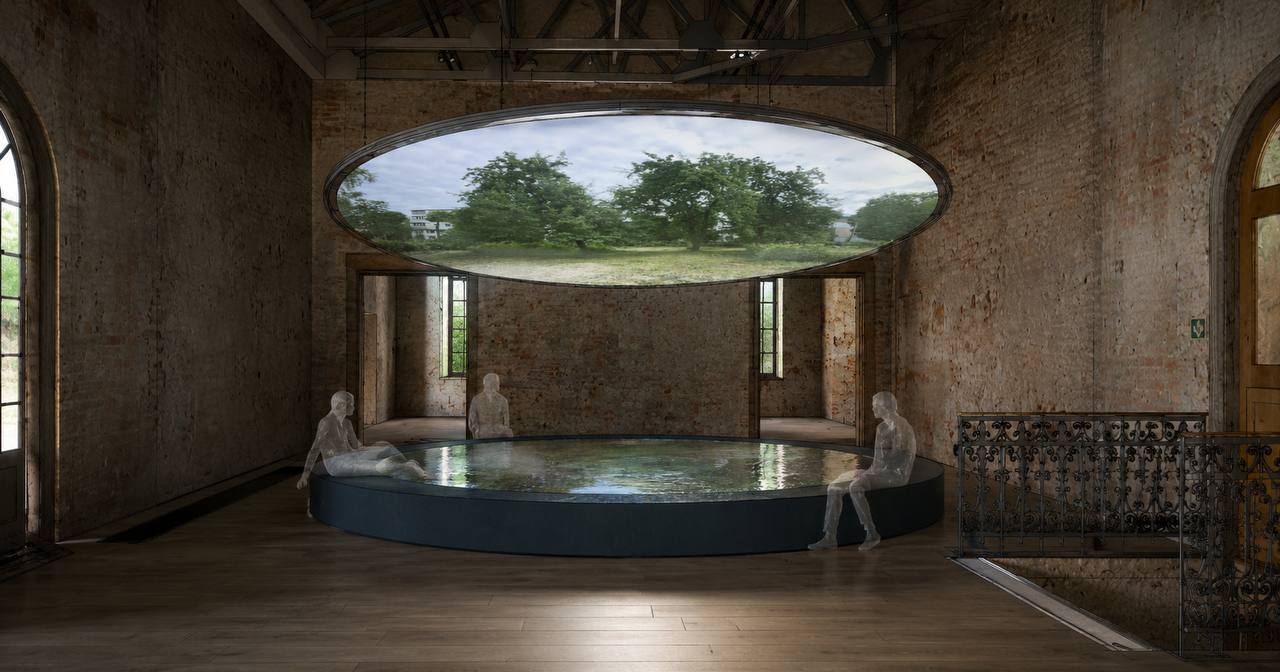
The focal point of the installation is a dark, shallow basin of water positioned centrally within the exhibition space. Visitors are invited to approach, touch, and even step into the water, which acts as a reflective surface. Projected video installations—documenting the lived realities of CO-HATY’s latest housing project in Kalush—ripple across the water’s surface. Every time a visitor steps near the basin, the water is disturbed, creating a physical metaphor for the disruption and fragility that defines displaced life.
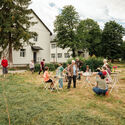
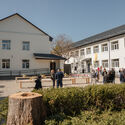
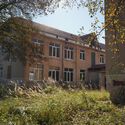
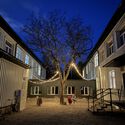
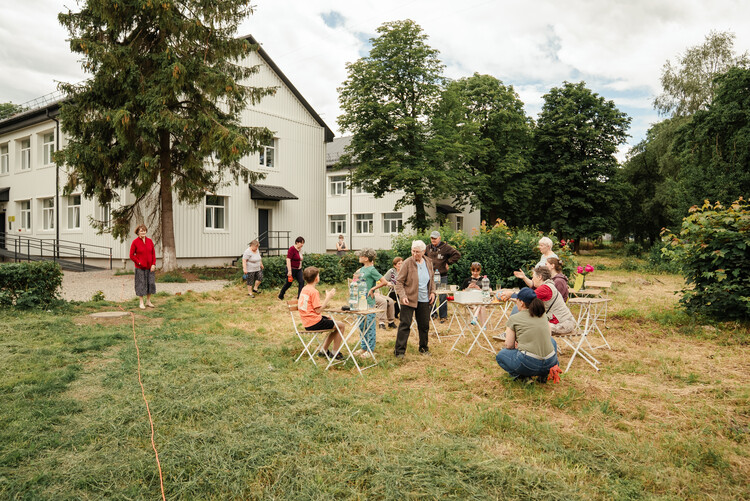
The project highlights CO-HATY’s tenth major housing initiative: the adaptive reuse of a former Soviet-era kindergarten in Kalush, western Ukraine. Transformed through collaborative workshops and community labor, this building now provides secure, dignified housing for over 100 displaced individuals.
Rather than focusing exclusively on construction materials, the curation elevates what the team terms "not architecture"—the intricate, unglamorous networks of municipal contracts, trust-building, budget constraints, neighborly disputes, material sourcing, everyday maintenance, and long-term operational models that make human life possible under siege.
Chronology: From Grassroots Survival to the Global Stage
The conceptual genesis of the Ukrainian Pavilion is deeply rooted in the escalation of the war following the 2022 full-scale invasion, tracing a timeline of urgent adaptation and community-led resilience:
- March–December 2022: Following millions of internal displacements, the METALAB team, alongside relocated members of the Ukrainian Urban Curators agency, conceptualizes CO-HATY (meaning "to love" or "to embrace" in Ukrainian) as an emergency and transitional housing response.
- 2023–2025: CO-HATY scales its operations across western and central Ukraine, systematically identifying, acquiring, and retrofitting derelict buildings—dormitories, empty administrative offices, and industrial structures—into communal living spaces for families uprooted from the front lines.
- August 2026: The official announcement of the Ukrainian Pavilion for the 2027 Venice Architecture Biennale is made, introducing "Pool of Questions" as a continuation of CO-HATY’s grassroots methodologies on an international platform.
- Late 2026–Early 2027: Documentarian Nadia Parfan records the ongoing life of the Kalush kindergarten project, capturing community tolokas (traditional communal work parties), seasonal gardening efforts, and residents settling into their new homes. These materials are slated to continuously update throughout the duration of the Biennale.
- Spring 2027 (Upcoming): The official opening of the 20th International Architecture Exhibition—La Biennale di Venezia, where the pavilion will premiere alongside an accompanying publication titled Beyond Shelter.
Supporting Data and the Architecture of "Not Architecture"
The socio-economic realities underscoring the Ukrainian Pavilion reflect the staggering scale of displacement and the inventive adaptability required of modern civic actors.
Key Metrics of the CO-HATY Initiative:
- Scale of Displacement: Millions of Ukrainians remain internally displaced, residing in temporary shelters, makeshift camps, or sharing overcrowded housing with host families.
- The Kalush Project: More than 100 individuals of varying ages—from young children to elderly grandparents—now inhabit the converted Soviet-era kindergarten.
- Multigenerational and Multidisciplinary Input: The transformation process relies on diverse perspectives embedded directly into the design methodology:
- Children prioritize yards for play and open air.
- Elderly residents focus on benches, shaded seating, and community vegetable plots.
- Gardeners look to soil composition and growing seasons.
- Cleaners and administrators navigate daily wear-and-tear, maintenance, and spatial governance.
- Architects synthesize these conflicting desires into functional spatial systems.
The installation asks a radical question: Can elements traditionally viewed as non-essential luxuries—such as a public swimming pool, a garden, or a place for quiet contemplation—be justified in a context defined by emergency housing? Over time, the curators argue, these "luxuries" evolve into basic human rights necessary for psychological survival.
Official Responses and Curatorial Intent
The curatorial team emphasizes that the pavilion is designed to provoke discomfort among international audiences accustomed to viewing war strictly through the lens of physical destruction and subsequent reconstruction.
"The project addresses a daily practice of decisions between things that should not have to coexist: security and development, humanitarian aid and long-term policy, affordability and sustainability, one’s own life and responsibility to others, necessity and desire, survival and the future," notes the curatorial collective.
By placing visitors in a state of quiet rest beside a reflective pool—only for that calm to be perpetually disturbed by new presences—the installation highlights an ethical asymmetry. It contrasts the comfortable, contemplative pause available to Biennale visitors with the unrelenting, unyielding crisis faced by those living through an active war with no visible end.
Global Context and Broader Implications at the 2027 Biennale
The Ukrainian Pavilion does not exist in a vacuum; it forms part of a broader global discourse taking shape at the 2027 Venice Architecture Biennale under the curatorial framework of Wang Shu and Lu Wenyu. National pavilions are increasingly turning away from formalist aesthetics to address systemic planetary crises:
- Türkiye Pavilion ("Spolia Futures"): Examines the structural and emotional reuse of architectural elements, linking material salvage directly to collective memory.
- Australian Pavilion ("Lived In"): Investigates multi-dwelling housing models through the direct lens of lived domestic experiences.
- Austria Pavilion: Proposes a groundbreaking shared diplomatic platform with Bosnia and Herzegovina, addressing gaps in national representation and regional solidarity.
- Switzerland Pavilion: Explores water as a critical territorial, ecological, and political resource, questioning national sovereignty and environmental stewardship.
Implications for Future Urbanism and Humanitarian Architecture
The legacy of "Pool of Questions" extends far beyond the exhibition halls of the Giardini or the Arsenale in Venice. It redefines the role of the architect in times of crisis. When institutional frameworks collapse and government budgets are diverted entirely toward defense, architecture must become radically resourceful, collaborative, and deeply empathetic.
By elevating the mundane, messy realities of community organizing, municipal negotiation, and interpersonal trust to the level of high architectural theory, the Ukrainian Pavilion issues a timeless challenge to the global profession: Architecture is not merely built with concrete, steel, and glass. True architecture is built with dignity, shared responsibility, and the relentless human determination to carve out a future, even when the present remains uncertain.
