

TORONTO, ON — Across global heating, ventilation, air conditioning, and refrigeration (HVACR) markets, the fundamental conditions governing refrigerant procurement, utilization, and disposal are undergoing a massive transformation. Driven by a combination of aggressive international regulatory frameworks and shifting practical realities on the ground, the industry is entering a defining era where traditional supply models are no longer guaranteed.
At the center of this structural evolution is the global phasedown of hydrofluorocarbons (HFCs) mandated by the Kigali Amendment to the Montreal Protocol. In Canada, these international commitments have been codified through regional mechanisms such as the Ozone-depleting Substances and Halocarbon Alternatives Regulations (ODSHAR). As these regulatory timelines tighten—culminating in severe quota reductions scheduled for 2029, 2034, and 2036—the availability of virgin service gas is shrinking dramatically, sending ripples of rising costs and supply unpredictability through the commercial and industrial sectors.
In response to these shrinking supplies, the HVACR industry is accelerating its transition toward a circular economy, leaning heavily on recovered, reclaimed, and reprocessed refrigerants as a primary operational lifeline. However, this pivot introduces complex technical challenges. Refrigerant is no longer viewed as a simple consumable commodity moving in a linear path from manufacturer to mechanical system. Instead, it is now recognized as a vital component of a sophisticated closed-loop lifecycle encompassing recovery, rigorous laboratory testing, advanced chemical reprocessing, and certified reuse. When managed correctly, this lifecycle fortifies both environmental stewardship and operational continuity. When mishandled, it introduces catastrophic risks to system efficiency, reliability, and component longevity.
Main Facts: The Regulatory and Operational Pivot
The convergence of international climate treaties, domestic environmental laws, and market economics has created an urgent need for standardized, high-quality reclaimed refrigerants.
- The Regulatory Squeeze: Under the Kigali Amendment and Canada’s ODSHAR framework, HFC production and consumption baselines are on a downward trajectory. As virgin quotas tighten, facility managers, equipment owners, and contractors face acute supply constraints for traditional high-Global Warming Potential (GWP) gases, as well as emerging alternatives.
- The Shift to Circularity: Reclamation has transformed from a niche, reactive alternative into an essential pillar of modern HVACR infrastructure.
- The Quality Benchmark: To be legally and operationally viable for reuse—particularly when transferred between different mechanical systems—reclaimed refrigerant must be tested and processed to meet uncompromising purity standards.
- The Core Standard: AHRI Standard 700 serves as the universal, globally recognized benchmark defining acceptable purity levels, setting strict limits on moisture, acidity, non-condensable gases, and other contaminants.
- The Industry Leader: Companies specializing in lifecycle refrigerant management, such as A-Gas, are providing the closed-loop infrastructure, in-house analytical laboratories, and proprietary separation technologies necessary to deliver virgin-grade reclaimed refrigerants at scale.
Chronology: The Evolution of Refrigerant Management
To understand how the HVACR market arrived at its current reliance on strict reclamation protocols, it is necessary to examine the historical trajectory of environmental policy and industry adaptation:
- 1987 (The Montreal Protocol): The international community unites to phase out ozone-depleting substances, primarily chlorofluorocarbons (CFCs) and later hydrochlorofluorocarbons (HCFCs). This marks the birth of modern global refrigerant regulation.
- Late 1990s – 2010s (The HFC Era): HFCs are widely adopted as the go-to substitute for ozone-depleting compounds. While effective for cooling and heating, HFCs are subsequently identified as potent greenhouse gases with high GWPs, prompting the need for a new international strategy.
- October 2016 (The Kigali Amendment): Parties to the Montreal Protocol reach a landmark agreement in Rwanda to gradually reduce the global production and consumption of HFCs by more than 80 over the next three decades.
- 2018–Present (Regional Enforcement & ODSHAR Alignment): Governments worldwide begin aligning domestic policies with the Kigali Amendment. In Canada, the Ozone-depleting Substances and Halocarbon Alternatives Regulations (ODSHAR) are enacted and progressively tightened, setting aggressive phasedown milestones.
- The 2020s (The Maturation of Reclamation): As virgin quotas contract and supply chain volatility increases, reclamation evolves from a fragmented, informal practice into an engineered, highly regulated industrial process governed by stringent analytical standards like AHRI 700.
- Future Milestones (2029, 2034, 2036): Upcoming regulatory reduction thresholds in Canada and other jurisdictions promise to sharply reduce virgin gas availability, making certified reclaimed refrigerant a mandatory foundation for industry survival.
Supporting Data: Understanding AHRI Standard 700 and Purity Metrics
Across many regional jurisdictions, industry codes of practice and environmental regulations explicitly require that any refrigerant intended for reuse—especially when deployed in a system other than the one from which it was originally extracted—must undergo rigorous testing. If necessary, it must be chemically reprocessed to meet defined quality thresholds ensuring it performs identically to newly manufactured virgin product.
At the heart of this verification process is AHRI Standard 700 (Specifications for Refrigerants), published by the Air-Conditioning, Heating, and Refrigeration Institute.
What AHRI Standard 700 Governs
AHRI 700 is unique because it focuses entirely on chemical composition and purity rather than the origin of the molecule. Whether a batch of refrigerant was synthesized yesterday in a chemical plant or recovered from a commercial chiller that reached the end of its operational life, it must pass the exact same analytical thresholds.
- Broad Scope: The standard applies across a massive spectrum of chemical families, including CFCs, HCFCs, HFCs, hydrofluoroolefins (HFOs), hydrocarbons, and carbon dioxide ($textCO_2$). It is equally relevant for brand-new equipment and legacy infrastructure operating under mixed-refrigerant conditions.
- Measurable Thresholds: AHRI 700 does not rely on subjective descriptions such as "clean" or "fit for service." Instead, it establishes explicit numerical limits for allowable impurities, moisture content, high-boiling residues, acidity, and non-condensable gases.
- Standardized Testing Methodologies: The standard mandates specific analytical testing protocols—such as gas chromatography—to ensure that evaluation procedures remain uniform across different laboratories, testing facilities, and geographic regions.
Why Purity is Integral to System Health
It is a dangerous misconception to view refrigerant purity as a secondary consideration that only impacts the margins of system performance. In real-world HVACR operations, chemical purity dictates the long-term health, efficiency, and reliability of mechanical infrastructure.
- Moisture: Excess water in a system mixes with lubricants and refrigerants to form corrosive acids. This acid eats away at internal metal surfaces, winding insulation, and mechanical seals.
- Acidity: Elevated acid levels aggressively attack compressor motor windings, destabilize synthetic lubricants, and accelerate wear on moving parts.
- Non-Condensable Gases: Air and other non-condensable gases trapped in the refrigerant loop occupy condenser volume, raising discharge pressures, reducing heat transfer efficiency, and forcing compressors to consume excessive electrical energy.
- Physical Damage: Substandard refrigerant can trigger severe failure modes, including copper plating (where copper is stripped from tubing and deposited onto steel compressor components), sludge formation, and thermal overloads.
For contractors and facility owners, introducing unverified, low-purity refrigerant carries profound technical and financial risks. Equipment efficiency plummets, operating costs surge, and catastrophic mechanical failures lead to expensive callbacks, emergency replacements, and severe reputational damage. Consequently, adherence to AHRI 700 is fundamentally an exercise in enterprise risk management.
Official Responses and Industry Perspectives
As the HVACR sector transitions toward circular supply models, industry leaders are redefining how reclamation is integrated into the commercial ecosystem. Rather than viewing reclamation as a reactive measure deployed only when virgin gas is unavailable, major market stakeholders are positioning it as an engineered, proactive infrastructure.

A prominent example of this operational evolution is A-Gas, a global leader in lifecycle refrigerant management. Through advanced processing capabilities, A-Gas bridges the gap between regulatory compliance and market demand.
Industry experts emphasize that true reclamation goes far beyond simple "recycling" or field-filtering. While recycling typically removes gross particulate matter and moisture using portable filter-driers, it does not guarantee the removal of complex chemical contaminants or fractionated compound shifts. True reclamation restores used refrigerant to virgin specifications through a multi-step industrial sequence:
- Recovery: Safely capturing and containing gas from decommissioned or serviced systems.
- Purification: Removing non-condensable gases, compressor oils, particulates, and chlorides using specialized separation and distillation columns.
- Drying and Filtration: Stripping out residual moisture and acid compounds.
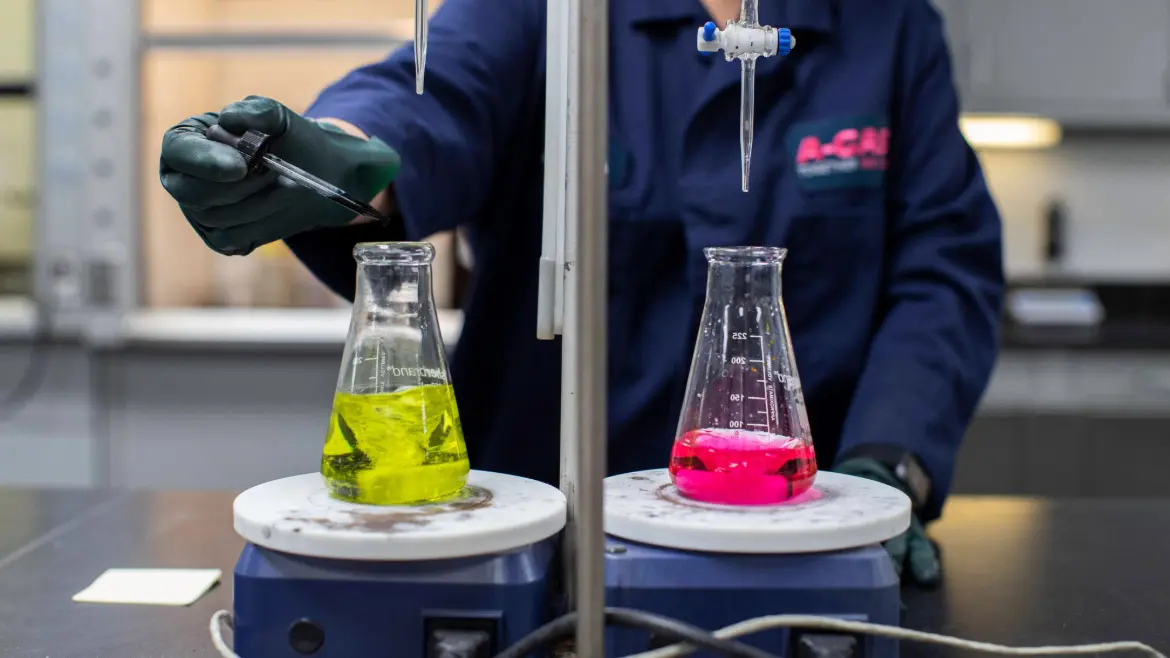
- Laboratory Certification: Conducting exhaustive gas chromatography and moisture testing to verify absolute compliance with AHRI 700 parameters.
By managing this entire chain within a closed-loop system, companies like A-Gas ensure that the final product carries the same performance guarantees as newly synthesized chemical products, eliminating the uncertainty that has historically plagued secondary refrigerant markets.
Implications: Building a Resilient and Sustainable HVACR Ecosystem
The growing reliance on reclaimed refrigerant is fundamentally reshaping how the HVACR industry approaches quality control, supply chain resilience, and environmental responsibility.
1. Operational and Economic Implications
For facility managers and commercial building operators, sourcing verified reclaimed refrigerant protects capital investments. Ensuring that every pound of gas put into a system meets AHRI 700 standards prevents premature equipment degradation, maintains optimal coefficient of performance (COP) ratings, and curbs energy waste. For contractors, utilizing certified reclaimed product eliminates liability risks associated with contaminated service charges, safeguarding profit margins and client trust.
2. Environmental and Regulatory Implications
With regulatory deadlines under the Kigali Amendment and ODSHAR accelerating, traditional linear supply chains are no longer environmentally or legally tenable. Reclamation acts as a powerful greenhouse gas mitigation strategy. By capturing refrigerants that might otherwise leak into the atmosphere or require energy-intensive destruction, the industry prevents direct emissions while reducing the industrial footprint of manufacturing virgin chemicals.
3. Supply Chain Security
As regulatory quotas restrict the importation and production of virgin HFCs, market volatility will inevitably spike. Establishing a robust, localized reclamation infrastructure creates a secure, domestic buffer against geopolitical and economic supply shocks. Reclaimed gas ensures that existing HVACR infrastructure—which represents trillions of dollars in global capital investment—can continue to operate smoothly without premature, forced retrofits.
Conclusion
The convergence of tighter regulatory phasedowns, shrinking virgin refrigerant quotas, and the rising imperative for corporate sustainability has permanently altered the HVACR landscape. Refrigerant reclamation is no longer a peripheral topic or an emergency stopgap; it is the cornerstone of modern mechanical system management.
At the heart of this transition sits AHRI Standard 700. By providing a rigorous, measurable definition of purity, the standard bridges the gap between environmental idealism and mechanical reality. It guarantees that circular supply models do not compromise system integrity.
As the industry navigates the critical milestones ahead—particularly Canada’s upcoming ODSHAR reduction phases in 2029, 2034, and 2036—the mandate for stakeholders is clear. Refrigerant decisions can no longer end at initial equipment selection and installation. Long-term operational success requires proactive lifecycle management, rigorous analytical verification, and deep collaboration with trusted reclamation leaders. By embracing these standards and investing in advanced closed-loop infrastructure, the HVACR ecosystem can build a resilient, efficient, and sustainable future.
