By Global Energy & Mobility Desk Published: August 2026
Main Facts
Convenience store giant Wawa is taking a deeper, more direct role in the electric vehicle (EV) charging ecosystem. Building on its strategy to offer self-branded Tesla Superchargers introduced earlier this year, the company is launching a new wave of proprietary DC fast chargers developed in partnership with Electrify America.
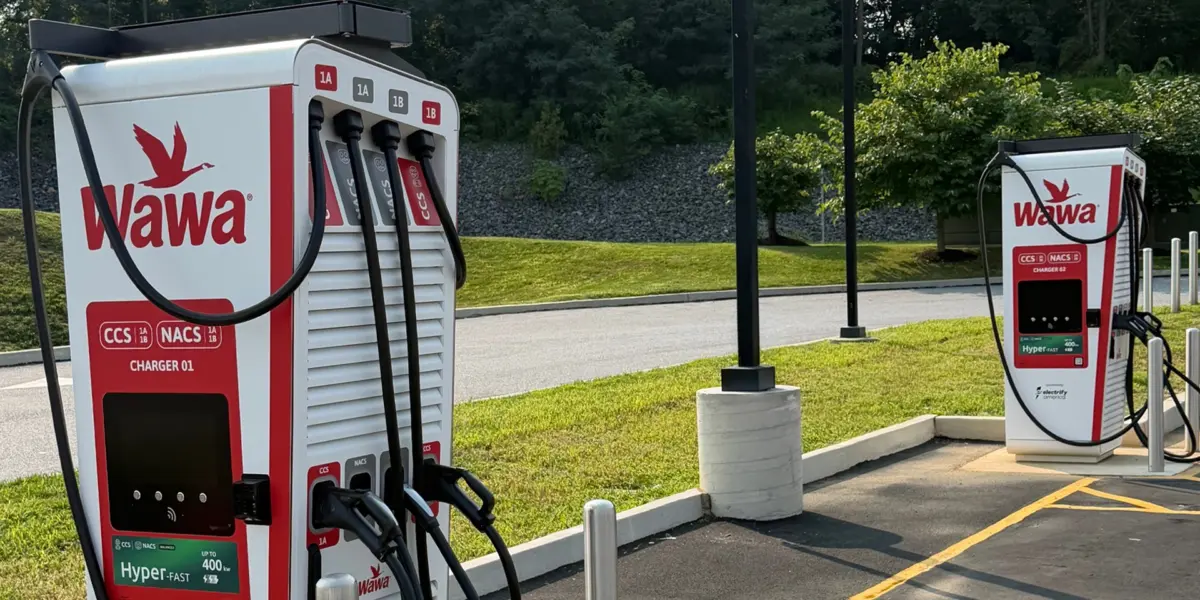
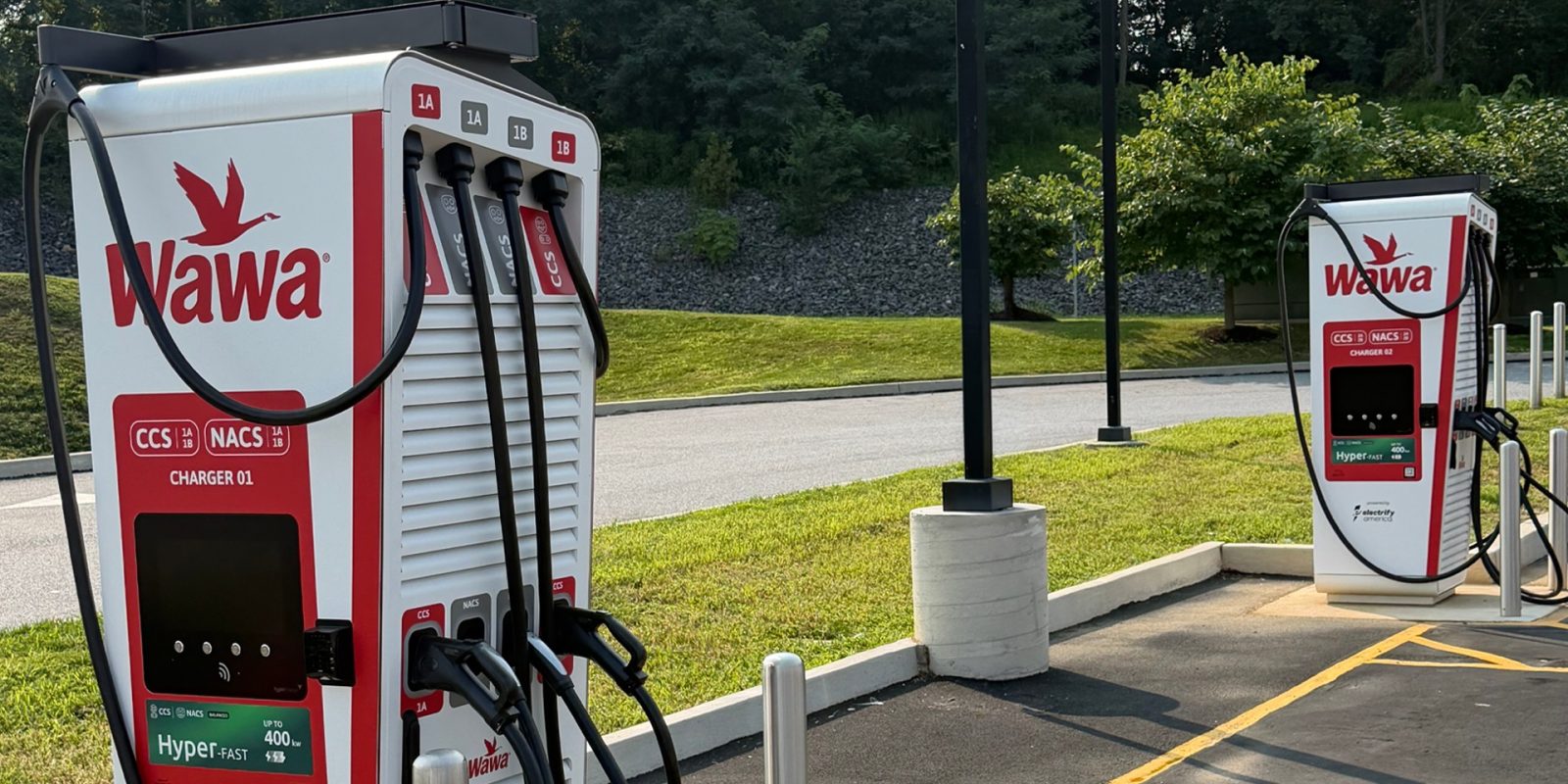
Under this new initiative, Wawa will roll out Wawa-branded high-speed charging stations across eight select store locations in Pennsylvania. Rather than traditional third-party installations where a network provider operates entirely under its own banner, this deployment utilizes Electrify America’s white-label charging platform. This framework allows Wawa to manage and operate the stations under its own corporate identity, while leveraging Electrify America’s proven hardware, backend software, and continuous network support.
The hardware rollout represents a major leap in public charging capabilities:
High-Speed Performance: Five of the upcoming sites will feature cutting-edge charging architecture capable of delivering up to 400 kW. These locations will offer both NACS (North American Charging Standard) and CCS (Combined Charging System) connectors to accommodate a vast array of modern EVs.
CCS-Dedicated Hubs: The remaining three locations will feature CCS-exclusive chargers capable of speeds up to 350 kW.
While actual charging speeds will ultimately depend on an individual EV’s battery architecture and thermal management system, a 400 kW output capacity places these new Wawa stations among the fastest publicly accessible charging infrastructure currently being deployed anywhere in the United States.
Wawa has emphasized that this Pennsylvania-based rollout serves as a strategic pilot program. By moving into in-house ownership of its EV infrastructure, the retailer aims to secure tighter quality control, enhance uptime and reliability, and curate a seamless customer journey. The ultimate goal remains deeply tied to Wawa’s core retail business: keeping customers satisfied and engaged inside the store—grabbing a fresh coffee, a signature hoagie, or a quick snack—while their vehicles juice up outside.
Chronology: The Evolution of Wawa’s Energy Strategy
Wawa’s transition from a traditional gas-and-convenience retailer into a multi-energy fueling hub has been deliberate and progressive. Understanding the timeline of this transformation highlights how quickly the convenience sector is adapting to the electrification of transport.
The Early Adoption Phase (2018–2021)
Long before mass-market EV adoption surged, Wawa recognized that highway travelers and local commuters would need alternative fueling options. The chain began forging partnerships with early charging networks, embedding third-party DC fast chargers into select parking lots across its Mid-Atlantic footprint. These early partnerships allowed Wawa to test consumer demand and gauge how charging dwell times impacted in-store sales.
Diversification and Network Partnerships (2022–2025)
As the EV market matured, Wawa expanded its footprint by collaborating with various major charging providers. Rather than committing to a single exclusive partner, the convenience store chain adopted an open-door policy, hosting stations from multiple networks—including Tesla, Electrify America, and later, the high-profile IONNA joint venture. This multi-network strategy ensured that drivers of virtually any electric vehicle could find a compatible plug at a Wawa location across its 14-state operating territory.
The Shift to Self-Branded Infrastructure (2026–Present)
The year 2026 marked a profound turning point for Wawa’s energy strategy. Moving away from purely hosting third-party hardware, Wawa initiated programs to launch self-branded infrastructure. Following the rollout of self-branded Tesla Superchargers earlier in the year, the new partnership with Electrify America’s white-label platform in August 2026 cements Wawa’s transition from a passive host to an active energy brand.
Supporting Data: Infrastructure Specs and Network Geography
To better understand the scale and technical ambition of Wawa’s latest deployment, it is necessary to examine the technical parameters of the hardware and the strategic placement of the stations.
Technical Performance Metrics
400 kW Stations (NACS & CCS): Representing the pinnacle of current public fast-charging speeds, these installations can dramatically reduce charging times for vehicles equipped with 800V architectures (such as the Porsche Taycan, Hyundai Ioniq 5, Kia EV6, and newer Lucid or Tesla platforms). By incorporating both NACS and CCS plugs on the same dispensers, Wawa ensures near-universal compatibility without the need for cumbersome adapters.
350 kW Stations (CCS Only): While restricted to CCS vehicles and capped slightly lower at 350 kW, these stations still rank among the fastest ultra-rapid chargers available, capable of adding hundreds of miles of range in under 20 minutes for capable EVs.
Geographic Footprint & Multi-Brand Integration
Wawa currently operates across 14 states, predominantly in the Mid-Atlantic and Florida regions. While the initial eight-station testbed is concentrated in Pennsylvania, executives hint that success here could pave the way for a broader geographical expansion of self-branded energy assets.
Importantly, these new self-branded stations do not replace Wawa’s existing agreements with major networks. The chain will continue to host traditional Electrify America, Tesla, and IONNA chargers. Instead, the white-label initiative adds a new layer to Wawa’s portfolio, giving the corporation direct oversight of select high-traffic locations while maintaining a diverse mix of charging partners across its broader real estate footprint.
Official Responses and Executive Insights
Corporate leadership at both Wawa and Electrify America have framed this partnership as a win-win for infrastructure growth and consumer experience.
Rich Makin, Wawa’s Senior Vice President and Chief Fuel and Development Officer, underscored the strategic motivations driving the pilot project:
"Owning Wawa-branded EV chargers allows us to provide more options throughout 14 states for our customers."
Makin further elaborated that the Pennsylvania rollout is a vital testing ground for Wawa-owned charging operations. By taking a stake in the ownership model, Wawa can directly influence station uptime, troubleshoot maintenance issues more rapidly, and refine the physical and digital touchpoints that drivers encounter.
Industry analysts point out that white-label solutions offer traditional retailers the best of both worlds. Companies like Electrify America possess the complex software-defined power management systems, grid-interconnection expertise, and heavy-duty hardware manufacturing capabilities required to build reliable fast-charging corridors. Meanwhile, trusted consumer brands like Wawa bring prime real estate, massive customer foot traffic, and recognizable brand equity that inspires consumer trust.
Implications: The Future of Convenience Retail and EV Charging
The convergence of convenience retail and electric vehicle charging carries massive implications for the future of transportation, energy markets, and local commerce.
1. Redefining the Convenience Business Model
For decades, convenience stores have relied heavily on fuel sales to draw motorists in, capturing high-margin secondary purchases on snacks, beverages, and prepared foods once customers stepped inside. As internal combustion engine (ICE) vehicles gradually give way to electric alternatives, gas station revenue faces an existential evolution.
By taking ownership of EV charging stations—rather than merely leasing parking spaces to third-party operators—retailers like Wawa capture a direct revenue stream from electricity sales while maintaining control over the customer experience. A faster, more reliable charge means a happier motorist who is more likely to spend 15 to 20 minutes browsing the store aisles.
2. The Rise of the White-Label Infrastructure Model
Wawa’s partnership with Electrify America highlights a growing trend in the B2B energy market: white-labeling. Many retail giants, hospitality chains, and real estate developers want the strategic advantage of operating their own branded charging networks, but they lack the internal engineering expertise to build charging hardware and backend management software from scratch. By supplying turnkey white-label platforms, charging networks like Electrify America can scale their technology much faster while empowering mainstream brands to enter the e-mobility space with confidence.
3. Elevating Customer Expectations for Reliability
Historically, public EV charging has faced public relations hurdles regarding station reliability, broken screens, and malfunctioning payment terminals. By leveraging enterprise-grade hardware and software support from Electrify America—while maintaining strict internal oversight—Wawa is setting a higher standard for retail charging hubs. As more companies adopt this model, drivers can expect a more dependable, unified charging experience nationwide.
Conclusion
Wawa’s decision to roll out self-branded, ultra-fast charging stations powered by Electrify America’s white-label platform marks a maturing phase in America’s EV transition. As convenience stores evolve into the new era’s primary fueling stations, Wawa is ensuring it remains at the forefront—delivering blistering speeds, seamless connector compatibility, and the familiar convenience its customers have relied on for decades.