

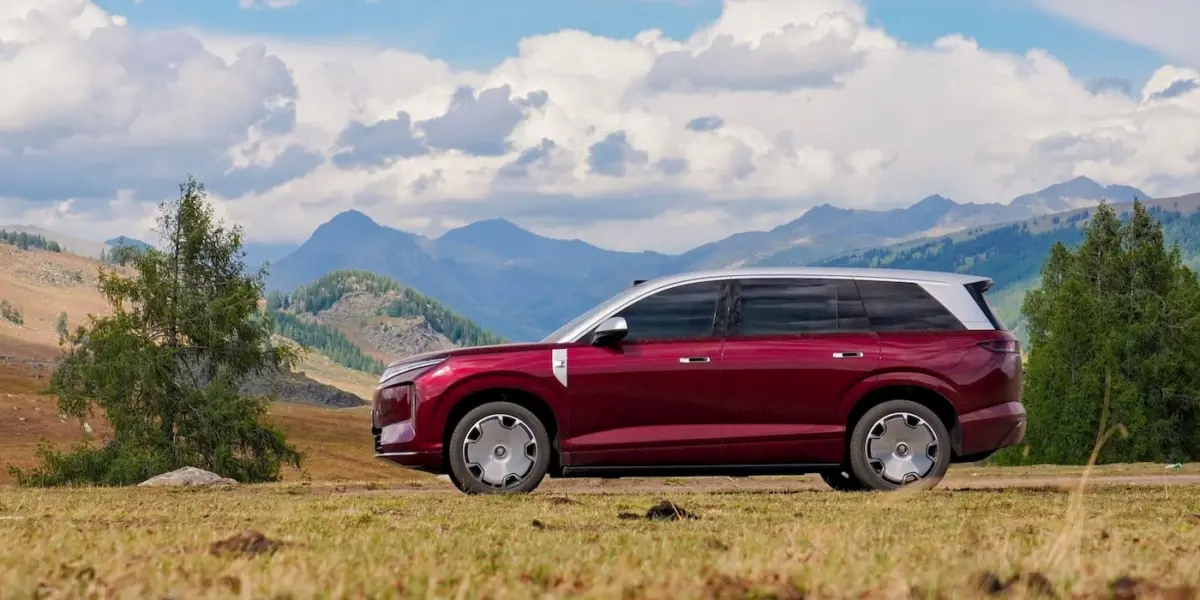
Main Facts: The Rise of BYD’s New D-Segment Heavyweight
The global electric vehicle (EV) landscape is witnessing a seismic shift, and Chinese manufacturing giant BYD is leading the charge with unprecedented momentum. The company’s full-size flagship electric utility vehicle, the Great Tang, is officially off to a historic start. Within its first three months on the commercial market, cumulative sales have surpassed the 40,000-unit threshold, driven by consistent monthly volumes exceeding 10,000 vehicles.
Representing the crown jewel of BYD’s prestigious Dynasty series—the automaker’s largest and most high-end vehicle lineup—the Great Tang has captured the imagination of consumers and industry analysts alike. Boasting a staggering 29 world-first innovations according to BYD’s engineering team, the full-size SUV bridges the gap between ultra-luxury comfort, cutting-edge battery science, and mind-boggling ultra-fast charging capabilities.
Available in both pure battery electric vehicle (BEV) and plug-in hybrid electric vehicle (PHEV) configurations, the Great Tang targets the upper echelon of the family transport market. With a competitive entry-level pricing strategy that belies its massive proportions and luxurious interior, the vehicle is reshaping consumer expectations of what a flagship electric SUV can deliver. As production ramps up to meet relentless domestic demand, BYD is already setting its sights on international expansion, with targeted rollouts slated for Europe and other major global markets in the near future.
Chronology: From Beijing Auto Show Debut to Global Domination
The journey of the Great Tang from a concept-level revelation to a commercial juggernaut is a masterclass in modern automotive marketing and rapid manufacturing execution.
April 2026: The Beijing Auto Show Reveal
The narrative began at the Beijing Auto Show in April, where BYD officially opened preorders for the Dynasty series’ new flagship. The unveiling immediately paralyzed automotive news cycles, capturing the attention of tech enthusiasts and prospective buyers. The sheer scale of the vehicle, paired with preliminary technical specifications regarding its charging speeds and battery capacity, created an instant rush of consumer interest.
The 24-Hour and Two-Week Surges
The market response to the preorders was nothing short of historic. Within the first 24 hours of availability, BYD reported receiving over 30,000 firm orders. This velocity did not taper off; instead, it accelerated. Just two weeks into the preorder window, cumulative reservations had skyrocketed past the 100,000 mark.
Mid-June 2026: The Official Launch and Record-Breaking Tally
When the Great Tang officially hit showrooms across China in mid-June, it did so with a staggering safety net of demand. BYD confirmed that preorders had peaked at an astonishing 150,000 units, setting an all-time record for a single vehicle model in the company’s history. This pre-launch enthusiasm laid the bedrock for the robust production and delivery schedules that followed over the summer.
Summer to September 2026: Maintaining the Momentum
True to its early promise, the Great Tang transitioned smoothly from backlog fulfillment to steady consumer deliveries. BYD reported strong deliveries month-over-month, culminating in a stellar September performance where 13,010 units were handed over to customers. This marked the third consecutive month that sales crossed the psychological and commercial milestone of 10,000 units, bringing the total vehicle count on the road to an impressive 40,222 units since its mid-June debut.
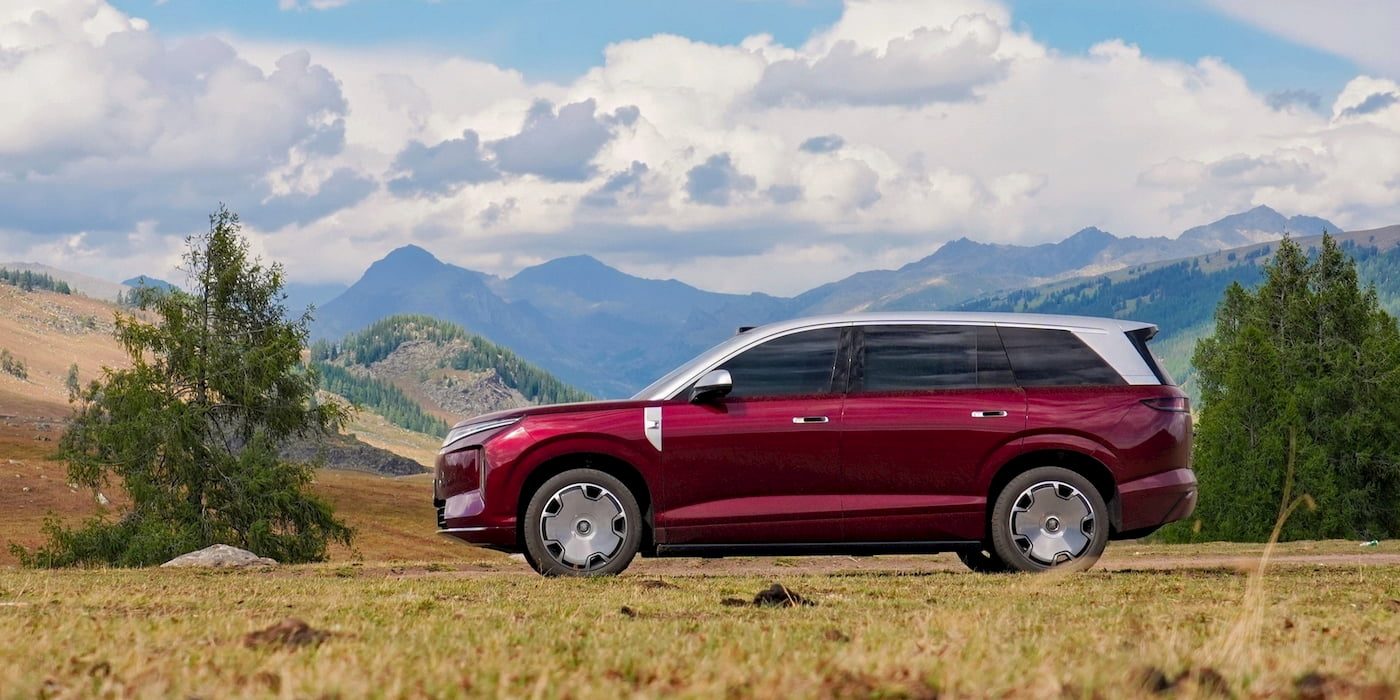
Supporting Data: Specifications, Pricing, and Performance Metrics
The success of the Great Tang is anchored in hard engineering data, aggressive pricing, and specifications that challenge established luxury benchmarks.
Dimensions and Presence
The Great Tang is a behemoth in the truest sense, designed to command the road and offer palatial interior dimensions:
- Length: 5,263 mm
- Width: 1,999 mm
- Height: 1,800 mm
- Wheelbase: 3,130 mm
To put these figures into perspective, the Great Tang easily eclipses established global competitors such as the Hyundai IONIQ 9 and the Kia EV9 in overall footprint, matching the imposing road presence of the well-regarded Li Auto L9. This massive structural canvas allows for China’s first-ever 2+2+3 seven-seat configuration, providing an ultra-comfortable, private-jet-style cabin layout for large families and executive transport alike.
Powertrain, Battery Technology, and Pricing
BYD has structured the Great Tang lineup to cater to diverse consumer needs, offering both pure electric and plug-in hybrid setups. All variants benefit from the integration of BYD’s proprietary second-generation Blade Batteries, renowned for their structural integrity, thermal safety, and volumetric efficiency.
-
Base Premium EV Trim:
- Starting Price: 239,900 yuan (approximately $35,500 USD).
- Battery Capacity: 105.79 kWh.
- Target Audience: Value-conscious luxury buyers seeking long-range performance without crossing into premium pricing territory.
-
Flagship EV Trim:
- Starting Price: 269,900 yuan (approximately $40,000 USD).
- Battery Capacity: 130.15 kWh.
- Maximum Range: Up to 590 miles (950 km) under the stringent China Light-Duty Vehicle Test Cycle (CLTC).
Revolutionary Flash Charging Architecture
Perhaps the most headline-grabbing engineering feat of the Great Tang is its charging infrastructure compatibility. Built upon an advanced 1,000V electrical architecture and paired with BYD’s proprietary Flash Charging technology, the vehicle essentially eradicates long charging anxiety.
According to official performance benchmarks, the Great Tang can replenish its battery from 10% to 70% in a mere five minutes. For drivers pushing toward a near-full charge, taking the battery from 10% to 97% requires just nine minutes. This performance places BYD’s charging ecosystem at the absolute vanguard of the global automotive industry, rivaling or exceeding even the most advanced 800V architectures currently on the market.

Official Responses and Strategic Global Intentions
The phenomenal domestic reception of the Great Tang has not made BYD complacent. Company leadership views this flagship SUV not merely as a domestic triumph, but as a crucial instrument in its broader strategy for global market dominance.
Following the vehicle’s record-breaking launch in June, Stella Li, Executive Vice President of BYD, addressed the international press and confirmed the company’s aggressive global timeline. Li formally announced that the Great Tang would not remain exclusive to the Chinese market. Instead, the luxury flagship SUV is scheduled to begin its overseas commercial rollout, targeting Europe and other strategic international markets by the end of 2026 or early 2027.
Industry observers interpret this official stance as a clear signal that BYD is ready to challenge traditional European and American luxury automakers on their home turf. By packaging ultra-fast charging, immense driving range, and cutting-edge cabin technology into a vehicle priced significantly lower than Western equivalents, BYD aims to capture market share among discerning global consumers who are increasingly open to high-end Chinese electric vehicles.
Implications: What the Great Tang Means for the Global EV Market
The early success and aggressive scaling of the BYD Great Tang carry profound implications for the global automotive sector, reshaping competitive dynamics across multiple vectors.
1. Redefining Value in the Luxury Segment
For decades, high-end, full-size luxury SUVs have commanded six-figure price tags in Western markets, while premium offerings in Asia have steadily crept upward. By delivering a vehicle measuring over 5.2 meters in length, equipped with a 130 kWh battery, a 950 km range, and 1,000V flash-charging capabilities for a starting price equivalent to roughly $35,500 to $40,000 USD domestically, BYD is fundamentally altering consumer perception of vehicle value. Even when accounting for international shipping, tariffs, and localization costs upon its European arrival, the Great Tang is positioned to underprice legacy luxury competitors dramatically.
2. The Pressure on Infrastructure and Competitors
The deployment of 1,000V architecture and sub-ten-minute charging times places immense pressure on legacy automakers—particularly in Europe, North America, Japan, and South Korea—to accelerate their own next-generation platform developments. Competitors who are currently struggling to achieve stable profitability on their first- and second-generation EV architectures may find it difficult to match both the pricing and the rapid-charge performance demonstrated by BYD’s second-generation Blade Battery and flash-charging ecosystem.
3. A Stress Test for International Trade and Protectionism
As BYD executes its stated strategy to bring vehicles like the Great Tang to Europe and other global territories by late 2026 and early 2027, geopolitical and regulatory scrutiny will inevitably intensify. The arrival of such a technologically advanced, competitively priced full-size SUV is expected to trigger fierce debates among trade regulators regarding tariffs, market protection, and local manufacturing requirements. European manufacturers, in particular, will look to policymakers for shielding against an influx of highly optimized Chinese EVs.
Conclusion
Ultimately, the BYD Great Tang is more than just a successful new model launch; it is a milestone demonstrating the maturity of China’s electric vehicle supply chain and engineering prowess. With over 40,000 units sold in three months, record-shattering preorder numbers, and a roadmap pointing toward international shores, the Great Tang stands as a formidable warning to the legacy automotive establishment: the era of accessible, high-performance luxury electric mobility has arrived, and it is moving at breakneck speed.
