

Main Facts: Honoring the Boss at Monmouth University
The intersection of American cultural history, industrial grit, and contemporary sustainable design has found its physical manifestation in the newly completed Bruce Springsteen Center for American Music. Located on the campus of Monmouth University in New Jersey, the project was designed by the renowned architectural firm COOKFOX.
Curated and presented to the global architectural community through platforms like ArchDaily, the center serves a dual purpose. It functions as a dynamic cultural archive dedicated to preserving the broader tapestry of American music history, while simultaneously serving as a monument to the life, career, and enduring artistic legacy of Bruce Springsteen.
Rather than adopting a traditional, sterile museum typology, COOKFOX conceived the building as an act of cultural placemaking. The architecture channels the raw, poetic narratives embedded in Springsteen’s extensive catalog—themes of blue-collar struggle, the fading American dream, resilience, and industrial landscapes. Spanning dedicated exhibition galleries, state-of-the-art educational spaces, and secure archival vaults for rare musical artifacts, the center balances institutional rigor with a deeply emotional, place-based architectural language.
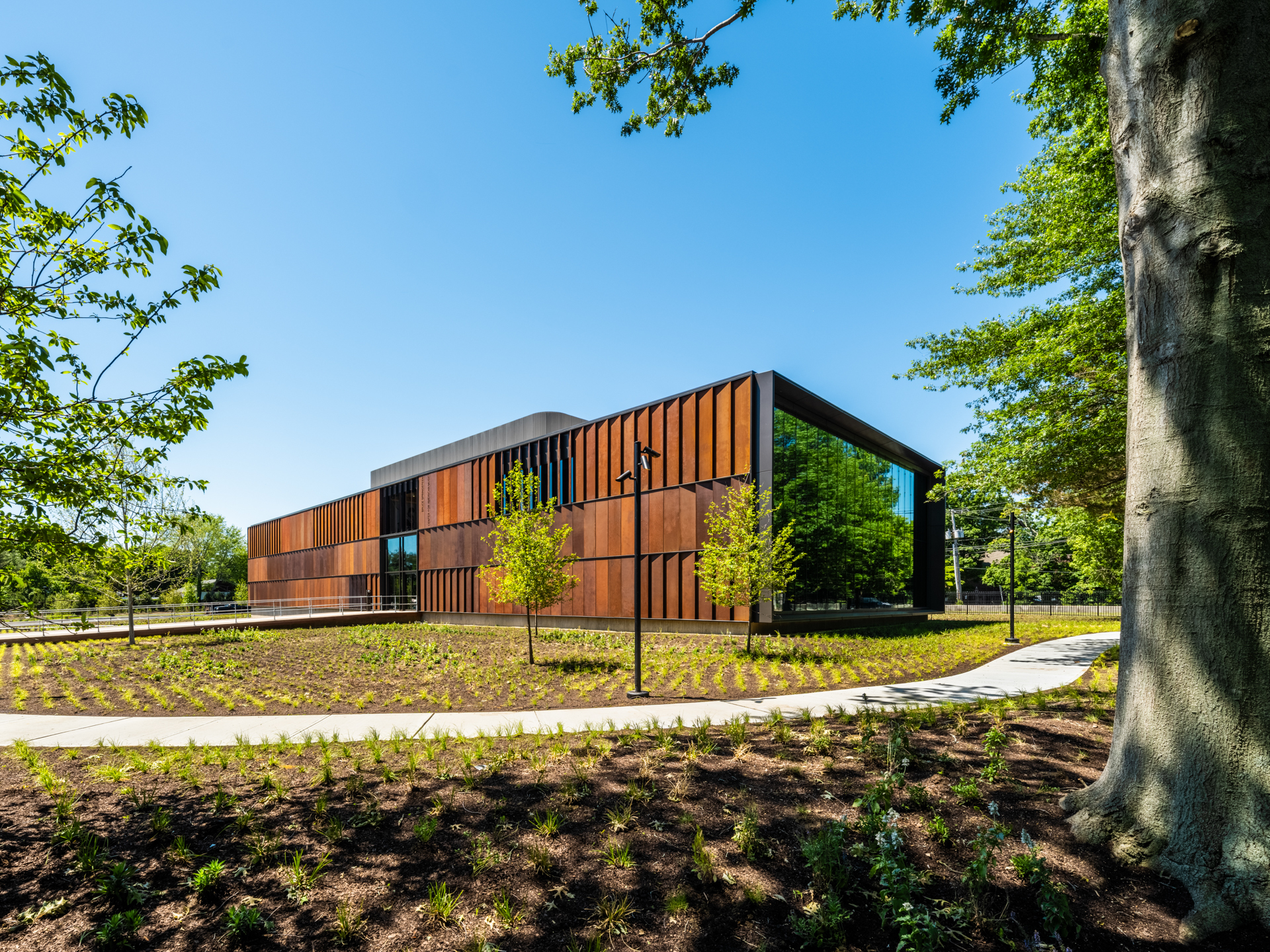
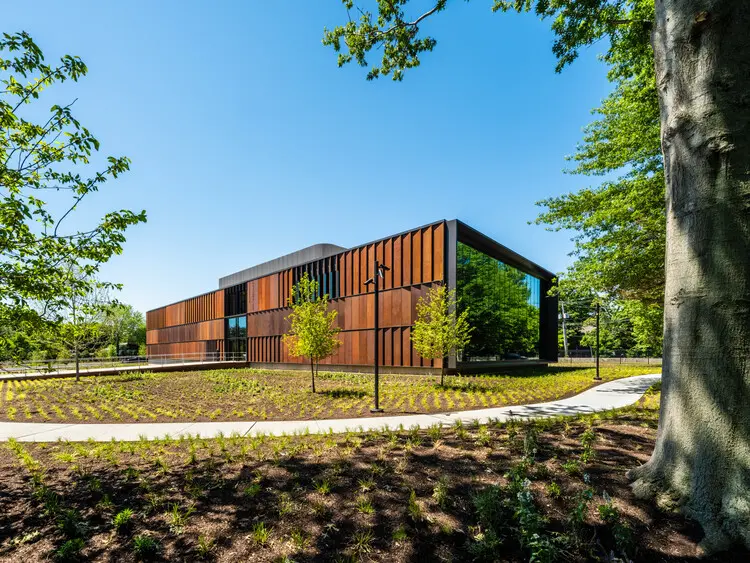
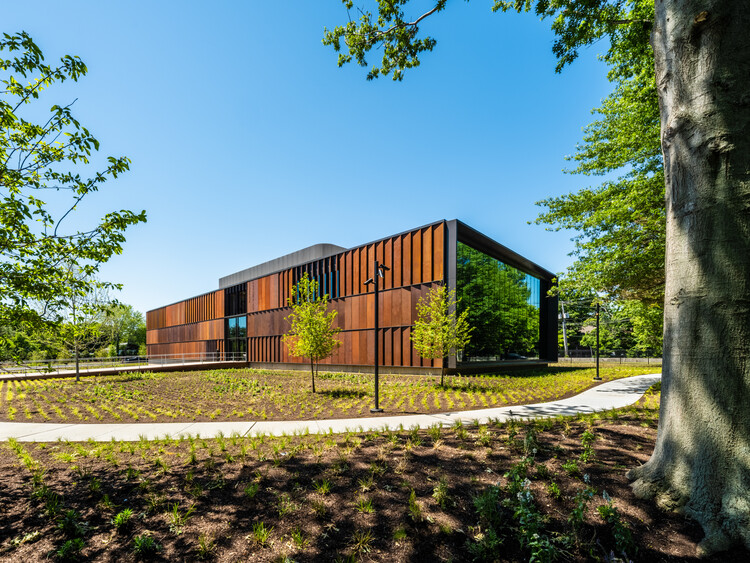
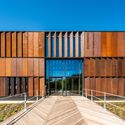
The material palette itself tells a story: a striking weathering steel exterior references New Jersey’s rich industrial past, while a warm mass timber structural interior provides an authentic, welcoming, and sustainable environment for visitors, students, and researchers alike.
Chronology: From Concept to Cultural Landmark
The realization of the Bruce Springsteen Center for American Music at Monmouth University represents the culmination of years of academic dedication, archival preservation, and architectural vision. While the formal unveiling took place in August 2026, the roots of the project stretch back decades.
1. The Genesis of the Archive (Late 2010s)
Monmouth University established a foundational relationship with Bruce Springsteen, housing the Bruce Springsteen Archives and Center for American Music. The collection grew rapidly to include thousands of items: rare manuscripts, photographs, oral histories, instruments, and memorabilia spanning decades of American musical history. It quickly became clear that the university needed a dedicated, world-class physical home to house these precious assets and expand its educational outreach.
2. Commissioning COOKFOX (Early 2020s)
Recognizing the need for an architectural approach that respected both ecological sustainability and deep cultural narratives, the university commissioned COOKFOX Architects. Known for their expertise in biophilic design, mass timber construction, and contextual urbanism, the firm began translating Springsteen’s lyrical themes into architectural concepts.
3. Design and Construction (2023–2026)
Engineering and construction focused heavily on marrying high-performance sustainability with evocative materiality. The selection of a weathering steel facade allowed the building to literally age and evolve with the elements—much like the industrial towns immortalized in Springsteen’s songs. Concurrently, the interior mass timber framework was erected, prioritizing low embodied carbon and a warm, tactile aesthetic.
4. Grand Opening (August 2026)
The center officially opened its doors to the public in August 2026, establishing Monmouth University as a premier global hub for the study of American popular music and cultural history.
Supporting Data: Materiality, Structure, and Sustainability
To truly understand the architectural achievement of the Bruce Springsteen Center for American Music, one must look closely at its technical specifications, material choices, and spatial programming.
Materiality and the Industrial Metaphor
- Weathering Steel (Cor-Ten): The building’s outer skin utilizes weathering steel, a material engineered to form a stable rust-like appearance after years of exposure to weather. This deliberate choice pays homage to the rust belt, manufacturing hubs, and working-class shipyards of New Jersey. The material shifts in hue under changing skies, mirroring the emotional landscape of songs like The River or Born to Run.
- Mass Timber Structure: In stark contrast to the rugged exterior, the interior relies heavily on mass timber. Exposed timber beams, columns, and ceilings imbue the galleries and study areas with a human-centric warmth. Mass timber was also chosen for its significant environmental advantages, including sequestering carbon and reducing the overall carbon footprint of the construction process.
Functional Programming
The building is meticulously organized to support three distinct yet interconnected pillars:
- Exhibition Spaces: Dynamic galleries designed to host rotating and permanent exhibitions detailing the evolution of American roots, rock, folk, and pop music, with a primary focus on Springsteen’s creative process.
- Educational Facilities: Classrooms, lecture halls, and interactive seminar spaces integrated directly into the university campus, allowing students of music history, journalism, and cultural studies to engage hands-on with primary source material.
- Archival Vaults: Climate-controlled, secure preservation environments designed to safeguard fragile historical documents, early lyric notebooks, tour ephemera, and audio-visual recordings for future generations of scholars.
Official Responses and Design Intentions
The philosophy guiding the project was deeply rooted in capturing the intangible spirit of American songwriting and transforming it into spatial reality.

In their official design statement, the architects at COOKFOX elaborated on their conceptual framework:
"The Bruce Springsteen Center for American Music is dedicated to telling the story of music in this country and celebrating Bruce Springsteen’s contributions to that tradition. COOKFOX’s design seeks to express those interwoven themes and their composite parts—song, poetry, the myth of the American dream—as cultural placemaking."
The synergy between Monmouth University’s academic mission and COOKFOX’s design expertise has drawn high praise from both architectural critics and music historians. University officials emphasized that the building is not merely a monument to a single rock icon, but an active laboratory for cultural inquiry. By housing both the legendary archives and cutting-edge educational infrastructure under one roof, the center bridges the gap between historical preservation and forward-looking academic exploration.
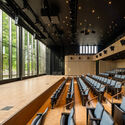
Furthermore, the integration of biophilic design principles—highlighted by the use of natural wood interiors, abundant daylighting, and spatial transparency—creates an inviting atmosphere that encourages prolonged engagement, quiet reflection, and community gatherings.
Implications: A New Paradigm for Cultural and Institutional Architecture
The completion of the Bruce Springsteen Center for American Music carries significant implications for the future of institutional, educational, and cultural architecture.
1. Storytelling Through Materiality
The project demonstrates that civic and institutional buildings can successfully move away from generic, glass-and-steel modernism in favor of narrative-driven architecture. By using weathering steel to evoke New Jersey’s industrial heritage, COOKFOX proves that a building can tell a localized, highly specific story before a visitor even steps through the front door. This approach offers a compelling model for future music museums, cultural hubs, and regional memorials.
2. Sustainability Meets Emotional Resonance
While sustainable architecture often emphasizes metrics like energy efficiency and LEED certifications (which the building incorporates through its mass timber framework and high-performance envelope), COOKFOX highlights the emotional dimension of sustainability. Natural materials like timber do not just lower embodied carbon; they connect the human occupant to the natural world and, in this case, to the earthy, acoustic roots of American folk and rock music.
3. Elevating the University Campus as a Cultural Destination
By embedding a world-class cultural institution and archive directly within Monmouth University, the project redefines the relationship between higher education and the public. It transforms the campus into an international pilgrimage site for music lovers while providing students with unprecedented access to primary archival resources.
As cities and institutions look for ways to revitalize public spaces and honor local heroes in the 21st century, the Bruce Springsteen Center for American Music stands as a masterclass in how architecture can immortalize a legacy while looking boldly toward the future.
