

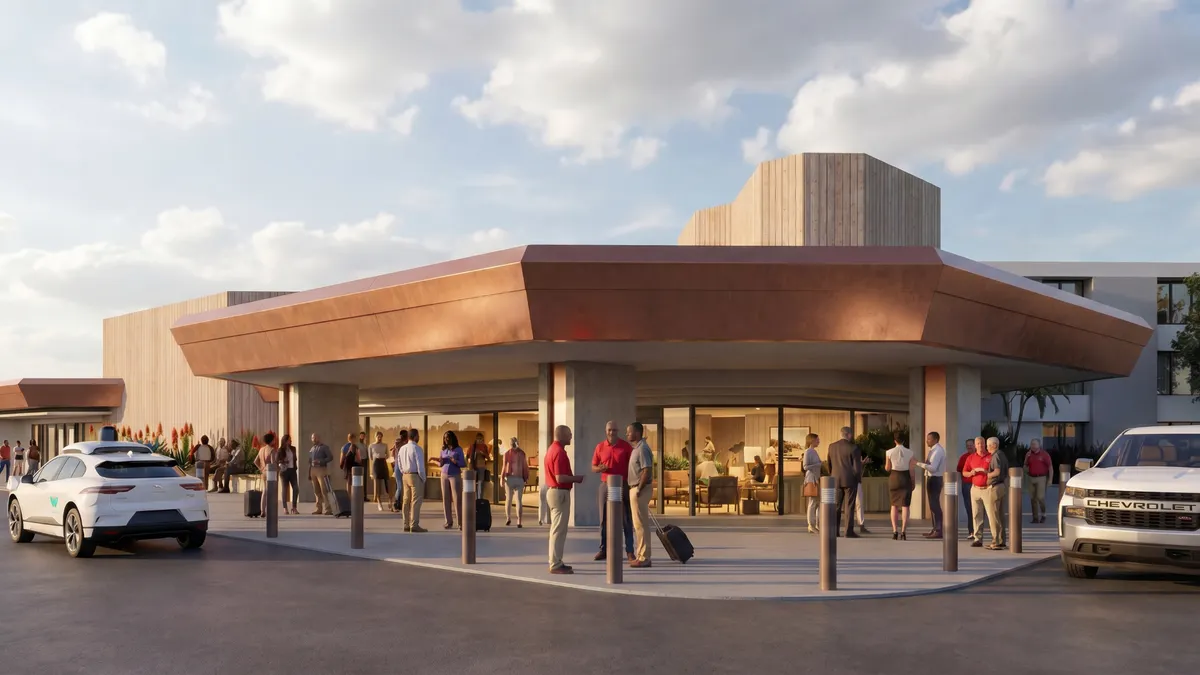
TEMPE, Ariz. — In a bold move to combat the construction industry’s persistent labor crunch, St. Louis-based general contractor McCarthy Building Companies has officially broken ground on its ambitious new training and development hub: the McCarthy Anchor Campus.
Announced on August 19, 2026, and helmed by Matthew Thibault of Construction Dive, this multi-million-dollar redevelopment project breathes new life into a former hotel and convention site in Tempe, Arizona. Once completed, the 171,030-square-foot facility will serve as a centralized national headquarters for upskilling, leadership development, and hands-on training for both salaried personnel and craft workers from across McCarthy’s operations nationwide.
The project highlights a broader corporate trend across major American industries—ranging from heavy construction to tech giants like Meta and Google—investing tens of millions of dollars into direct workforce development and vocational training initiatives.
Main Facts
The McCarthy Anchor Campus represents a strategic leap forward for one of the country’s oldest and most respected privately held construction firms. Situated in the heart of Tempe, the sprawling facility is designed to unite workers from diverse geographic regions and specialized trades under one roof to foster cross-collaboration, technical mastery, and safety leadership.
- Project Scope: The campus spans 171,030 square feet and consists of 13 distinct structures.
- Property Layout: The complex includes a main central structure housing a lobby, restaurant, meeting spaces, and one block of guest rooms, alongside 11 separate hotel room structures and a standalone conference center.
- Target Audience: The facility will host both salaried management employees and craft workforce professionals for specialized training, educational workshops, and leadership seminars.
- Operational Partner: McCarthy has enlisted hospitality management leader Pyramid Global Hospitality to oversee the daily operations of the campus’s hospitality and lodging infrastructure.
- Timeline: The heavy redevelopment and construction phase is slated to take approximately 16 months to complete.
Chronology of the Project
The journey from an underutilized hospitality space to a premier national construction training ground has moved at a rapid pace, dictated by strategic acquisitions and rigorous design-build planning.
January 2026: The Acquisition
McCarthy Building Cos. officially closed on the purchase of the former hotel and convention center site in Tempe, Arizona. Leadership identified the property’s layout as a "blank canvas" ideal for conversion into a multi-use corporate campus equipped with housing, dining, and educational infrastructure.
February – July 2026: Permitting and Design-Build Collaboration
Following the acquisition, a specialized design-build team went to work. According to R.J. Morris, McCarthy’s Senior Vice President of the Anchor Campus, the team spent months assessing the physical condition of the 13 structures, securing municipal permits, and refining master architectural blueprints. Collaborating closely on key operational decisions, the firm also partnered with Pyramid Global Hospitality to ensure the site’s residential and event capabilities met high commercial standards.
August 2026: Groundbreaking and Mobilization
By mid-August, construction crews officially mobilized on-site. Current early-phase activities involve targeted interior demolition, structural enhancements, and the systematic modernization of the guest rooms and breakout spaces.
Supporting Data and Facility Specifications
The transformation of a hospitality asset into a high-tech, multi-disciplinary educational center requires careful integration of physical infrastructure and programmatic design.
Architectural and Structural Breakdown
The 13-building campus is uniquely suited for a hybrid training model. Because it originated as a hospitality venue, the site natively possesses the residential capacity required to host hundreds of traveling workers at a time, eliminating the logistical hurdles and expenses of off-site hotel bookings.
- Main Structure: Functions as the operational heart of the campus. It features a welcoming lobby, a commercial-grade restaurant for communal dining, high-capacity meeting spaces, and primary administrative offices.
- Residential Infrastructure: The 11 standalone hotel room structures, alongside the rooms in the main building, provide comfortable, on-site lodging for trainees arriving from McCarthy projects nationwide.
- Conference Facilities: A dedicated conference center will host large-scale keynote presentations, corporate summits, and industry panels.
Amenities and Learning Environments
Beyond traditional lecture-style spaces, the Anchor Campus has been engineered to support modern, dynamic adult learning theories. The facility will incorporate:
- Flexible Classrooms: Movable partitions and modular furniture allow rooms to be rapidly reconfigured for large seminars or small group workshops.
- Breakout Spaces: Informal networking zones designed to encourage organic mentorship and peer-to-peer knowledge sharing between seasoned superintendents and junior apprentices.
- Wellness Amenities: Facilities dedicated to mental and physical health, reflecting the construction industry’s growing emphasis on worker well-being and suicide prevention in the trades.
- Adaptable Outdoor Spaces: Open-air zones designed for hands-on, weather-permitting trade demonstrations, equipment operation simulations, and social gatherings.
Official Responses and Strategic Rationale
For McCarthy leadership, selecting Tempe as the permanent home for the Anchor Campus was a deliberate choice grounded in regional accessibility, economic vitality, and the company’s deep-rooted history in the American Southwest.

"The McCarthy Anchor Campus builds on our existing learning and development programs by creating new opportunities for employees across the country to come together to learn, collaborate, and develop new skills in one dedicated space," said R.J. Morris in an email statement to Construction Dive.
Morris noted that the design-build team spent the months following the January acquisition meticulously assessing the campus layout.
"Since acquiring the facility in January, the design-build team has been actively assessing the campus while working through design, collaborating on key decisions for the future facility, and working through permitting," Morris explained.
When asked why Arizona was chosen over other regional hubs, Morris highlighted Tempe’s central location and robust transit infrastructure. He emphasized that the region was a "natural fit" for the firm’s ambitious training pipeline due to exceptional regional accessibility and McCarthy’s decades-long footprint in the local construction market. By centralizing operations in Tempe, the contractor can efficiently funnel personnel from western, central, and eastern markets into a single, highly optimized educational ecosystem.
Broader Industry Implications and the War for Talent
McCarthy’s capital investment in the Anchor Campus does not occur in a vacuum. It arrives amidst an unprecedented national movement by major corporations and tech conglomerates to address the severe, long-term shortage of skilled labor plaguing the U.S. construction and infrastructure sectors.
The Macro Labor Shortage
The American construction industry continues to face a massive demographic cliff. As a generation of veteran craft workers and trade professionals approaches retirement age, the pipeline of incoming talent has struggled to keep pace with soaring demand. This labor deficit threatens to delay critical infrastructure projects, commercial developments, and industrial expansions nationwide. General contractors are increasingly realizing that traditional, decentralized training models are no longer sufficient to scale up workforce numbers rapidly and safely.

Corporate Tech Giants Step Into the Trades
Recognizing that their own massive digital infrastructure investments—such as hyper-scale data centers—rely entirely on the availability of skilled electricians, ironworkers, concrete masons, and HVAC technicians, major technology companies have launched multi-million-dollar workforce initiatives:
- Meta’s Workforce Initiatives: On June 8, social media giant Meta announced the launch of America’s Workforce Academy, a sweeping $115 million training initiative designed specifically to train skilled tradespeople for data center construction projects. Following that rollout, Meta partnered with North America’s Building Trades Unions (NABTU) to institutionalize specialized apprenticeship programs tailored to the demands of modern digital infrastructure construction.
- Google’s Training Investments: Similarly, tech titan Google launched a $50 million funding initiative aimed at bolstering labor unions and regional training centers. Google’s program focuses on upgrading educational technology, expanding outreach to underrepresented demographics, and improving curriculum standards for vocational students entering the construction pipeline.
Where McCarthy Fits In
While tech companies are channeling capital into external unions and third-party academies, McCarthy’s Anchor Campus represents an internal, owner-operated approach to enterprise-wide excellence. By purchasing real estate and building a dedicated corporate campus, McCarthy ensures complete quality control over its curriculum, safety protocols, and corporate culture.
The integration of salaried staff and hourly craft workers under one roof is particularly significant. Historically, office-based project managers and field-based craft workers have operated in distinct organizational silos. By bringing both groups to the Tempe campus for collaborative training, McCarthy aims to break down communication barriers, enhance build-team cohesion, and drive operational efficiency on complex jobsites.
Looking Ahead
As construction teams press forward with minor structural demolitions and guest room overhauls in Tempe, anticipation is building across McCarthy’s regional offices nationwide. With a scheduled completion window pointing toward late 2027, the Anchor Campus stands poised to become a blueprint for how major general contractors can proactively solve the skilled labor crisis.
By marrying hospitality-grade comfort with rigorous vocational education, McCarthy Building Companies is not merely training workers for today’s projects—it is deliberately engineering the future leadership of American construction.
