

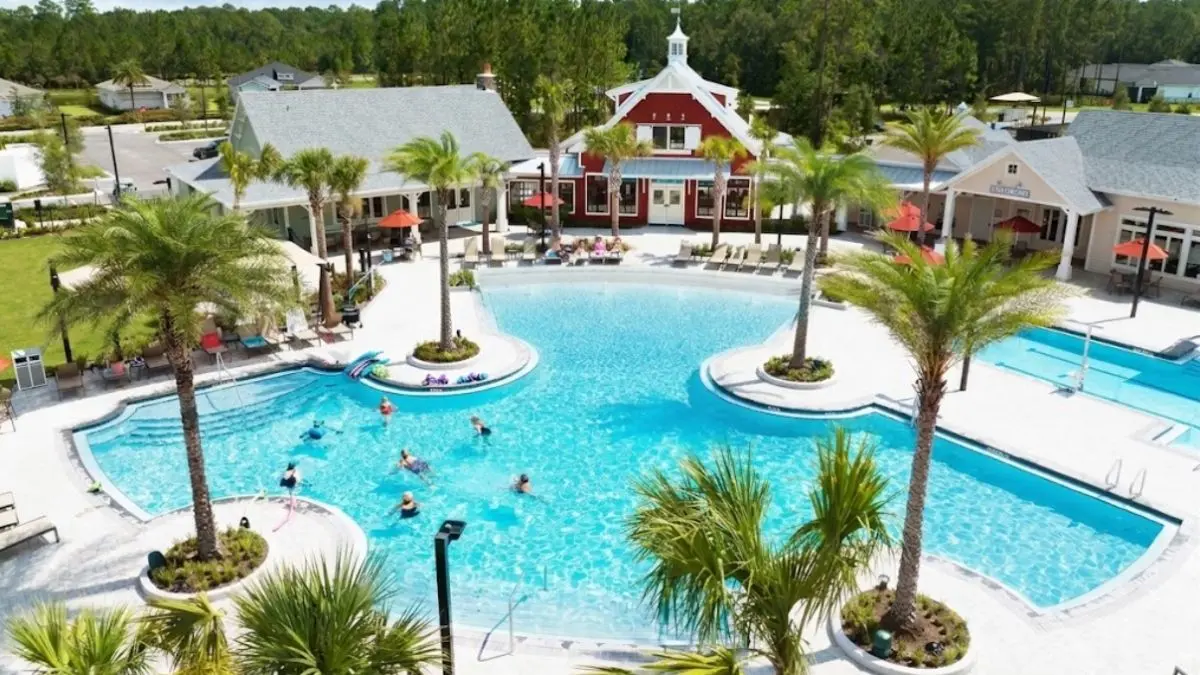
NATIONAL REPORT — In a strategic pivot designed to capture a rapidly expanding demographic of younger, highly active homebuyers, Dream Finders Homes has announced a major brand evolution. The homebuilder’s popular active adult division, Reverie, will now encompass non-age-restricted lifestyle communities. This new tier, formally dubbed Reverie Resort Lifestyle, aims to bridge the gap for affluent, active empty nesters in their 50s and early 60s who desire a resort-style, community-focused neighborhood without the legal boundaries of a traditional 55-plus restriction.
The announcement comes at a transformative time for Dream Finders Homes. Currently ranked as the 12th-largest homebuilder in HousingWire’s national Homebuilder Rankings, the company is on track to vault into the top 10 following its pending acquisition of Beazer Homes. By extending the Reverie portfolio, Dream Finders is positioning itself to capitalize on a lucrative market segment that major competitors have increasingly targeted over the last several years.
Main Facts: The Anatomy of the Reverie Expansion
The introduction of Reverie Resort Lifestyle does not signal an abandonment of Dream Finders’ core competencies; rather, it is an amplification of them. According to David Smith, Vice President of Active Adult at Dream Finders Homes, the traditional 55-plus Reverie offering will remain completely intact.
- The Core Strategy: Reverie Resort Lifestyle targets consumers who want the amenities, social programming, and architectural design of an active adult community, but who are still in the workforce, have younger family dynamics, or simply prefer to avoid age-gated neighborhoods.
- The Pioneer Location: The inaugural Reverie Resort Lifestyle community is slated to open in Parker, Colorado, an area strategically selected for its extensive network of biking and hiking trails that appeal to an active demographic.
- Industry Alignment: Dream Finders joins a growing roster of top-tier homebuilders adapting their adult-lifestyle portfolios. PulteGroup expanded its iconic Del Webb brand with "Del Webb Explore" (targeting buyers aged 45–60), while Taylor Morrison (Esplanade) and Lennar have similarly blurred the lines between age-restricted and lifestyle-focused developments.
"We’re still very new with the Reverie brand, but we weren’t going to miss this opportunity to identify an underserved consumer in the market," Smith noted in an exclusive interview. "The lifestyle component just allowed us to open the net up a little bit wider."
Chronology: The Evolution of the Reverie Brand
To understand the weight of this new brand extension, it is necessary to examine how Dream Finders established its footprint in the active adult sector over the past decade.
2018: Inception and Market Entry
The Reverie brand was born in 2018 when Dream Finders recruited David Smith to build an active adult division from the ground up. At the time, the homebuilder possessed virtually no institutional track record in the 55-plus market. The name "Reverie"—signifying pleasant, dream-like thoughts—was selected to evoke a sense of leisure and aspiration, aligning with the company’s overarching brand ethos.
2018–2023: Maturation of the Traditional Model
Over the next five years, Smith and his team established traditional, age-restricted Reverie communities. They honed a specific formula centered around modern floor plans, country-club-style amenities, and robust social calendars. During this period, the average age of a Reverie buyer stabilized around 64 to 65 years old, mirroring the broader national demographic wave of aging Baby Boomers.
2023–2024: Identifying the Missing Middle
As the division matured, leadership began noticing a recurring pattern: a subset of prospective buyers in their early-to-mid 50s and late 60s—frequently working professionals and younger Generation Xers—were touring Reverie properties. They loved the single-story home designs, low-maintenance exteriors, and vibrant community centers, but were legally or personally excluded from or uninterested in age-restricted neighborhoods.
2024–Present: The Launch of Reverie Resort Lifestyle
Recognizing this gap, Dream Finders formalized the Reverie Resort Lifestyle concept. By removing age restrictions while retaining the exact same architectural standards and amenity packages, the builder created a flexible model that can pivot based on local market demand. If a specific submarket heavily favors age-restricted developments, Dream Finders will build 55-plus; if the local buyer pool skews younger and desires intergenerational proximity, the Reverie Resort Lifestyle framework drops seamlessly into place.
Supporting Data: The Resilient Gen X and Boomer Balance
Homebuilders navigating the current macroeconomic climate—characterized by elevated mortgage rates and lingering affordability pressures—are increasingly looking to buyers who possess substantial balance sheet strength. Active adult and lifestyle buyers consistently rank among the most resilient segments of the housing market due to their accumulated home equity and cash liquidity.
Generation X Buying Power
The primary target for the Reverie Resort Lifestyle brand is Generation X (individuals born between 1965 and 1980). According to data from LendingTree, Gen X held an impressive $14.14 trillion in home equity as of last year.
Furthermore, many Gen X buyers purchased their first homes during historical periods when mortgage rates were well north of 10%. Consequently, today’s prevailing rates in the mid-60s range (around 6.5%) do not trigger the same psychological hesitation seen among younger, first-time homebuyers. At this stage in life, lifestyle motivations—such as downsizing, relocating for climate, or seeking connection—often supersede temporary macroeconomic friction.
Margin Advantages in the Lifestyle Segment
While Dream Finders does not break out specific financial metrics for the Reverie brand independently, public peer data underscores why builders are doubling down on this product category. Lifestyle and active adult homes typically demand fewer financial concessions, resulting in healthier gross profit margins.
- Taylor Morrison: During an earnings call in February, CEO Sheryl Palmer highlighted that the company’s Esplanade brand "drives superior home prices and gross margins that consistently exceed the balance of our business."
- PulteGroup: In early 2026 earnings communications, PulteGroup announced plans to aggressively shift construction starts toward its Del Webb communities. Historically accounting for roughly 20% of the builder’s closings, Del Webb’s share is projected to climb to 25%, signaling extreme corporate confidence in the sector’s long-term durability.
Official Responses and Strategic Vision
David Smith’s philosophy regarding community placement relies heavily on integration rather than isolation. Dream Finders frequently situates Reverie neighborhoods within expansive master-planned communities (MPCs). This approach allows active adults and empty nesters to remain physically close to their children and grandchildren while enjoying dedicated, age-appropriate or lifestyle-tailored enclaves within the broader development.
"The average age in our active adults is closer to 64, maybe even 65 years of age, which is the fastest-growing segment of the market," Smith explained. "And we’re not ignoring that, but the lifestyle component just allowed us to open the net up a little bit wider."
When designing the social infrastructure of these communities, Dream Finders has intentionally broken away from traditional country-club models. While traditional clubhouses feature state-of-the-art fitness studios, billiards rooms, and golf simulators, outdoor spaces are conceptualized around casual connectivity.
Rather than operating full-service restaurants—which can carry high operational overhead—many Reverie communities utilize food truck courts complete with permanent utility hookups, extensive grassy areas, and shaded seating. This allows rotating local vendors to serve residents by the pool, cultivating a vibrant, festival-like atmosphere.
"The number one amenity all the time is walking trails," Smith emphasized. "So if you have a very walkable community and access to trails and sidewalks and things like that, that is a huge amenity." This insight directly informed the selection of Parker, Colorado, as the debut site for the brand extension, marrying the appeal of the great outdoors with modern, low-maintenance home designs.
Implications for the Housing Market and Competitors
The rollout of Reverie Resort Lifestyle carries several notable implications for the broader residential construction landscape:
- Blurring Demographic Lines: As more builders follow PulteGroup, Taylor Morrison, and now Dream Finders in offering non-age-restricted lifestyle brands, the dividing line between "active adult" housing and "move-down" housing will continue to dissolve.
- Mitigating Margin Pressure: In a housing market where material and labor costs squeeze builder margins, pivoting production toward buyers with high home equity reduces reliance on rate buy-downs and price cuts, thereby safeguarding profitability.
- Master-Planned Integration: The success of these brands proves that empty nesters do not necessarily want to live in walled-off enclaves. By embedding lifestyle villages within massive master-planned developments, builders can capture multi-generational household moves—grandparents can live in a Reverie home while their adult children reside in standard single-family phases down the street.
As Dream Finders Homes completes its absorption of Beazer Homes and scales its operations into the top tier of American homebuilding, the Reverie Resort Lifestyle brand is positioned to be a primary vehicle for sustained, high-margin growth. For Gen X professionals eager to trade suburban lawn maintenance for resort-style community living without waiting for a milestone birthday, the market is finally opening its doors.
