

Main Facts
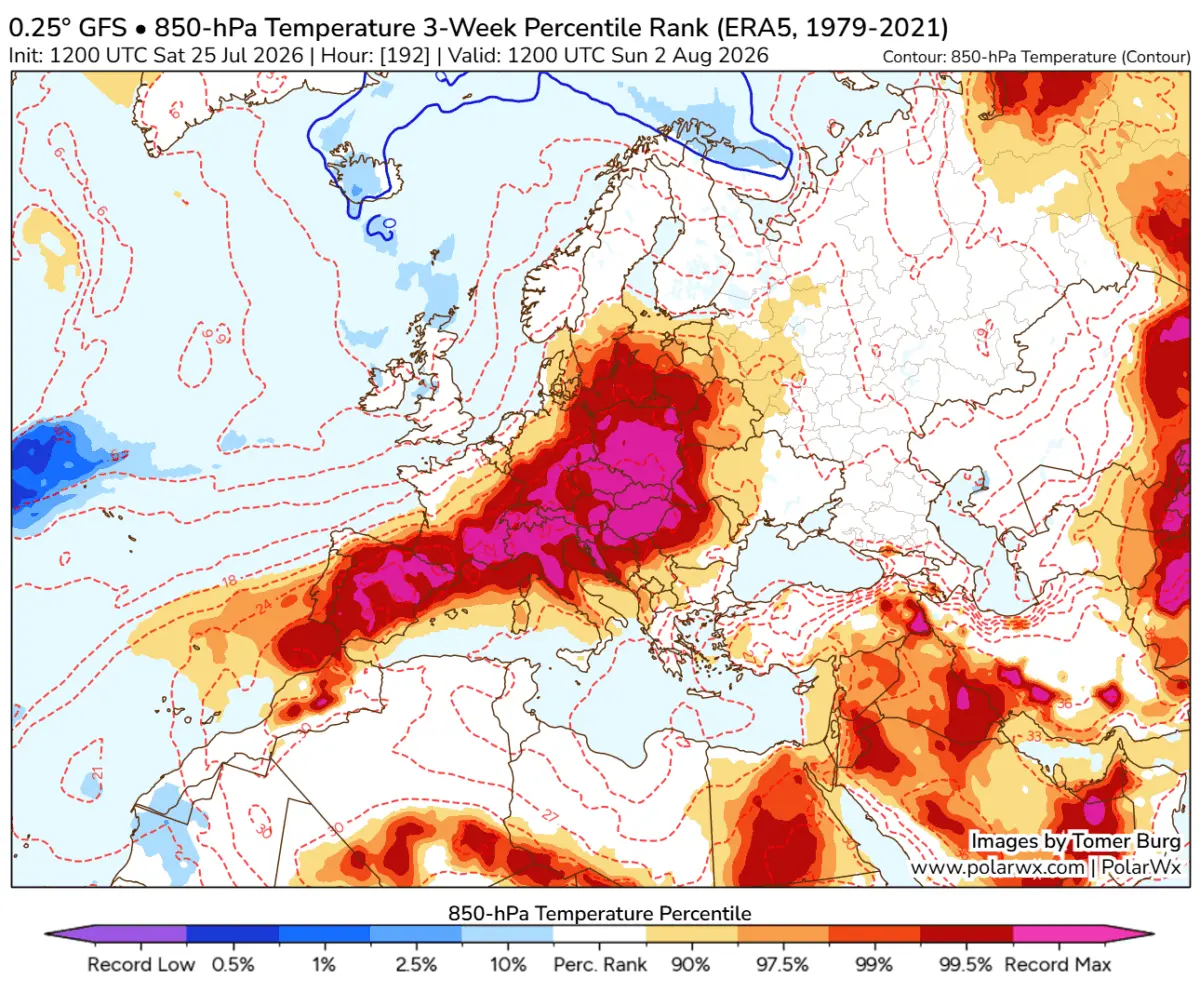
As the calendar turns from July into August 2026, the European continent is preparing for its fourth, and potentially most severe, major heatwave of the season. Driven by a textbook atmospheric Omega block, a colossal and long-lasting Heat Dome is locking into place over Western Europe, Central Europe, and the Mediterranean basin.
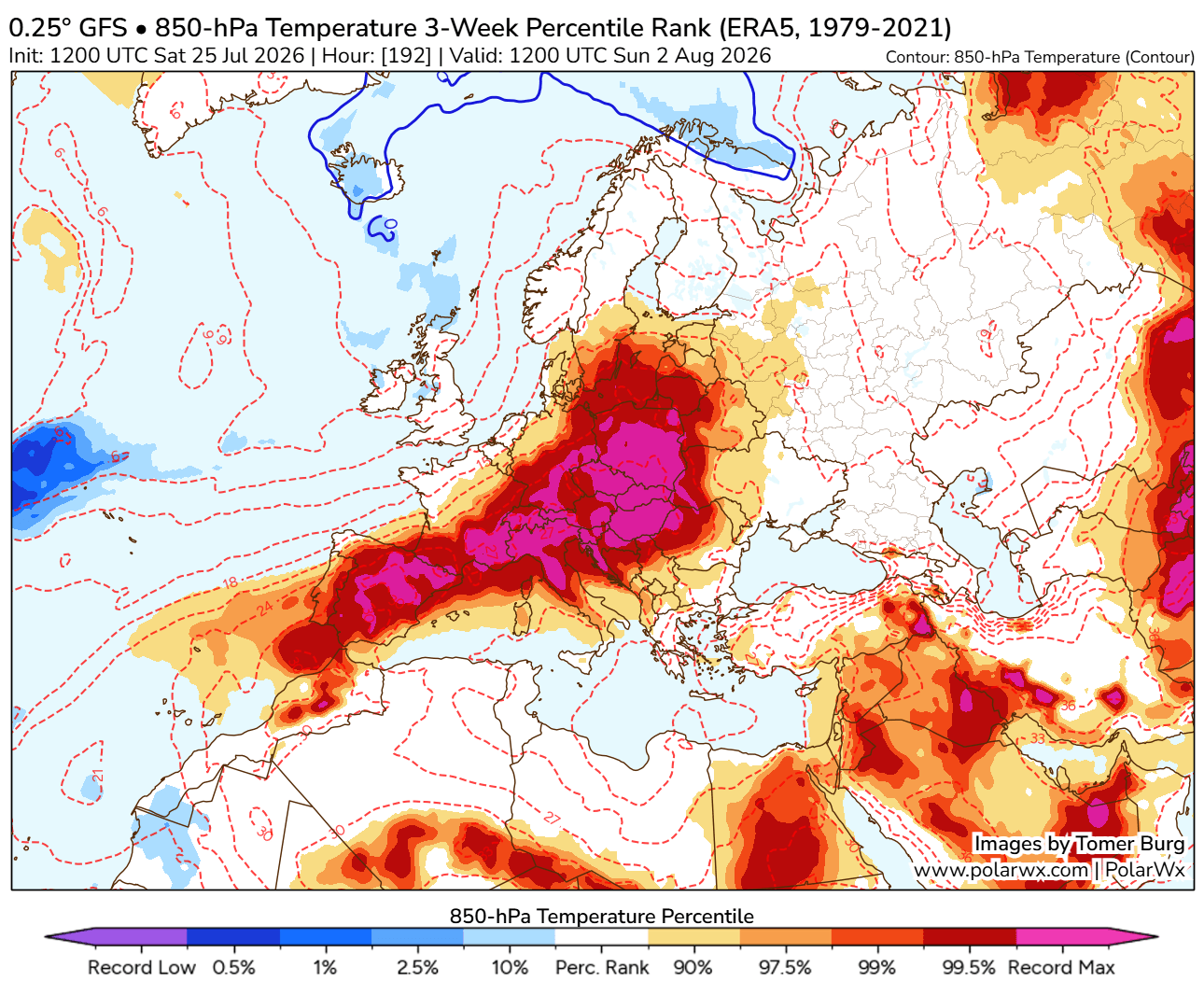
Pumping searing, exceptionally dry air directly northward from the Sahara Desert, the weather system is fueled by high-resolution global ensemble models projecting mid- to upper-air thermal anomalies tracking well into the 99th percentile.

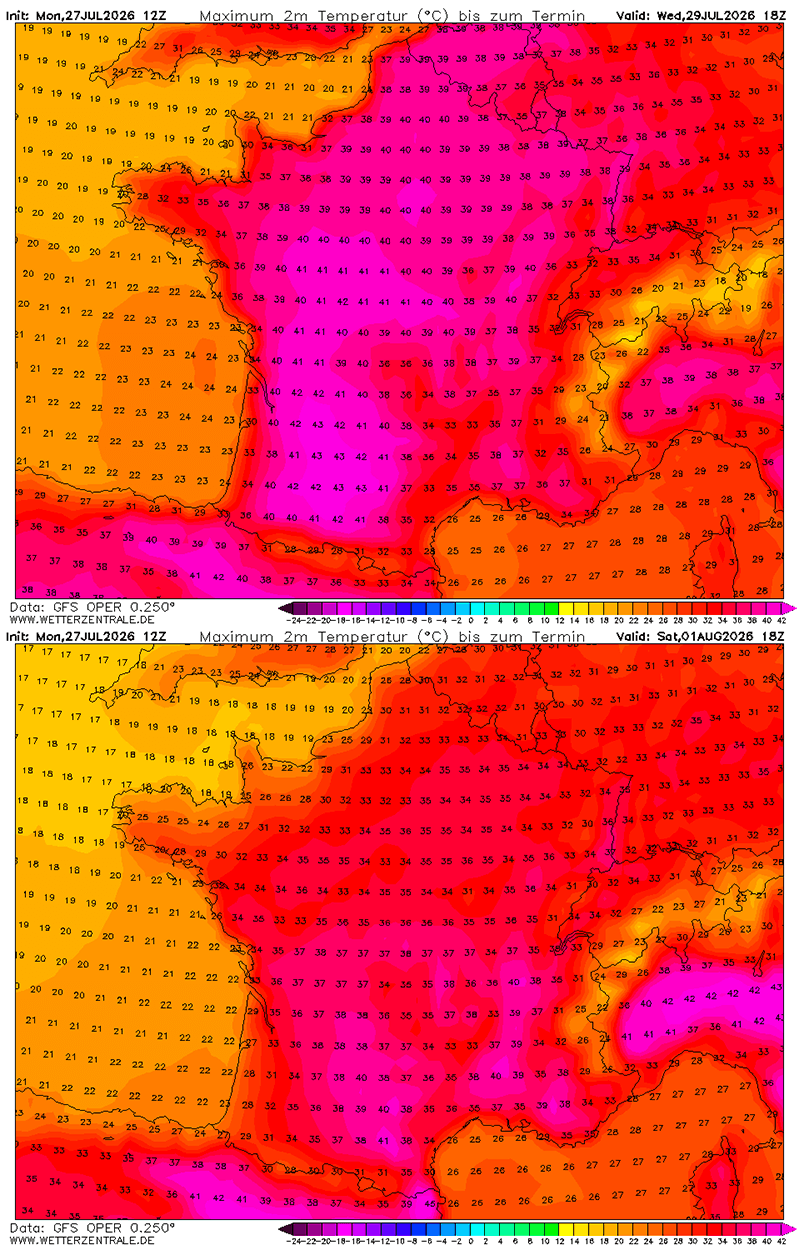
The catastrophic atmospheric setup is forecast to easily push ambient air temperatures past the 40°C (104°F) threshold across wide swaths of the continent. In the most heat-prone lowlands of the Iberian Peninsula, maximum readings are projected to skyrocket between 42°C and 46°C (108°F to 115°F).
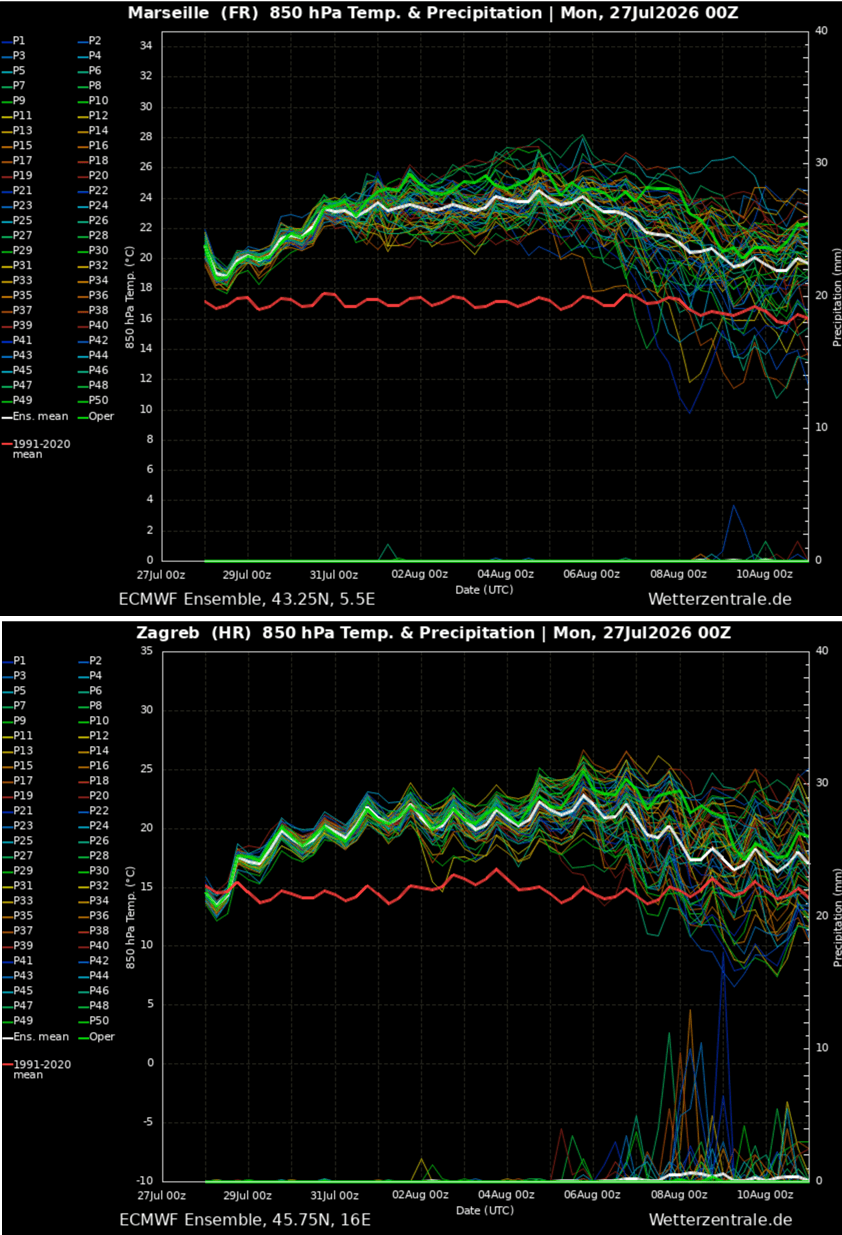
Unlike transient summer spikes, this atmospheric furnace is expected to persist for nearly two weeks, bringing relentless day-time baking paired with dangerous, suffocating "tropical nights" where overnight lows refuse to drop below the mid-to-upper 20s Celsius (77°F to 84°F).
Compounding the meteorological crisis are tinder-dry forests across southern Europe. With relative humidity plunging below 20 percent, the conditions have primed the region for explosive, fast-moving wildfires that threaten to overwhelm emergency resources from Spain and France to Italy and the Balkans.
Chronology of the Event
The evolution of this historic weather pattern began taking shape in mid-July, mirroring structural characteristics seen earlier in the summer, though with significantly more intensity and a more central continental positioning.
Phase One: The Western European Peak (Mid-Week)
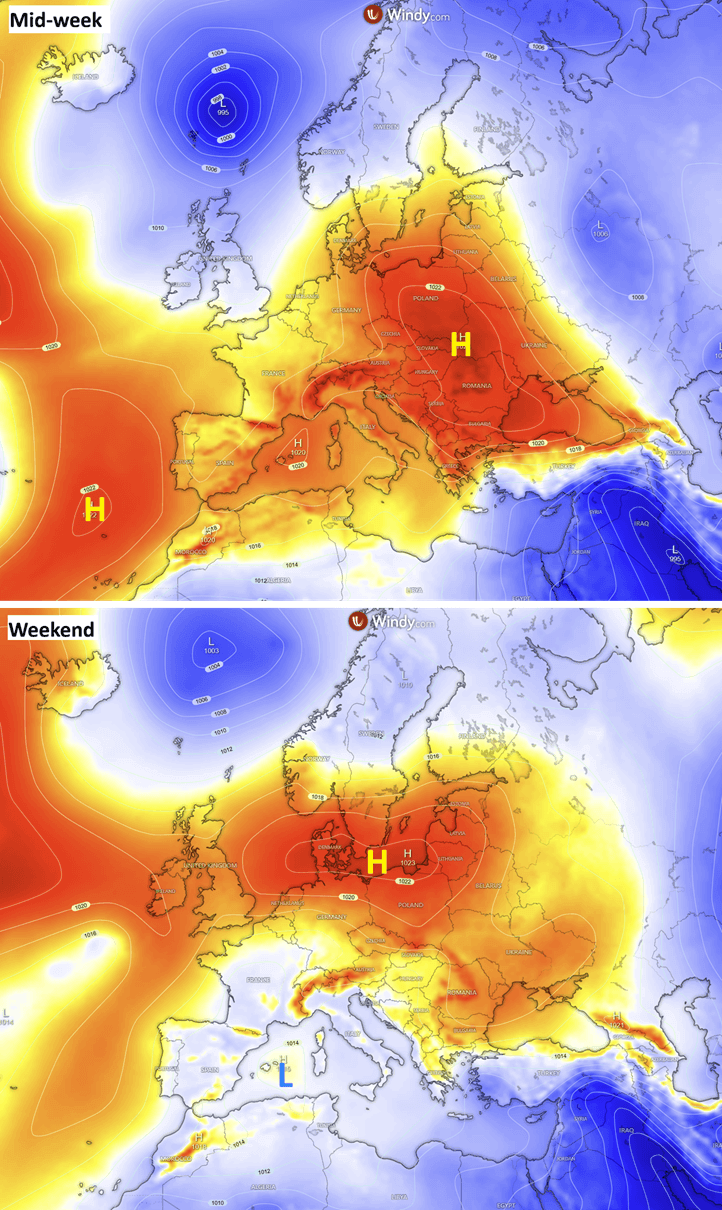
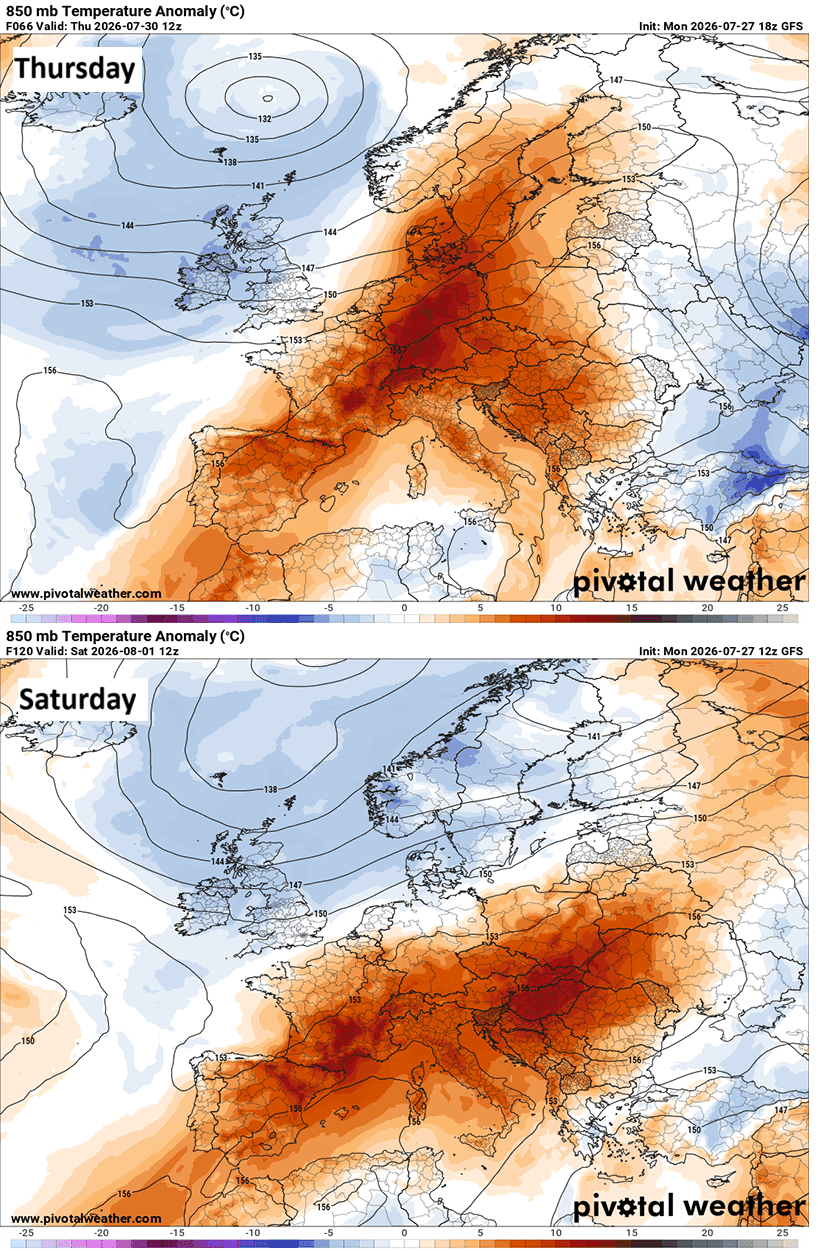
By Tuesday and Wednesday, the upper-level ridge axis parks itself firmly over west-central Europe. France bears the initial brunt of the surge on Wednesday, with extreme heat expanding into western and central departments, driving afternoon peaks to between 40°C and 43°C.
Concurrently, the British Isles experience a sharp, short-term spike. South-central England records highs of 33°C to 36°C on Wednesday before maritime air masses from the Atlantic force a cool-down later in the week. Simultaneously, Benelux and Germany face their most intense multi-day baking on Wednesday and Thursday, with temperatures climbing into the upper 30s and touching 41°C locally.
Phase Two: Iberian Peninsula Intensity (Late Week)
As the week progresses, the core of the heat focus shifts intensely toward the southwest. Friday shapes up to be brutally hot across southern Portugal and south-central Spain. Due to exceptionally low humidity and intense solar insolation, the lowlands of Iberia reach their absolute peak, threatening all-time historical temperature records.
Phase Three: Central Europe, Italy, and the Balkans (The Weekend Transition)
Moving into the weekend and early August, the center of the surface High shifts eastward toward Germany, Denmark, and the Baltic region, while low pressure establishes over the Mediterranean. This pressure configuration sets up an east-northeast flow, dragging dry continental air masses across the Mediterranean via downslope Foehn wind effects.
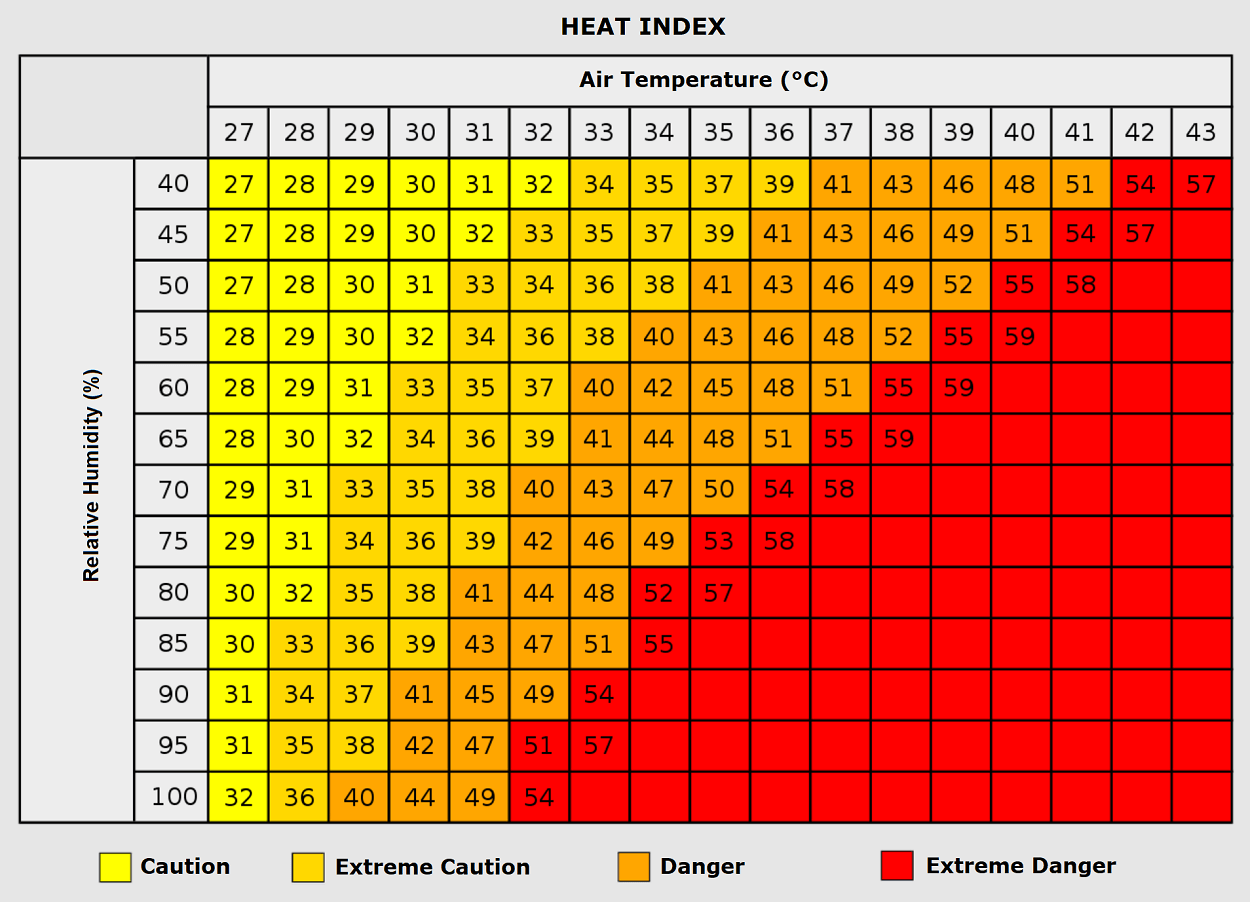
From Thursday onward, north-central Italy, Tuscany, the Po Valley, Hungary, Slovenia, Croatia, Bosnia & Herzegovina, and Serbia enter a multi-day siege of 40°C+ readings.
Phase Four: Eastern Europe Expansion (Early Next Week)
By Sunday and into the following week, the atmospheric block pushes further east, sweeping scorching air into Ukraine, Moldova, and Western Russia. Temperatures in these regions are forecast to climb toward 40°C, sustaining dangerous heat levels well into next week.
Supporting Data and Meteorological Mechanics
Understanding the Heat Dome and Omega Block
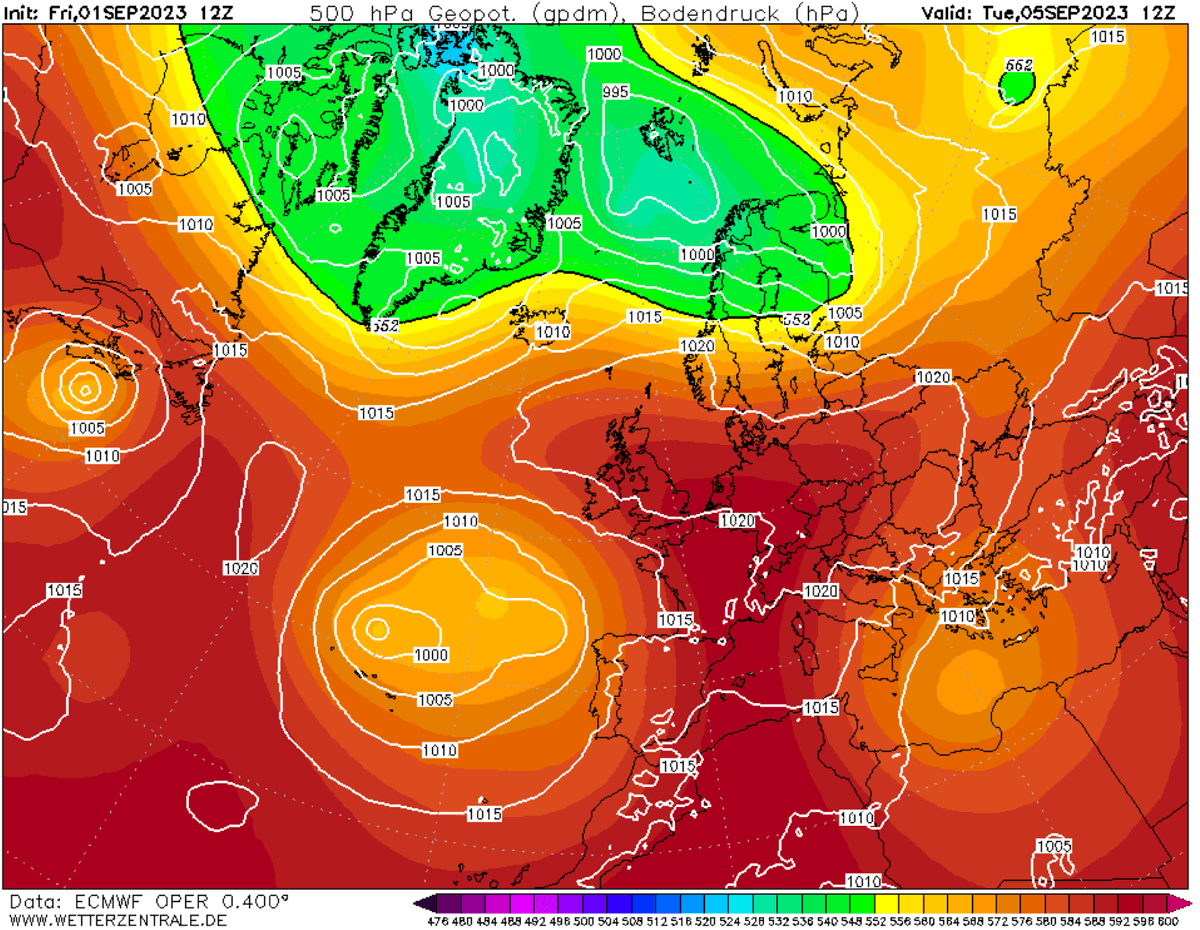
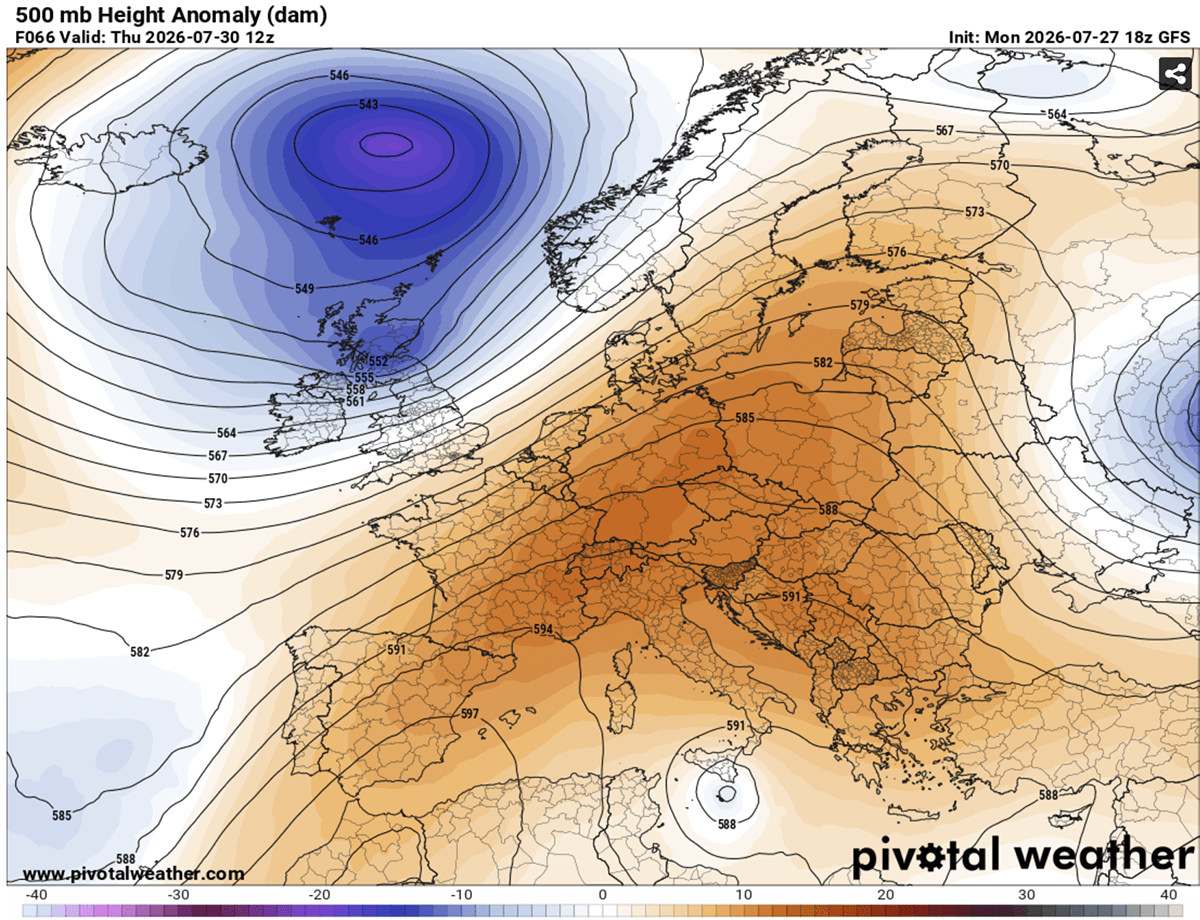
The primary engine behind this climate anomaly is an Omega blocking pattern—named for its resemblance to the Greek letter $Omega$—featuring a powerful upper-level High anchored over the continent, flanked by deep low-pressure systems over the North Atlantic and Russia.
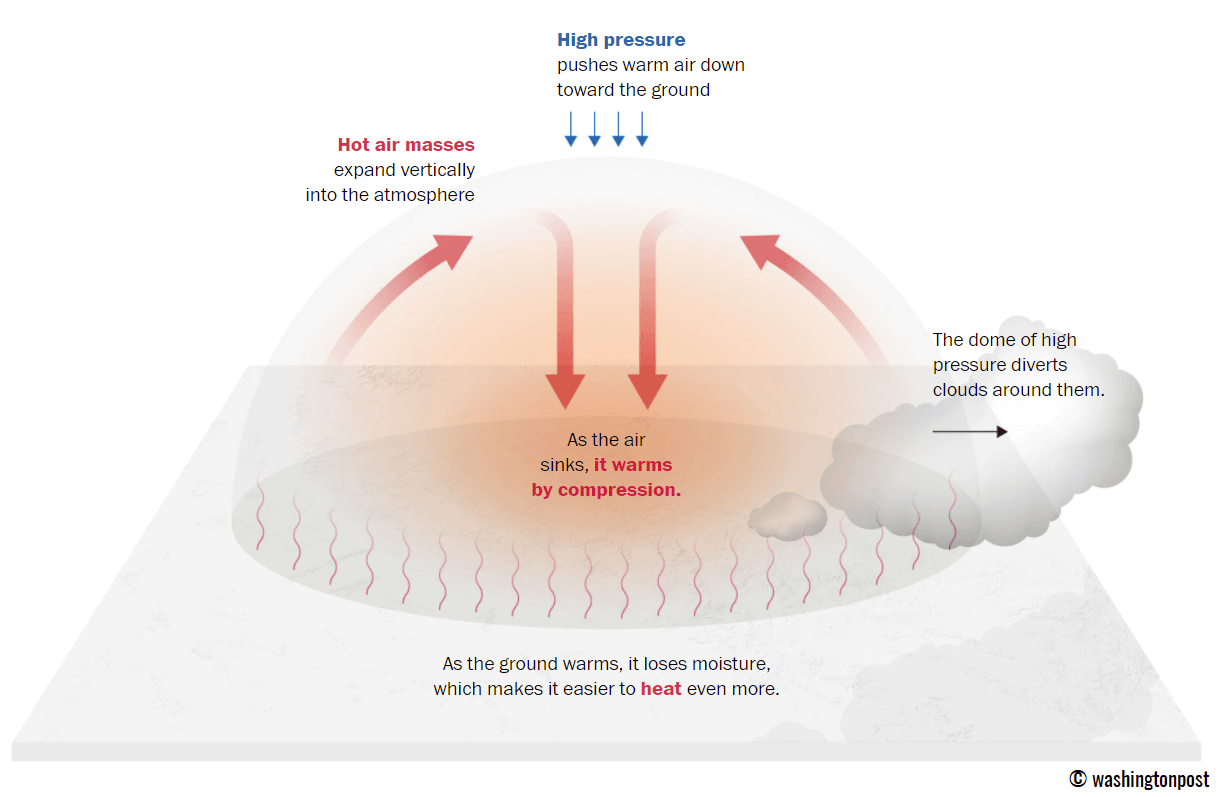
Within this block, a "Heat Dome" forms as an extensive upper-level ridge traps a massive pool of warm air at higher altitudes. This acts like a lid on a pot, forcing air layers to sink toward the ground through adiabatic compression. The sinking air warms significantly, creating a high-pressure zone at the surface that prevents cloud formation, maximizes solar radiation, and bakes the landscape below.
Quantitative Atmospheric Metrics
Meteorological data from the European Centre for Medium-Range Weather Forecasts (ECMWF) and the Global Forecast System (GFS) highlight the extreme nature of the tropospheric setup:
- 500 mbar Geopotential Heights: Projected to reach near-record levels for late July, reflecting an exceptionally deep, warm subtropical column.
- 850 mbar Level Temperatures: Models indicate readings pushing into the 24°C to 28°C range across a broad swath of Europe, with some projections touching nearly 30°C over the Mediterranean. Such levels are typically reserved for only the most historic and intense heatwaves on record.
- Surface Wind and Humidity: A persistent lack of strong gradient winds through mid-week transitions into dry, gusty northeastly flows by the weekend, driving relative humidity down below 20% in many areas and accelerating the risk of uncontrollable wildfires.
Official Responses and Public Safety Implications
Public Health Emergencies
Public health authorities across Europe are mobilizing for a severe crisis. Extreme heat is widely recognized by meteorologists and medical professionals as a "silent killer." The combination of daytime highs exceeding 40°C and nocturnal minimums lingering near 25°C denies human physiology the vital recovery window required to cool down.
Because centralized residential air conditioning remains relatively rare across large parts of Western and Central Europe, emergency rooms are bracing for an influx of patients suffering from heat exhaustion, dehydration, and life-threatening heat stroke. Medical experts warn that vulnerable populations—including the elderly, young children, individuals with pre-existing cardiovascular or respiratory conditions, and impoverished urban residents living in heat-trapping concrete and asbestos structures—face the highest risk of mortality.
Furthermore, outdoor laborers in agriculture and construction face extreme occupational hazards, with prolonged exposure dramatically elevating the incidence of heat-related illnesses and cardiovascular strain.
Ecological and Wildfire Crisis
The ecological toll is equally catastrophic. Extended drought conditions, combined with the current atmospheric dry spell, have turned forests in Spain, southern France, Italy, the Alpine region, and the Balkans into tinderboxes.
Authorities have issued maximum wildfire alerts. The combination of parched vegetation, single-digit relative humidity percentages, and strengthening weekend winds creates a volatile environment capable of sparking explosive, fast-spreading wildfires that threaten rural communities, critical infrastructure, and vital tourist destinations during the peak of the summer vacation season.
Outlook
As Europe navigates this historic fourth heatwave of 2026, meteorological agencies and civil protection units remain on high alert. The longevity of the blocking pattern—projected to persist for nearly two weeks—means that infrastructural strain on power grids (driven by surging cooling demands), agricultural output, and water resources will be severely tested.
Forecasters will continue to monitor the progression of the Heat Dome as it transitions eastward into August, with further updates expected regarding its potential persistence toward the middle of the month. Residents and travelers within the affected zones are strongly advised to follow local civil defense advisories, stay hydrated, and limit strenuous outdoor activities during peak afternoon hours.
