

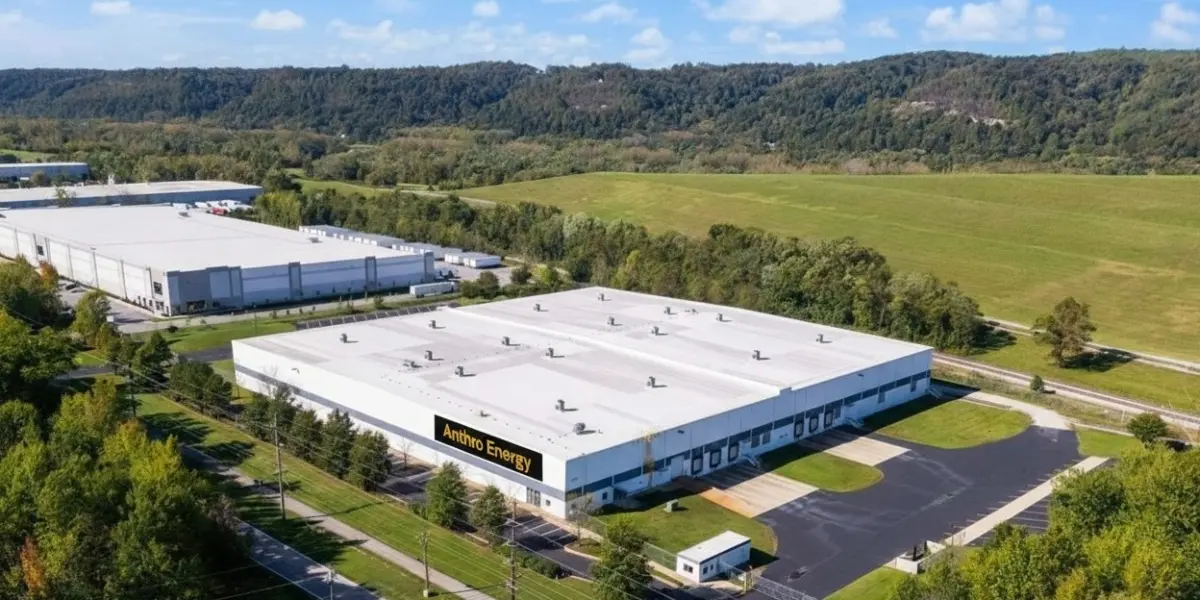
LOUISVILLE, Ky. — In a milestone event for the domestic clean energy supply chain, battery technology startup Anthro Energy has officially broken ground on a first-of-its-kind advanced electrolyte manufacturing facility in Louisville, Kentucky.
Representing a crucial step forward in America’s quest for energy independence, the plant is designed to scale up production to support an astonishing 25 gigawatt-hours (GWh) of lithium-ion batteries annually. Scheduled to open its doors in late 2027, the facility will focus on producing approximately 12,000 metric tons of specialized polymer electrolyte per year, transforming the landscape of energy storage, electric vehicles (EVs), and consumer electronics in the United States.
Main Facts: The Louisville Project at a Glance
The groundbreaking in Louisville is not merely a regional economic win; it represents a fundamental technological pivot in how the United States sources and manufactures components vital to the energy transition.
- Location: Louisville, Kentucky.
- Developer: Anthro Energy (a California-based battery startup).
- Target Opening Date: Late 2027.
- Production Capacity: ~12,000 metric tons of advanced polymer electrolyte annually, supporting up to 25 GWh of lithium-ion batteries.
- Financial Backing: Over $42 million in total funding, including a $24.9 million grant from the U.S. Department of Energy (DOE) and $18.4 million in federal tax credits via the Inflation Reduction Act’s 48C program.
- Job Creation: 110 permanent high-tech manufacturing and operational roles, alongside nearly 390 construction jobs.
- Supply Chain Compliance: Fully compliant with Foreign Entity of Concern (FEOC) restrictions, utilizing domestically sourced inputs from day one.
Chronology: From California Lab to Kentucky Groundbreaking
The journey toward the Louisville manufacturing plant highlights the rapid evolution of next-generation battery technology and the decisive role of federal policy in accelerating commercialization.

Early Research and Development
Anthro Energy originated as a spin-out rooted in advanced materials science, focusing on solving one of the most persistent bottlenecks in battery engineering: the electrolyte. While conventional lithium-ion batteries rely on flammable, volatile liquid electrolytes, Anthro’s founding team sought to design a safer, higher-performing alternative that could integrate seamlessly into existing manufacturing infrastructure. This gave rise to the company’s proprietary Proteus platform.
Securing Public and Private Backing
As the technology matured in lab settings, scaling production became the primary hurdle. Recognizing the strategic importance of securing a domestic supply chain for critical battery components, the federal government stepped in. Anthro secured a landmark $24.9 million award through the U.S. Department of Energy, authorized by the Bipartisan Infrastructure Law (officially known as the Infrastructure Investment and Jobs Act). This was supplemented by $18.4 million in investment tax credits through the 48C program, established under the Inflation Reduction Act.
Site Selection and Groundbreaking
After evaluating various industrial hubs across the country, Anthro selected Louisville, Kentucky, as the site for its flagship commercial facility. The location provides strategic logistical advantages, access to a skilled manufacturing workforce, and proximity to major US industrial and automotive corridors. With permits secured and funding finalized, executives, local officials, and community leaders gathered in August 2026 to officially break ground on the facility, setting the stage for a frantic construction schedule leading to a 2027 launch.
Supporting Data: The Scale and Impact of 25 GWh
To understand the weight of Anthro Energy’s new facility, one must examine the raw numbers behind battery manufacturing and energy storage.
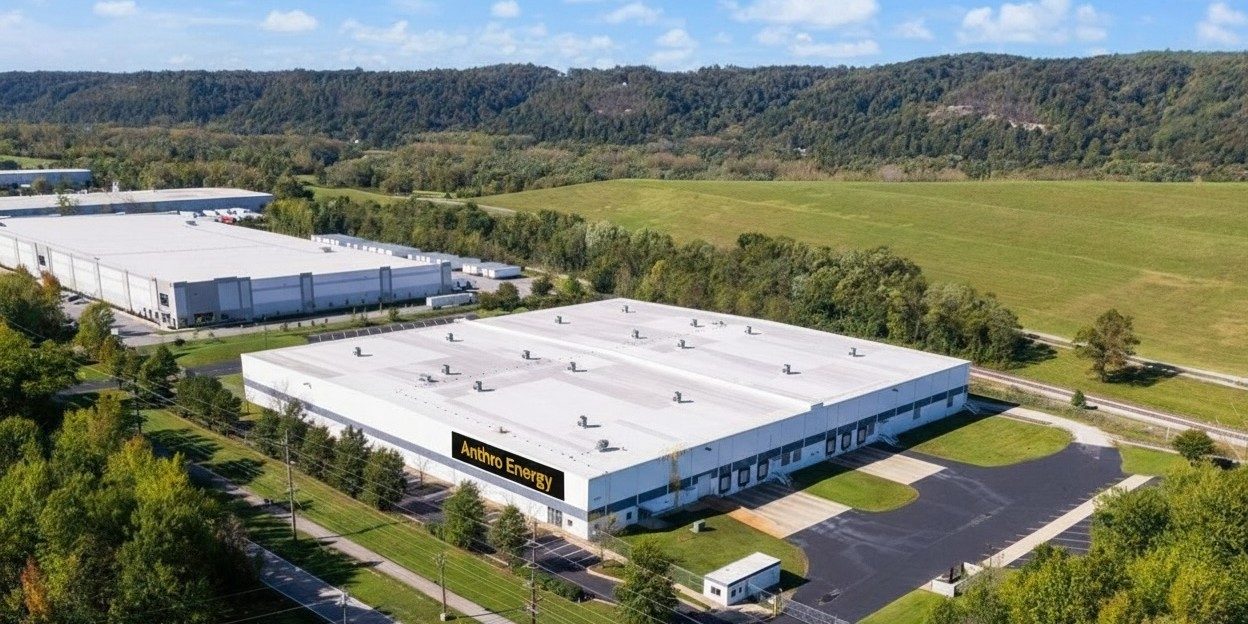
The projected annual output of 12,000 metric tons of polymer electrolyte will be capable of supporting 25 gigawatt-hours (GWh) of lithium-ion batteries. To put that figure into perspective:
- Grid-Scale Storage Equivalent: If entirely dedicated to stationary energy storage, the plant’s annual output could supply enough material for 6.25 gigawatts (GW) of four-hour storage projects every year. This capacity is vital for balancing intermittent renewable energy sources like wind and solar on the nation’s electrical grid.
- Multi-Sector Application: While grid storage represents a massive market, Anthro’s electrolyte will not be siloed into a single industry. The material is engineered for deployment across multiple high-demand sectors, including electric transportation (EVs), national defense systems, advanced robotics, and high-performance consumer electronics.
- Economic Footprint: The construction phase will inject immediate economic activity into Jefferson County and the surrounding region by employing nearly 390 construction workers. Once operational, the plant will sustain 110 permanent, high-paying technical and manufacturing jobs, contributing to Kentucky’s growing reputation as a central hub for the American automotive and battery sectors.
Official Responses and Strategic Vision
Leadership from Anthro Energy and federal stakeholders emphasized the national security and economic imperatives driving the project.
Bridging the Domestic Supply Gap
"As demand for advanced batteries continues to grow, rebuilding domestic manufacturing capacity for critical battery materials has become a national priority," said Anthro Energy CEO and co-founder David Mackanic during the groundbreaking ceremonies.
Mackanic underscored that the facility is designed to bypass overseas vulnerabilities. By manufacturing advanced electrolytes on U.S. soil using inputs entirely free of Foreign Entity of Concern (FEOC) restrictions, Anthro is offering domestic battery cell makers a secure, reliable alternative to foreign supply chains.
"By producing advanced electrolytes here in the United States, we’re helping build a more resilient domestic supply chain while enabling the next generation of safer, higher-performing batteries," Mackanic added.
Federal Alignment
The project represents a textbook success story for industrial policy enacted under the Biden administration. By pairing direct grants from the Bipartisan Infrastructure Law with the long-term tax incentives of the Inflation Reduction Act, federal lawmakers designed a funding ecosystem capable of coaxing venture-backed startups out of the laboratory and into heavy industrial manufacturing.
Energy analysts note that while much of the public discourse around US battery manufacturing has focused on gigafactories producing finished cells or cathode and anode materials, upstream components like advanced electrolytes have historically been major supply chain blind spots. Anthro’s facility directly addresses this vulnerability.
Implications: Why Advanced Electrolytes Matter
To appreciate why Anthro Energy’s proprietary Proteus platform is generating so much excitement within the energy sector, it is necessary to examine the fundamental chemistry of modern batteries.

The Role of the Electrolyte
Inside every lithium-ion battery, the electrolyte acts as the biological equivalent of a circulatory system. It is the liquid or chemical medium that enables lithium ions to travel back and forth between the positive electrode (cathode) and the negative electrode (anode) during the charge and discharge cycles. Without a stable and efficient electrolyte, the battery cannot function.
Safety: Combating Thermal Runaway
The vast majority of lithium-ion batteries currently deployed in electric vehicles and grid-scale storage facilities use flammable liquid electrolytes. When a battery fails, gets damaged, or experiences a short circuit, it can undergo thermal runaway—a catastrophic chain reaction where heat builds rapidly, potentially causing fires, smoke, or structural explosions.
Because grid-scale storage facilities pack thousands of individual battery cells closely together, containing thermal runaway is a paramount engineering challenge. Anthro’s Proteus platform changes this dynamic.
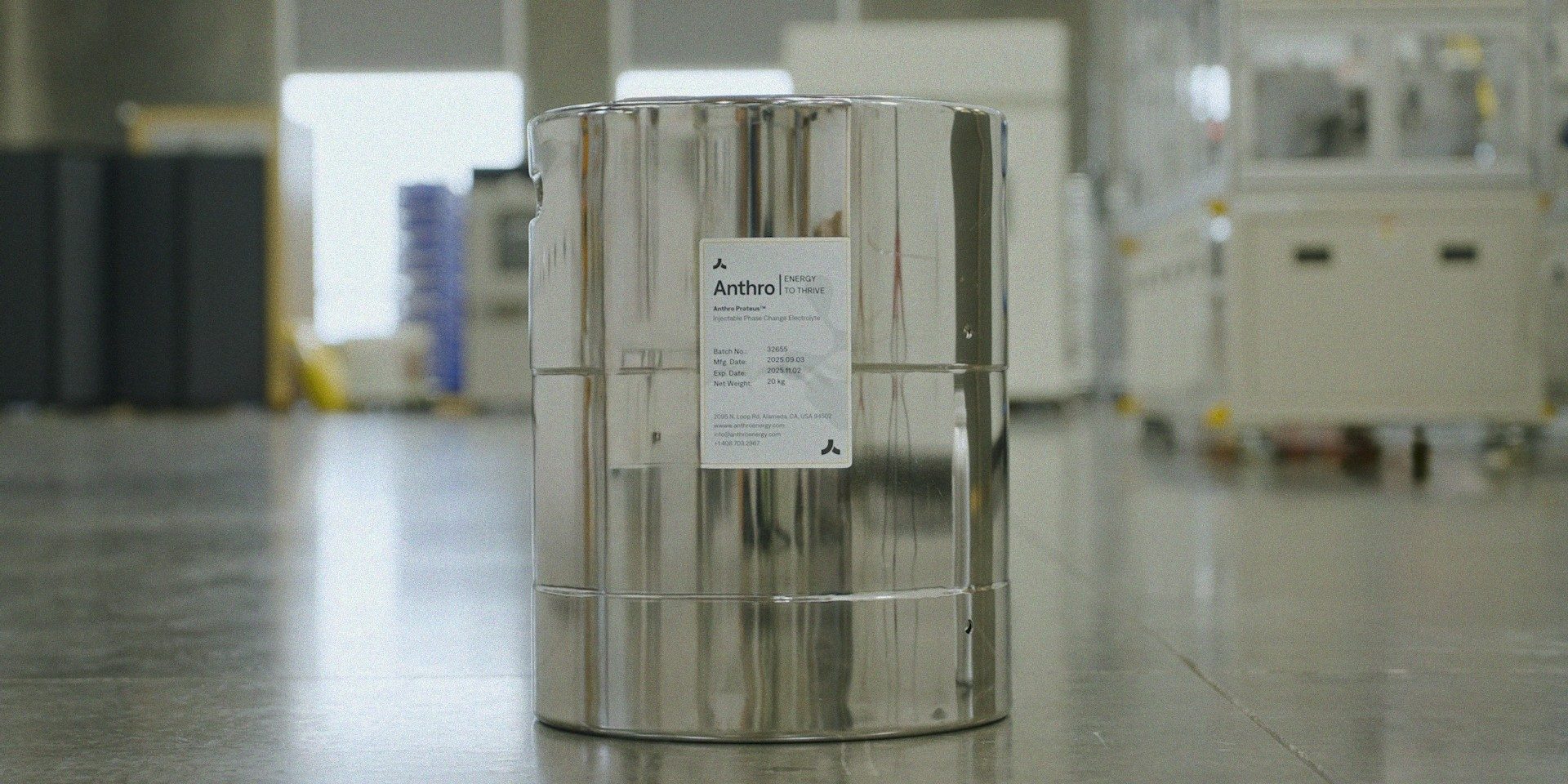
The material is injected into the battery cell as a liquid using standard, existing manufacturing equipment. Once inside, it undergoes a chemical reaction during the cell’s normal formation process, transforming into a solid or semi-solid polymer. This polymer matrix is significantly more resistant to fire, internal short circuits, and physical swelling. If a single cell encounters a failure, the solid-state characteristics of the electrolyte dramatically reduce the likelihood that the failure will propagate to neighboring cells. This safety upgrade is critical for battery installations deployed near residential neighborhoods, commercial centers, and vital infrastructure.

Performance and Energy Density
Beyond safety, Anthro claims its polymer electrolyte can meaningfully enhance energy density and cycle life. If these performance metrics translate successfully to commercial-scale manufacturing, it will allow battery makers to pack more electricity into a smaller footprint. Furthermore, it will extend the operational lifespan of batteries, allowing them to endure years of aggressive daily cycling without significant capacity degradation.
Zero Re-Tooling Barrier to Entry
One of the greatest economic barriers for battery startups introducing novel chemistries is the sheer cost of manufacturing. Many solid-state or advanced battery designs require entirely new factories built from scratch with custom, expensive machinery.
Anthro has bypassed this hurdle by engineering Proteus to be drop-in compatible. Battery manufacturers can utilize Anthro’s polymer electrolyte using their existing production equipment. This low barrier to adoption means cell makers can immediately upgrade their product safety and performance profiles without enduring multi-billion-dollar factory redesigns.
Looking Ahead to 2027
As construction crews break ground in Louisville, all eyes will be on Anthro Energy to see whether it can meet its aggressive timeline. If the startup successfully brings its 12,000-metric-ton facility online by late 2027, it will mark a watershed moment for American material science.

By securing a domestic, FEOC-compliant supply of advanced electrolytes, the United States moves one step closer to complete independence in the energy storage revolution—paving the way for safer, denser, and more resilient batteries powering everything from local electrical grids to the vehicles of tomorrow.
