

By Automotive Desk
October 13, 2026
Main Facts: The Long-Awaited Livestream
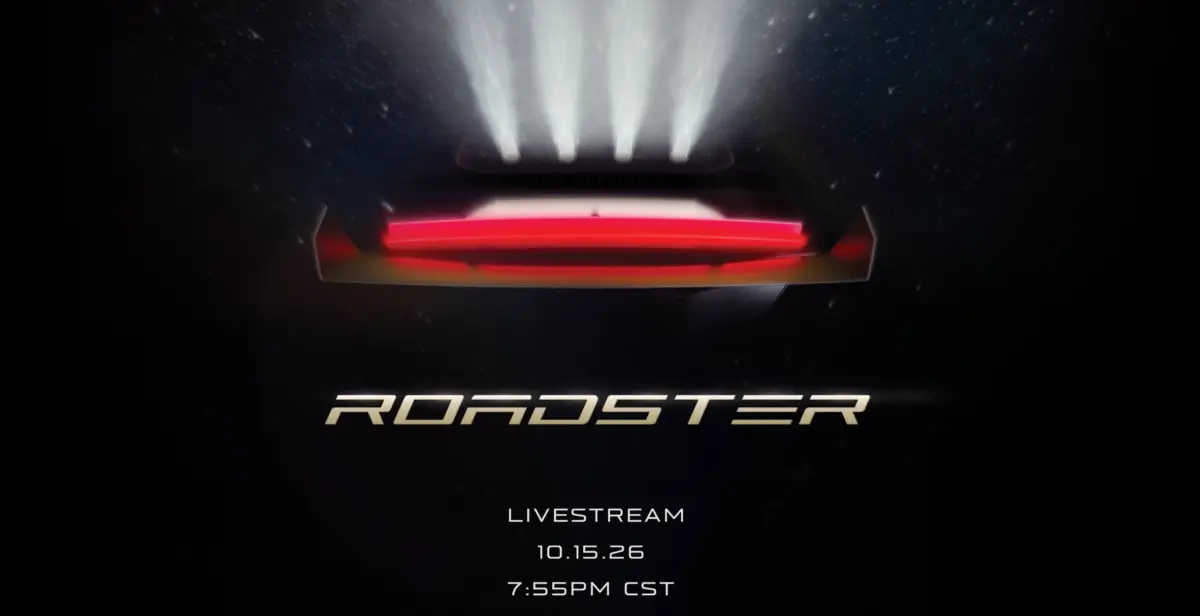
Tesla has officially announced that it will stream its highly anticipated next-generation Roadster event this Thursday, October 15, at 7:55 PM Central Time. The confirmation, shared via social media platform X, comes two weeks after the original outdoor showcase in Texas was abruptly postponed due to weather concerns.
However, beneath the veneer of corporate excitement lies a profound skepticism from consumers, industry analysts, and early reservation holders alike. What was initially promised in 2017 as a revolutionary, high-performance production electric vehicle (EV) has gradually morphed into what critics describe as an elaborate marketing stunt. Rather than showcasing a street-legal production model with concrete pricing and delivery timelines, Thursday’s event is widely expected to focus on a remote-controlled prototype utilizing SpaceX-derived cold gas thrusters designed to achieve short, localized hovers rather than traditional driving dynamics.
Chronology of Broken Promises: Every Roadster Delay So Far
To understand the weight of Thursday’s upcoming stream, one must look back at nearly a decade of missed deadlines, shifting goals, and elusive marketing dates. The saga of the second-generation Tesla Roadster is arguably one of the most drawn-out product development cycles in modern automotive history.
- November 2017: Tesla unveils the next-gen Roadster to a stunned audience, boasting a 0-60 mph time of 1.9 seconds, a top speed exceeding 250 mph, and a staggering 620-mile range. CEO Elon Musk boldly promises production will begin in 2020.
- 2020–2021: The 2020 target quietly comes and goes. Amid global supply chain disruptions and the prioritization of the Model Y and Cybertruck, Musk pushes the production timeline further out, citing engineering refinements.
- 2021–2024: Production timelines are repeatedly deferred. The Roadster becomes a background item in Tesla’s broader portfolio as the company scales manufacturing globally.
- Late 2025: Musk begins teasing a physical demonstration of the Roadster, initially penciled in for late 2025.
- April 1, 2026: The demo date is moved to April Fools’ Day—a date Musk himself admitted provided him with convenient "deniability."
- March–May 2026: The target slips again to late April, then "maybe in a month or so" during the Q1 earnings call, followed by tentative windows in late May and June.
- August 2026: The demonstration is pushed to August or later as engineers at SpaceX reportedly grapple with integrating complex cold gas thruster systems into the vehicle architecture. In mid-August, Musk teases a "flying" driverless demo for that month.
- October 1, 2026: The highly publicized outdoor event in Texas is scheduled. On September 28, just days prior, Tesla cancels the event, citing unfavorable weather conditions and noting that the performance "can only be held outdoors."
- October 15, 2026: The rescheduled date for the livestream is locked in, marking at least six major production slips and a staggering seven distinct unveil dates over the years.
Supporting Data and Technical Speculations: A Thruster Demo with a Car Attached
All available clues, patents, and executive teasers point toward a singular technological focal point for Thursday’s event: SpaceX cold gas thrusters.
Musk has repeatedly claimed that integrating these aerospace-derived thrusters will allow the Roadster to achieve a mind-boggling 0-60 mph acceleration time in under one second. However, practical execution has forced engineers to scale back expectations significantly. Rather than a sustained, fully realized "flying car" experience, Thursday’s demonstration is reportedly restricted to a short, remote-operated hover in an open field. Furthermore, industry insiders note that the demo vehicle is entirely remote-controlled and lacks street-legal certification.
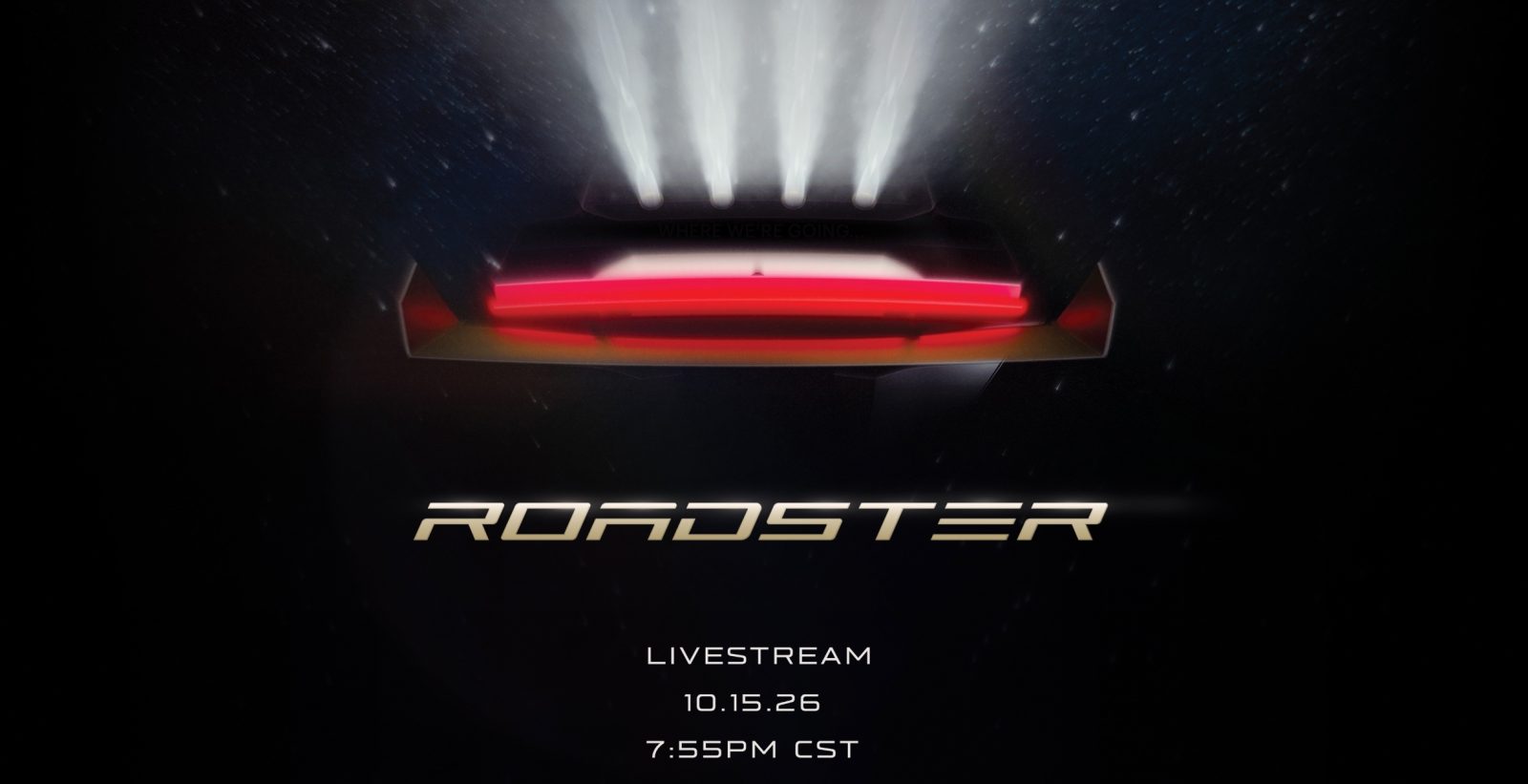
Compounding concerns over practicality are rumors and recent intellectual property filings. Tesla recently filed a patent for a "fan-car" system designed to create localized vacuums underneath the vehicle—a mechanic historically used in racing to dramatically increase downforce. This has sparked speculation that Tesla may attempt an upside-down driving stunt or a high-angle hover during the broadcast.
Additionally, leaks and teasers suggest the Roadster may adopt Tesla’s polarizing, angular "Cyber" design language. Critics have openly questioned this aesthetic shift, arguing that a sleek, organic sports car silhouette suited the Roadster far better than the industrial, stainless-steel-inspired geometry seen on the Cybertruck.
Official Responses and Corporate Stance
Tesla’s official communications regarding the Roadster have historically relied on a blend of hyperbole and future-focused optimism. By insisting that the showcase must be held outdoors, the company has tacitly admitted that Thursday’s event is an experiential spectacle rather than a traditional indoor press conference or factory rollout line tour.
Company representatives have defended the prolonged development cycle as a necessary byproduct of pushing technological boundaries. Integrating rocket science into an electric vehicle—quite literally, via SpaceX cold gas systems—is uncharted territory in the automotive sector.
However, Tesla has remained notably tight-lipped regarding the core concerns of early reservation holders:
- What is the final production-ready pricing?
- When will the first customer vehicles roll off the assembly line?
- How will the company honor the original 2017 reservation pricing and perks, such as the famous Founder’s Series allocations and referral program rewards?
Implications: The Disconnect Between Stunts and Consumer Expectations
For early adopters, reservation holders, and automotive journalists, Thursday’s livestream represents a profound philosophical divide within the EV community.

When consumers put down substantial deposits—ranging from $50,000 for standard reservations to the full $250,000 for the Founder’s Series—back in 2017, they were investing in a tangible, revolutionary automobile. They anticipated a four-seat, 620-mile range electric supercar that could comfortably drive on public roads while dominating the track.
Instead, the narrative has shifted toward aerospace gimmicks. A cold gas thruster system offers limited utility: it consumes finite propellant per tank, adds considerable weight, increases manufacturing complexity, and does nothing to improve everyday driving dynamics or long-distance touring. While a short hover in a Texas field will undoubtedly generate viral clips, trending hashtags, and millions of views on X, it does nothing to alleviate the frustrations of customers who have been waiting nearly a decade for a car they can actually drive.
What the Industry Actually Wants to See
True automotive enthusiasts are not looking for Hollywood-style stunts or remote-controlled physics demonstrations. The ideal announcements for Thursday would be fundamentally "boring" by Musk’s standards, yet entirely necessary for the brand’s credibility:
- A Concrete Production Vehicle: The final, finalized body design and interior layout ready for mass manufacturing.
- Transparent Pricing: Clear, binding numbers for what consumers will actually pay in 2026 and beyond.
- Firm Production Timelines: A verified start-date for manufacturing lines.
- Accountability for 2017 Reservations: A definitive roadmap addressing how nearly ten years of inflation, technological pivots, and structural delays impact those who trusted the brand from day one.
As Thursday evening approaches, the world will tune in to see what Tesla has engineered. Whether the event proves to be a jaw-dropping milestone in vehicle engineering or merely another fleeting distraction remains to be seen. But for the thousands still waiting for delivery, the ultimate metric of success won’t be how high the car can hover—it will be when they can finally get behind the wheel.
