

Published: August 19, 2026
Source: Construction Dive (Reporting by Sebastian Obando)
Main Facts
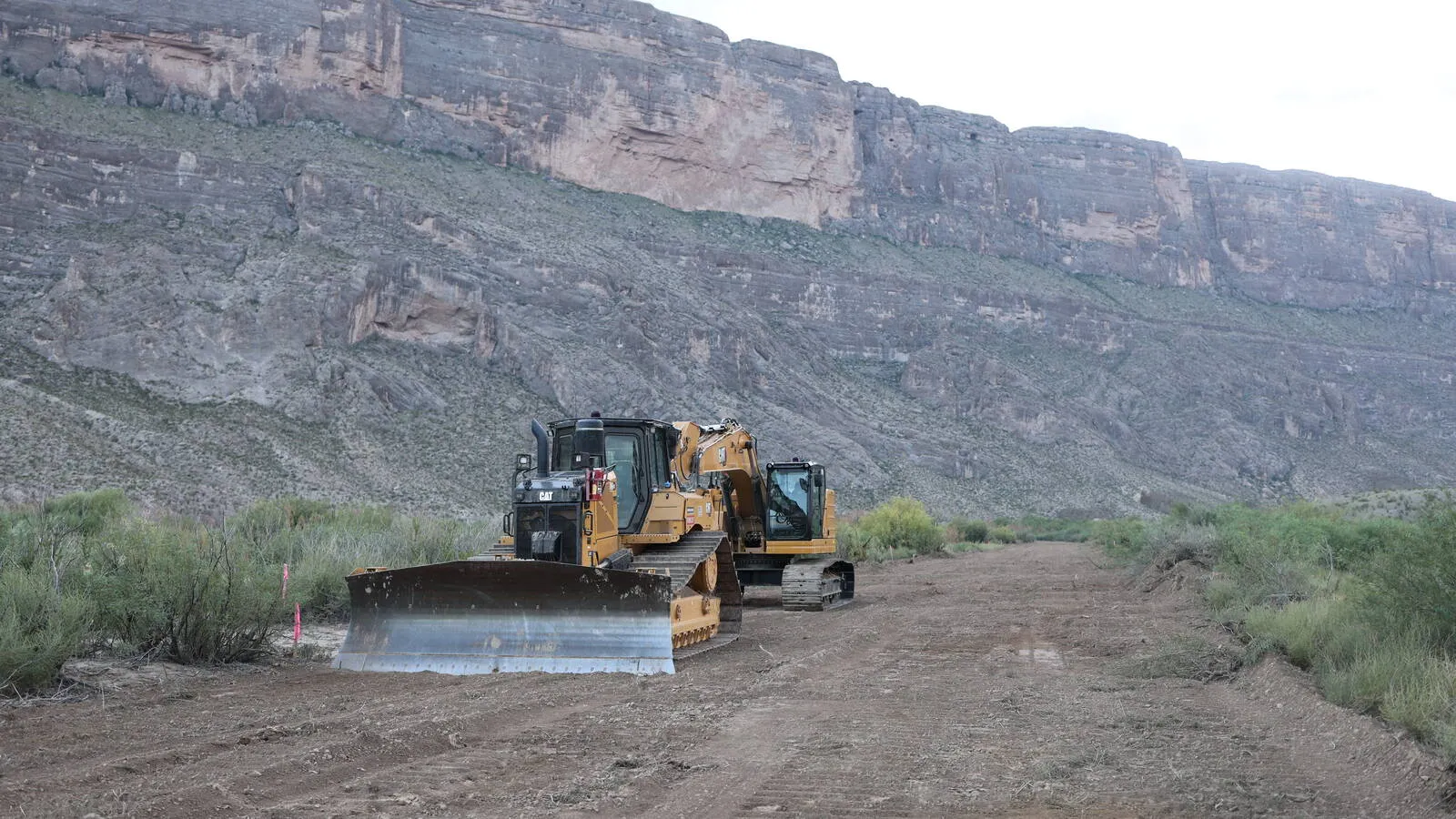
Customs and Border Protection (CBP) has officially paused all border infrastructure and survey activity within the boundaries of Big Bend National Park following intense national scrutiny and forceful intervention by conservation groups. The temporary halt comes in response to mounting outrage from the National Parks Conservation Association (NPCA) and environmental advocates, who claim that federal contractors have already severely scarred pristine desert ecosystems using heavy construction machinery.
While federal agencies maintain that the ongoing operations are strictly limited to survey work, access road improvements, and the deployment of non-intrusive surveillance technology—rather than the construction of a physical barrier—critics argue the damage has already been done. The controversy centers around five planned border security infrastructure projects spanning a staggering 517 miles across the remote Texas region. Environmental watchdogs claim the administration of President Donald Trump has waived crucial foundational environmental laws to fast-track these initiatives, bypassing standard reviews designed to protect fragile public lands.
The debate highlights a broader tension between national security mandates aimed at achieving zero illegal border crossings and the legal mandates governing the preservation of America’s most treasured natural landscapes. As political leaders step in to temporarily freeze the projects pending site inspections, the incident has ignited a nationwide debate over the ecological cost of border enforcement in remote wilderness areas.
Chronology of Events
The unfolding situation in Big Bend National Park has escalated rapidly over the summer of 2026, shifting from quiet preliminary engineering assessments to a high-profile national controversy.
- Early Summer 2026: Federal contractors mobilize heavy machinery, including bulldozers and grading equipment, into the remote expanses of Big Bend National Park. Operations are concentrated near ecologically sensitive zones such as Mariscal Mountain and the peripheries of Santa Elena Canyon.
- Early August 2026: Visitors, park enthusiasts, and local wildlife advocates capture video footage of heavy equipment carving paths through untouched desert terrain. The footage is quickly shared across social media platforms, sparking initial alarm among conservationists.
- Mid-August 2026: The National Parks Conservation Association releases official statements and visual evidence detailing what it describes as widespread destruction of wild landscapes. The NPCA formally demands a permanent halt to all border-related construction and infrastructure development in the park.
- Week of August 12, 2026: CBP issues an initial public statement defending its presence in the region. The agency clarifies that its scope of work is limited to evaluating technology options, building a single new access road, upgrading existing routes, and installing strategic vehicle barriers—explicitly denying plans to erect a 30-foot wall or stadium-style lighting.
- August 19, 2026: Facing mounting public pressure, escalating media scrutiny, and direct appeals from environmental organizations, federal authorities announce a temporary pause on all activities. Officials, including key figures addressing the situation on social media platforms like X, confirm that work will remain frozen until an on-site evaluation can be conducted.
Supporting Data and Environmental Impact
The geographic and ecological footprint of the disputed projects has become a central point of contention between federal security planners and environmental advocates.
The Scale of the Project
According to data provided to Construction Dive by the NPCA, the current operational push is part of a broader framework encompassing five distinct border security infrastructure projects. These initiatives collectively span 517 miles of the Texas borderlands, a territory characterized by extreme geographical isolation and fragile biological communities.
Landscape and Habitat Destruction
Despite CBP’s assertions that physical construction has not begun, independent observers and park advocates maintain that the heavy equipment utilized for preliminary survey and design work has inflicted irreparable harm. Erika Pelletier, Texas associate director for the NPCA, emphasized that the region’s natural topography already serves as an insurmountable deterrent.
"Big Bend does not need heavy border infrastructure," Pelletier stated. "Harsh desert conditions and unforgiving mountain terrain already form natural barriers that discourage unsanctioned border crossings at Big Bend. Crossing the border in or near Big Bend National Park is incredibly dangerous."
The deployment of bulldozers has reportedly torn through miles of priceless wild landscape. Environmental scientists note that the Chihuahuan Desert ecosystem within Big Bend, while appearing stark and resilient, relies on delicate soil crusts and rare microhabitats that can take decades—or even centuries—to recover once disrupted by heavy machinery. Wildlife species dependent on these corridors, including rare migratory birds, native mammals, and specialized desert flora, face immediate habitat fragmentation.
Official Responses and Conflicting Narratives
The dispute over Big Bend has produced starkly contrasting narratives from federal law enforcement agencies and environmental advocacy groups, each interpreting the on-the-ground reality through a fundamentally different lens.
The Customs and Border Protection Perspective
In formal statements sent to Construction Dive, CBP officials sought to calm public fears regarding the construction of a massive border wall through the national park and adjacent protected zones.

"What people have been seeing over the past few weeks in Big Bend National Park is survey and design work — not construction of a physical wall through the park," the agency stated.
CBP reiterated that its operational goals align with national directives to achieve zero illegal border crossings, but insisted that these objectives are being pursued through measured, low-impact means. According to the agency, the current framework includes:
- Improving select existing roads to facilitate rapid response times for border patrol agents.
- Constructing a single new access road where topographical necessity demands it.
- Placing strategic vehicle barriers to prevent unauthorized vehicular transit.
- Installing advanced detection technology to monitor remote sectors without altering the physical landscape.
Furthermore, CBP explicitly stated: "To be clear, CBP is not planning to construct a 30-foot-high barrier in Big Bend National Park, Big Bend Ranch State Park or the Black Gap Wildlife Management area."
The National Parks Conservation Association Perspective
Environmental groups reject the distinction between "survey work" and "construction" when heavy earthmoving equipment is involved. Tiernan Sittenfeld, president and CEO of the NPCA, issued a scathing critique of the federal contractors’ actions.
"Unfortunately, the federal contractors’ bulldozers have already inflicted tremendous damage to one of America’s most iconic national parks," Sittenfeld said in a released statement. "Their heavy equipment has torn through miles of priceless wild landscape, wreaking havoc on sensitive wildlife and irreplaceable habitat."
The NPCA further contends that the administration has utilized executive powers to bypass foundational environmental protection statutes, such as the National Environmental Policy Act (NEPA), which would normally mandate comprehensive environmental impact statements and public comment periods prior to undertaking such invasive projects on federal public lands.

Implications for Public Lands and Border Security
The temporary pause of border work in Big Bend National Park carries profound implications for the future management of federal public lands, the execution of national security policy, and the balance of power between federal agencies and environmental stewards.
Precedent for Protected Lands
Big Bend National Park is internationally recognized not only as a crown jewel of the United States National Park System but also as an International Biosphere Reserve, shared across the Rio Grande with protected areas in Mexico. The introduction of heavy machinery—even under the guise of preliminary surveys—threatens to undermine decades of bilateral conservation efforts and scientific research.
Conservationists worry that if heavy-handed infrastructure projects can bypass traditional environmental reviews in a flagship national park, other protected wilderness areas across the American Southwest remain dangerously vulnerable to similar interventions. The precedent set by the Big Bend dispute will likely influence how future border security enhancements are balanced against statutory conservation requirements.
Operational Challenges in Remote Terrain
From a tactical standpoint, the controversy underscores the ongoing logistical friction between securing remote border sectors and preserving their natural integrity. Border enforcement agencies have long argued that technological force multipliers, access roads, and surveillance infrastructure are vital to monitoring porous borders in areas where foot patrols are impractical due to extreme heat, rugged canyons, and vast distances.
Conversely, critics and local wilderness experts argue that the inherent dangers of the Chihuahuan Desert provide a natural security buffer that renders heavy infrastructure redundant. By forcing a temporary halt—marked by political figures confirming that activity will remain frozen pending direct on-site investigations—the federal government faces mounting pressure to establish clear, transparent protocols that reconcile border enforcement imperatives with the absolute mandate to protect national parklands for future generations.
As federal officials prepare to conduct their scheduled on-site inspections in Big Bend, the construction industry, environmental advocates, and policymakers alike will be watching closely to see whether the temporary pause evolves into a permanent cancellation of heavy infrastructure development in America’s wild sanctuaries.
