

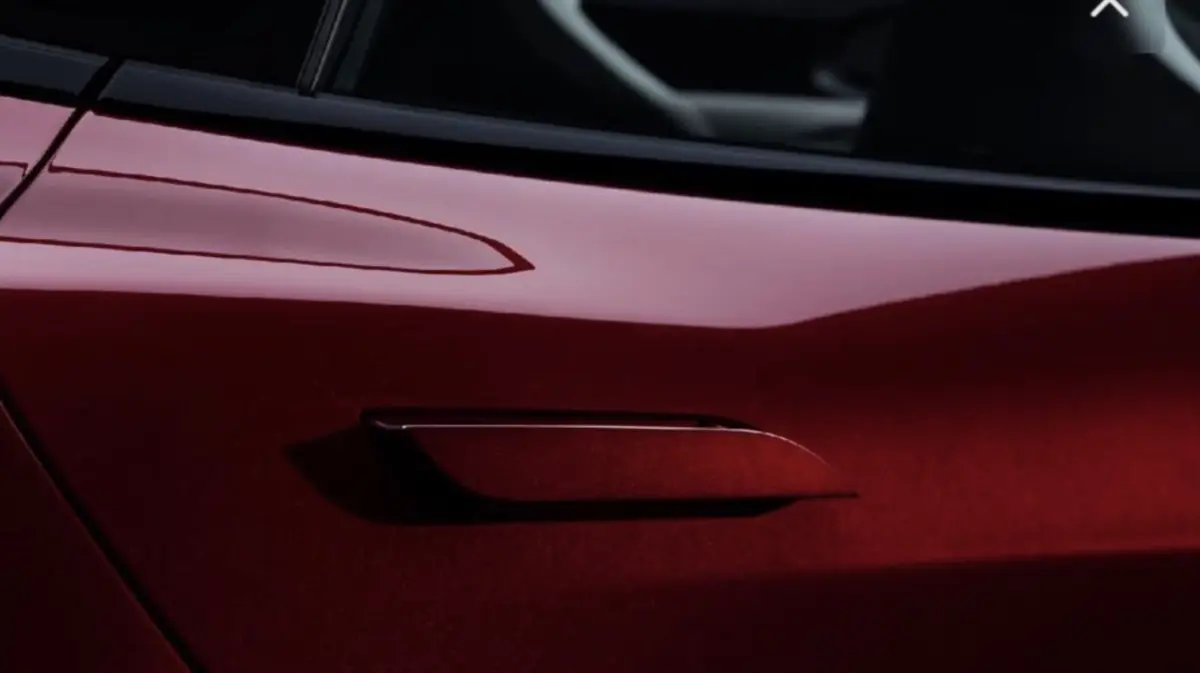
BEIJING — In what marks the largest safety recall in Tesla’s history within the Chinese market, the electric vehicle pioneer has been compelled to recall nearly three million vehicles. The sweeping action, orchestrated in cooperation with China’s State Administration for Market Regulation (SAMR), focuses on a critical safety feature: the internal emergency mechanical door release.
While the aesthetic of flush exterior door handles has long been a hallmark of modern electric vehicle design, regulators across the globe are increasingly turning their attention to what happens inside the cabin when an EV loses power during a catastrophic collision. The joint safety action in China underscores a growing international consensus that minimalist automotive design must not compromise emergency egress.
Main Facts
The colossal recall blankets nearly every Tesla vehicle currently operating on Chinese roads, encompassing a staggering 2,975,910 units. According to filings submitted to SAMR, the recall campaign affects a broad spectrum of domestically produced and imported models:
- Domestically Built Model 3: 973,156 units
- Domestically Built Model Y: 1,956,713 units
- Imported Model 3: 35,590 units
- Imported Model X: 8,328 units
- Imported Model S: 2,123 units
The Core Safety Issue
The heart of the regulatory concern does not lie with the sleek, aerodynamic exterior door handles popularized by Tesla and subsequently copied by dozens of other automakers. Instead, the focus is squarely on the internal emergency mechanical release—the manual backup mechanism intended to allow vehicle occupants to push open a door if the vehicle completely loses electrical power.

According to SAMR investigators, these manual releases are difficult to locate and operate rapidly under high-stress conditions because their coloring often blends seamlessly into the surrounding interior door trim. In a severe collision that disables the vehicle’s low-voltage electrical architecture, panicked or injured occupants could struggle to find and activate the manual latch, potentially trapping them inside.
The Remedy
Rather than a comprehensive mechanical overhaul or a hardware redesign of the door latches, Tesla’s approved remedy relies on a dual approach. The automaker will deploy warning labels to make the manual releases more visually distinct and push an over-the-air (OTA) software update designed to optimize how the side windows drop during an emergency, thereby facilitating easier egress. The official recall implementation is scheduled to take effect on September 25, 2026.
Chronology of Events
The road to this historic recall has been paved with escalating regulatory scrutiny, design trends, and mounting safety concerns spanning multiple years.
- Early EV Design Evolution (2012–2020): Tesla introduces flush, electronically actuated door handles with the Model S, setting an industry design trend aimed at maximizing aerodynamic efficiency and extending vehicle range. Other global and domestic Chinese automakers rapidly adopt similar minimalist styles.
- Late 2025 – Regulatory Crackdowns Begin: Chinese regulators initiate broad crackdowns on various extreme EV design trends, scrutinizing everything from dangerously high acceleration metrics to flush door handles that obscure emergency access.
- November 2025: In the United States, the National Highway Traffic Safety Administration (NHTSA) significantly widens its ongoing probe into Tesla door handles following a series of fatal accidents where victims were allegedly trapped inside disabled vehicles.
- January 2026: US lawmakers introduce the "SAFE Exit Act," specifically targeting hidden and electronically dependent door handles and attributing roughly 15 deaths to entrapment issues linked to the design.
- February 2026: China finalizes a comprehensive, highly restrictive ban on Tesla-style hidden door handles for newly approved vehicles, signaling zero tolerance for designs that complicate emergency exits.
- July 2026: While denying a specific defect petition regarding Tesla’s door releases, NHTSA takes the proactive step of opening a broader rulemaking process to fundamentally rewrite federal safety standards regarding emergency egress.
- Late 2026 (Recall Announcement): SAMR officially issues the multi-million-vehicle recall mandate. On the exact same day, eight major Chinese automakers file coordinated recalls for identical interior release concerns, marking a watershed moment for automotive safety policy in Asia.
Supporting Data and Industry Impact
Tesla’s nearly three-million-vehicle recall does not exist in a vacuum. It represents the apex of a broader industry reckoning regarding form versus function in the era of software-defined vehicles.

On the day of Tesla’s filing, eight other Chinese automakers filed matching safety recalls with SAMR addressing identical interior-release vulnerabilities. The roster of participating manufacturers reads as a who’s who of modern Chinese EV dominance:
- Xiaomi
- Leapmotor
- Xpeng
- Geely
- Chery
- Dongfeng
- BAIC BluePark
- FAW
While these domestic brands also recalled substantial fleets, Tesla’s footprint of nearly 3 million cars completely dwarfs the rest, highlighting its massive market penetration in China.
Furthermore, data analytics from regulatory bodies indicate that electronic latch systems—while shaving fractions of a drag coefficient and adding a futuristic aesthetic—introduce human-factors failure points. In emergency scenarios, human cognitive load spikes, and cognitive processing time slows down. If a driver or passenger must search for an unlit, camouflaged mechanical pull-tab while smoke or water enters a cabin, precious seconds are lost.
Official Responses and Regulatory Posture
The global regulatory posture toward electronic door mechanisms has shifted dramatically from passive observation to aggressive intervention.

China’s Stance
SAMR has taken an uncompromising approach. By finalizing its ban on hidden exterior handles earlier this year and enforcing this massive retroactive software-and-label recall, Beijing has signaled that passenger safety and first-responder accessibility take absolute precedence over aerodynamic styling. The coordinated filing of nine total automakers suggests that Chinese regulators orchestrated a unified industry-wide remediation to eliminate the design flaw across both domestic and foreign nameplates simultaneously.
The United States Response
Pressure is simultaneously mounting across the Pacific. In the United States, NHTSA’s decision to open formal rulemaking regarding door releases points toward potential federal mandates that could force automakers to standardize mechanical backups. Congressional pressure, spearheaded by proponents of the SAFE Exit Act, continues to keep the spotlight on the automaker.
Tesla, for its part, has consistently defended the structural integrity and safety compliance of its engineering, maintaining that its vehicles meet or exceed all regional regulatory standards at the time of their manufacture. However, compliance with local market regulators leaves the company with little choice but to adapt quickly via software updates and physical labeling to maintain access to its most critical international market.
Broader Implications for the Automotive Industry
The ripple effects of this recall will likely reshape vehicle design for the next decade.

1. The End of the "Hidden" Era?
For years, automotive exterior and interior designers chased ultra-clean lines, eliminating physical crevices, traditional pull-handles, and mechanical linkages in favor of capacitive touch sensors, pop-out mechanisms, and hidden buttons. The events in China and the US suggest that this era of uninhibited minimalism is coming to a close. Automakers may soon be legally required to feature high-visibility, instantly recognizable mechanical releases that require zero instruction to operate.
2. Software vs. Hardware Remedies
Tesla’s chosen fix—deploying a software update to alter window-dropping behaviors and applying warning stickers—highlights the ongoing debate over whether software can truly solve physical safety oversights. While regulators in China have accepted this remedy for the current fleet, consumer safety advocates argue that true safety requires intuitive physical redesigns rather than aftermarket labels that drivers may ignore or fail to notice.
3. Global Compliance Complexities
As automotive software and hardware architectures become increasingly globalized, regulatory divergences pose massive logistical challenges. Automakers can no longer rely on localized workarounds; a safety crackdown in one major market (such as China or the US) immediately triggers intense cross-border scrutiny, forcing proactive preemptive measures worldwide.
As the September 2026 enforcement date for Tesla’s Chinese recall approaches, all eyes will be on how effectively the over-the-air updates and warning labels perform—and whether Western regulators will mandate similar or even stricter physical interventions for vehicles on North American and European roadways.
