

By Health & Wellness Tech Desk
For over a decade, the consumer wearable landscape has been dominated by a singular, individualistic philosophy. Fitness trackers, smartwatches, and smart rings are engineered to optimize your personal sleep score, count your daily steps, and alert you to anomalies in your resting heart rate. While these devices have successfully empowered millions of users to take charge of their own physical well-being, they have historically operated in isolated silos. If a parent wanted to keep tabs on their aging father’s declining activity levels, or a busy professional wanted to coordinate complex medication schedules for a child while managing their own chronic illness, current technology offered little cohesive support.
Enter Luffu. Launched in February by Fitbit co-founders James Park and Eric Friedman, the AI-driven health platform is fundamentally redefining the scope of digital health. Rather than focusing solely on the individual user, Luffu is building an interconnected ecosystem designed to capture, organize, and streamline health and safety data across entire households.
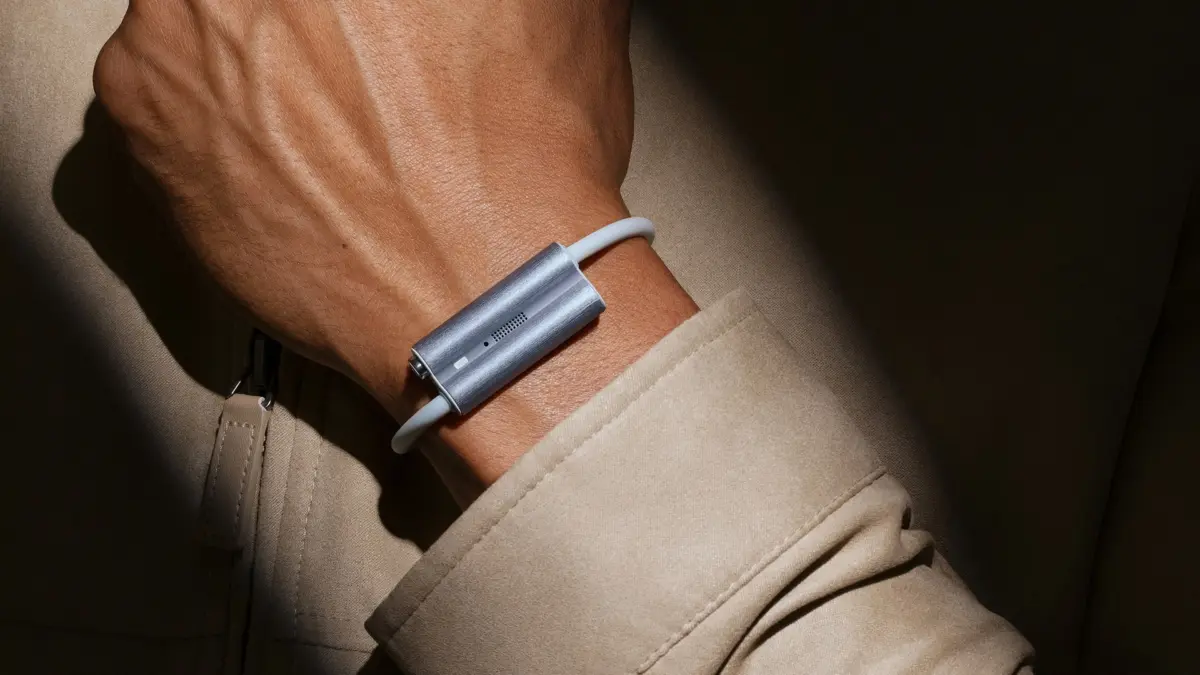
Following the initial rollout of its public beta app—which allows family members to manually log everything from diet and vaccine records to doctor appointments—Luffu announced a major hardware expansion. The company has officially unveiled the Luffu Link, a screenless, jewelry-like wearable designed to bridge the gap between individual health tracking and collaborative family care.

Main Facts: What Is the Luffu Ecosystem?
The Luffu platform is constructed around a three-pronged ecosystem encompassing the phone, the wrist, and the home. At its core, the system seeks to alleviate the invisible labor of caregiving through artificial intelligence.
The newly announced Luffu Link is a minimalist, screenless wearable that operates independently via built-in 4G LTE connectivity. This means users do not need to carry a smartphone to access its primary emergency and communication features. Constructed with a slim metal core and a comfortable silicone band, the device features a single, multi-functional physical button:
- Voice Logging: Pressing and holding the button allows users to verbally log meals, medications, moods, symptoms, reminders, and daily notes on the go.
- Family Check-Ins: Pressing the button twice instantly sends a check-in alert or location update to designated family members via built-in GPS.
- Biometric Tracking: In addition to safety features, the Luffu Link captures comprehensive health data, including sleep metrics, daily activity, resting heart rate, heart rate variability (HRV), calories burned, and breathing rate.
Once data is captured by the wearable or logged through the mobile app, Luffu’s AI algorithms step in. The system analyzes the incoming information to establish baseline patterns, automatically organizing records and alerting users to significant changes or anomalies. Crucially, the platform isn’t just for humans—users can also establish profiles for household pets to track veterinary visits, meal schedules, and medication regimens.
According to the company, privacy and consent remain paramount: families retain total control over what information is shared, and with whom, within their established network.

Chronology: The Luffu Timeline
Luffu’s development trajectory reflects a rapid, calculated expansion from software beta testing to a fully integrated hardware and software ecosystem.
- February: Fitbit co-founders James Park and Eric Friedman officially launch Luffu as a health-tracking application in public beta, allowing families to manually aggregate medical data, dietary habits, and schedules.
- Present Day (Tuesday Announcement): Luffu reveals its inaugural hardware product, the Luffu Link. US consumers aged 13 and older can now preorder the device on the official Luffu website.
- Later This Year: The Luffu mobile app is slated for broader US availability following the conclusion of its public beta phase. Additionally, the company plans to officially announce and unveil its dedicated intelligent home device, aimed at multi-generational and cross-household care coordination.
- Early 2027: The Luffu Link is officially projected to begin shipping to early-bird backers and pre-order customers.
Supporting Data: Pricing, Specs, and Subscriptions
Building a comprehensive, multi-user health ecosystem requires a robust hardware and subscription infrastructure. Luffu has outlined clear pricing tiers and technical specifications for its initial hardware launch.
Luffu Link Specifications and Preorder Pricing
- Preorder Price: $250 (Available now for US customers on the Luffu website; price will increase to $300 once shipping commences in early 2027).
- Included in Box: Beta access to the Luffu app, a quick charger, and both small and large silicone bands.
- Color Options: Halo Gold, Sterling Blue, and Onyx Black.
- Durability & Battery: Water-resistant up to 50 meters (5 ATM); battery life spans up to five days on a single charge; full charge achieved in approximately 1 hour.
- Compatibility: Requires Android 14 or later, or iOS 18 or later.
- Connectivity: Built-in 4G LTE data service is included directly with the device, eliminating the need to set up a separate cellular carrier plan.
Family Subscription Plans
While the LTE data is bundled into the device, utilizing the Luffu platform requires a family subscription plan (sold separately and rolling out later this year):
- Standard Family Plan: Covers up to 4 people for $20 per month or $200 per year.
- Extended Family Plan: Covers up to 8 people for $30 per month.
Official Responses: Shifting the Narrative on Target Audiences
When first viewing a screenless, LTE-enabled safety band with GPS tracking, industry analysts and consumers frequently draw immediate comparisons to medical alert pendants marketed toward aging seniors. However, Luffu leadership is pushing back firmly against that narrow categorization.

In statements provided to media outlets, a Luffu company representative emphasized that the Luffu Link was intentionally engineered to serve a much broader demographic spectrum:
"That includes adults [ages] 35 to 60 managing kids, aging parents, pets and their own health; independent, active adults 65+ who want discreet health and safety support without a traditional emergency pendant; and younger or middle-aged adults who may start with health tracking or voice logging and also benefit from safety, location and shared care features."
Co-founders James Park and Eric Friedman noted that the entire platform was born out of personal necessity. Drawing from their own lived experiences as caregivers managing complex family health needs, Park and Friedman set out to solve a glaring market inefficiency: the absence of a unified digital space where families can effortlessly monitor both the physical wellness and day-to-day safety of their loved ones.
Implications: What Luffu Means for the Future of Digital Health
The launch of Luffu and the Luffu Link signals a potential paradigm shift in consumer health technology. For years, the digital health market has operated under the assumption that wellness is an isolated pursuit. By treating health as a communal, interconnected network, Luffu addresses several critical societal trends:

1. Easing the Burden of the "Sandwich Generation"
Millions of adults aged 35 to 60 find themselves caught in the "sandwich generation"—simultaneously raising children, managing their own careers, and overseeing the medical care of aging parents. The cognitive load of coordinating doctor appointments, tracking fluctuating medication dosages, and monitoring chronic conditions across multiple generations is staggering. Luffu’s AI-driven platform acts as an automated administrative assistant, consolidating fragmented health records into a single interface.
2. The Evolution of Discreet Safety Wearables
Traditional medical alert systems often carry a social stigma, featuring bulky panic buttons that elderly users may feel reluctant to wear in public. By designing the Luffu Link to look and feel like modern, jewelry-like fitness trackers—complete with sleek metallic finishes and versatile color options—the company removes the stigma associated with safety pendants while maintaining critical emergency features like GPS tracking and one-touch check-ins.
3. Expanding the Boundaries of AI in Healthcare
Consumer AI has rapidly moved beyond simple chatbots into proactive health monitoring. By deploying AI to learn individual baseline patterns from biometric data (such as HRV, resting heart rate, and sleep quality) and correlating them with voice-logged symptoms, Luffu’s software can theoretically flag subtle health regressions before they escalate into medical emergencies. Furthermore, extending this tracking capability to household pets underscores a holistic view of domestic well-being, recognizing that the health of animal companions directly impacts the emotional and physical health of their owners.
As Luffu prepares for its broader app release and the introduction of its domestic home device later this year, the tech industry will be watching closely. If Park and Friedman can successfully translate their past success with Fitbit into the realm of collective family care, Luffu may well establish the blueprint for the next generation of digital health.
