

By Emma Roth
Enriched & Expanded Edition
Main Facts: The Next Evolution in Rugged Wearables
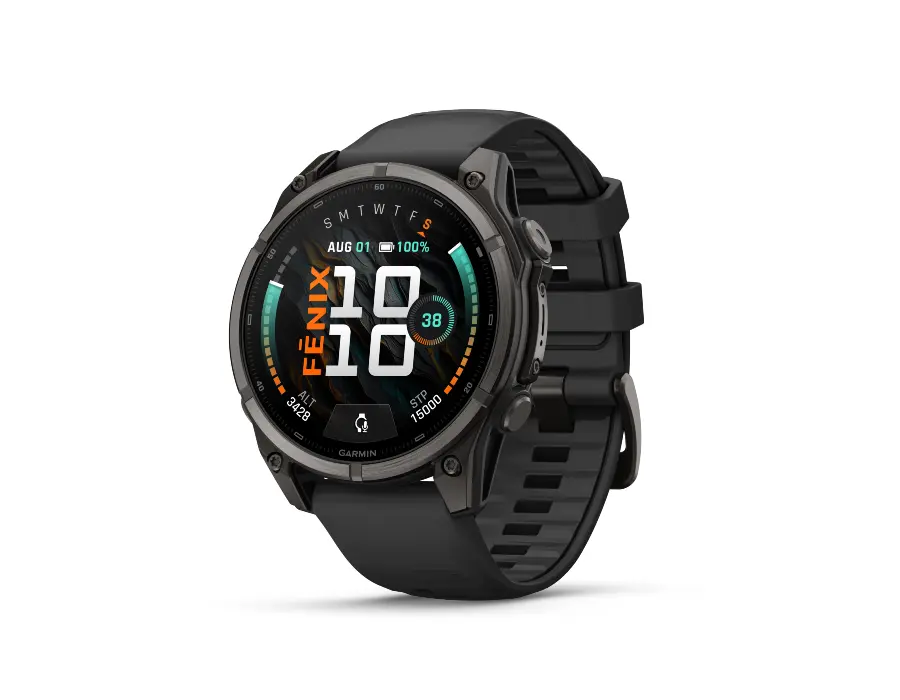
Garmin has officially taken the wraps off its highly anticipated flagship performance smartwatch lineup, introducing the rugged and feature-packed Fenix 9 and Fenix 9 Pro series. Building upon the legacy of its industry-leading predecessors, the new lineup brings massive hardware overhauls, striking visual upgrades, and a suite of advanced software capabilities tailored for endurance athletes, outdoor adventurers, and tech enthusiasts alike.
At the vanguard of the release is the base Fenix 9 model, which starts at $999.99 for the compact 43mm case option. Most notably, the standard Fenix 9 now trades legacy display technology for a vibrant, high-definition OLED display capable of outputting a staggering 3,000 nits of peak brightness. This makes the screen twice as bright as the previous generation, ensuring optimal legibility even under direct, blinding midday sunlight.
Under the hood, Garmin has significantly boosted the performance architecture. The Fenix 9 features 50 percent more RAM and an entirely upgraded map engine, delivering a fluid, lag-free navigation experience with significantly faster panning when exploring complex topographic maps. Durability remains paramount, anchored by a scratch-resistant sapphire lens and expanded 64GB of onboard storage—plenty of room for offline maps, music, and workout logs.
For those demanding elite-tier construction, the Fenix 9 Pro starts at $1,099.99 and introduces a lightweight, aerospace-grade titanium case. The Pro series pushes boundaries further by offering InReach satellite or LTE connectivity across all three case sizes (43mm, 47mm, and 51mm) for an additional $100 upfront, paired with a $7.99-per-month subscription plan. Crucially, the largest 51mm Fenix 9 Pro variant introduces a massive 1.5-inch OLED display, eclipsing the 1.3-inch and 1.4-inch panels found on the smaller form factors.
Beyond hardware, the Fenix 9 ecosystem introduces groundbreaking software features, including Garmin Epic—a tool that aggregates multi-day, weekly, or monthly training blocks into a unified performance narrative—alongside refined stamina tracking and dynamic rucking metrics. Battery life remains a hallmark achievement, with the largest 51mm model delivering up to 29 days of continuous use in standard smartwatch mode, and up to 57 days on solar-charged variants under optimal conditions.
The entire Fenix 9 lineup is available for order starting August 28th, with a vast array of case finishes, bezels, and customizable band color combinations.
Chronology: The Journey to the Fenix 9
To truly appreciate the engineering leap of the Fenix 9 series, it helps to examine the evolutionary timeline of Garmin’s premier outdoor watch lineup and the industry trends that shaped it.
- The Foundation (Pre-2023): For years, Garmin’s Fenix line cemented its reputation as the gold standard for backcountry expeditions and triathlons. Relying primarily on Memory-in-Pixel (MIP) reflective displays and solar glass, these watches prioritized multi-week battery longevity over vibrant multimedia interfaces, carving out a fiercely loyal following among ultra-runners, mountaineers, and tactical professionals.
- The Shift Toward Brightness (2024–2025): As competitors began integrating bright AMOLED and OLED screens into outdoor wearables, consumers increasingly demanded the rich colors and high contrast of smartphone-grade displays without sacrificing ruggedness. Garmin began testing the waters with AMOLED variants in select lines, setting the stage for a full-scale display revolution.
- The Development Phase (Late 2024–Early 2025): Engineering teams focused heavily on overcoming the traditional trade-off between OLED screen brightness and power consumption. By pairing next-generation energy-efficient display panels with expanded RAM and faster processors, Garmin successfully engineered a map engine capable of rendering complex topographical data seamlessly on high-resolution screens.
- The Official Announcement (August 2025): Garmin formally unveils the Fenix 9 and Fenix 9 Pro. By combining a 3,000-nit OLED panel, satellite/LTE connectivity, and deep software integrations like Garmin Epic, the company positions the new lineup as both a high-end lifestyle smartwatch and a life-saving wilderness survival tool.
- Global Market Rollout (August 28, 2025 and Beyond): Pre-orders and initial retail availability commence globally, establishing a new pricing benchmark for consumer performance wearables starting at $999.99 and scaling up with specialized Pro configurations.
Supporting Data: Specifications and Performance Metrics
A deep dive into the technical specifications reveals just how much engineering muscle Garmin packed into the Fenix 9 and Fenix 9 Pro frames.
| Feature / Specification | Garmin Fenix 9 (Base) | Garmin Fenix 9 Pro |
|---|---|---|
| Starting Price | $999.99 (43mm) | $1,099.99 |
| Case Options | Standard materials (e.g., stainless steel/polymer) | Lightweight Titanium case |
| Display Technology | OLED (up to 3,000 nits brightness) | OLED (up to 3,000 nits; 1.5-inch on 51mm model) |
| Display Sizes | 1.3-inch (43mm), 1.4-inch (larger models) | 1.3-inch, 1.4-inch, and 1.5-inch (51mm) |
| RAM & Storage | 50% more RAM than predecessor; 64GB storage | 50% more RAM; 64GB storage |
| Glass / Lens | Scratch-resistant sapphire lens | Scratch-resistant sapphire lens |
| Connectivity | Standard GPS, Bluetooth, Wi-Fi | Optional InReach Satellite / LTE (+$100 + $7.99/mo) |
| Max Battery (Smartwatch Mode) | Up to 29 days (51mm size) | Up to 57 days (Solar-charged 47mm/51mm variants)* |
*Note on Solar Battery Claims: The headline-grabbing 57-day battery life on solar-charged Fenix 9 Pro models requires specific environmental conditions—specifically, spending three hours per day outdoors in intense 50,000 lux lighting conditions.

Key Software Additions
- Garmin Epic: A macro-analytics tool that aggregates cumulative training loads, cardiovascular strain, and recovery metrics over weeks or months to paint a comprehensive picture of athletic progression.
- Advanced Stamina Tracking: Real-time monitoring of energy reserves during grueling aerobic sessions, helping athletes pace themselves to avoid mid-workout bonks.
- Dynamic Rucking Features: Tailored specifically for military personnel, hikers, and fitness enthusiasts who train with weighted packs, allowing users to input and adjust pack weight on-the-fly to calculate accurate caloric burn and physical strain.
Official Responses and Industry Reactions
The announcement of the Fenix 9 lineup has sent ripples through the consumer technology and outdoor fitness sectors. Industry analysts, gear reviewers, and Garmin executives have weighed in on what this release means for the future of wearable tech.
In its official product launch statements, Garmin emphasized its commitment to bridging the gap between extreme outdoor durability and modern visual aesthetics. "With the Fenix 9 series, we refused to make compromises," noted a representative from Garmin’s outdoor product division. "Athletes shouldn’t have to choose between a brilliant, crystal-clear display that reads instantly in blinding sunlight and the rugged, multi-week battery life required for backcountry survival. The Fenix 9 delivers both without compromise."
Early reactions from outdoor tech reviewers have been largely positive, particularly regarding the inclusion of a 3,000-nit OLED screen. For years, critics argued that traditional Garmin watches lagged behind mainstream smartwatches in terms of screen vibrancy. By vaulting past industry brightness standards, Garmin has neutralized that criticism while retaining its crown for robust GPS accuracy and physiological tracking.
However, tech commentators have also pointed out the steep financial barrier to entry. With a starting price of $999.99 for the base model and scaling past $1,100+ for Pro variants with LTE or satellite subscriptions, the Fenix 9 firmly occupies ultra-premium territory. Industry analysts note that while casual fitness trackers are seeing price compression, high-end expedition gear with independent satellite connectivity commands a dedicated, affluent niche that values safety and reliability above all else.
Implications: What the Fenix 9 Means for the Wearable Market
The launch of the Garmin Fenix 9 and Fenix 9 Pro has broader implications for the smartwatch industry as a whole, signaling shifts in consumer expectations, hardware capabilities, and safety integration.
1. The Death of the "Display vs. Durability" Compromise
For years, manufacturers forced buyers to make a stark choice: buy a lifestyle smartwatch with a gorgeous OLED screen that dies every 24 to 36 hours, or buy a rugged outdoor watch with a dim, muted screen that lasts a month. By successfully powering a 3,000-nit OLED display while maintaining multi-week battery thresholds (and months via solar charging), Garmin has proven that high-end display tech and extreme endurance can coexist. This will likely force competing outdoor brands to accelerate their own OLED transitions.
2. Normalization of Wrist-Based Satellite Communication
By offering integrated InReach satellite and LTE connectivity seamlessly across all three case sizes of the Fenix 9 Pro (for a modest hardware surcharge and monthly fee), Garmin is doubling down on wrist-worn safety. In an era where backcountry recreation is surging, the ability to send SOS signals, share live tracking, and communicate via satellite directly from a watch—independent of a cellular smartphone—transforms the device from a mere training accessory into an essential piece of wilderness survival gear.
3. Deepening the Software Ecosystem with Macro-Analytics
Features like "Garmin Epic" highlight an industry-wide pivot away from isolated, single-workout metrics toward holistic, long-term health and training intelligence. Consumers are no longer satisfied with simply knowing how fast they ran a specific 5K; they want deep insights into cumulative systemic fatigue, training load optimization, and predictive recovery modeling. Garmin’s investment in advanced software architecture ensures its ecosystem remains sticky, discouraging users from migrating to competing platforms.
4. Widening the Class Divide in Wearables
Finally, the pricing strategy of the Fenix 9 series underscores a widening chasm in the smartwatch market. While budget fitness bands and smartwatches hover between $50 and $300, flagship expedition watches are rapidly pushing toward—and past—the $1,000 mark. For professional athletes, guides, and tech enthusiasts, the investment is easily justified by the sheer depth of engineering, mapping precision, and life-saving communication tools. For casual weekend warriors, however, devices like the Fenix 9 represent an aspirational pinnacle of wearable technology.
As the Fenix 9 and Fenix 9 Pro hit shelves on August 28th, they do so not just as iterative updates, but as a bold statement of dominance from a brand that continues to define what an outdoor smartwatch can—and should—be.
