


BERLIN/TALLINN — As the war in Ukraine approaches its fifth grueling winter, Russia is aggressively expanding a covert campaign of hybrid warfare targeting Western nations that provide financial and military backing to Kyiv. From cyber attacks and mysterious arson operations to armed drones and targeted assassinations, European security is fracturing under the pressure of Moscow’s sub-threshold aggression.
Despite months of mounting intelligence warnings, European Union and NATO leadership have largely remained pinned to a reactive, defensive posture. This strategic paralysis has emboldened Moscow, raising urgent questions about the bloc’s ability to deter asymmetrical warfare short of conventional military conflict.
Main Facts: The Anatomy of a Continental Shadow War
The breadth of Moscow’s hybrid campaign is unprecedented, stretching from the Baltic states to the UK and Germany. Russian intelligence has systematically shifted away from traditional, high-risk operations—particularly following the mass expulsion of diplomatic personnel after the initial 2022 invasion—toward decentralized, deniable tactics.
Chief among these methods is online radicalization and recruitment. Utilizing encrypted messaging platforms like Telegram, Russian handlers routinely enlist local proxies and foreign nationals to execute acts of sabotage, minimizing direct state attribution.
Key incidents defining this escalation include:
- The Leipzig Drone Discovery: An explosive-laden drone was discovered at an airport in Leipzig, Germany, positioned near a Ukrainian cargo plane, triggering fears of a targeted strike on critical logistics.
- The Estonian Drone Facility Fire: Estonian authorities formally accused Moscow of orchestrating a destructive fire at Milrem Robotics, a prominent manufacturer of unmanned ground vehicles that supplies Ukraine.
- Thwarted Assassination in Poland: Polish intelligence successfully disrupted a Russian-ordered plot to assassinate a Ukrainian-born U.S. citizen living on its soil.
- Cross-Border Sabotage Networks: Lithuanian prosecutors revealed direct operational links between the Leipzig drone incident and a 2024 scheme to detonate an incendiary parcel on a DHL cargo flight.
Chronology of Escalation: From Covert Probes to Kinetic Sabotage
The timeline of Russian hybrid operations reveals a steady, calculated escalation designed to test Western red lines without triggering Article 5, NATO’s mutual defense clause.
- Late 2022–2023: Following widespread expulsions of Russian diplomats, Moscow pivots its intelligence operations toward online recruitment, utilizing localized criminal elements and disenfranchised individuals to conduct minor arson attacks against logistics hubs and charities supporting Ukraine.
- 2024: Sabotage goes airborne. Investigators uncover a sophisticated plot to detonate incendiary parcels across European transport networks, culminating in a DHL cargo plane parcel explosion investigation that eventually leads Lithuania to charge five individuals hired by Russian military intelligence.
- June 2025: Two Ukrainian nationals are sentenced to prison in the United Kingdom after a British jury finds them guilty of conspiring to execute arson attacks against properties and vehicles linked to former Prime Minister Keir Starmer. Court proceedings confirm the perpetrators were recruited online by Russian-speaking handlers via Telegram.
- August 2026: Hybrid attacks intensify dramatically. Estonia investigates the Milrem Robotics fire; Poland thwarts the U.S. citizen assassination plot; and German authorities discover the explosive-laden drone in Leipzig. Amid these crises, CIA Director John Ratcliffe travels quietly to Russia for high-level meetings, underscoring the severity of the intelligence standoff.
Supporting Data and Geopolitical Realities
The financial and political commitments binding Europe to Ukraine have intensified precisely as Washington recalibrates its foreign policy focus away from the continent. Europe has effectively assumed the primary burden of sustaining Ukraine’s war effort.
- Aid Commitments: At the NATO summit in Ankara, alliance members pledged $80 billion in military assistance to Ukraine for 2026, with commitments to match or exceed that level in 2027. The vast majority of these funds originate from European capitals.
- Asymmetrical Vulnerabilities: According to security analysts, Russia’s reliance on kinetic sabotage correlates directly with its frustrations on the physical front line in Ukraine. Because conventional military pressure and international economic sanctions have failed to collapse European political will, Moscow has turned to sub-threshold warfare to erode public support for Kyiv from within.
- False Flag Concerns: Intelligence officials have warned Bloomberg that Russian security services are actively gaming out false flag operations in the Baltic states and Poland, potentially using captured Ukrainian hardware to stage fake attacks on critical regional infrastructure.
Official Responses and Diplomatic Friction
Western leaders have stepped up their rhetoric, though tangible deterrence remains elusive.
German Chancellor Friedrich Merz issued a stark warning following the Leipzig drone discovery, declaring that those responsible for hybrid attacks "will pay the price." Similarly, Finnish Prime Minister Petteri Orpo argued in Helsinki that Moscow’s strategy of intimidation is backfiring. "Russia is clearly seeking to escalate the situation—not through direct military escalation, but perhaps by influencing Western countries," Orpo said. "But it is not working. In fact, it is having the opposite effect."
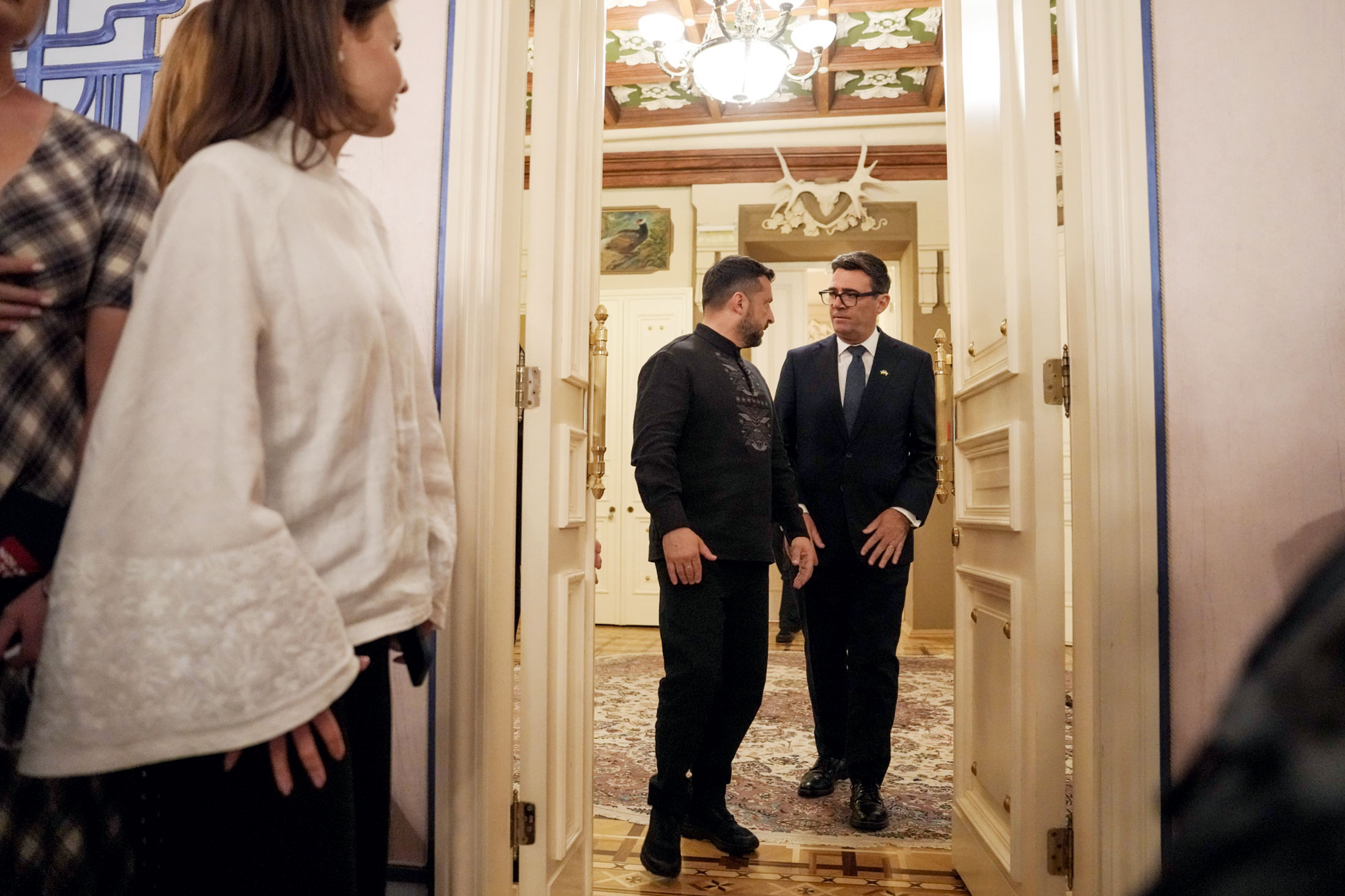
The diplomatic friction is acutely visible in the United Kingdom. During a visit to Kyiv, UK Prime Minister Andy Burnham handed over cruise missile blueprints to Ukrainian leadership and explicitly compared Ukraine’s existential struggle to Britain’s resistance against Nazi Germany in World War II.
The Kremlin fired back immediately. Kremlin spokesman Dmitry Peskov accused London of "methodically and regularly adding fuel to the fire" and actively sabotaging potential peace processes. Moscow also issued explicit threats of retaliation against the UK following reports that Kyiv utilized British-manufactured drones to execute deep-strike operations inside Russian territory.
Meanwhile, behind closed doors in Brussels, European Union officials are debating another sanctions package targeting hundreds of individuals and entities, slated for the autumn. Measures under consideration include the controversial seizure of frozen Russian sovereign assets, a total ban on transporting Russian liquefied natural gas (LNG), and strict visa restrictions. However, critics note that previous rounds of sanctions have failed to alter the Kremlin’s calculus.
Implications: A Strategic Blind Spot for Europe
The overarching implication of Russia’s hybrid campaign is that Europe faces a strategic blind spot. Because these aggressive acts—ranging from cyber disruptions to localized arson and drone deployment—fall well below the kinetic threshold required to invoke NATO’s Article 5, the alliance has struggled to craft a unified, proactive response.
"NATO, European and national responses have largely been reactive and defensive," explains Agnia Grigas, a non-resident fellow at the Atlantic Council in Vilnius. "They have focused on detecting and countering individual provocations, but have not built a record of effective deterrence by consistently dissuading Moscow from continuing or escalating them."
Alex Kokcharov, a geoeconomics analyst at Bloomberg Economics in London, elaborates on the Kremlin’s strategic calculus: "Russia’s ongoing hybrid warfare in Europe is a highly coordinated, sub-threshold campaign aimed at destabilizing Western political systems, fracturing NATO and EU unity, and eroding support for Ukraine. To achieve these goals, the Kremlin maintains plausible deniability by exploiting anonymity and utilizing proxies to obfuscate direct state attribution."
As the winter months close in and the conflict in Ukraine grinds forward, the European Union and NATO are running out of time to adapt. Without the establishment of a robust, proactive doctrine of deterrence that matches Moscow’s asymmetric playbook, European infrastructure, political stability, and civil society will remain on the front lines of a war that has quietly crossed international borders.
