

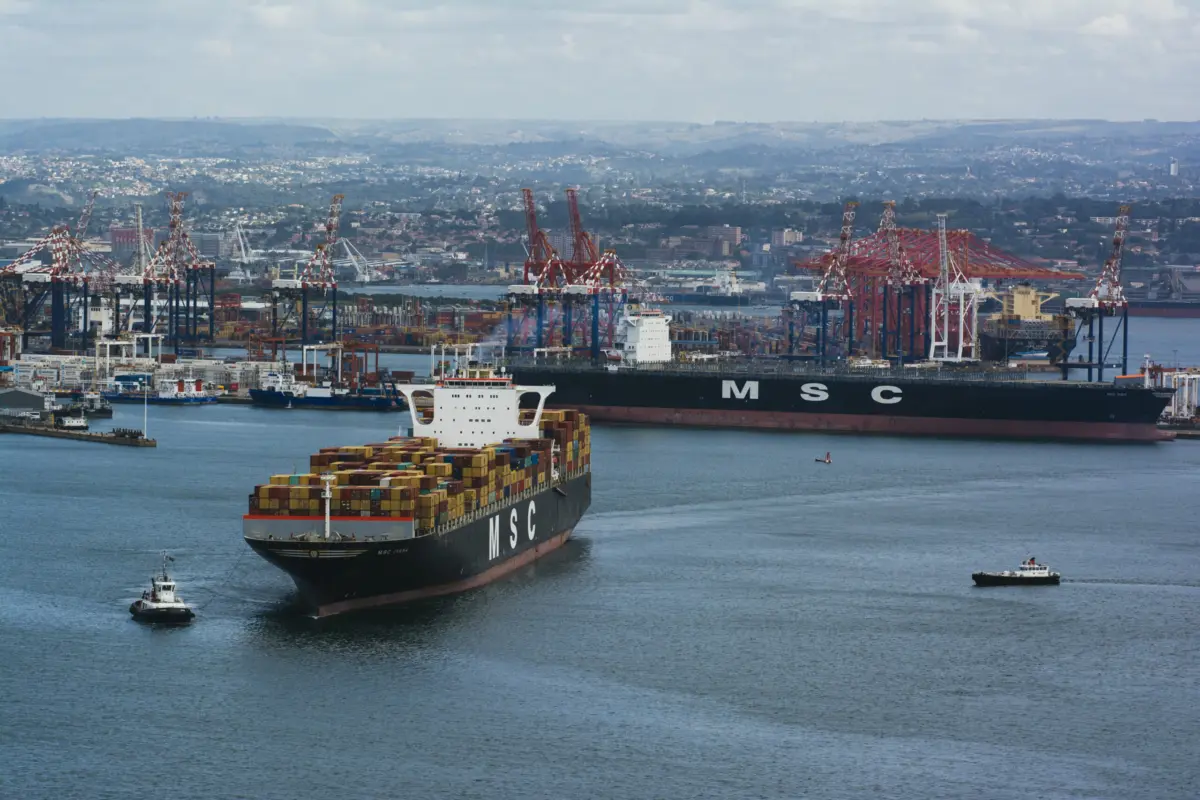
GENEVA/MOSCOW — Global supply chains traversing the turbulent waters of the Black Sea faced a fresh jolt this week as Mediterranean Shipping Company (MSC), the world’s largest container shipper, announced the immediate suspension of all new cargo bookings to and from the critical Russian port of Novorossiysk.
The drastic move by the Swiss-headquartered maritime behemoth comes in the direct wake of a drone attack targeting one of its container vessels, the MSC ULSAN III, as it navigated toward the southern Russian hub. The incident underscores the rapidly escalating risks confronting commercial shipping operating within or adjacent to the active conflict zone between Russia and Ukraine.
While MSC has maintained a heavily scaled-back, highly selective operational footprint in Russia since the Kremlin launched its full-scale invasion of Ukraine in February 2022, this latest kinetic strike on maritime infrastructure marks a dangerous new threshold. The suspension not only cuts off a vital logistics artery for southern Russia but also injects profound uncertainty into the broader Black Sea trade corridor—a lifeline for international agricultural and energy markets.
Main Facts
The core of the crisis centers on the hostile action directed against the MSC ULSAN III. According to customer advisories reviewed by media outlets, the vessel was struck by an unmanned aerial vehicle (UAV) while en route to the deep-water port of Novorossiysk, located on the eastern coast of the Black Sea in Russia’s Krasnodar Krai region.
In response to the attack, MSC took swift defensive action, issuing a directive halting all new import and export bookings for Novorossiysk effective immediately. The company has instructed its global customer base to liaise directly with its Russian agency network to explore contingency routes and alternative logistics solutions. Regular weekly container services from the port remain indefinitely suspended until safety assessments indicate that normal operations can resume without endangering crews and cargo.
Despite the total freeze on Novorossiysk, MSC’s operations in other parts of the Russian Federation remain nominally active. A representative at the company’s regional office in St. Petersburg confirmed that operations in the nation’s northwestern hub are proceeding, though under heightened security protocols. The dual approach highlights the complex calculus multinational corporations face as they attempt to balance commercial obligations with soaring geopolitical risks.
- Primary Incident: Drone attack on the container vessel MSC ULSAN III.
- Immediate Consequence: Complete suspension of bookings to and from the port of Novorossiysk by MSC.
- Scope of Impact: Primarily affects non-sanctioned humanitarian and consumer goods, including foodstuffs, pharmaceuticals, and apparel.
- Geographic Exception: MSC’s operations through Baltic ports, such as St. Petersburg, remain operational for now.
Chronology of Escalation
The lineage of the current maritime crisis in the Black Sea can be traced across a timeline of escalating hostilities, transforming a once-bustling commercial superhighway into a contested naval theater.
Pre-2022: The Peaceful Basin
Prior to the outbreak of full-scale war, the Black Sea served as one of the world’s most dynamic trade arteries. Novorossiysk, alongside Ukrainian ports such as Odesa, Pivdennyi, and Chornomorsk, facilitated the export of hundreds of millions of tons of grain, steel, coal, and manufactured goods connecting Eastern Europe and Central Asia to Mediterranean, Middle Eastern, and Asian markets.
February 2022: The Invasion and Corporate Exodus
Following Russia’s invasion of Ukraine in early 2022, major international container lines—including MSC, Maersk, CMA CGM, and Hapag-Lloyd—substantially curtailed or entirely withdrew from Russian operations in compliance with sweeping Western sanctions and out of concern for crew safety. However, a trickle of non-sanctioned essential goods, such as agricultural products, medical supplies, and basic consumer necessities, continued to move through select Russian ports, managed cautiously by residual networks.
July 2023–Present: The Breakdown of Safe Corridors
Tensions in the Black Sea spiked dramatically following the collapse of the Black Sea Grain Initiative. Both Moscow and Kyiv intensified military operations targeting naval assets, port infrastructure, and commercial vessels. The proliferation of maritime and aerial drones altered naval warfare dynamics, making commercial vessels vulnerable to collateral damage or targeted interdiction regardless of their neutral flags or non-military cargo manifests.
The MSC ULSAN III Incident (Recent Weeks)
The exact date of the strike on the MSC ULSAN III has not been officially disclosed by MSC, but industry intelligence indicates it occurred during a routine transit toward Novorossiysk. The drone strike bypassed traditional naval deterrents, demonstrating the high vulnerability of merchant shipping to asymmetric warfare tactics in enclosed seas.
Following the strike, internal risk assessments within MSC prompted executive leadership in Geneva to pull the plug on Novorossiysk bookings, culminating in the public advisory issued to global logistics clients.
Supporting Data and Economic Context
The disruption at Novorossiysk carries disproportionate economic weight. Novorossiysk is not merely a regional port; it is Russia’s largest maritime gateway and one of the most critical export-import terminals on the Black Sea.
- Port Significance: Novorossiysk handles a vast share of Russia’s southern non-oil trade, including substantial volumes of grain, cement, steel, oil products, and containerized consumer goods.
- Global Commodity Pressures: Increased kinetic activity against Black Sea shipping since July has already disrupted global grain supplies. The persistent threat of strikes has driven wheat futures to multi-year highs, reverberating across international food markets and exacerbating food security anxieties in import-dependent developing nations.
- The Sea of Azov and Regional Trade: Beyond the Black Sea proper, maritime activity in the shallow waters of the Sea of Azov has dropped precipitously. Steel and coal shipments originating from southern Russian-controlled industrial centers have faced severe bottlenecks, forcing logistics operators to rely more heavily on overburdened rail networks.
- Insurance and Freight Rates: War-risk insurance premiums for vessels entering the eastern Black Sea basin have skyrocketed. Underwriters are increasingly demanding prohibitive policy riders, or declining coverage altogether for vessels calling at Russian southern ports, making commercial voyages economically unviable for many independent operators.
Official Responses and Stakeholder Reactions
As news of the suspension reverberates through global supply chain networks, reactions from corporate entities, logistics providers, and regional observers highlight the growing friction between commercial enterprise and wartime realities.
MSC’s Corporate Stance
In its communications with clients, MSC has maintained a measured tone, emphasizing safety above commercial continuity.
"We are closely monitoring the evolving situation in the region," MSC noted in its customer advisory. "Customers are advised to contact our local Russian agency for potential logistics alternatives for imports and exports until conditions allow the resumption of regular weekly services from the Black Sea port."
Requests for broader comment directed to MSC’s international press service in Geneva went unanswered at the time of publication, reflecting the sensitivity surrounding corporate interactions with Russian infrastructure under the shadow of international sanctions.
Regional Logistics and On-the-Ground Realities
On the ground in Russia, local logistics operators are scrambling to re-route cargo originally slated for Novorossiysk. The confirmation by a St. Petersburg-based employee that Novorossiysk operations are "currently idled" points to an internal scramble to divert remaining containerized goods toward northern alternatives, such as the Baltic Sea ports or overland rail routes via Kazakhstan and Belarus. However, these alternative corridors are already congested and lack the capacity to fully absorb the volume displaced from the south.
International Shipping Community Reactions
Global industry bodies, including the International Chamber of Shipping (ICS) and various maritime labor unions, have reiterated urgent calls for the protection of civilian seafarers. The targeting of vessels carrying non-military, humanitarian goods—such as medicine and food—has drawn widespread condemnation from international bodies, who argue that maritime trade routes must remain shielded from active hostilities under international maritime law.
Broader Implications for Global Trade
The indefinite suspension of MSC’s Novorossiysk service serves as a glaring indicator of how protracted geopolitical conflicts can permanently alter global trade topographies. Several key implications emerge from this development:
- Bifurcation of Russian Logistics: Russia is increasingly forced to rely on domestic or friendly-flagged tonnage (the so-called "shadow fleet" or localized Black Sea feeder networks) to maintain trade links through its southern ports. Major international liners are effectively signaling that the risk-reward ratio of touching southern Russian ports is no longer tenable.
- Fragility of Regional Food and Pharma Supply Chains: While luxury and non-essential goods were long ago scrubbed from manifests, the continued disruption of containerized food and pharmaceutical inputs to southern Russia threatens to create localized shortages, placing humanitarian pressures on the civilian population.
- Escalation of Asymmetric Naval Warfare: The use of long-range drones in the Black Sea has permanently rewritten the doctrine of maritime security. Commercial vessels can no longer assume that a civilian transponder or a neutral destination protects them from becoming entangled in the fog of war. Insurers will likely price these risks into global shipping for years to come, keeping freight rates structurally elevated.
- Shift Toward Overland Corridors: As maritime routes through the Black and Azov seas become increasingly perilous, exporters and importers are accelerating investments in trans-Eurasian rail corridors, such as the Middle Corridor bypassing Russia entirely, or strengthening bilateral rail links through the Caucasus and Central Asia.
As the situation develops, the eyes of the global maritime community remain fixed on the Black Sea. For MSC and its peers, the immediate priority is safeguarding crews and maintaining compliance with international regulations. For global markets, the incident serves as yet another stark reminder that the security of the world’s oceans is deeply fragile, and that the shockwaves of regional conflict can disrupt supply chains thousands of miles away.
