

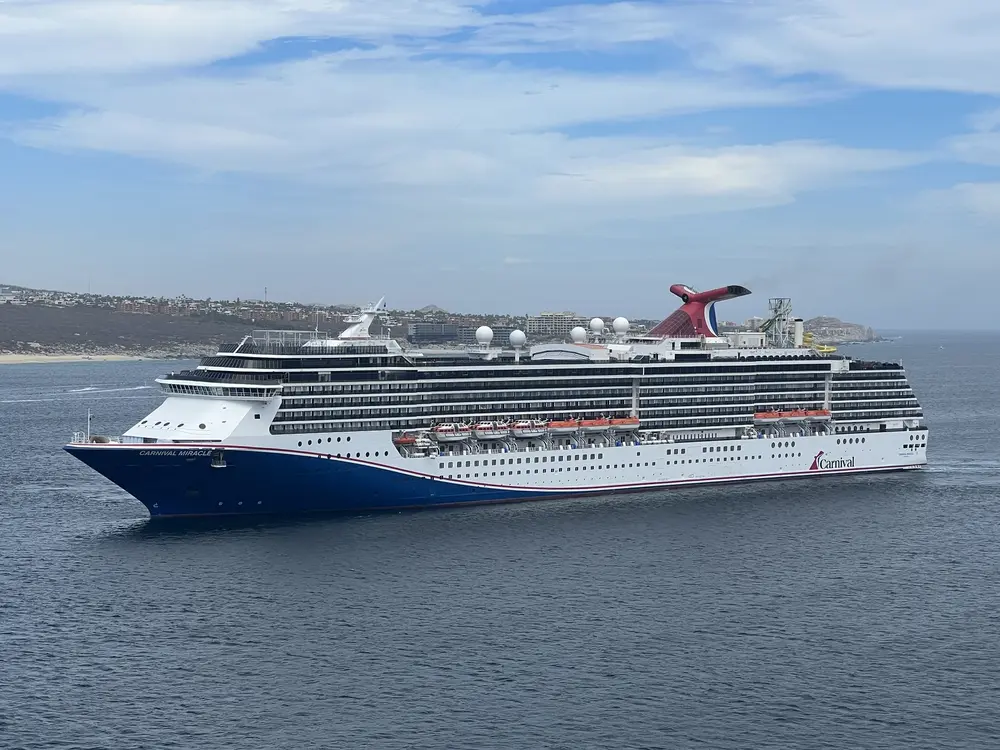
MIAMI — In a significant legal development for the multi-billion-dollar cruise industry, a federal appeals court has overturned a massive $10.3 million jury verdict against Carnival Cruise Line. The U.S. 11th Circuit Court of Appeals ruled this week that the lower court committed a critical error by withholding key federal investigative findings from the jury, thereby depriving the defense of vital evidence.
The appellate decision revives a contentious legal battle stemming from a 2018 incident aboard the Carnival Miracle, in which a young female passenger alleged she was sexually assaulted and falsely imprisoned by a member of the ship’s housekeeping crew. While cruise lines have faced sustained scrutiny and a litumen of lawsuits regarding crew member misconduct and passenger safety, this ruling underscores the pivotal role federal investigative reports can play in maritime tort litigation.
Main Facts of the Case
The underlying litigation centers on events that unfolded in 2018 aboard the Carnival Miracle. The plaintiff, identified in court documents only as Jane Doe, was a passenger on the vessel who had consumed significant amounts of alcohol during the voyage. According to court records, Doe became extremely intoxicated, a factor that both sides acknowledge severely impacted her recollection of the night in question.
Doe subsequently alleged that she was sexually assaulted by a male member of the ship’s cleaning crew inside a storage closet. She also brought a claim of false imprisonment, asserting that the crew member blocked her from leaving the enclosure. However, due to her state of intoxication, Doe initially informed authorities that she could not fully remember the specifics of the encounter or whether her egress had physically been blocked. Despite her lack of clear memory, she later reported to friends and a shipboard security officer that she believed she had been the victim of an assault.
The legal battle that ensued in a Miami federal district court focused heavily on liability, consent, and the handling of evidence. After a six-day trial that concluded in July, a Florida federal jury sided with the plaintiff, handing down a staggering $10.3 million verdict against Carnival Cruise Line.
Carnival immediately appealed the decision, arguing that the trial judge fundamentally compromised the fairness of the proceedings by excluding a federal document: an FBI investigative report concluding that the sexual encounter was, in fact, consensual.
The 11th Circuit Court of Appeals agreed unanimously with Carnival’s position. Writing for the appellate panel, Circuit Judge Barbara Lagoa concluded that the exclusion of the FBI report was a prejudicial error that could easily have altered the jury’s final verdict.
Chronology of Events
To understand how a case moves from a disputed shipboard encounter to an $10.3 million judgment and subsequent appellate reversal, it is necessary to trace the timeline of events from 2018 to the present day:
- 2018: The incident occurs aboard the Carnival Miracle. An intoxicated female passenger, Jane Doe, interacts with a male cleaning crew member in a shipboard storage area. Doe reports a suspected assault to shipboard security and friends, prompting an official maritime and federal investigation.
- Post-2018 Investigation: Federal authorities, including the Federal Bureau of Investigation (FBI), launch a timely probe into the allegations. Investigators interview the crew member—who maintains that the encounter was entirely consensual—and review surrounding circumstances, ultimately compiling a formal investigative report.
- Pre-Trial Proceedings: As the lawsuit proceeds in a southern Florida federal district court, attorneys for Jane Doe seek to bar the admission of the FBI report’s conclusions. The district court grants partial summary judgment and rules to exclude the federal findings from the jury’s purview.
- July (Trial Phase): A high-stakes, six-day civil trial takes place in Miami. Without knowledge of the FBI’s conclusions regarding consent, the jury deliberates and ultimately returns a $10.3 million verdict in favor of Jane Doe on her sexual assault and false imprisonment claims.
- August (Appellate Decision): Carnival Cruise Line appeals the verdict to the U.S. 11th Circuit Court of Appeals. The appellate court issues an opinion reversing the lower court’s partial summary judgment on the false imprisonment claim, vacating the judgment as to both the false imprisonment and sexual assault claims, and remanding the case for a completely new trial.
Supporting Data and Legal Reasoning
The legal crux of the 11th Circuit’s ruling hinges on the admissibility and reliability of official government reports in civil litigation. Under federal rules of evidence, public records and reports—including those compiled by federal law enforcement agencies like the FBI—are generally admissible in civil trials unless the opposing party can demonstrate that the sources of information or other circumstances indicate a lack of trustworthiness.
In this case, the plaintiff argued against the introduction of the FBI report, suggesting its conclusions should be kept from the jury. The lower court agreed, keeping the document out of evidence. The appellate court, however, found no legal justification for this exclusion.
"We conclude that Doe has not met her burden of demonstrating that the FBI Reports’ conclusions could not be trusted," Judge Lagoa wrote in the Aug. 25 appellate opinion. "In her briefs, Doe concedes that the FBI’s investigation was timely."
Furthermore, the appellate judges emphasized the decisive weight such evidence carries. The agent’s formal report, according to the court, "could have been the deciding factor for the jury." By barring the jury from hearing that federal investigators found the encounter to be consensual—supported by the accused crew member’s statements and the absence of contradictory physical evidence or examined video surveillance of the closet area—the trial court fundamentally tipped the scales of justice, depriving Carnival of a complete defense.
As a result of these findings, the 11th Circuit officially reversed the district court’s grant of partial summary judgment on the false imprisonment claim, vacated the judgment regarding both the false imprisonment and sexual assault claims, and ordered a new trial. As of publication, the courts have not yet set a definitive start date for the new proceedings in Miami.
Official Responses and Industry Context
Carnival Cruise Line, a subsidiary of Carnival Corp. headquartered in Doral, Florida, has long maintained its commitment to passenger safety while aggressively defending itself against mounting tort litigation. The cruise giant operates under complex insurance structures. According to specialized maritime law firms, Carnival is partly self-insured for general liability claims, while also maintaining layers of coverage through mutual insurance arrangements via protection and indemnity (P&I) clubs.
Representatives for the cruise line have consistently argued that while passenger safety is paramount, individual liability claims must be evaluated based on the full scope of objective evidence—including law enforcement findings—rather than emotional appeals or restricted evidentiary scopes.
Conversely, victim advocates and legal representatives for plaintiffs point out that cruise ships present unique jurisdictional and security challenges. Operating in international waters, cruise vessels rely heavily on internal security protocols before federal or domestic law enforcement can board and secure a crime scene. In the Carnival Miracle case, legal teams noted that shipboard video recordings of the corridor and closet area were not thoroughly examined or preserved by ship security in a manner that definitively answered all questions, leaving investigators to rely heavily on witness statements and circumstantial evidence.
Broader Implications for Maritime Law and Future Litigation
The 11th Circuit’s ruling carries profound implications for how cruise lines handle passenger claims, how federal investigations are utilized in civil courtrooms, and how future maritime tort cases will be litigated in the jurisdiction of southern Florida—the cruise capital of the world.
1. The Critical Weight of Federal Reports
By reaffirming that timely FBI reports carrying conclusions on consent must be presented to juries, the appellate court has set a clear boundary on trial court discretion. Plaintiffs’ attorneys can no longer routinely block the admission of unfavorable federal law enforcement findings simply by casting generalized doubt on them; they must legally prove a lack of trustworthiness under federal rules of evidence.
2. A Rising Tide of Cruise Litigation Scrutiny
This case is part of a broader, ongoing legal battleground involving Carnival and other major cruise operators. Recent legal actions highlight the delicate intersection of passenger intoxication, shipboard liability, and corporate responsibility:
- In April 2026, an appellate court or related ruling underscored liability regarding alcohol service when a Carnival cruise passenger who was served 14 drinks was awarded $300,000 after falling down a flight of stairs.
- Conversely, in June 2025, an appeals court found Carnival not liable in a separate high-profile case involving the alleged sexual assault of a teenager on board, demonstrating that courts routinely scrutinize the direct negligence of the cruise line versus the independent actions of individuals.
3. Implications for Cruise Line Risk Management
For Carnival and its competitors, the decision is a temporary reprieve that highlights the necessity of cooperating fully with federal agencies during onboard incidents. When federal investigators compile objective reports, those documents can ultimately serve as a corporate shield against catastrophic multi-million-dollar civil judgments.
At the same time, the ruling serves as a warning regarding shipboard evidence preservation. The notation in the opinion that ship video recordings of the closet area were not properly examined points to ongoing vulnerabilities in how cruise operators secure immediate electronic evidence following an alleged crime at sea.
As the case heads back to the trial court in Miami for a brand-new proceeding, both maritime legal experts and the cruise industry at large will be watching closely to see how a new jury evaluates the reinstated FBI evidence—and what precedent it sets for the future of maritime jurisprudence.
