

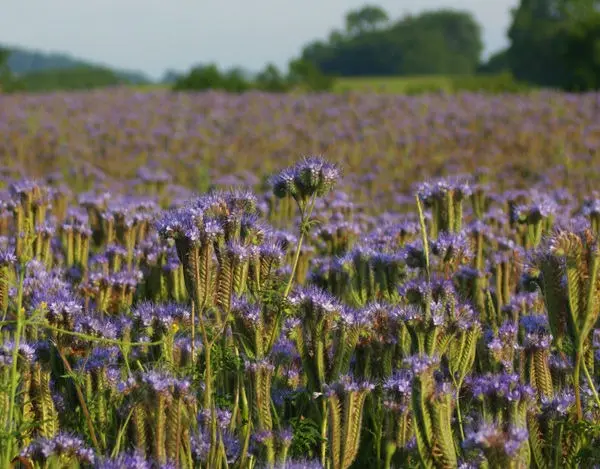
SPRINGFIELD, Ill. — For the eighth consecutive year, the Illinois Department of Agriculture (IDOA) is rolling out its popular and impactful insurance discount program aimed at expanding the adoption of cover crops across the Prairie State. The initiative, officially titled the "Fall Covers for Spring Savings Program," is designed to encourage farmers to plant cover crops on acreage that does not currently receive financial support from other state or federal conservation incentives.
As agricultural producers face mounting economic pressures alongside increasing demands for sustainable farming practices, this program serves as a critical bridge. It directly rewards stewardship by linking ecological management directly to the financial bottom line of the farm enterprise.
With a cap of 190,000 acres available for the 2026-2027 program cycle, state officials anticipate high demand. Funding and acreage allocation will be administered strictly on a first-come, first-served basis, maintaining a precedent that has helped the program fund nearly one million acres of conservation plantings over the past decade.
Main Facts
The Fall Covers for Spring Savings Program provides a direct financial incentive to agricultural producers in Illinois who integrate cover crops into their crop rotation schedules. Cover crops—typically non-harvested plants such as cereal rye, crimson clover, radishes, or winter wheat—are grown primarily for the benefit of the soil ecosystem, rather than for direct food production or commercial sale.
Key parameters of the upcoming 2026–2027 program include:
- Financial Benefit: Eligible applicants can receive a premium discount of up to $5 per acre on their 2027 federal crop insurance policies for each verified cover crop acre.
- Acreage Cap: A total of 190,000 acres are made available for this cycle, funded through state resources.
- Eligibility Boundaries: The program exclusively applies to Illinois land seeded with cover crops in the fall of 2026 that will subsequently be planted to an insurable crop in the spring of 2027.
- Exclusions: Acres already receiving financial support from other targeted state or federal cover crop cost-share initiatives are ineligible, ensuring that program dollars expand new conservation acres rather than subsidizing existing ones.
- Insurance Partner: Applicants must hold an active crop insurance policy through the U.S. Department of Agriculture’s Risk Management Agency (USDA-RMA). Once approved by IDOA, applications are forwarded directly to the USDA-RMA to apply the premium discount to the producer’s 2027 insurance invoice.
To qualify successfully, participating farmers must complete critical administrative steps, including certifying their cover crop acreage with their local USDA Farm Service Agency (FSA) office prior to applying. Applicants must have their current FSA-578 form and federal crop insurance policy numbers ready at the time of submission.
Supporting Data and Historical Context
To fully understand the significance of the 190,000-acre rollout for 2026–2027, it is necessary to examine the trajectory of the program since its inception. Over the past seven operational years, the Fall Covers for Spring Savings Program has successfully funded an impressive cumulative total of 890,000 acres of cover crops across Illinois.
This sustained growth reflects a broader cultural and operational shift in Midwestern agriculture. Cover crops have transitioned from a niche practice utilized primarily by early adopters to a mainstream component of modern agronomic management.
Environmental and Agronomic Impact
Agronomists and soil scientists point to several immediate and long-term benefits driven by widespread cover crop adoption:
- Erosion Control: Illinois soils, renowned for their high natural fertility, are nonetheless vulnerable to wind and water erosion during the freeze-thaw cycles of late fall, winter, and early spring. Living root systems anchor the topsoil, drastically reducing sediment loss and protecting fragile landscapes.
- Nutrient Retention: Nitrogen and phosphorus loss from agricultural fields into local waterways remains a major environmental challenge, contributing to downstream nutrient loading in the Mississippi River watershed and the Gulf of Mexico. Cover crops act as "nutrient pumps," taking up residual soil nitrates left over from the previous cash crop and holding them in plant biomass until spring, when they are released back to the soil as the cover crop decomposes.
- Soil Health and Organic Matter: Continuous cropping can deplete soil organic carbon over decades. Cover crops pump carbon back into the soil through root exudates and biomass accumulation, improving soil aggregation, water infiltration rates, and microbial diversity. Better water infiltration also builds resilience against both drought and extreme precipitation events—two increasingly common weather patterns affecting Illinois agriculture.
By offsetting the out-of-pocket costs associated with purchasing seed, operating planting equipment, and managing termination schedules, the $5-per-acre insurance discount helps mitigate the financial risk that often deters hesitant producers from trying cover crops for the first time.
Official Responses and Perspectives
Leadership within the Illinois Department of Agriculture continues to champion the program as a win-win scenario for both the environment and the state’s rural economy.
"The Fall Covers for Spring Savings cover crop premium discount program helps farmers lower their crop insurance costs while improving soil health, reducing erosion, and enhancing long-term land productivity," said IDOA Director Jerry Costello II. "It’s a practical way to strengthen both environmental stewardship and farm profitability at the same time."
State agricultural economists note that crop input costs—spanning fertilizer, seed, machinery, and crop insurance—have experienced significant volatility in recent years. For a mid-sized family farm managing hundreds or thousands of acres, even a modest reduction in crop insurance premiums can translate into meaningful savings. When combined with the long-term agronomic advantages of reduced fertilizer requirements and improved soil resilience, the financial case for participation becomes compelling.
Conservation groups and farm bureau representatives have similarly praised the initiative for its streamlined bureaucratic framework. Unlike complex cost-share programs that require extensive documentation, receipts, and multi-stage auditing, the IDOA program leverages existing USDA-RMA infrastructure. By integrating directly with federal crop insurance workflows, the program minimizes administrative burdens for both the state and the participating farmer.
Chronology of the 2026–2027 Application Cycle
Producers planning to participate in the upcoming program year must adhere to a strict timeline. Because allocations are handled on a first-come, first-served basis until the 190,000-acre cap is reached, preparedness is essential.
- Prior to Application: Farmers must visit their local USDA Farm Service Agency (FSA) office to certify their cover crop acreage. Securing the official FSA-578 form and verifying federal crop insurance policy numbers are mandatory prerequisites.
- November 30, 2026: Pre-enrollment portals and informational resources open on the official IDOA website (agr.illinois.gov). Producers are encouraged to review guidelines, gather documentation, and prepare their accounts.
- December 15, 2026: Official application intake begins. The online submission portal goes live, and applications begin accumulating timestamps to establish the first-come, first-served queue.
- January 15, 2027: The program officially closes. Any remaining available acreage unassigned by this date will expire, and no further applications will be accepted for the 2026–2027 cycle.
- Post-January 2027 Processing: IDOA reviews submitted applications for compliance and forwards approved rosters to the USDA-RMA. The risk management agency subsequently applies the premium discounts directly to the producers’ 2027 crop insurance invoices.
Implications for Illinois Agribusiness and Long-Term Sustainability
The longevity and continued popularity of the Fall Covers for Spring Savings Program signal a permanent evolution in how agricultural risk management and environmental policy intersect in Illinois.
Economic Implications for Producers
Crop insurance is one of the single largest fixed expenses for a modern grain farmer, protecting operations against catastrophic weather events, price shocks, and yield failures. By shaving up to $5 per acre off these bills, IDOA provides direct financial relief. For a farmer enrolling 500 eligible acres, this represents a direct insurance savings of $2,500. While cover crop establishment expenses can vary depending on seed selection (e.g., cereal rye versus multi-species mixes) and termination methods, the state discount significantly narrows the economic gap, accelerating the timeline to profitability for new adopters.
Water Quality and Nutrient Loss Reduction Targets
Illinois is a prominent participant in the Illinois Nutrient Loss Reduction Strategy, a comprehensive state framework designed to reduce total phosphorus and nitrate-nitrogen loads entering waterways. Cover crops are recognized as one of the most effective non-structural "best management practices" (BMPs) available to achieve these reduction targets. By expanding the footprint of protected acres by another 190,000 for the 2026–2027 season—building on nearly 900,000 acres already funded—the state takes another tangible step toward meeting its environmental benchmarks without relying solely on punitive regulations.
Future Outlook
As federal and state agencies evaluate the success of voluntary conservation incentives, programs that utilize existing infrastructure like the USDA-RMA framework serve as models for scalable agricultural policy. The collaborative approach between state departments of agriculture and federal risk management agencies demonstrates that government programs can be both environmentally ambitious and administratively efficient.
For Illinois farmers looking to optimize their input budgets while safeguarding their most valuable asset—their topsoil—the eighth iteration of the Fall Covers for Spring Savings Program offers a timely, proven opportunity. Interested producers should mark their calendars for the November 30 pre-enrollment window and prepare their FSA documentation early to secure their place in line before the program closes on January 15, 2027.
To access application forms, review detailed eligibility guidelines, and find direct program links as they become available, visit the Illinois Department of Agriculture website at agr.illinois.gov.
