

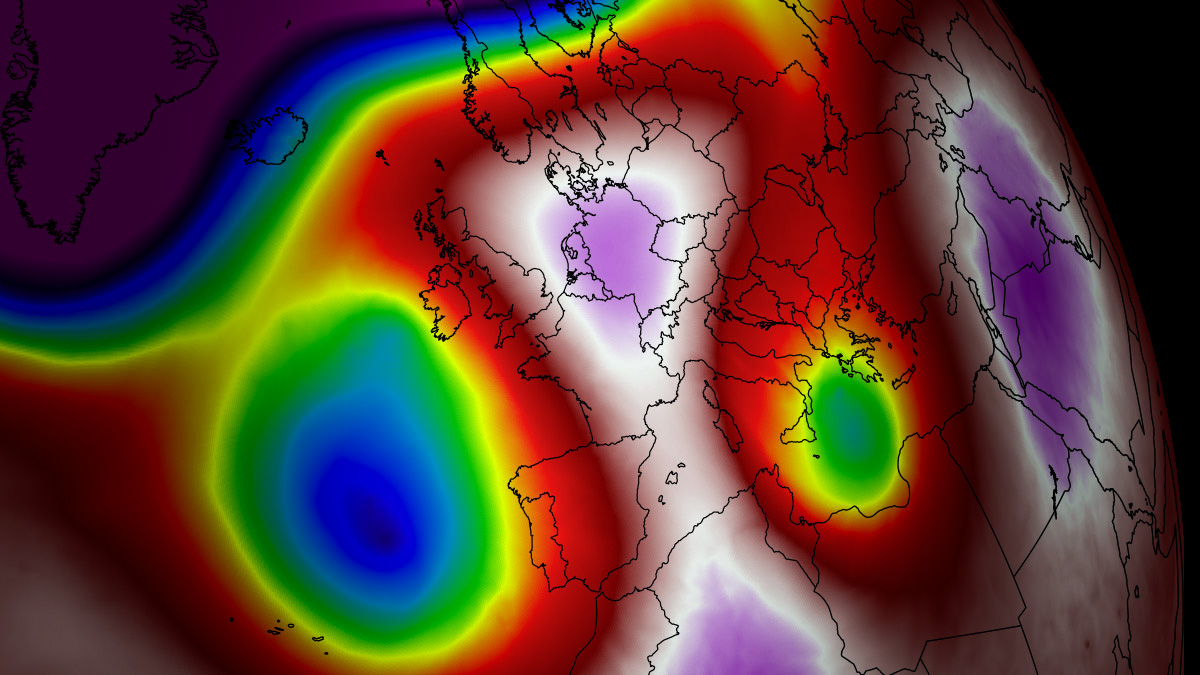
CONT. EUROPE — As mid-August sets in, a high-amplitude upper-level atmospheric ridge has locked the fifth major Heat Dome of the season directly over continental Europe. Driving a powerful northward warm surge, upper-air thermal anomalies have climbed once again into the 99th percentile. Severe, excessive heat is gripping nations from France and the United Kingdom to Italy, Central Europe, and the Balkan Peninsula, pushing widespread afternoon temperatures past the 40°C threshold.
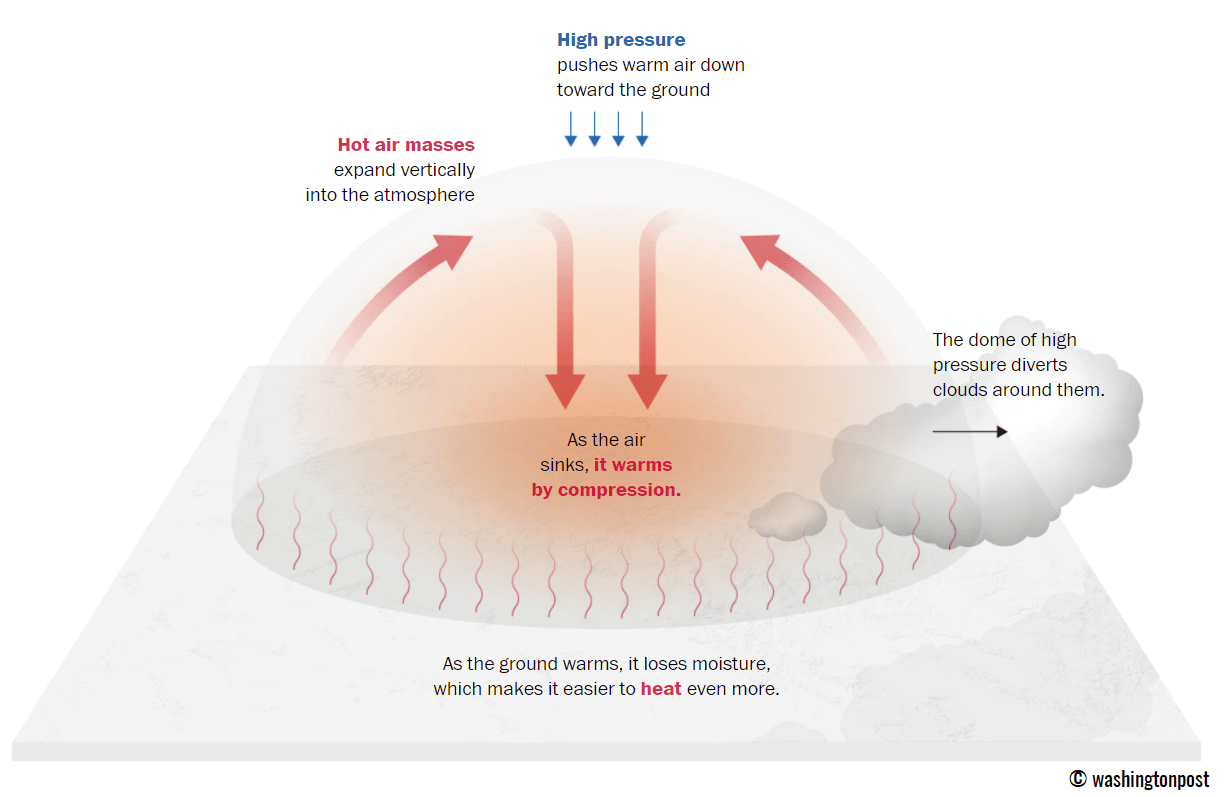
The primary atmospheric engine behind this fifth thermal wave is a stubborn, slow-moving high-pressure system parked firmly over the heart of the continent. As descending air adiabatically compresses and aggressively warms the lower troposphere, peak surface temperatures across low-lying basins and plains are forecasted to reach between 40°C and 43°C. Simultaneously, dry continental winds are keeping relative humidity low while rapidly depleting vital soil moisture reserves.
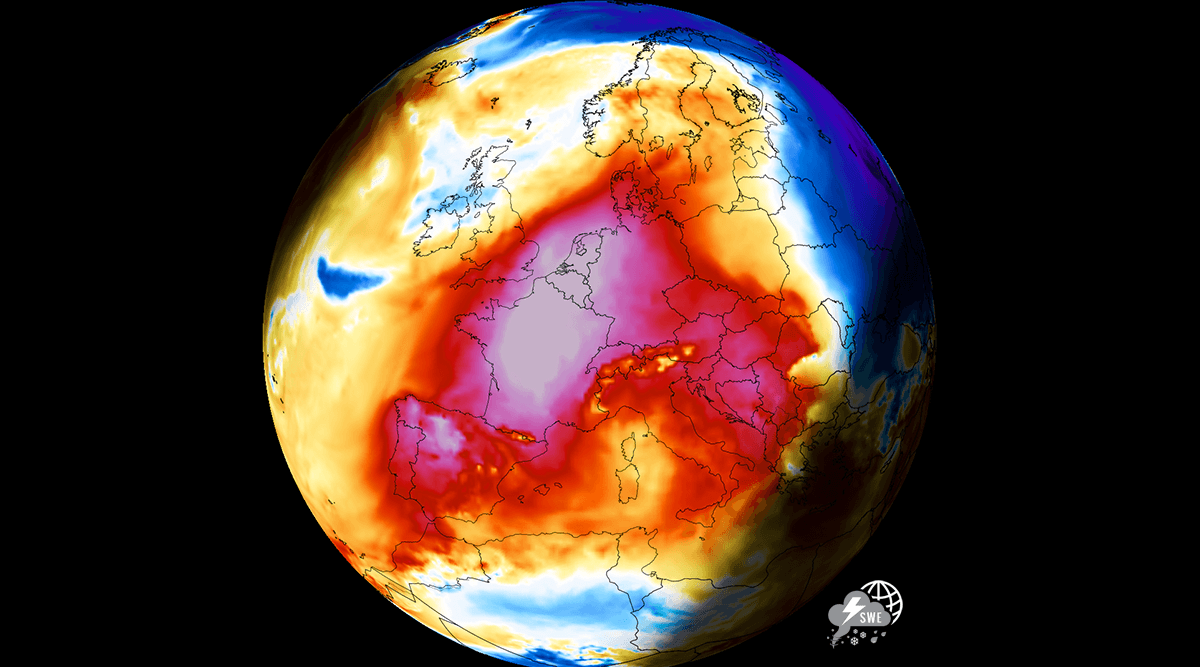
Meteorologists warn that this renewed thermal surge offers virtually no nocturnal relief. Overnight low temperatures are refusing to drop below 22°C to 26°C across major urban corridors. This persistent lack of nighttime cooling compounds severe physiological stress for millions of residents, skyrockets energy grid demand, and maintains extreme wildfire risks across southwestern and central Europe.
Chronology of the Thermal Wave: From Western Peaks to Central Shifts
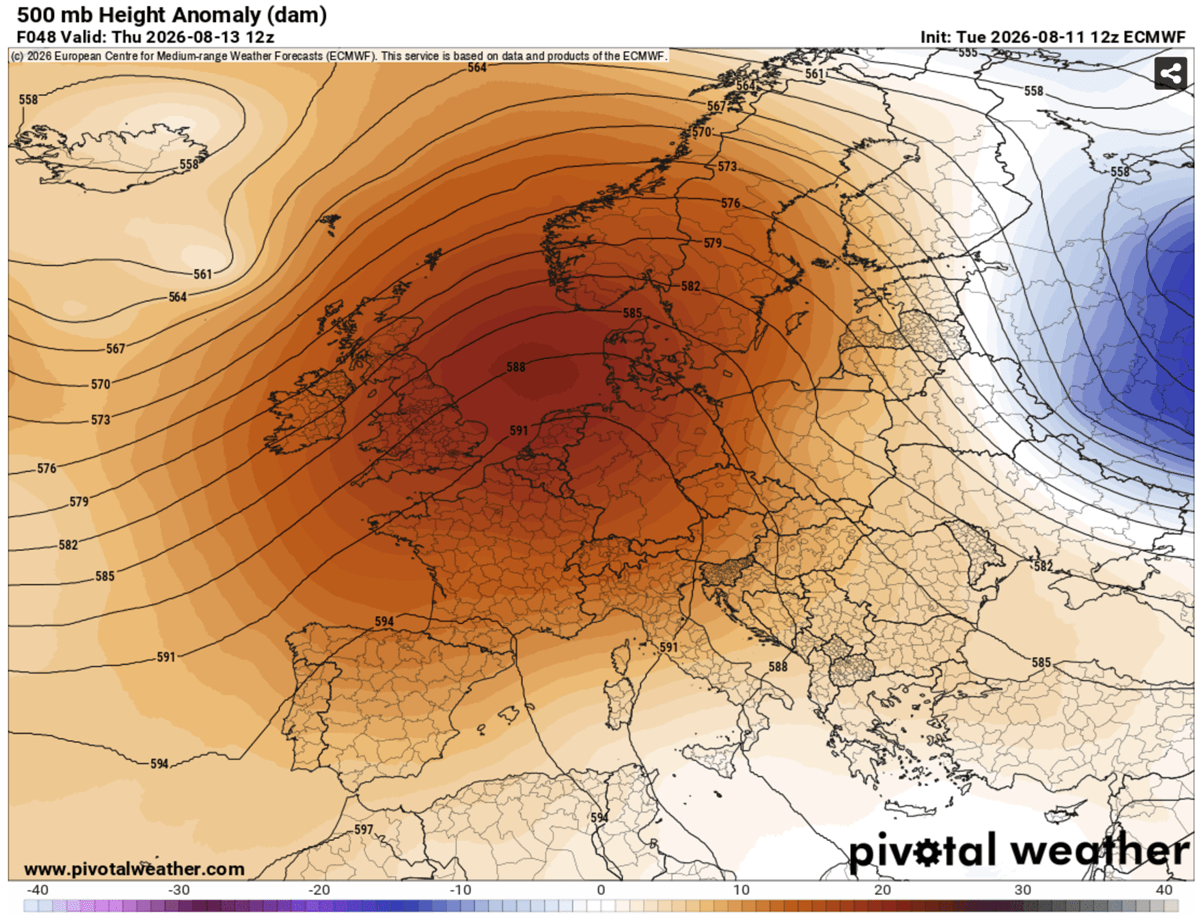
The trajectory of this weather phenomenon illustrates a classic, highly destructive high-pressure progression. The strongest temperature anomalies are forecast to dominate Western and Central Europe throughout the week before gradually dissipating from west to east late this weekend and into the following week.
Mid-Week: Western Europe in the Crosshairs
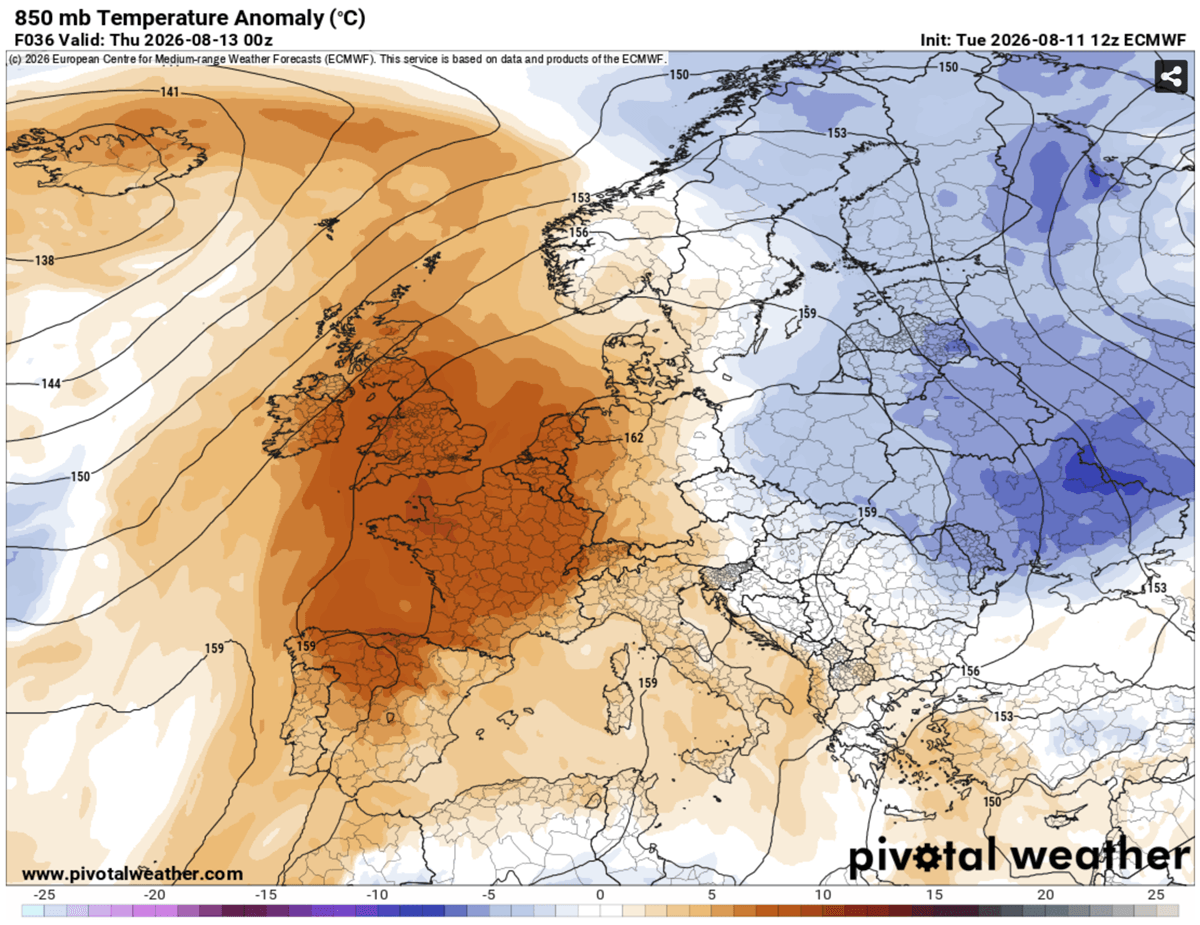
Beginning mid-week, the core of the heat dome established itself directly over the Iberian Peninsula, France, the United Kingdom, and the Benelux. Portugal and Spain experienced immediate temperature spikes into the low-to-mid 40s. By Thursday, the warmest air mass aloft sat squarely over northern France, the English Channel, and the UK.
England recorded some of its most intense heat of the season, with afternoon temperatures surging into the 38°C–39°C range. France faced a double-punch of extreme heat on Thursday and Friday, as low-40s temperatures returned to wide swaths of the country, with western, central, and southwestern departments peaking at 42°C–43°C.
The Weekend: Eastward Migration and Central European Strain
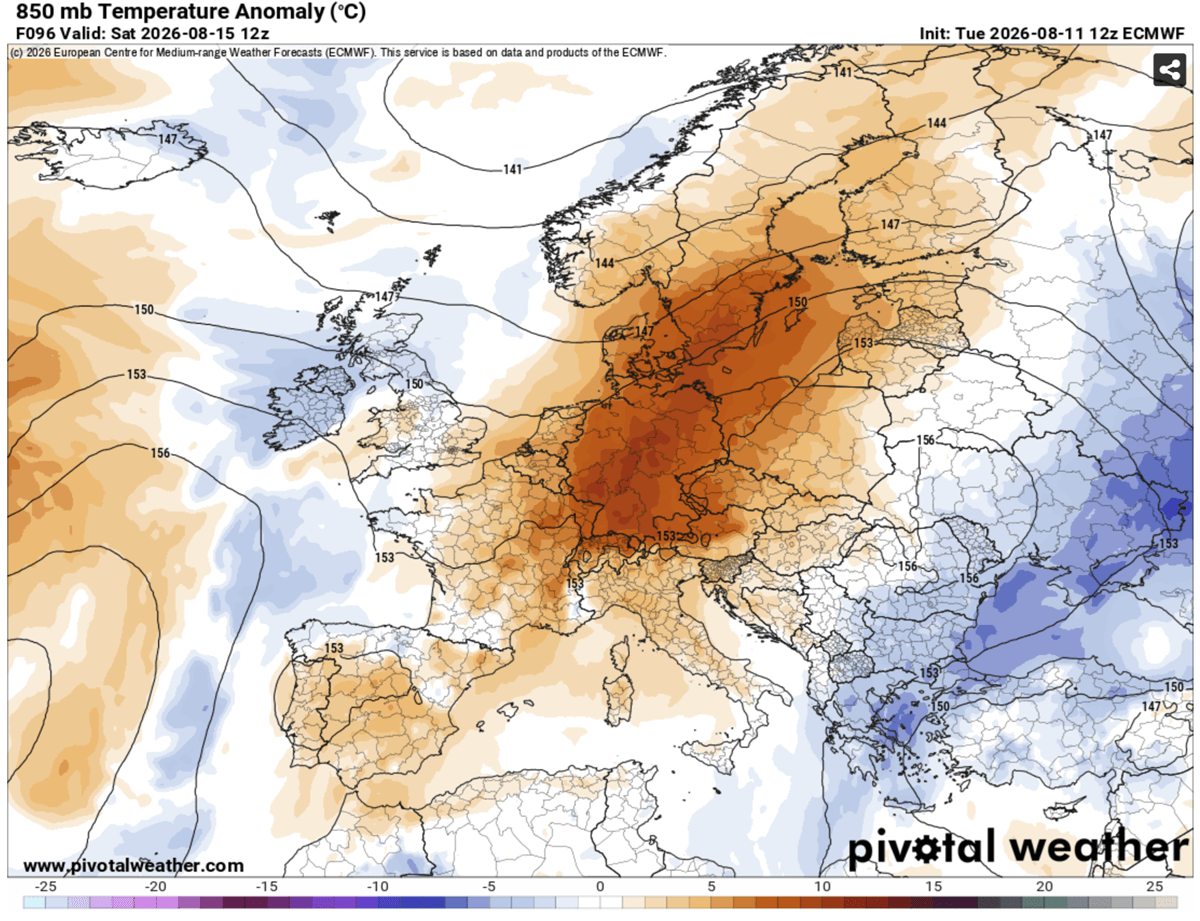
By Saturday, the upper-level wave over the Atlantic is slated to emerge into Western Europe while weakening, causing the heat dome to elongate as it shifts eastward into Central Europe. This transition will intensify the heatwave across Germany, Denmark, southern Sweden, Poland, the Czech Republic, the Alpine region, and northern Italy.
Simultaneously, a cooler maritime air mass from an Atlantic low-pressure system will gradually spread into Western Europe, bringing much-needed refreshment to Ireland, the UK, France, and the Iberian Peninsula by early next week.
Supporting Data and Meteorological Mechanics: Anatomy of a Heat Dome
To comprehend the severity of the current crisis, scientists emphasize the need to understand the mechanics of a Heat Dome. Similar to a lid on a boiling pot, an upper-level ridge pattern—or blocking High—traps vast volumes of warm air at all altitudes. Layers of air continuously sink toward the ground, compressing and creating anomalously warm conditions at lower elevations and extreme heat right at the surface.
Key Meteorological Metrics:
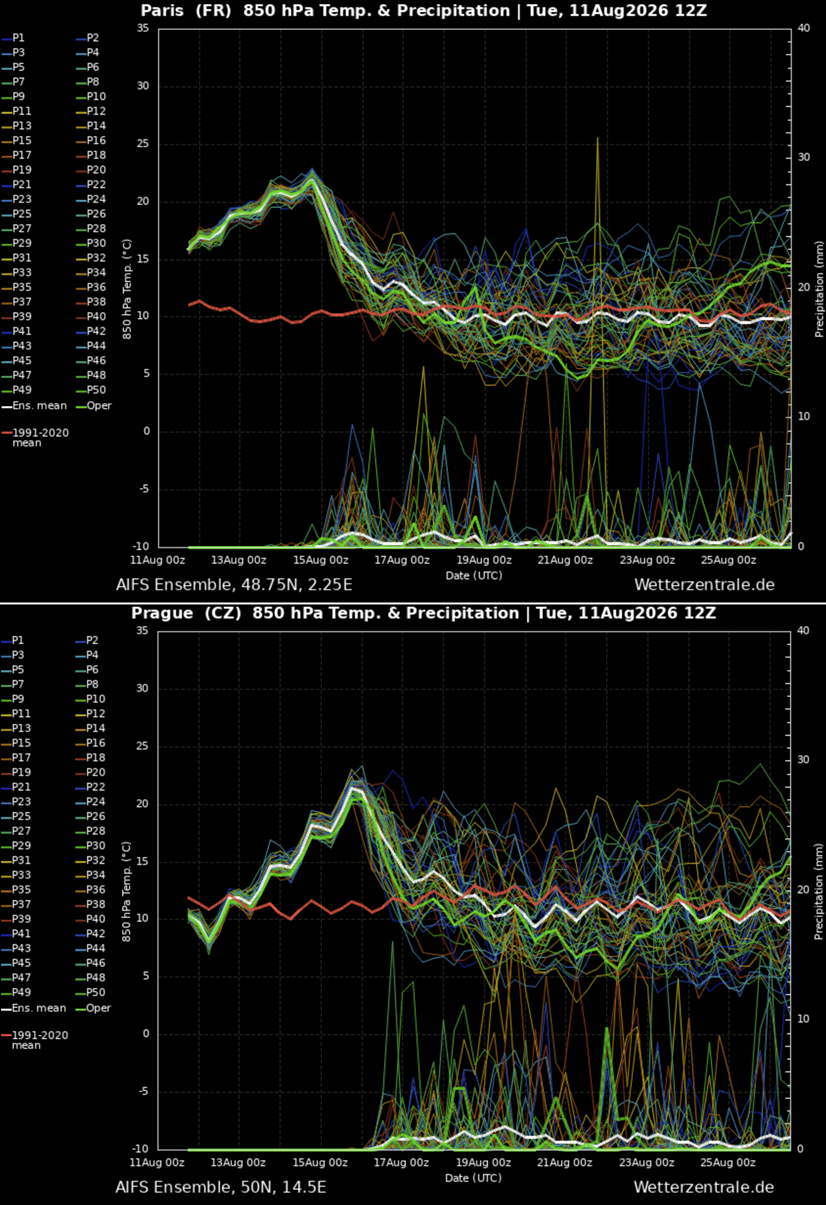
- 850 hPa Temperature Anomalies: Thermal values are tracking 12°C to 16°C above long-term climatological averages for mid-August.
- Geographical Spread: The dome encompasses regions spanning from Portugal to Poland, and from southern Scandinavia down to the northern Balkans.
- Urban Nighttime Temperatures ("Tropical Nights"): Lows failing to dip below 24°C in metropolitan areas deprive the human body of its primary biological recovery window.
- Regional Extremes:
- Southern Spain & Ebro Valley: 42°C to 44°C
- France: 40°C to 43°C
- England: 36°C to 39°C
- Benelux & Western Germany: 36°C to 40°C
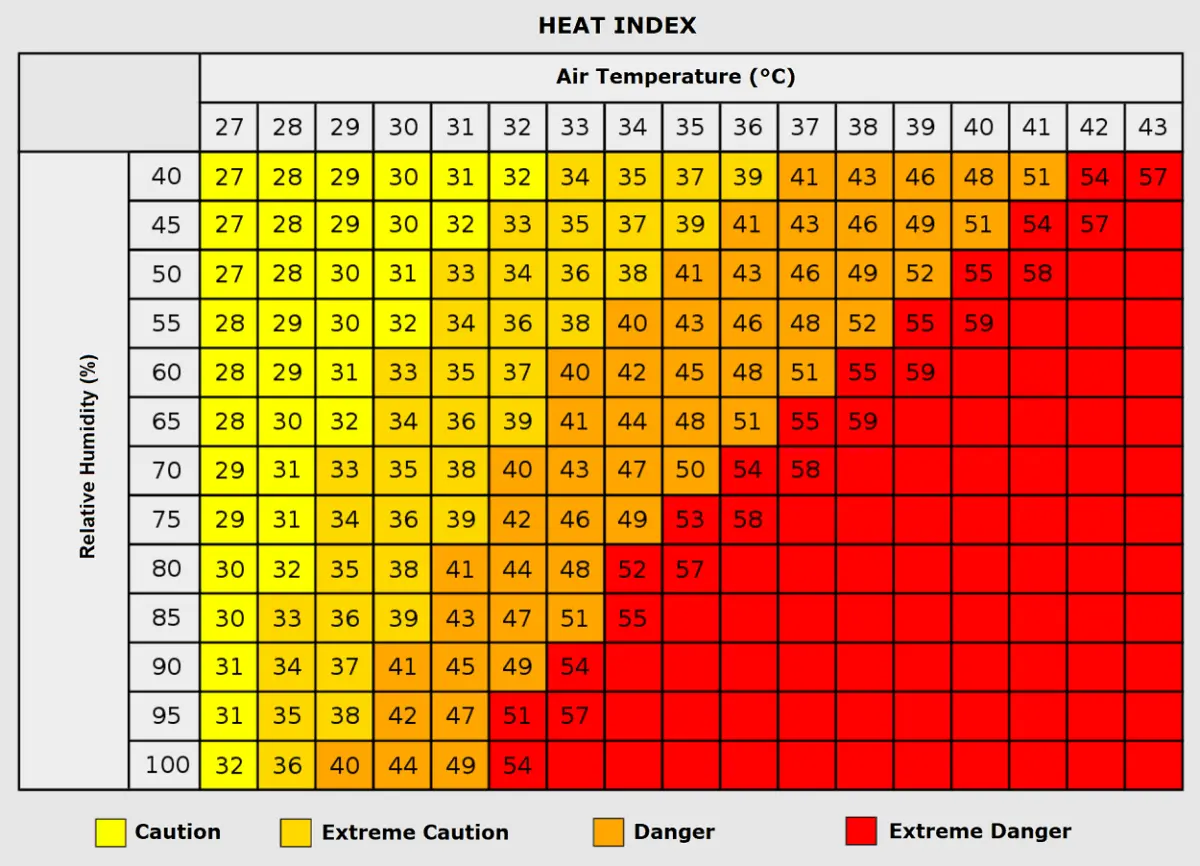
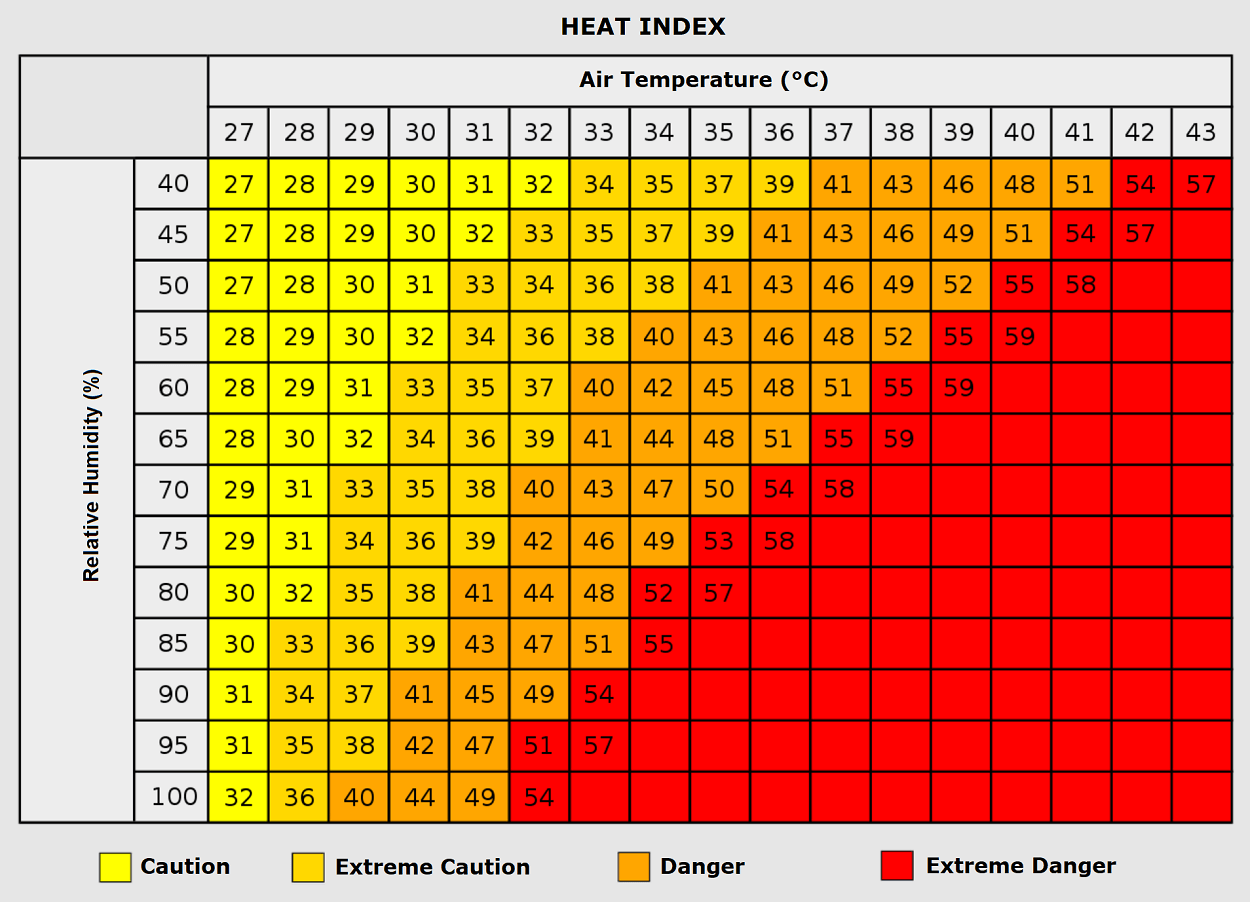
Furthermore, meteorologists rely heavily on the Heat Index to measure the physiological toll of these heatwaves. When ambient air temperatures hit 35°C, high relative humidity above 80% can elevate the perceived "feels-like" temperature to nearly 50°C, drastically increasing the risk of heat exhaustion and heat stroke.
Official Responses, Public Health, and Grid Management
Governments, municipal authorities, and public health organizations across Western and Central Europe have activated emergency protocols in response to the unfolding crisis. Health ministries have issued red and orange heat warnings, urging citizens—particularly vulnerable populations such as the elderly, young children, and those with pre-existing cardiovascular and respiratory conditions—to remain indoors during peak afternoon hours.
Protecting Vulnerable Workforces and Populations
Labor inspectorates across France, Spain, and Italy have mandated adjusted working hours for outdoor sectors like construction, agriculture, and municipal maintenance. Workers exposed to direct sunlight face immediate risks of severe dehydration, dizziness, and cognitive decline.
Sociologists and public health advocates note that low-income urban populations face heightened vulnerabilities. Many reside in densely built environments characterized by heat-trapping materials like concrete and asphalt, lacking adequate air conditioning or green spaces to mitigate the urban heat island effect.
Energy Grids Under Severe Strain
The simultaneous cooling demands of millions of homes, offices, and commercial spaces have placed unprecedented strain on continental electrical grids. Grid operators in France, Germany, and the UK have reported surging electricity consumption. Although nuclear and renewable outputs are being carefully managed, authorities are on high alert for localized brownouts and peak-load stress, particularly as transmission lines operate under thermal constraints.
Broader Implications: Agriculture, Infrastructure, and Climate Trends
Beyond immediate human health and energy concerns, the fifth heat dome of the season carries profound structural implications for the European continent.
Agricultural Deficits and Soil Moisture Depletion
Prolonged high temperatures coupled with a lack of substantial rainfall have severely depleted soil moisture reserves from the Iberian Peninsula to the Pannonian plains. Agricultural sectors in France, Germany, and Italy report accelerated crop maturation and stress, raising concerns over reduced yields for late-summer and autumn harvests, particularly for corn, vineyards, and livestock feed production.
Infrastructure Vulnerability
Transportation networks are also feeling the heat. Rail operators have issued speed restrictions across parts of the UK, France, and Germany due to the risk of steel rails buckling under extreme solar radiation and thermal expansion. Asphalt roads in regional areas have similarly required cooling interventions to prevent surface degradation.
Looking Ahead
While current operational models indicate that a significant pattern flip may arrive next week—bringing a breakdown of the persistent blocking high and introducing cooler Atlantic airmasses—climatologists warn that the frequency and intensity of these recurring mid-summer heat domes are becoming the new baseline for a warming Europe. Authorities emphasize that long-term adaptation strategies, urban greening, and robust civil protection frameworks will be essential to safeguard populations against increasingly hostile summer extremes.
